Shelf layouts

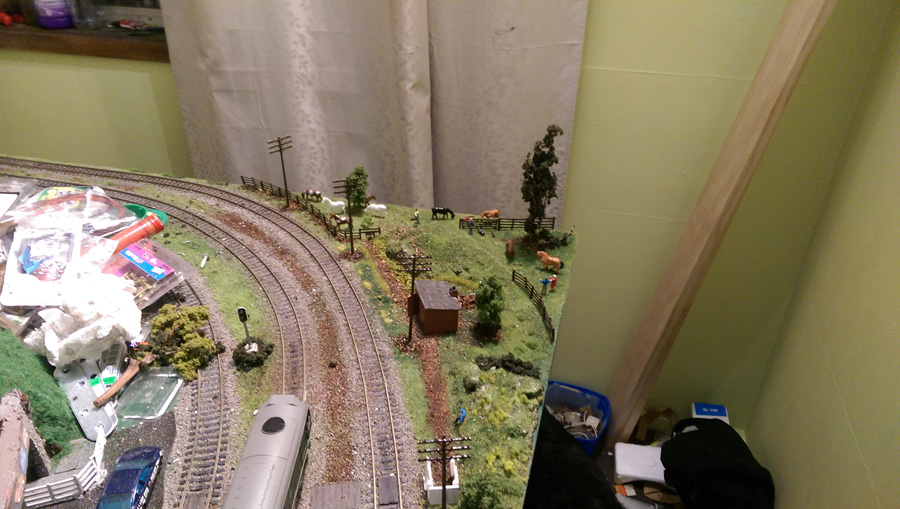
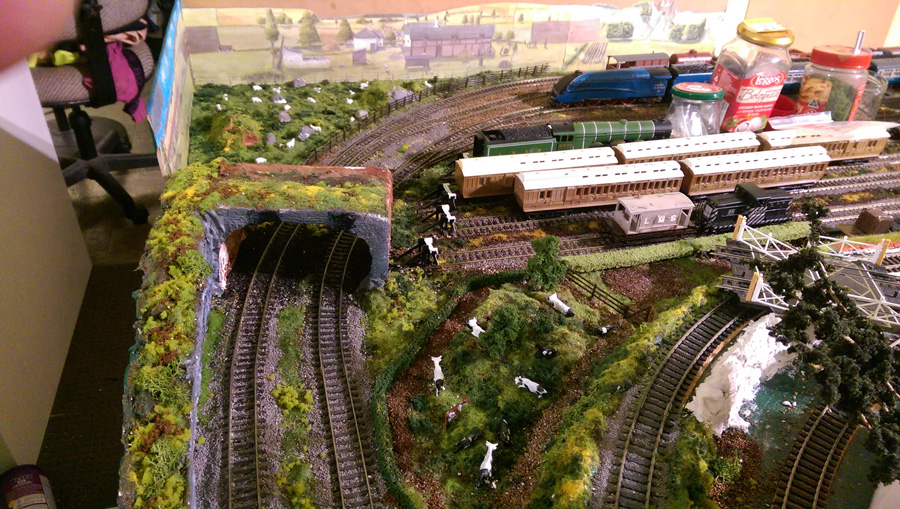
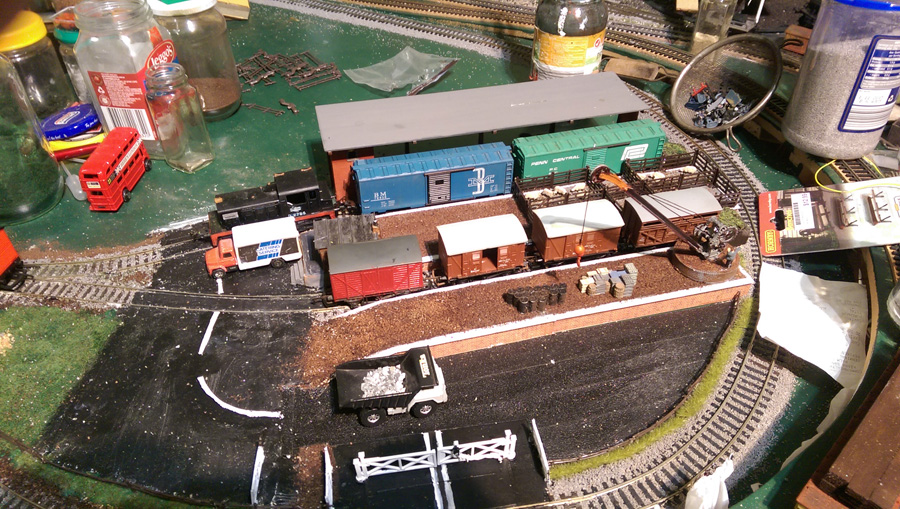
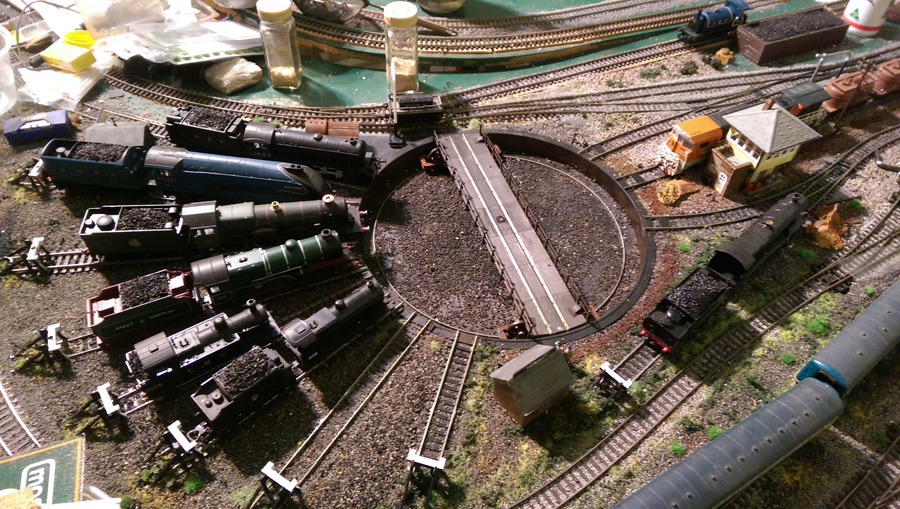
I have a few shelf layouts for you today – and a suspended one too!

Let’s start with John, who has kindly sent in more pics of his layout from yesterday:

“Dear Mr. Lee,

Thank you again for your site.

Every time I look I get new ideas…

The embedded links to previous pages are very helpful.

One thing the links help with most is to inspire new ideas by combining the ideas of others.

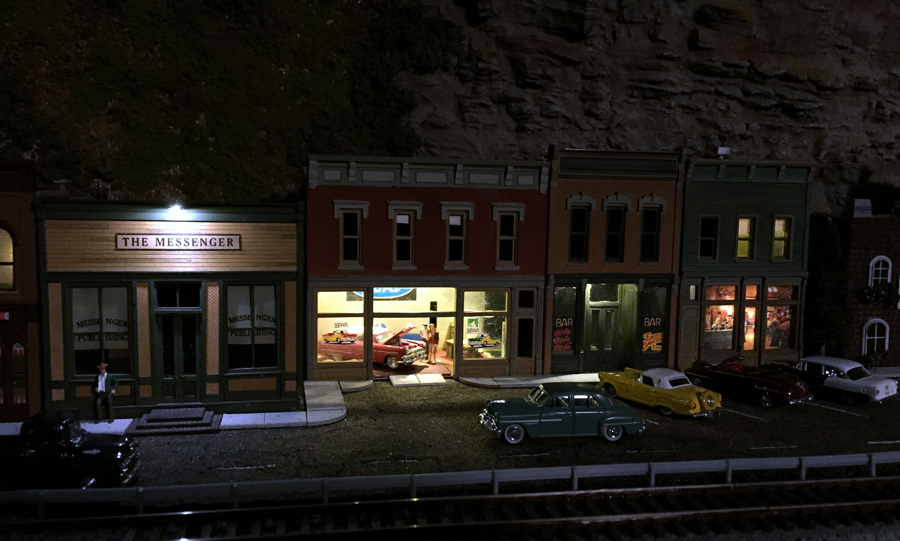
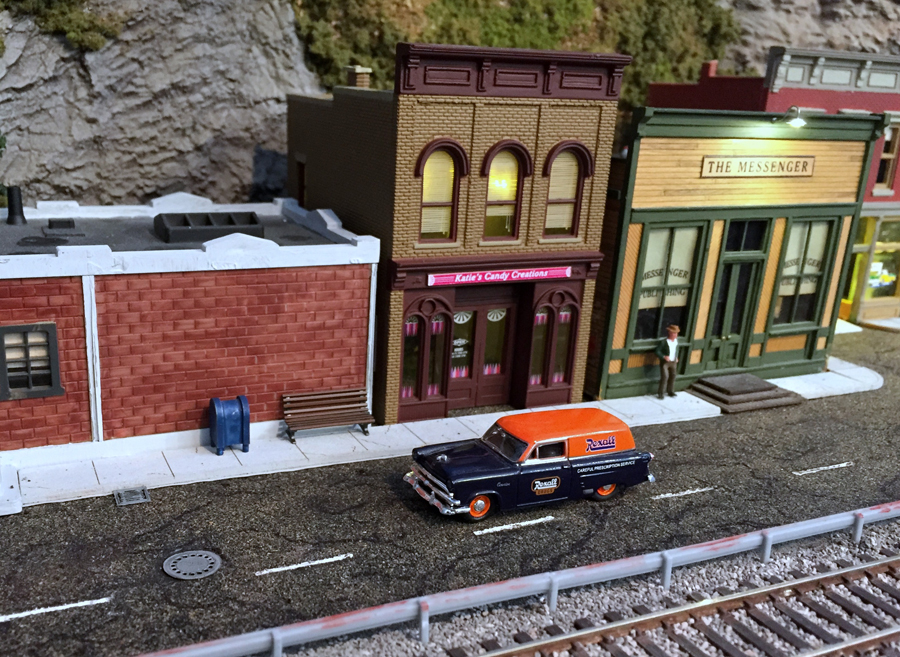
Just for fun, here are five pictures of my “Little Walkley” shelf layouts and its On30 companion “Sandy Flats”.

I have also included the track plans for both

These are two separate layouts. To save space, they are usually stacked one above the other.

I am currently working on an idea to be able to hang them on the wall (so I can start some new shelf layouts).

Hopefully this can inspire other modelers to realize that one can have a lot of fun even when there is not a lot of space.

We do not have exhibitions here in the States like you have in the UK. I used to display these and others at a local hobby shop where several modelers would meet on the last Saturday of each month to show off their latest projects for constructive criticism and to get new ideas.

Be blessed and may this find you in the best of health.

John”

shelf layouts

shelf layouts

shelf layouts

shelf layouts

shelf layouts


And Alan has been back in touch – his last post is here:

“Hi Al,

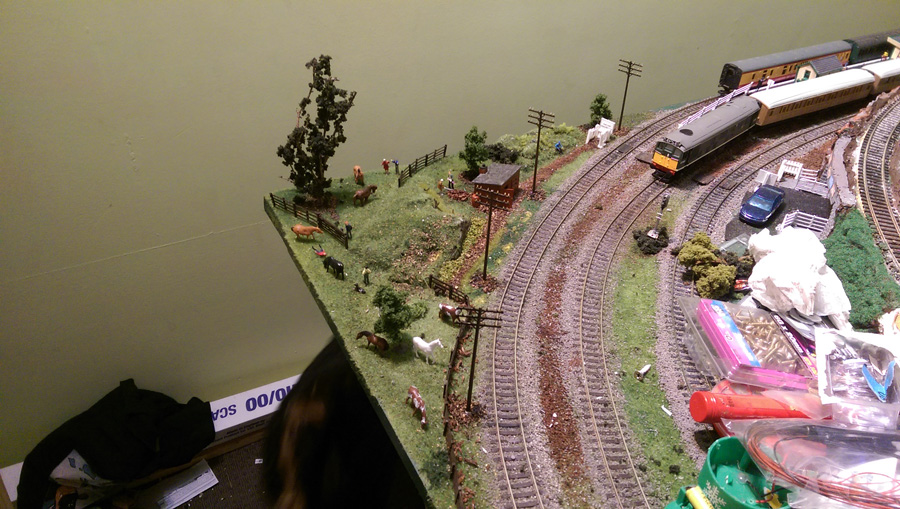
More or less finished my 009 shelf layouts now, it started with no scenery, as it was only to do a bit of shunting in the warmth of the house during the winter.

But I can’t help myself, I like building things from bits and bobs so gradually its morphed into a fully scenic layout.

My South Wales layout in the garage has been put on the back burner for a while but it still works fine.

Hope all is well your end, as you say ‘keep em coming’

Alan”

model train

model railroad

model train


“Railway layout accommodation has always been a bone of contention for enthusiasts. I have devised a simple pulley system so that a layout can be stored away when not in use.

My platform is about 9 and 1/2 feet long by 4 feet wide (290cm x 120cm).

On each corner of the layout I have secured 2 single pulleys (you can use a double).

To the ceiling joist, over each corner, I have attached a double pulley.

Each corner has its own rope and pulley system.

1

Here is the board raised to the ceiling of my garage.

The blue rope and clips are a safety feature, preventing the board falling if the pulleys fail. This is important as my car is stored underneath!

2

The white rope is first attached securely to the ceiling. It is then passed down to the first pulley on the board.

It then travels back to the double ceiling pulley.

Around the double pulley and back down to the second single pulley on the board.

Back up again to the double pulley.

3

From the double pulley at the top, it goes to a pulley that changes the direction through 90 degrees.

It travels to a double pulley where it drops down from the ceiling (where all four ropes can be pulled).

suspended layout

suspended layout

suspended layout

All four ropes, from each corner, are pulled together to raise or lower the board.

David”

A huge thanks to David – lack of space stops a lot of folk from rolling up their sleeves and getting stuck in, which is a great shame.

Thanks to the others too for sharing their shelf layouts.

Of course, I’m biased, but the site really is an Aladdin’s cave of layout tips now – and it’s all thanks to you lot. Please do keep ’em coming.

And don’t forget the Beginner’s Guide. It’s got the Hall of Fame’s stamp of approval, and without, this site wouldn’t exist.

That’s all this time folks.

Best

Al

PPS More HO scale train layouts here if that’s your thing.


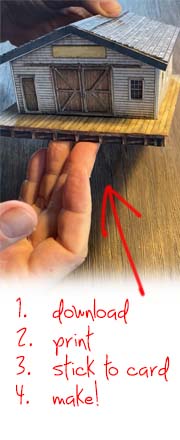
printable buildings

And there’s the Silly Discount bundle too.

More tips and scratch builds

“Hi Al.

I started work on the 6″ scale Little Samson about 4 years ago.

It took me 2000 hours to complete.

As said it is a half size model of a Little Samson steam tractor originally built at Kings Lynn, Norfolk, by Savage Brothers about 1900. No original engines survive today.

The engine has two forward and two reverse gears and has a maximum speed of about 6 MPH and is very powerful indeed.

It weighs in the region of 1300kg although I have not actually weighed it.

The boiler was professionally built by AJB Engineering in Derby.

Megan is fired by coal. The wheels were fabricated by myself and had them rubbered in England. Each rear wheel weighs 62kg.

Model engineering is my hobby, I have no engineering background. Whilst toiling in the UK I was a plumber.

Drawings and very good castings can be bought from Edward George at www.littlesamson.co.uk at reasonable prices.

Regards.

Roger”

steam_tractor_engine


“Dear Mr. Lee,

I shared with you some photographs of my latest layout “Little Wlakley” recently.

That layout had several inspirations including your engine shed kit.

Building that kit was fun and John’s (not me) video gave me some ideas on how to improve my model.

Because my engine shed faces the front and the interior is visible… Seeing the source of the cardboard was an issue…

Painting the interior brown was a help but still fell short of what I wanted to achieve. It was the video that set off a new light.

Hare are photos of my rebuilt enginehouse… I will also send you the files for my “detail kit” These are yours as a thank you for your site…

Sincerely,

John”

SAM_1083

SAM_1088


SAM_1091

SAM_1093

SAM_1097

SAM_1104

engine shed

My word, we’re getting some nice variations on the engine shed now, and it was all thanks to John who led the charge.

Dangerous Dave also got involved.

And look what Bob did with the original engine shed.

All good stuff!

That’s all this time folks. Please do keep ’em coming. And don’t forget if you’re still scratching your head over how to start, the Beginner’s Guide is here.

Best

Al

PS Latest ebay cheat sheet is here (still updated every single day…).


Model railroad scenery tips

I have a collection of model railroad scenery tips for you today:

“Hi Al,

I always enjoy the pictures and tips that you post. Today I like to share an easy way to make trees. I used the dried flower stalks from a plant named Astible and spray painted them a dull green. In my opinion they look pretty realistic.

You may post this if you think it’s worth it.

Guenter”

model railroad scenery tips


(Guenter’s trees made me think of Martins’s excellent ‘tree how-to’. If you’ve not stumbled across it yet, it’s here.)


“Hi Al,

I think possibly the best tip I could give to anyone coming to the railway modelling scene would be to decide what it is they actually want from the hobby.

Some people are model makers and want a place to show off their modelling skills. These are the ones who build a fantastic looking layout which is very realistic and in which the trains are secondary to the task.

Others are railway fanatics and simply want a layout that shows off their locomotives and their rolling stock. The scenery and buildings become secondary and often unimportant. There are layouts with no scenery whatsoever.

Then again, do they want to sit back and watch the trains go by or do they want to get really involved in the operation of the trains? In which case, do they want conventional controllers or the new fangled DCC? Or, perhaps, one of the computer programs that actually control the electronics for you (take a look at CATrain – a free download for Windows)

What I am saying is ‘plan’, ‘plan’, ‘plan’!

Be realistic. Make sure that your trains can actually traverse your immaculate scenery and/or make sure your track plan offers enough interest for your rolling stock … a twelve car Orient Express needs somewhere to go and would probably need a forty foot layout to be anything close to realistic.

But most of all – do what you want to do. Don’t take any notice of what the Jones’ have done, as long as it works for you, it’s fine. There is nothing stopping you running a Thomas the Tank Engine set – even at sixty-five years of age.

Just enjoy it,

Alan …”


“I have several model railroad scenery tips tips to send along.

One is to save the rigid plastic forms that fit over any of the many items we buy all the time, ie here in the states everything seems to come packaged inside rigid plastic glued to a cardboard bottom.

Most of these see thru rigid plastic forms are designed in round, square or rectangular shapes, but some are molded to fit the item itself which provides some intriguing shapes for the creative modeler. You name it, everything from light bulbs to computer parts come sandwiched between these materials.

I save the plastics all the time for a variety of things. They get cut to the right size and are windows for my home made buildings.

If I get really creative with an interior I put skylights in the tops for a peak inside the rooms. I make all my buildings, sheds and so forth from scratch. Just cut out the appropriate size window, use indelible magic marker or cut outs from paper for the window decoration, glue them to the plastic and when all is set glue the window into the opening.

I used a larger one (a flat rectangle) for a view into my tunnel. It sits over the tracks supported by the tunnel sides. Almost all of them have flanges on all four sides to be glued to the cardboard packaging so they provide a nice flat edge all the way around for stablizing them on the tunnel frame. I made a sculptamold landscape top for it that fits like a hat on a flat head. the plastic top is hidden unless I want to see inside the tunnel. It lifts off easily as does the plastic top for servicing the track if necessary. The sculptamold top has trees and foliage. The seams were thin enough so they were not seen unless you looked closely, but I recently made another with little flaps all the way around to hide the seams. I’ll send you a picture when I get the time.

Jo”


“Al – I’ve used red velvet and white lace from Doll House material to use as curtains & trim for the business car and private car on my layout.

Dave C”


“Just read email and comment I’ve looked at made me think I should contact you, I don’t know if these have been suggested before but here goes, I once purchased some look alike coal off ebay I then went to my local pet store and found the self same thing in the fish tank department the black gravel give a realistic look and a 3kg bag cost the same as 2 x 100g bags on ebay.

Secondly, abrasive paper especially the black WET & DRY type is ideal for roads and car parks, for the high class roads the RED OXIDE paper serves the same purpose with the finer grit looking more realistic.

I, like many of your other readers look at loads of plastic rubbish before it gets discarded, it’s surprising what a rough up with abrasive paper and a coat of grey primer paint sprayed on changes the looks of even the oddest pot, tub, straw etc….

Keep up the good work.

Mark”


Model railroad scenery tips:

“In reference to hills and cliffs, I have found on many fine layouts, the cliffs to be clearly ‘Trowelled’ and not realistic. Here in New Zealand, we have thousands of river (water) or Weather etched terrain to model from.

River cuttings can bed done by layering polystyrene (polyfoam) foam held in place with wire (DO NOT glue this will leave glue lines and lose the effect) and spray with Solvent Based spray paint. this will effectively weld the layers and give that weathered look. For Rock Cliffs, I do the same thing tufting ledges as they would appear in real situations.

Wayne”


“To make hills, fields and rock faces cheaply and quickly, I have always used strong brown wrapping paper (got 2 sq metres from our local furniture store) – cut roughly to a bit bigger than the area to be covere.

Crumple the paper up as tight as you can – smooth it out again (roughly for rock faces – smoother for hills) – using clear Bostic stick one edge down using 1/4″ overlap – then trim the other edge to 1/4″ overlap and stick it down in the same way – rubbing smooth

If it’s quite a big piece then some crumpled newspaper underneath will help to support it. Once dry (10 mins) you can paint it with any suitable paint (I used Homebase satin green, brown or grey) and sprinkle with coloured sawdusts while still wet (use a sieve) and hey presto, 24 hours later it has all set solid. Vertical rock are painted grey or brown, and when sprinkled with green grass it sticks to the horizontal surfaces – quick and easy. I can complete a whole section in a couple of hours..! Note: try not to get Bostic on your fingers – excessive amounts can dry the skin…

Duncan”

“My ‘best model railroad scenery tips’ for modelers in any scale is never, EVER get married … sorry but i got’s no pics fer that one … no need to reply – just sayin

nic”


Pondered over publishing the last one – but seeing as it made me laugh so much….

Anyway, it doesn’t matter if you want to lay track, make trees or weather your engines, it’s all in the Beginner’s Guide.

Thanks to everyone for sharing their model railroad scenery tips.

That’s all this time folks.

Please do keep ’em coming.

Latest ebay cheat sheet is here (updated daily).

Best

Al