I have a few shelf layouts for you today – and a suspended one too!
Let’s start with John, who has kindly sent in more pics of his layout from yesterday:
“Dear Mr. Lee,
Thank you again for your site.
Every time I look I get new ideas…
The embedded links to previous pages are very helpful.
One thing the links help with most is to inspire new ideas by combining the ideas of others.
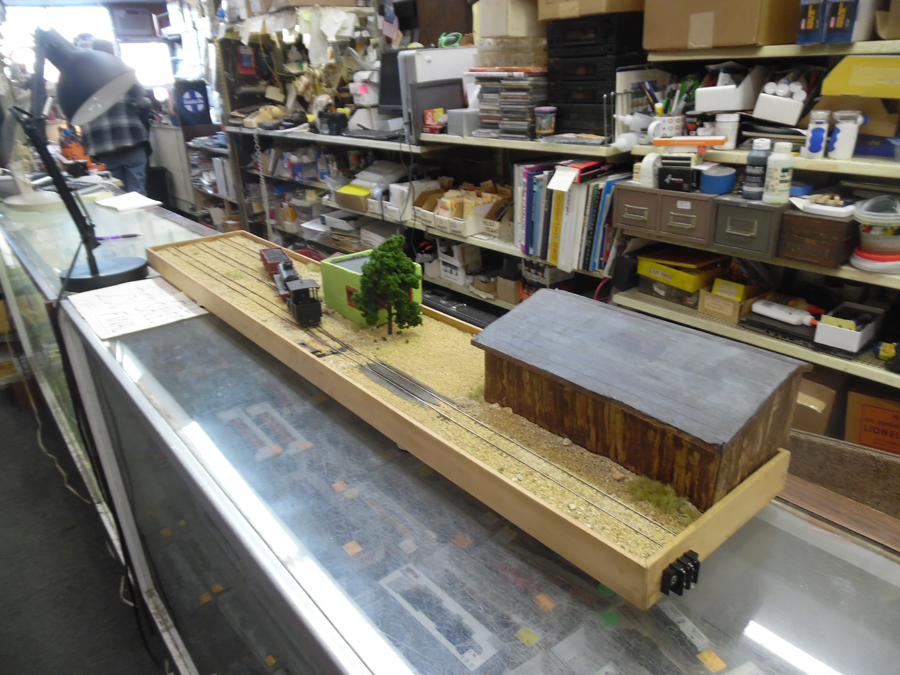
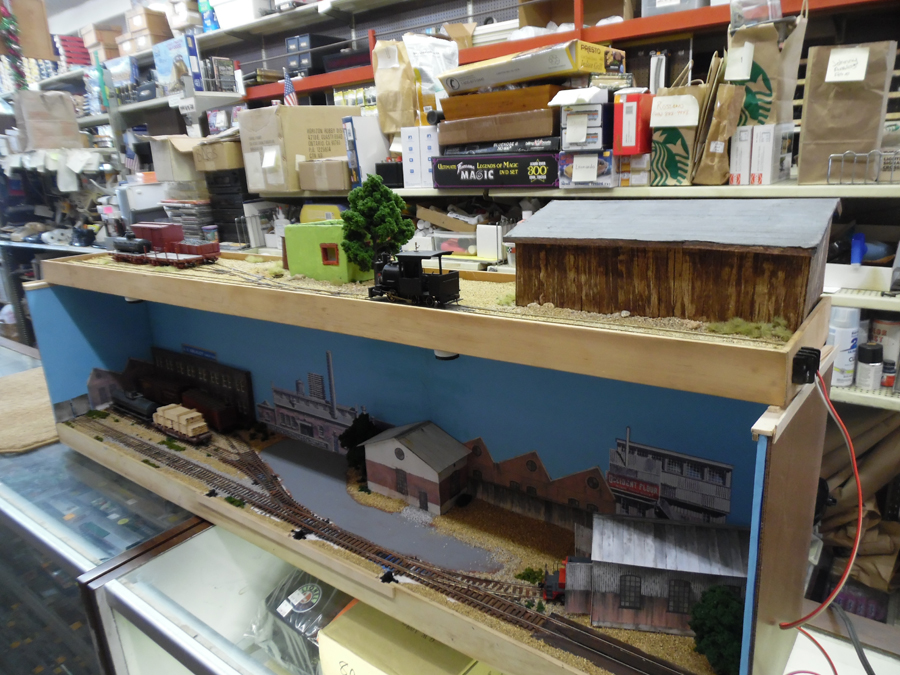
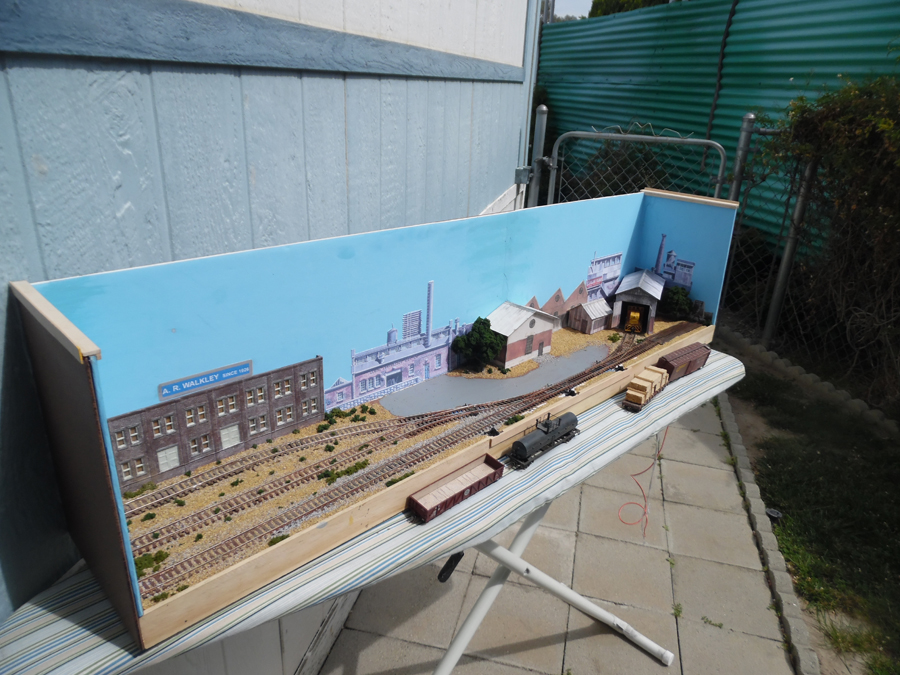
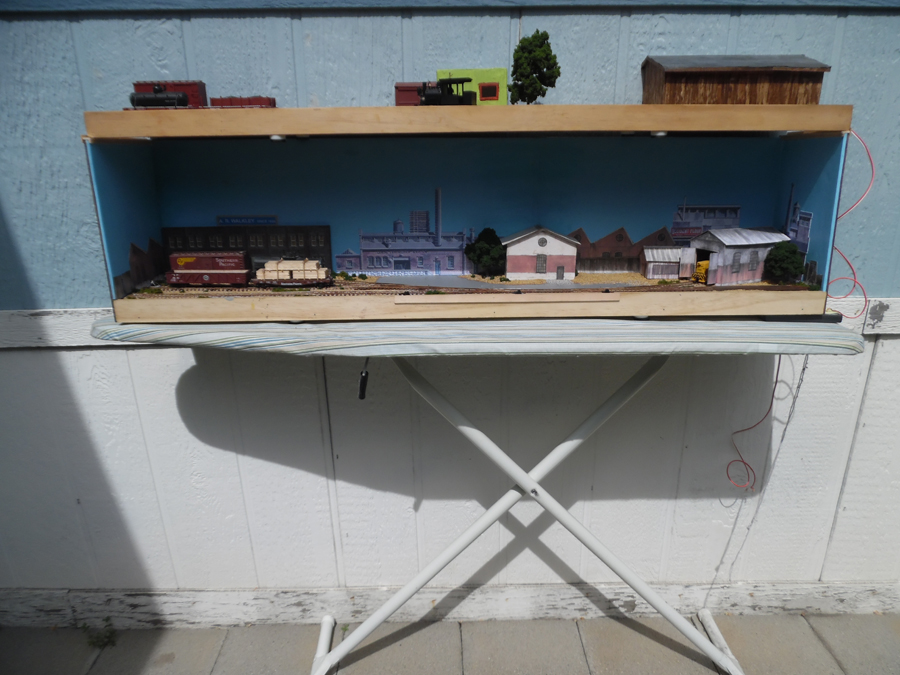
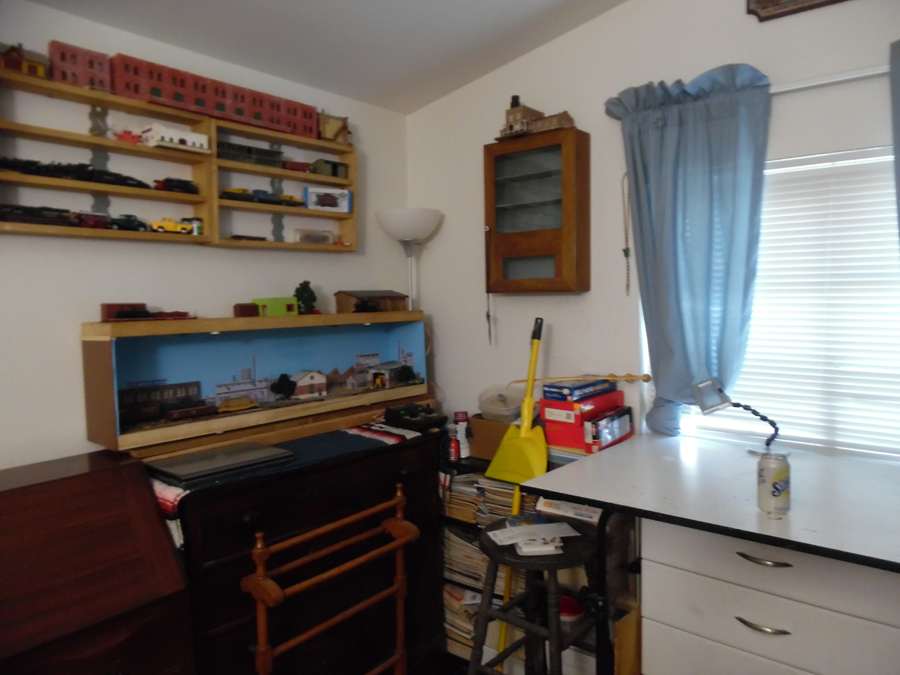
Just for fun, here are five pictures of my “Little Walkley” shelf layouts and its On30 companion “Sandy Flats”.
I have also included the track plans for both
These are two separate layouts. To save space, they are usually stacked one above the other.
I am currently working on an idea to be able to hang them on the wall (so I can start some new shelf layouts).
Hopefully this can inspire other modelers to realize that one can have a lot of fun even when there is not a lot of space.
We do not have exhibitions here in the States like you have in the UK. I used to display these and others at a local hobby shop where several modelers would meet on the last Saturday of each month to show off their latest projects for constructive criticism and to get new ideas.
Be blessed and may this find you in the best of health.
John”
And Alan has been back in touch – his last post is here:
“Hi Al,
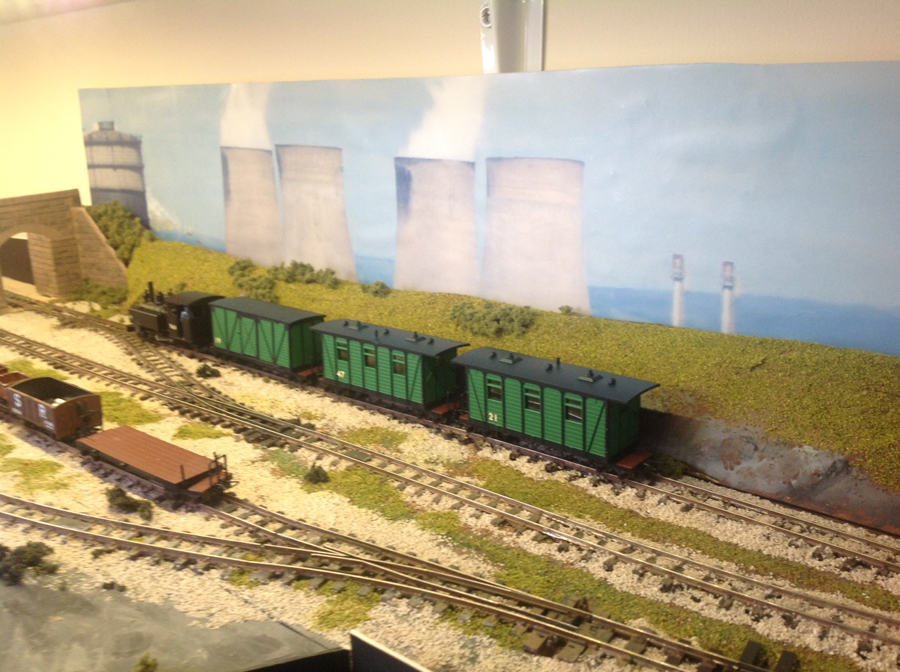
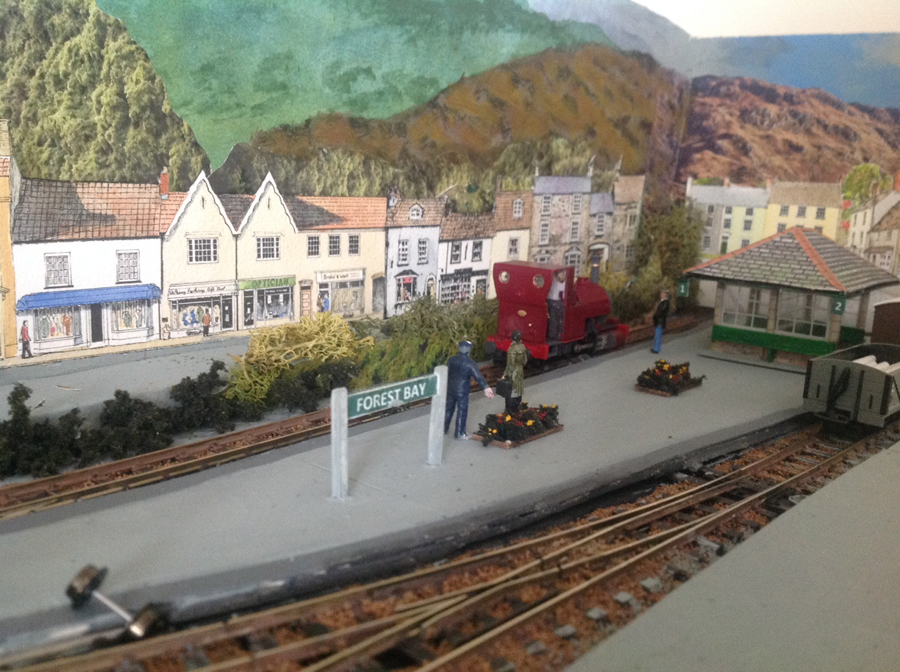
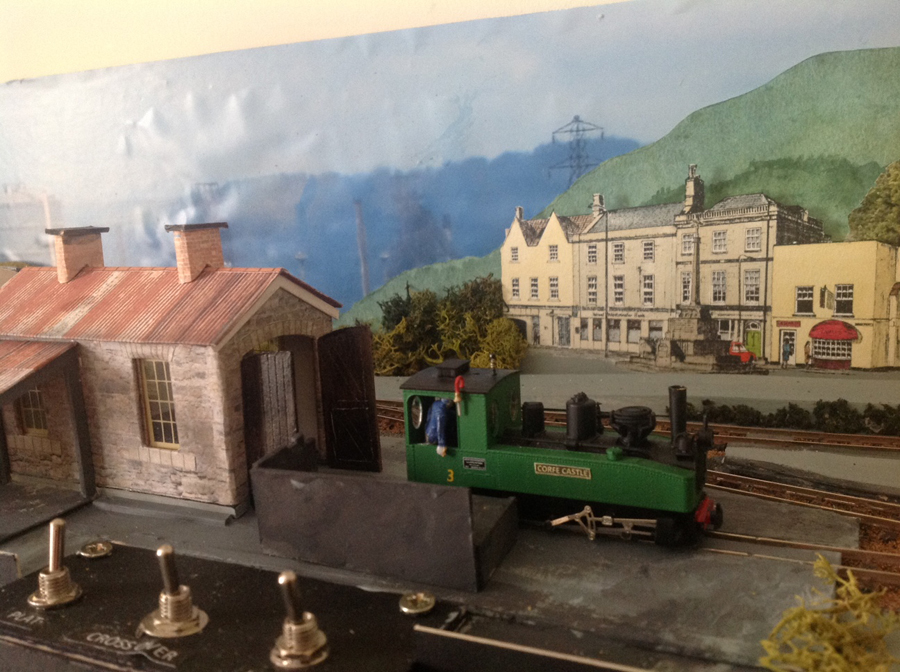
More or less finished my 009 shelf layouts now, it started with no scenery, as it was only to do a bit of shunting in the warmth of the house during the winter.
But I can’t help myself, I like building things from bits and bobs so gradually its morphed into a fully scenic layout.
My South Wales layout in the garage has been put on the back burner for a while but it still works fine.
Hope all is well your end, as you say ‘keep em coming’
Alan”
“Railway layout accommodation has always been a bone of contention for enthusiasts. I have devised a simple pulley system so that a layout can be stored away when not in use.
My platform is about 9 and 1/2 feet long by 4 feet wide (290cm x 120cm).
On each corner of the layout I have secured 2 single pulleys (you can use a double).
To the ceiling joist, over each corner, I have attached a double pulley.
Each corner has its own rope and pulley system.
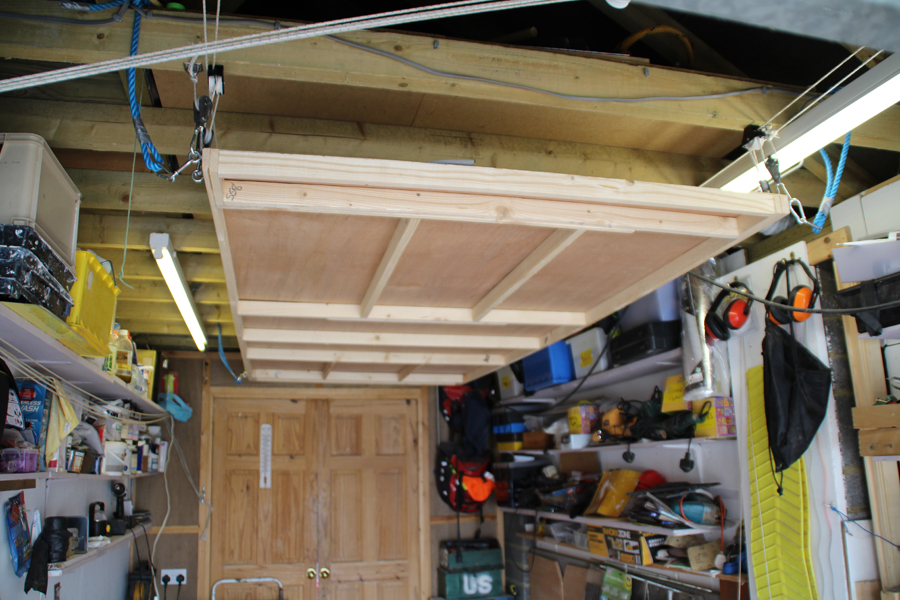
Here is the board raised to the ceiling of my garage.
The blue rope and clips are a safety feature, preventing the board falling if the pulleys fail. This is important as my car is stored underneath!

The white rope is first attached securely to the ceiling. It is then passed down to the first pulley on the board.
It then travels back to the double ceiling pulley.
Around the double pulley and back down to the second single pulley on the board.
Back up again to the double pulley.
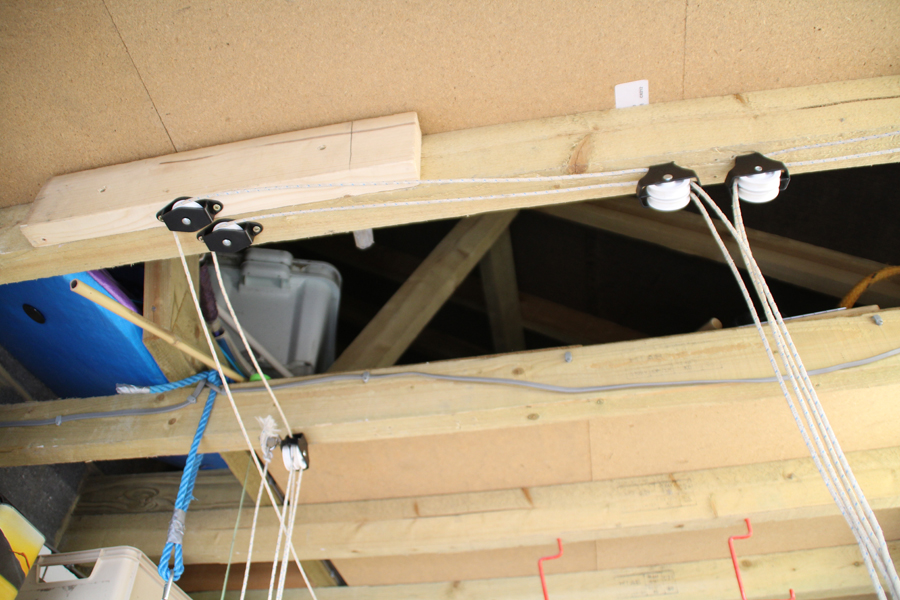
From the double pulley at the top, it goes to a pulley that changes the direction through 90 degrees.
It travels to a double pulley where it drops down from the ceiling (where all four ropes can be pulled).
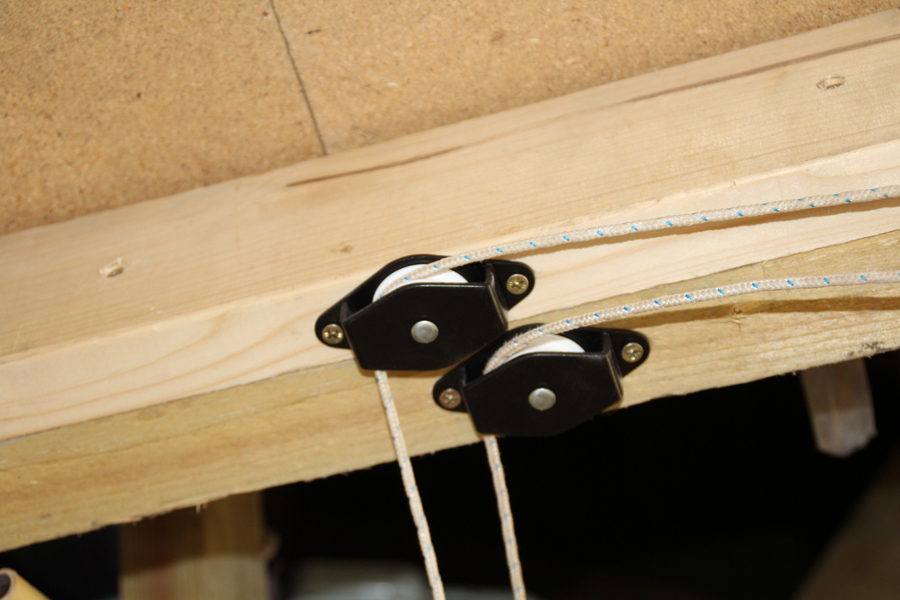
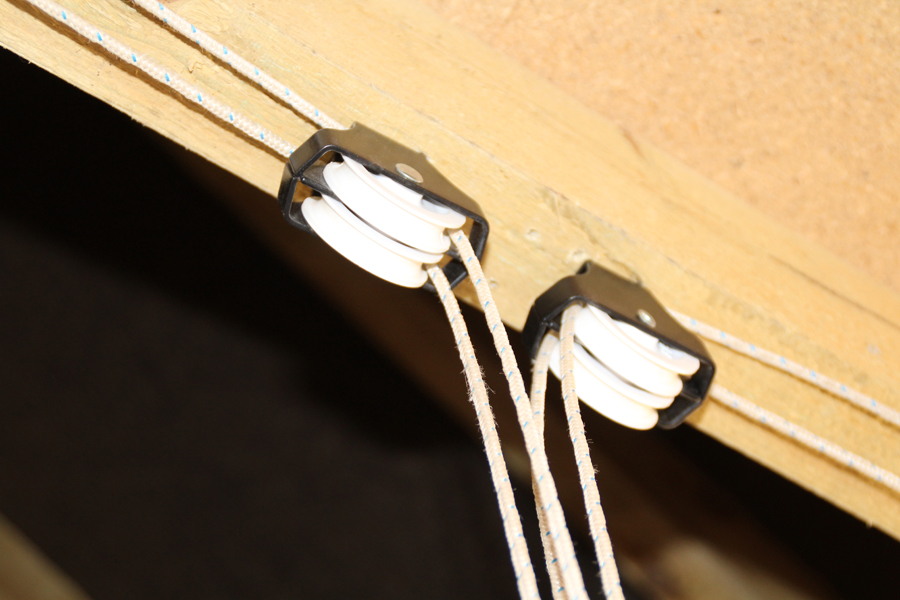
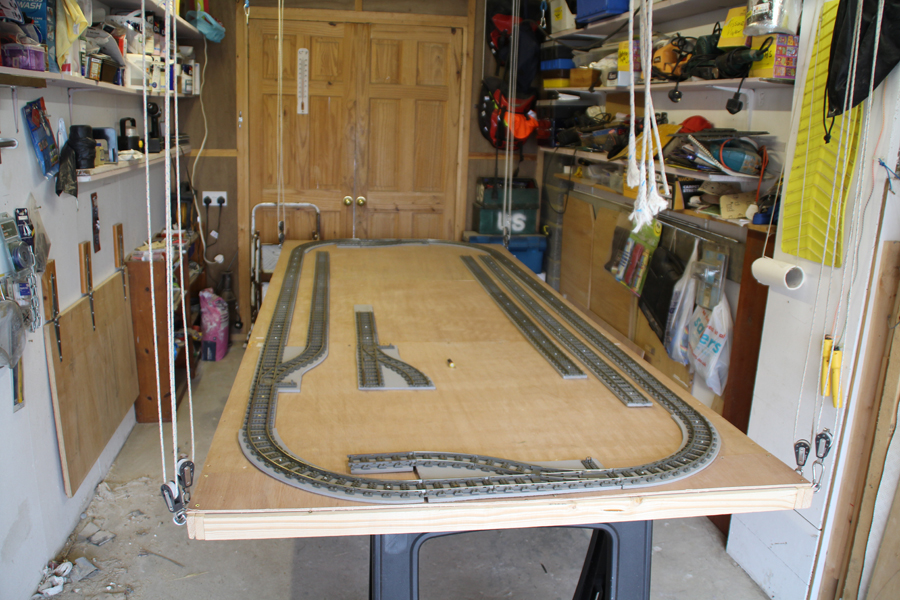
All four ropes, from each corner, are pulled together to raise or lower the board.
David”
A huge thanks to David – lack of space stops a lot of folk from rolling up their sleeves and getting stuck in, which is a great shame.
Thanks to the others too for sharing their shelf layouts.
Of course, I’m biased, but the site really is an Aladdin’s cave of layout tips now – and it’s all thanks to you lot. Please do keep ’em coming.
And don’t forget the Beginner’s Guide. It’s got the Hall of Fame’s stamp of approval, and without, this site wouldn’t exist.
That’s all this time folks.
Best
Al
PPS More HO scale train layouts here if that’s your thing.
And there’s the Silly Discount bundle too.