N scale model railroad

Dean’s been back in touch with the progress on his N scale model railroad – all built on an old door:

“Hello Al, from Dean from New Mexico.

In my last two submissions I showed the development of my plans for my next railroad, the 32” x 80” Conejos Valley Railroad, a fictitious railroad in southern Colorado.

The time for planning is over and it’s time to start construction.

This is a two-part submission: in the first, I show how I built the support table and baseboard. In the second I’ll describe the laying of the two outer loops of the layout using Atlas flex track and #6 switches.

After that I can run trains to check things out. I’ve included video that show the construction in more detail.

Here’s the plan again for reference. The dashed red lines show where I cut the hardboard and first Styrofoam layer so that I could raise the back part of the outer loop.

N scale model railroad track plan

The baseboard, shown in the section diagram through A-A, was a sandwich of 1/8” Masonite hardboard over three layers of white Styrofoam.

The thicknesses of the foam layers are not too critical, but at least two layers are best.

The baseboard was contained in a wood box constructed from ¾” x 2 ½” clear pine.

The layers were glued together with Liquid Nails construction adhesive and a bead of the same held the bottom layer into the wooden box.

The diagram shows how the rear part of the upper layer is supported with two more layers of 1” foam.

N scale model railroad track height diagram

Full size copies of the layout were printed using the Atlas Track Planning Software that I used for the layout design.

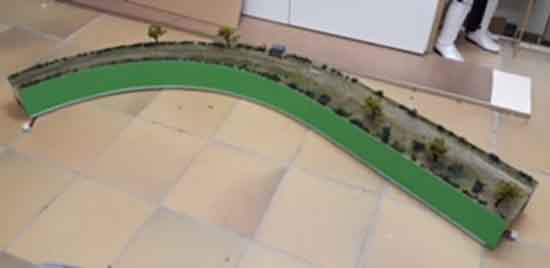
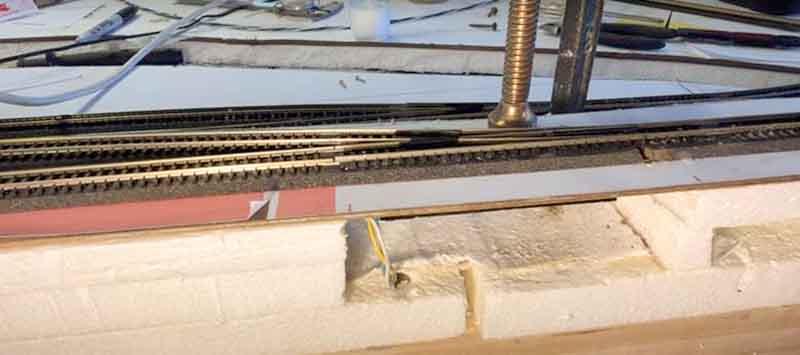
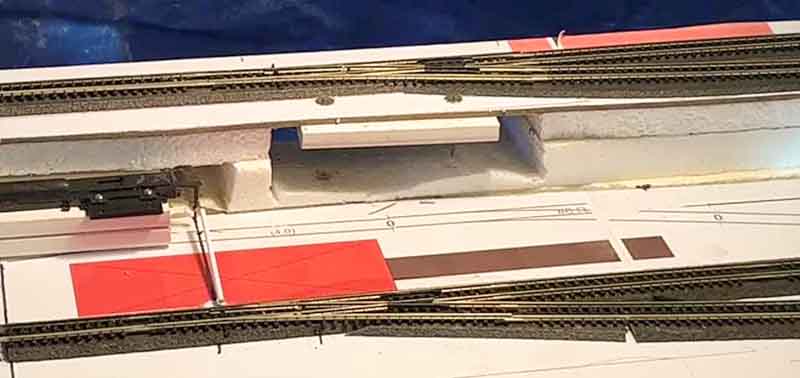
These pages were glued to the hardboard with a thin layer of white glue. The photo below shows how the rear part of the upper layer was raised after cuts were made.

building up N scale track height

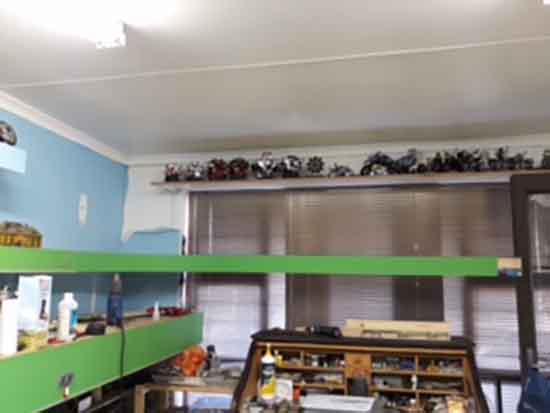
Below is a photo of the supporting table. Diagonal braces and a front cross piece were added after this photo was taken.

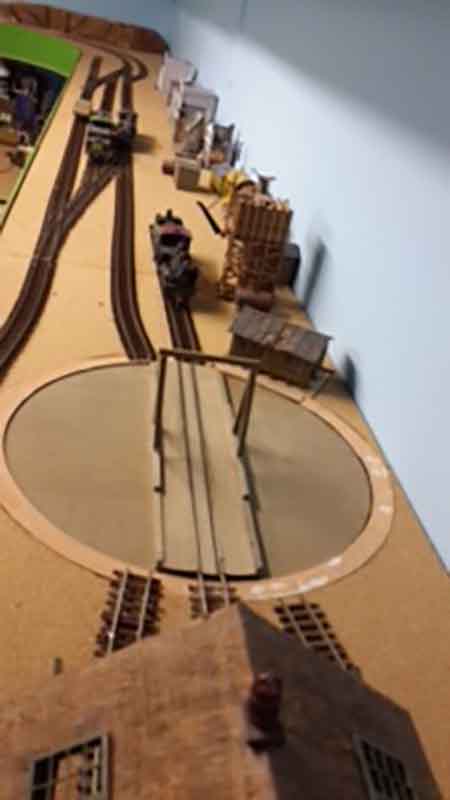
n scale bench

Another view of the tabletop:

N scale track plan bench


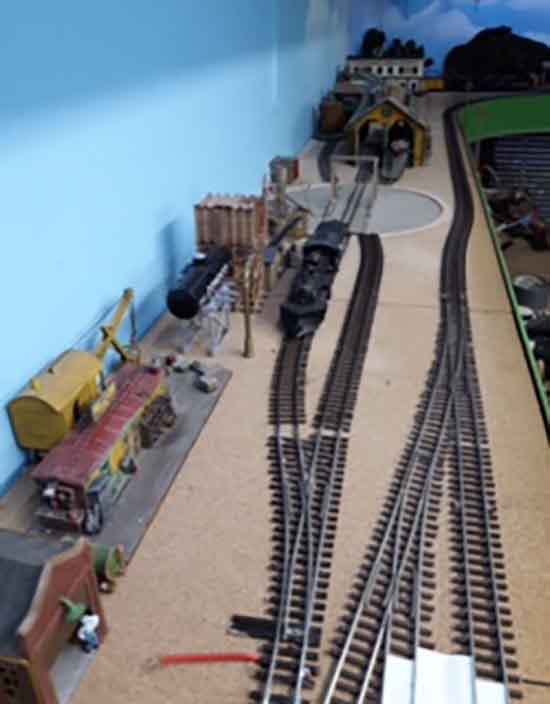
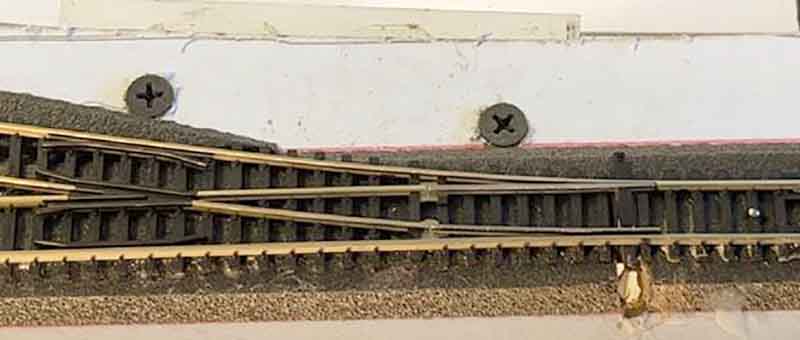
Now on to the first trackwork. I used Atlas code 80 N-Scale flex track and Atlas #6 Custom Line switches fastened to Woodland Scenic rubber roadbed.

The roadbed was first glued to the baseboard, then the track glued to the roadbed, in both cases using Woodland Scenic Foam Glue.

N scale laying track bench

On the curves I pinned the track to the baseboard with straight pins.

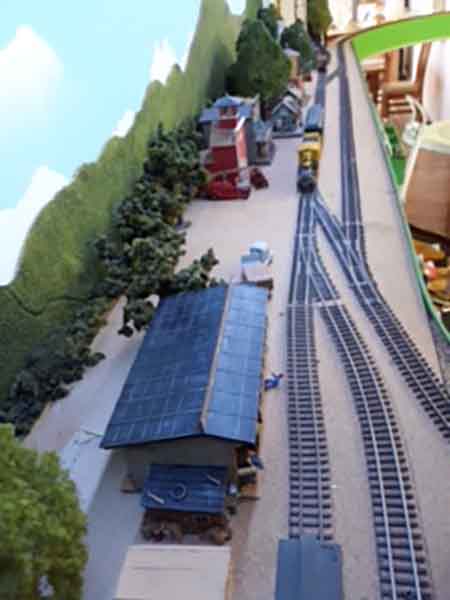
You can see two trains running below.

N scale testing track running trains

That’s all for now. In the next two future episodes I will:

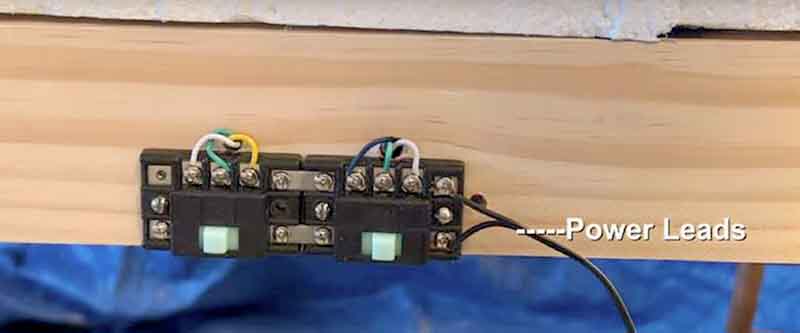
Add the remaining track and switch machines (ground throws and remote), wiring (DCC) then ballast.

Build up hills and mountains and cover all scenic areas with plaster cloth.

Thanks to all my watchers and subscribers for your continued support.

Dean from New Mexico”

(Here’s Dean’s last post, where he talks through his Atlas track plan.)

I always think of Michael’s layout when an N scale on a door pops up.


Now on to Ian :

“Hi Alistair,

My interest in trains started at the age of 6 yrs.

When I lived in Great Torrington, my father use to take me down to the station where I spent most of my time taking train numbers ( don’t ask me why).

During that time I got to speak to many engine drivers as well as the fireman. It was because of this that I was offered a trip on the footplate on the Petrockstow line.

Could you imagine that happening now especially with the so called Health and Safety rules.

I was hooked. It was then a built my first Tri-ang analogue layout.

After years of moving around Devon, Dorset and Norfolk I married a Weymouth girl whose father happened to be the Weymouth Station master and the second layout was built. This time it was digital, a train layout in a shed approx. 18@x15’ and was a very complicated layout.

About 3 years ago we moved house which had a long but narrow garden, once the house was in some sort of order a shed measuring 14’x10’ arrived on Nov 2020 somewhat smaller than I wanted.

Rob our electrician was summoned to wire up the shed on one condition that a cup of tea and a visit to the model railway construction was in order should any work be undertaken in the house.

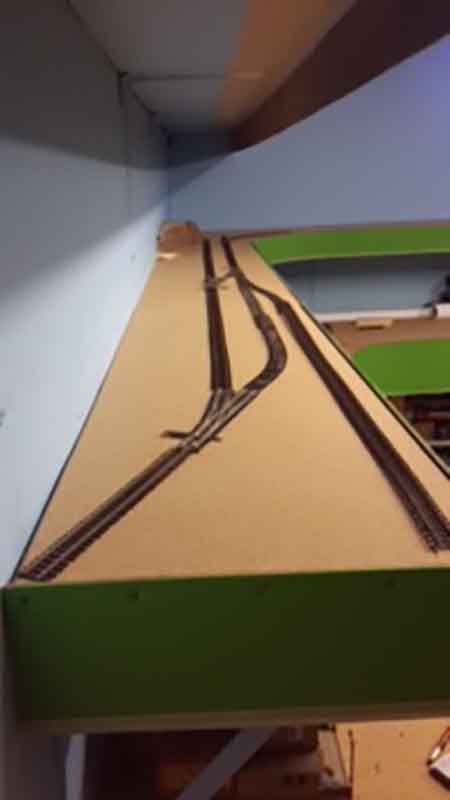
I had an idea as to how the layout should look so first the baseboard was constructed using 3/8” ply and 3”x2” legs which would support my weight, the base width itself was anything between 24” to 36” which gave me plenty of room for the marshalling yard etc.

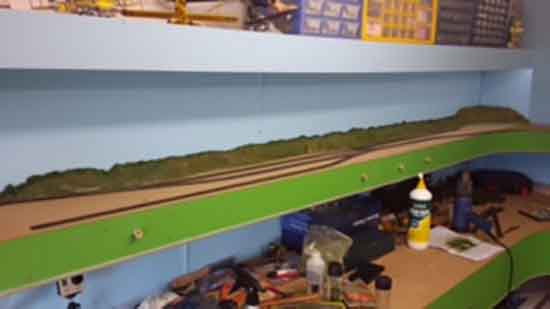
At this point a second base board was added underneath this ran the full width and length of the shed to incorporate a single track eventually ending up under the control board with four siding fiddle yards, entrance to the fiddle yard is via the tunnel nearest the wall.

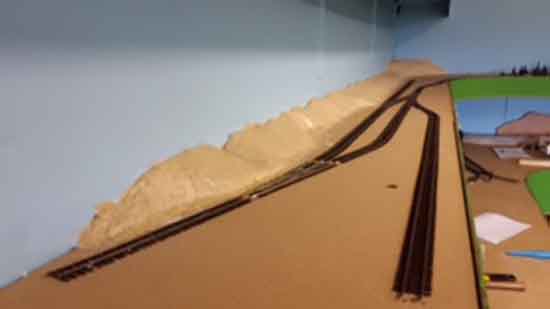
Inclines of 1” every 24” were made of ply/hardboard and covered in cardboard, mod rock and a thin layer of Polyfilla to give the rock effect.

Once the inclines, tunnels and bridges were in place and the whole thing wired up to the control board I ran several trains with various rolling stock to make sure of any mishaps.

Next was the Faller car system which I had from my previous layout, as you can see from the video the little VW Camper van run really well sadly only enough room for a single track.

Access to the shed was made from a sliding section 18”x24” (I hope I don’t put on any weight) which can be removed and stored when required, ballast and scenery were next on the agenda, buildings placed in various positions to give me some idea of how the scenery was to be created.

Two sections of the hills can be removed for easy access should a train become derailed, the first is behind the garage the second is in front which allows me to clamber up onto the base board to get to the far corners if required.

Only a 3rd of the scenery is partly finish if ever it is, I don’t want to shut myself in the shed for the rest of my retirement, so I joined a model flying club something I’ve always been interested in.

So dry weekends are spent flying, wet weekends are spent either in the shed or repairing the WOT trainer, for some reason the cornfield in the surrounding landing patch seems to jump up at the plane when landing.

I’m not a model train buff and I’m sure some of you will look at the layout with disapproval especially the way the building etc are placed but to me it’s the way I see it even if some of the engines are pulling the wrong rolling stock, it’s all in the satisfaction of scratch building and running the trains achieving something on your own.

Ian”

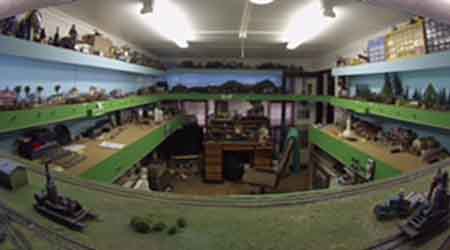
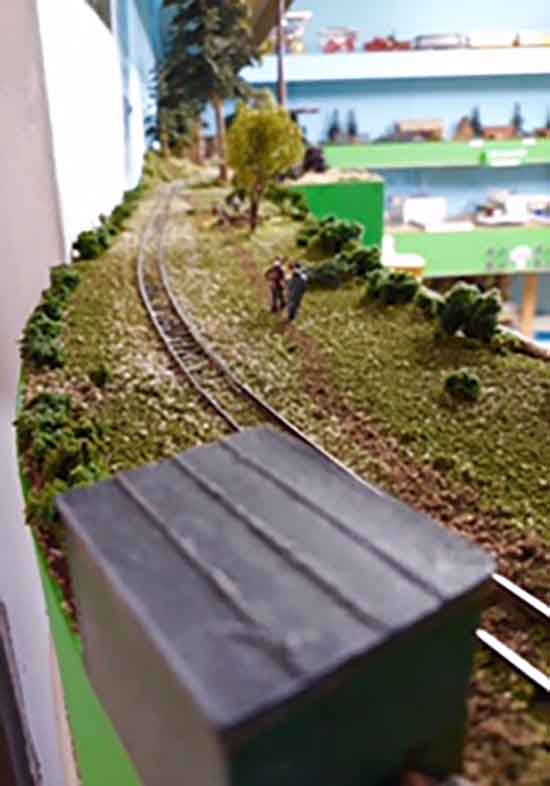
making model train layout in shed

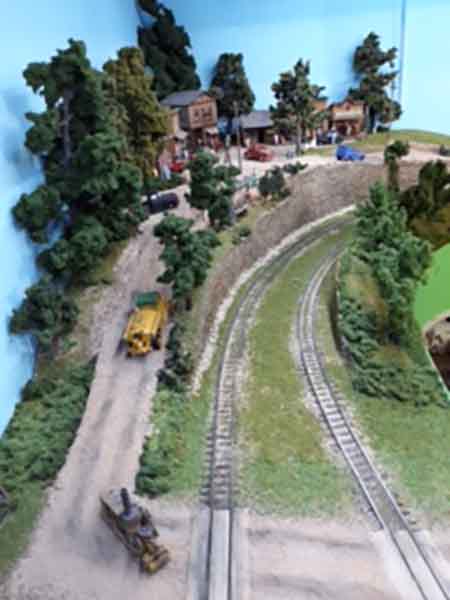
making model railway tunnels in shed

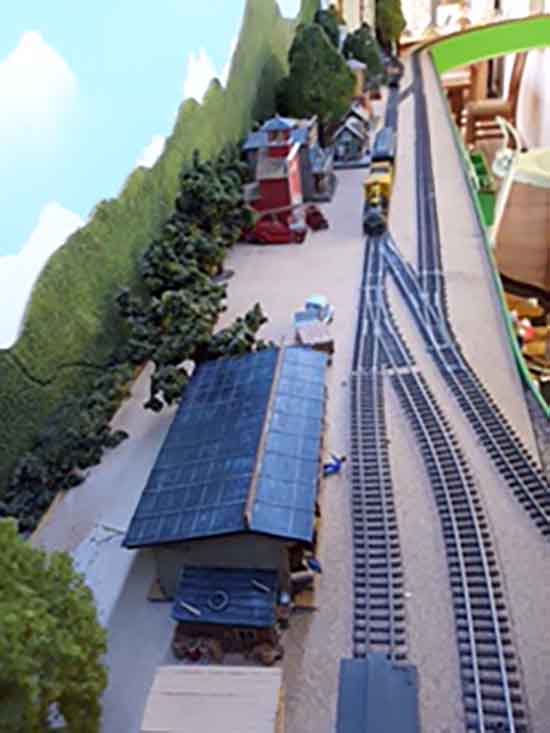
model railway sidings train layout shed

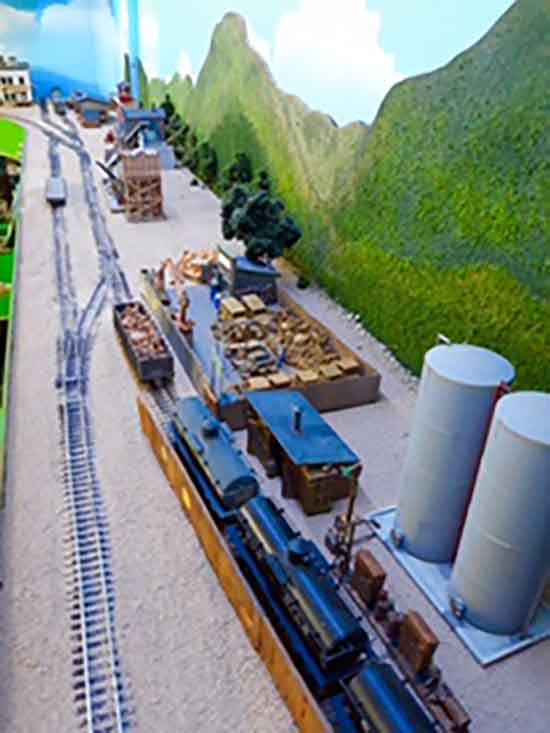
model railway embankment train layout shed

A big thanks to Dean and Ian.

That’s all for today folks.

Please do keep ’em coming.

And if today is the day you decide you’re missing out on all the fun, the Beginner’s Guide is here.

Best

Al

PS Latest ebay cheat sheet is here.


Model train bridge

John’s been back in touch with his very impressive model train bridge:

“Hi Al,

As mentioned in one of my last missives, the layout move from the basement to the attic is progressing, all-be-it slowly.

The last few weeks I’ve been working on getting the mainline trestle set in the new valley and river.

I also installed a long conveyor structure to take raw coal from the mines to thecrusher/loader. I think that detail came out pretty good, some pictures below.

I also had problems with the tracks around the big mine building, so I extended one out over the valley, I decided this will be an area where I can shuffle cars with a little yard engine, it’s long enough that it should allow the little engine and 2 cars.

Back to the trestle. I got 2 kits from a successful auction bid and set out to make the bridge, I had an idea for the width of the valley to cross, and built roughly to that dimension. Having 2 kits allowed me to have different heights of bents (supports) than what the kit guys had in mind.

Once the bridge was completed, I added little dense foam “supports” under each bent. The reason is that in the picture on the kit box lid the kit guys simply showed the bottom wood on the ground.

I then spray painted the whole bridge rust then black, I’ll use this as a base for weathering the whole bridge after I get it in place and scenery around it.

I’ve found that weathering structures before placing them often results in weathering that appears out of place with the surroundings and needs to be re-done or at least substantially touched up.

With the bridge nearly done, it was time for the valley. I use a few tricks to place my bridges.

First is to attach wood with some wire to the top area where the track will eventually go, then place the bridge across the opening.

Another trick is in one of the pictures and shows how I glue the screen to a cardboard shape that’s cut to the shape of the bridge bents. This is always approximate because working with screen and plaster is rather… uh… imprecise.

I then have an idea where I need to place the foundation support for the bents. I use aluminum window screen as the base for the plaster hard shell, it can be stretched and formed pretty well and is relatively inexpensive.

Also don’t worry about the size of the screen pieces because it’s easier to attach screen on the framework leaving space for getting in close and being able move around.

Later, the other screen pieces go in to close any holes, I use hot-glue to sew them together.

Dense foam insulation is used for foundations some walls and filler in placed where needed. It’s easy to cut to size, cheap, and takes paint well after a very thin coat of plaster is added at the same time the hard shell is being done.

Once the foam “foundations” are hot glued in place on the screen I can start applying the plaster, which is premixed sheetrock compound with dry sheetrock compound added. This allows me to control how fast the stuff dries.

With some experimenting I have it figured out to be workable for around 20 minutes. I mix small batches and apply the compound with small artist 3/4″ paint brushes, this ‘forces’ me to take my time and actually do some crafting of the landscaping, cliff faces, structure bases, and hill locations.

By applying the plaster horizontally with the brush, the rock strata is easier to simulate, sometimes just painting works well enough especially when lots of trees are planted in areas where the “ground” is not as noticeable.

Having the hard shell done with the supports for the bridge allows the bridge to be removed for painting and landscaping. I made the mistake on an earlier layout of getting impatient and gluing the track to the bridge with some plaster and creek bed not completed so I could run trains, then had to stand on my head to get the scenery done! Never again!

Anyway, the sequence of the pictures shows a more, shall we say, patient approach. This is particularly evident in the bridge in the background, as well as the conveyor system and all being completed before starting on the big trestle (but waiting was tough!).

Last pictures are the valley painted and the bridge set in place. Next is trees, scenery in the valley and water in the river. This project from the first pictures to the last of the bridge took about 16 hours, not counting the building of the bridge, scenery and track will be another 8 or so.

Thanks for all you do for the model RR fans across the globe!

John from Baltimore”

HO scale mine

HO scale mine track

plaster for mountains


card for plaster model train

gluing screens for model railroad mountains

HO scale girder bridge

HO scale model train bridge

bridge oiers ho scale

plaster for model train bridge

HO scale model train bridge

HO scale bridge with scenery

HO scale bridge with track

overhead view bridge

overhead view model train layout

A huge big thanks to John for sharing his model train bridge build – he really is the gift that keeps giving at the moment.

If you missed his missive of tips, it’s right here.

There’s also the post on his lift bridge too.

And now on to another John – Bonkers John as I call him:

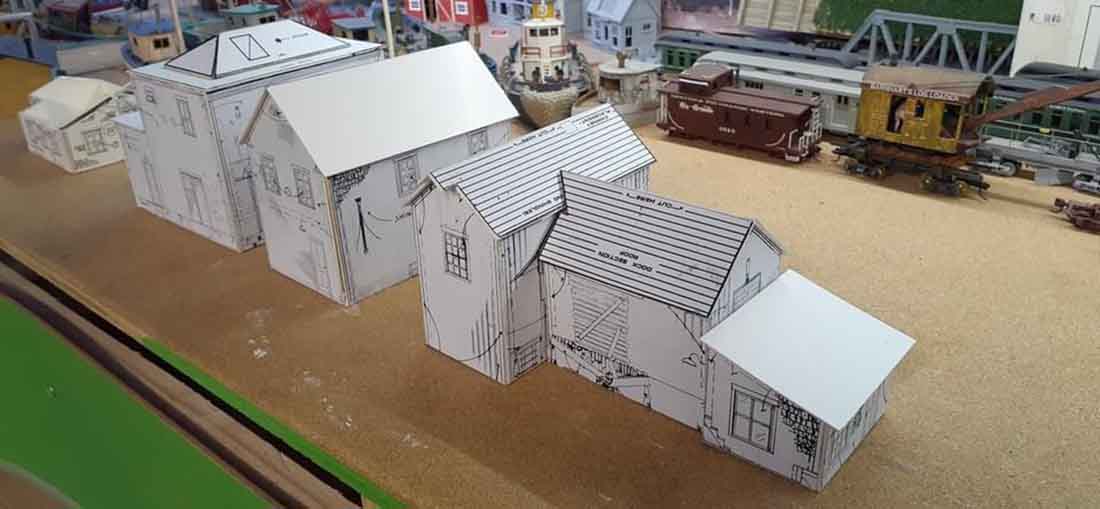
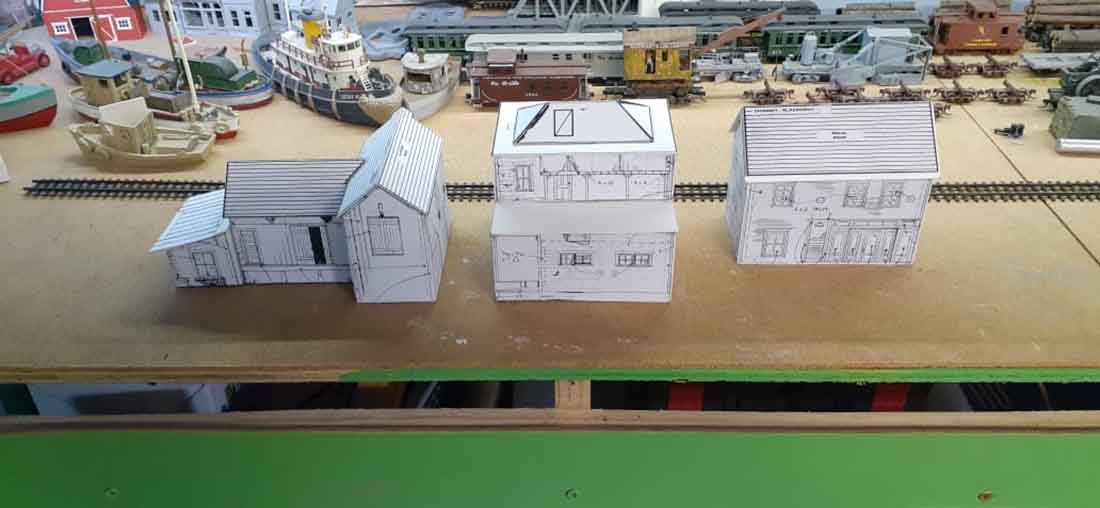
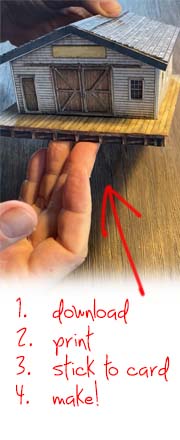
He’s been busy on the latest printable buildings, and as always, he’s done a great job of putting them together.

If you are unfamiliar with the printable buildings, you just download them and stick them together:


(Watch on youtube here.)

Here are the three new buildings:

printable building

printable building

All the buildings are HO scale. Just reduce the print size to 54% for N scale.

printable building

You can print as many as the buildings as you like.

printable building

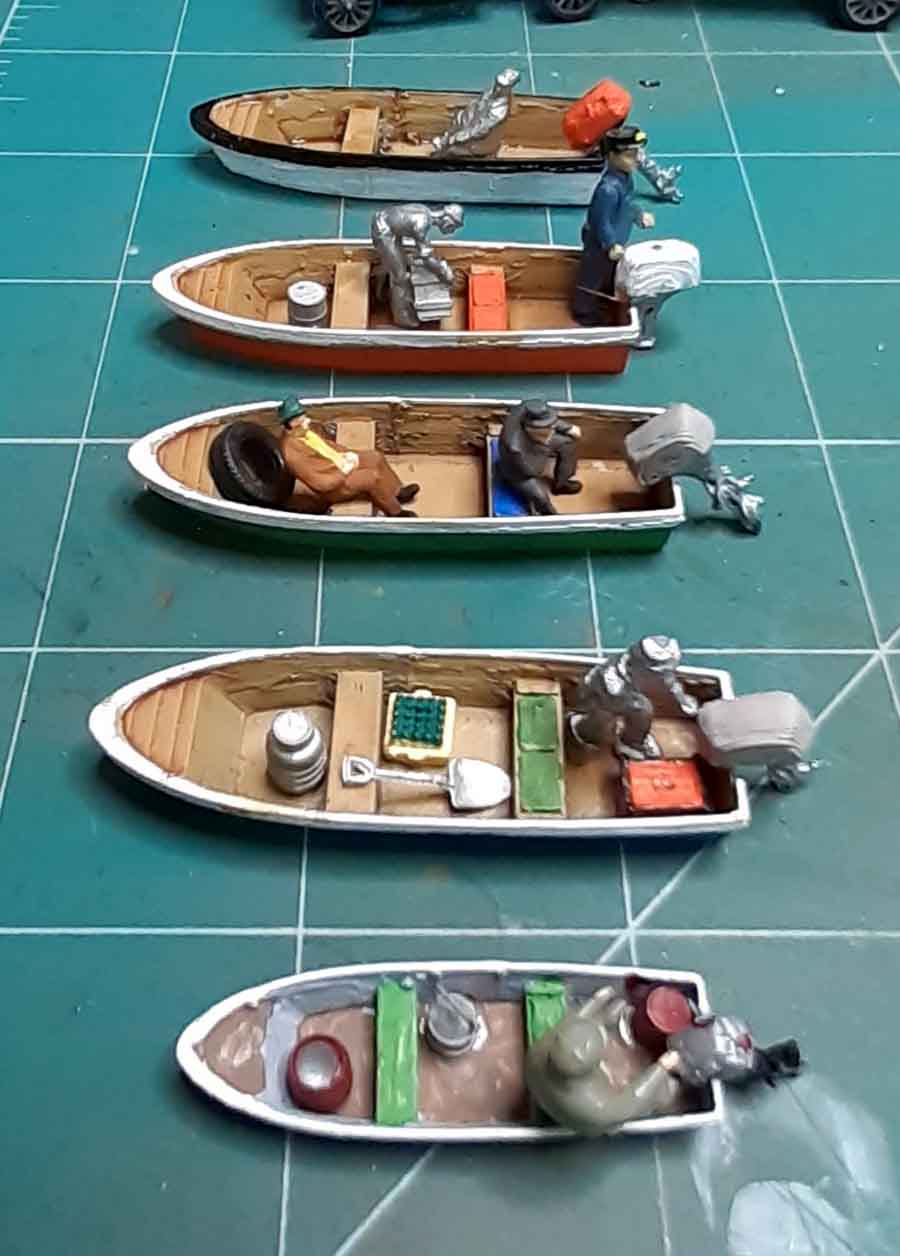
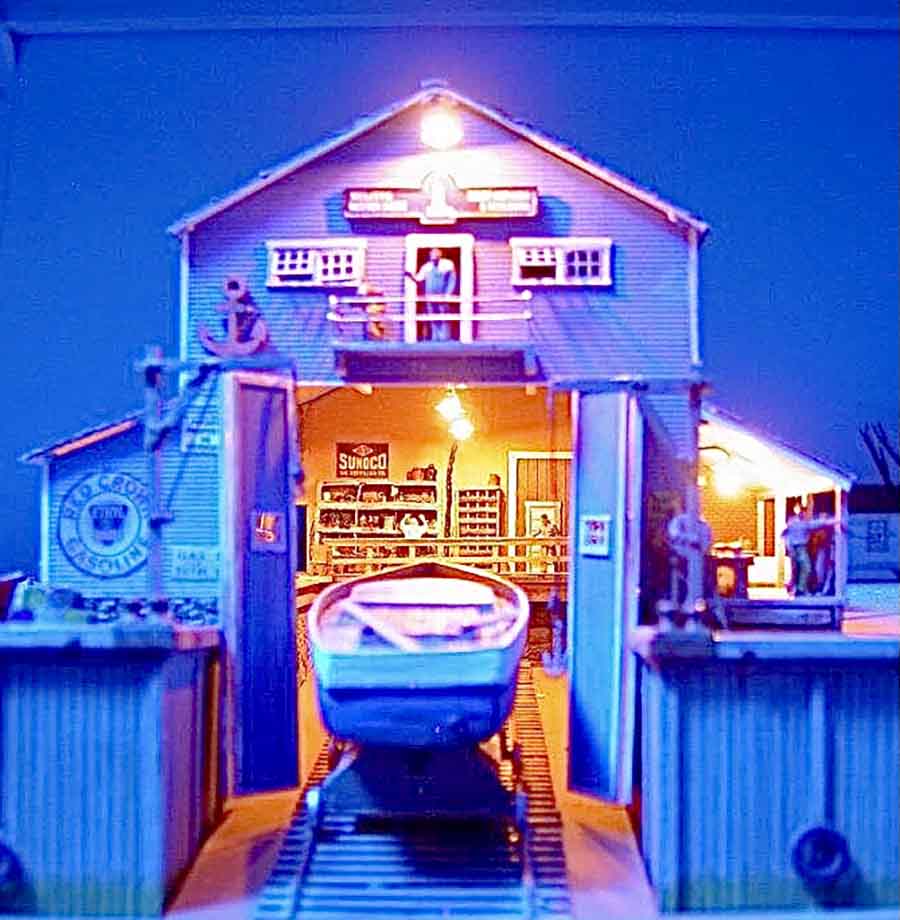
When you mix and match the buildings, you can get some really nice effects.

printable building

And best of all, you can get these three new buildings – and the latest track plan PDF – for just $9 over the next few days.

Volume 3 of the track plans is made up of another 20 track plans – all new, and featured on the blog, with the links to the posts.

If you’ve enjoyed the blog over the last few months or years, please do help it out and grab the new buildings and track plans.

To keep things simple, I have bundled the new buildings and new track plans PDF with the Beginner’s Guide, so even if you’ve already got the Beginner’s guide (I know many of you have), grabbing it again gets you the new buildings and the track plans.

It just makes it loads easier for me to do it this way.

And of course, if you’re new to the blog, and you’ve not got the Beginner’s Guide and all the bonuses, now’s the ideal time to grab it.

You’re saving $20 on the Beginner’s guide, and $27 on the new buildings, and $10 on the latest track plan PDF.

That’s a whopping $57 saving, and you’ll be directly supporting the blog too.

So there’s big savings to be had, and you’ll also be helping to keep the show on the road too.

buy

Don’t forget, there’s a 60 day money back guarantee on all of the products – the buildings and everything else – so you really have nothing to lose.

You can grab the new buildings and the new track plans PDF here.

Best

Al

PS More HO scale train layouts here if that’s your thing.
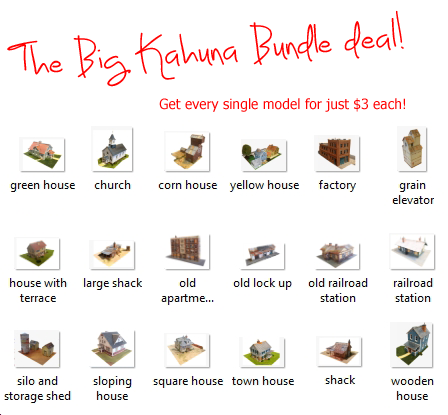


Need buildings for your layout? Have a look at the Silly Discount bundle.

Model railroad tips – John’s

John’s been back in touch with some very good model railroad tips:

You’ll remember him from his last post, which included a very impressive lift bridge.

Here’s a pic to jog your memory:

HO scale lift bridge

But perhaps you’ll remember him most from his previous mountain layout:

Well, he’s been kind enough to send in these tips after I posted things were a little thin on the ground this end:

“Al,

A couple of quick tips.

1) Tired of ballast sand going everywhere but in between the ties?

How about painting the cork roadbed to look like ballast – paint it all grey, then dry brush black.

Looks pretty good, and no sand in the points!

fake ballast

HO scale fake ballast

model train fake ballast

2) Need quick and easy tunnel liners?

I make mine from 2” dense insulation board, easy to punch a hole with a hole-saw, then trim with any saw.

Paint black and trim as needed, as an example on several on my tunnels, 2 sections cut in half (can’t see the side closest to the viewer), hot glue and done.

model railroad tips  tunnel liner

model railway tunnel liner

model railroad tunnel liner

tunnel liner


3) Need a quick way to carve in strata rock on a cliff?

I use a course wire brush, and try to time the drying of the plaster so it’s not super hard, but won’t clog the brush.

Works pretty well I think.

model railroad tips rock carving

rock face model railroad tips

More later.

John From Baltimore”

A big thank to John – some very useful tips.

I have to agree as well, I think his rock faces look spot on. And so simple too.

Now on to Rob:

“Hi Al,

I’ve got another video for you.

This time I packaged up all the track laying wisdom I have learned over the last 12 years of building layouts and laying track.

In all I pass along 12 items of experience. It has proven very popular on my channel.

I hope your readers can find a nugget or two that will help them.

Rob”


Thanks to Rob and John for sharing his model railroad tips.

That’s all for today folks.

Please do keep ’em coming.

And if today is the day you stop dreaming and start doing, the Beginner’s Guide is here.

Best

Al

PS More HO scale train layouts here if that’s your thing.
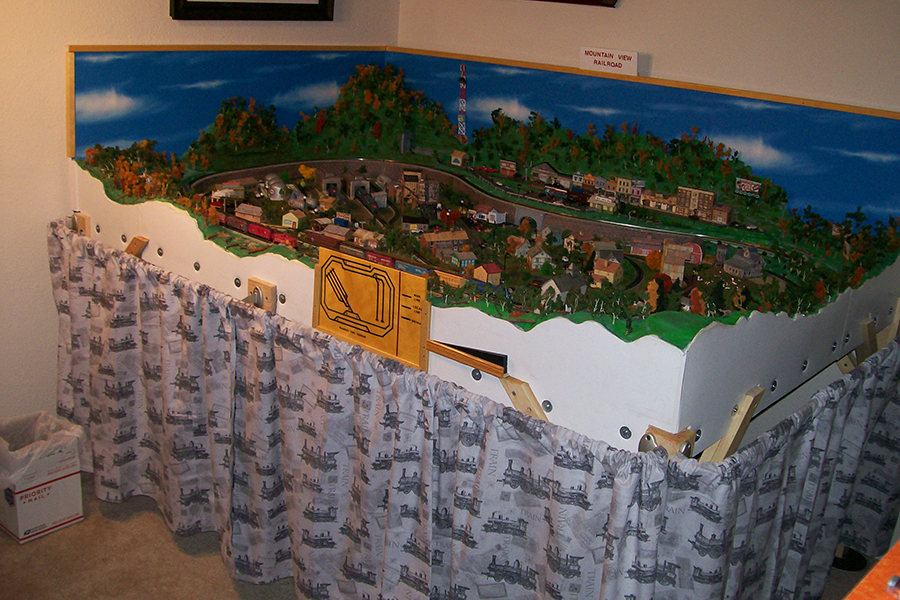


Need buildings for your layout? Have a look at the Silly Discount bundle.