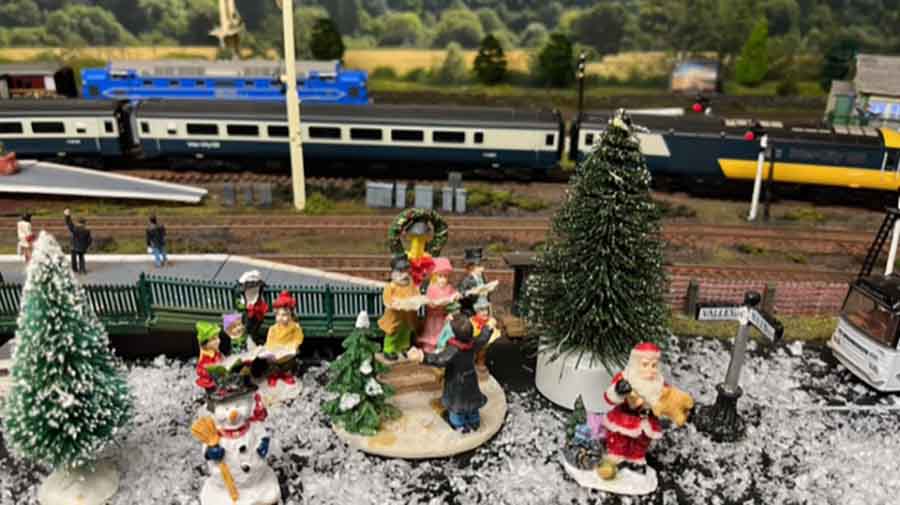
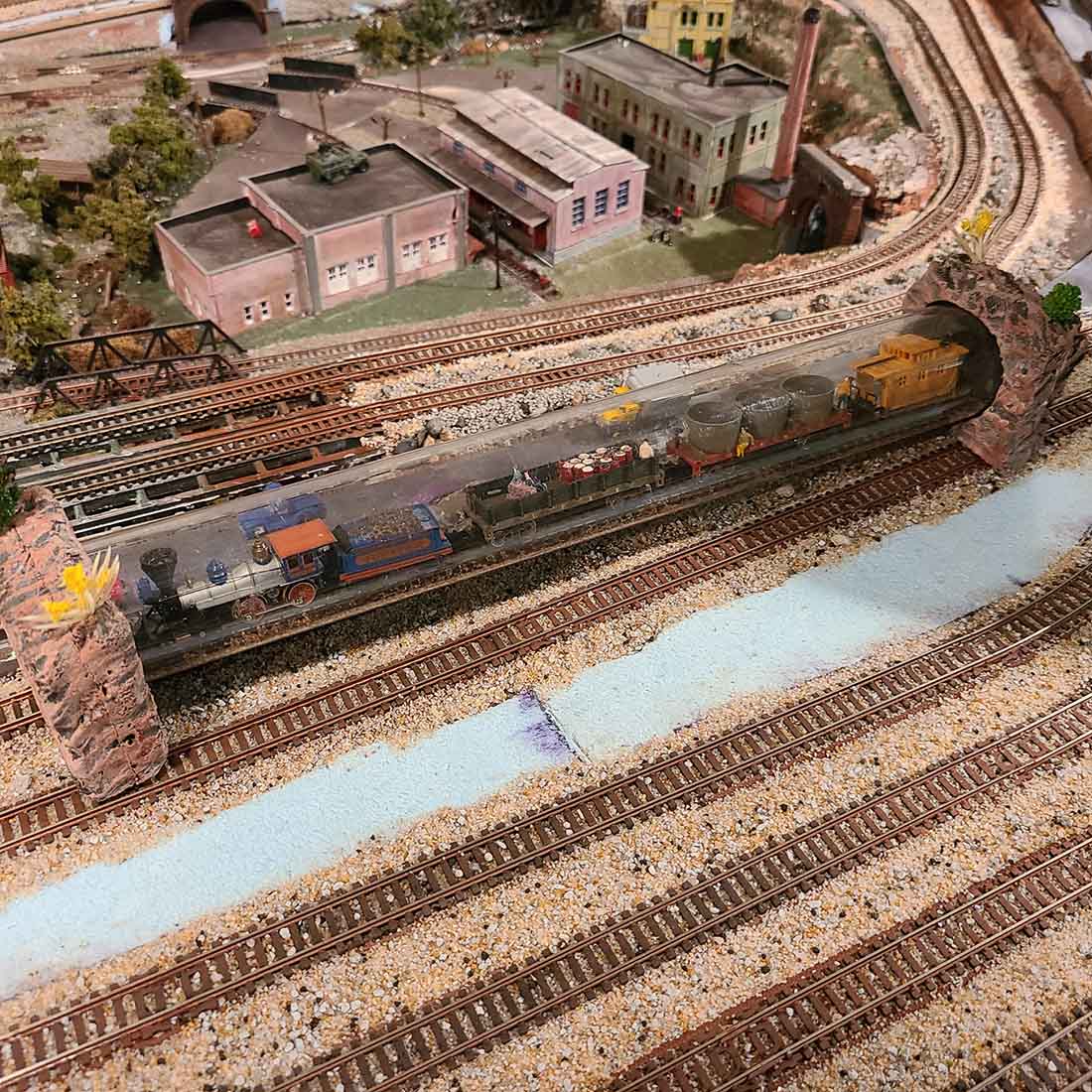
How to get good videos of model trains

Brian’s been back in touch with a very short but useful youtube on How to get good videos of model trains:

“Hi Alastair,

This submission a bit different than what’s normally seen here. I do note that more and more model railroaders are taking advantage of the television studios in our pockets these days, aka Smart Phones.

A bit of background. My career was in television news and corporate communications. As a News Director and Executive Producer I got to work with some very talented videographers. Later in corporate communications working with some major television providers I continued to see how video equipment became less bulky and more importantly less expensive.

Technology as you well know, and you prove it with the work you do here, empowers us all to tell our stories, including model railroading.

One thing I do see however, is so many people holding their smart phones vertically instead of horizontally when shooting video. Sort of like turning your big screen tv on its side at home. You get a narrow picture with black bars on each side instead of the full 16×9 ratio we’re used to seeing on TV and our Digital Devices.

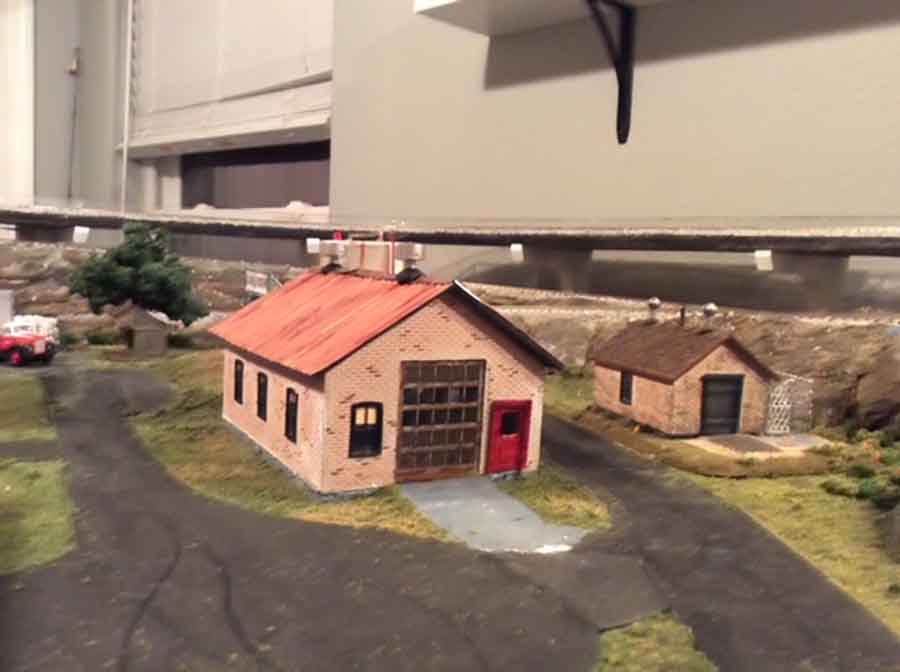
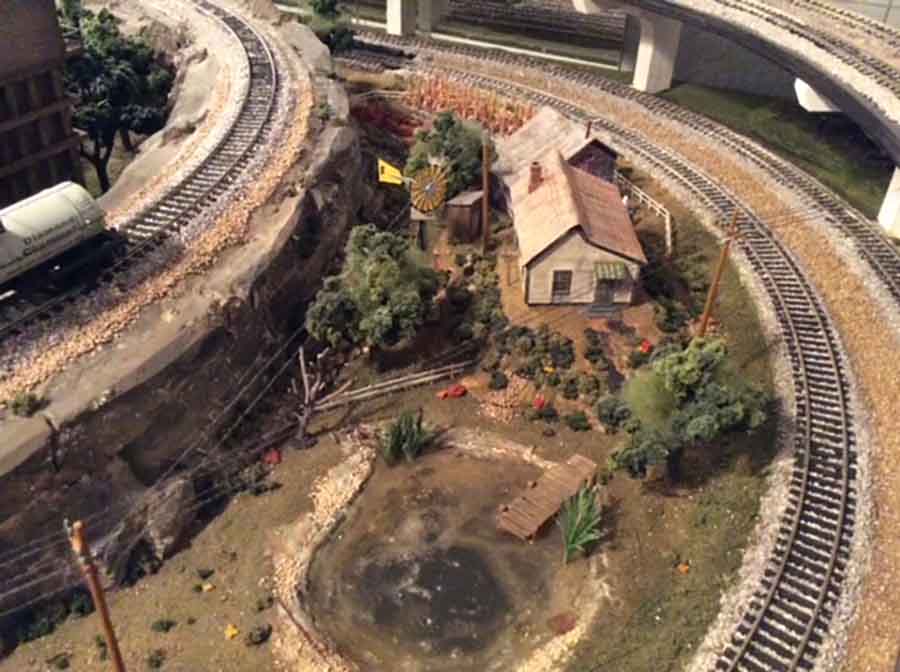
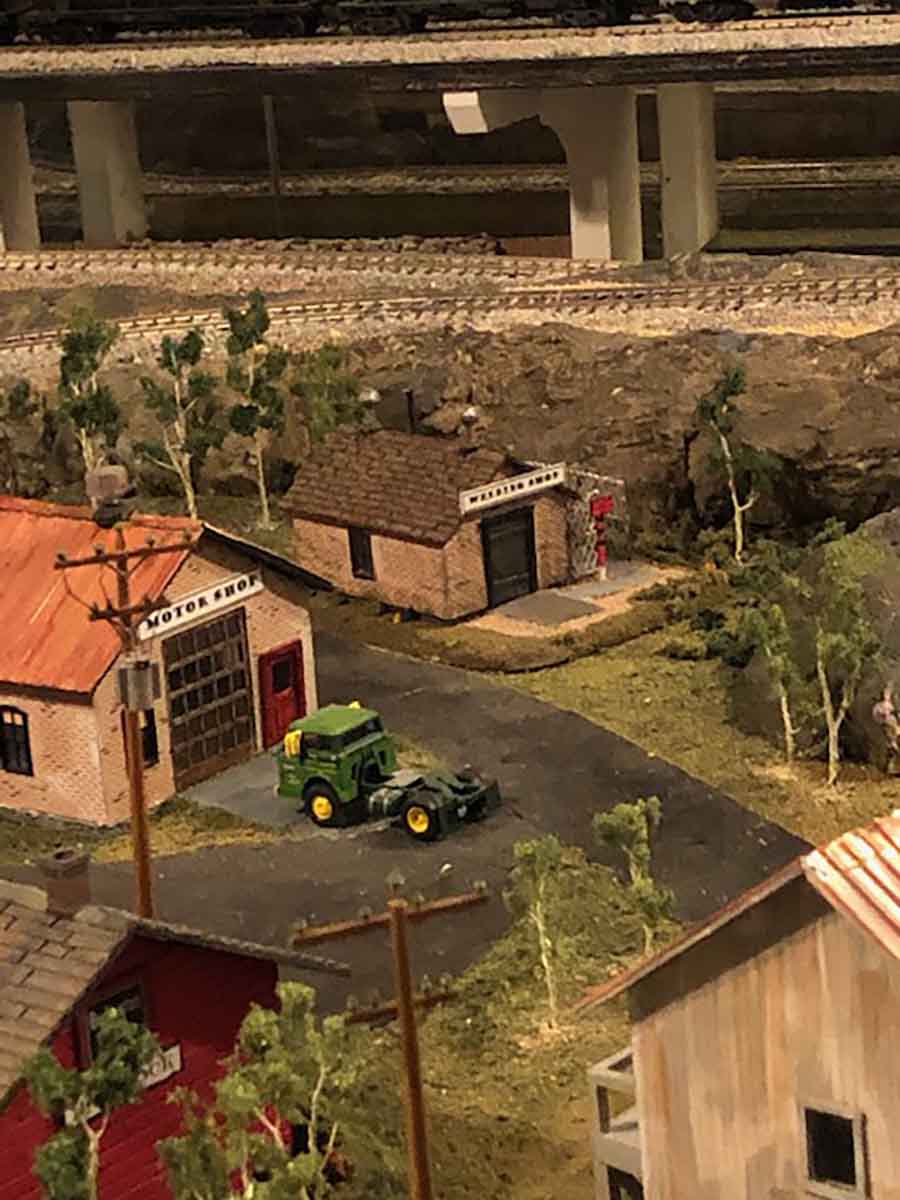
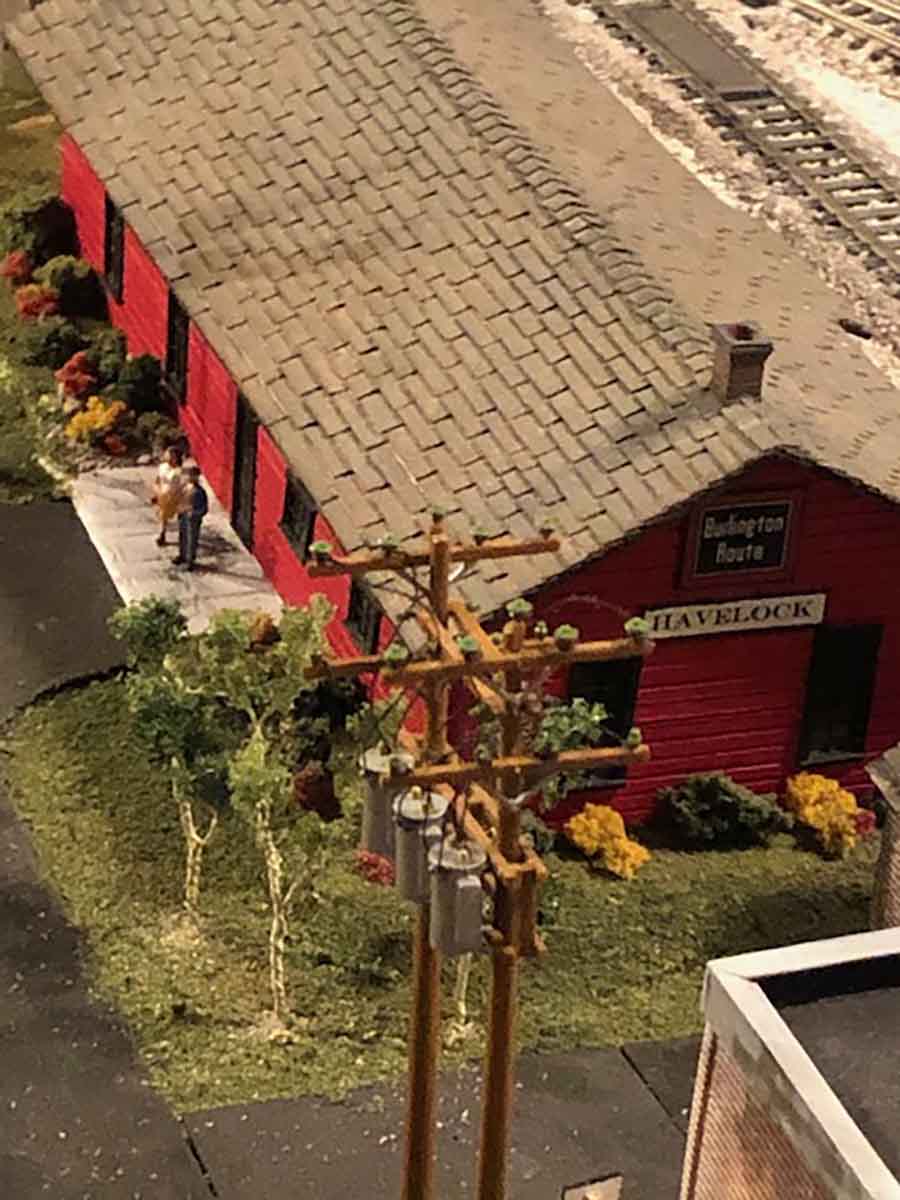
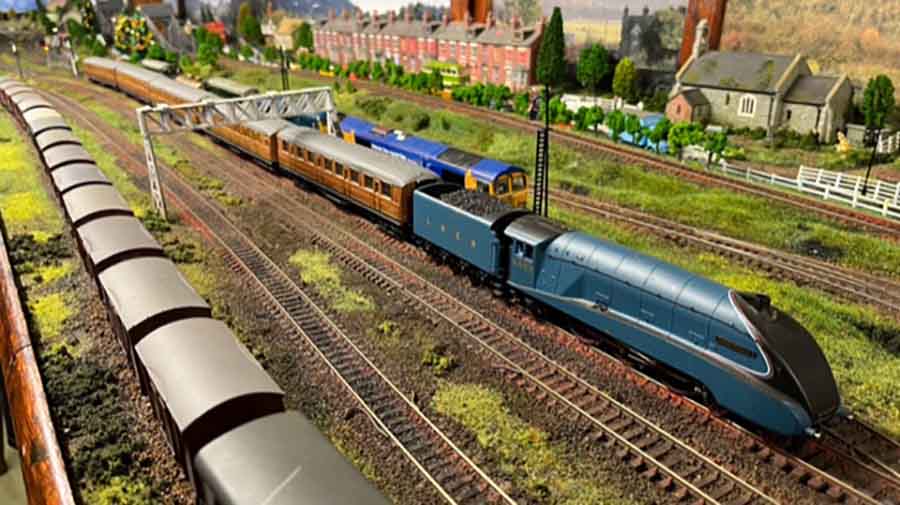
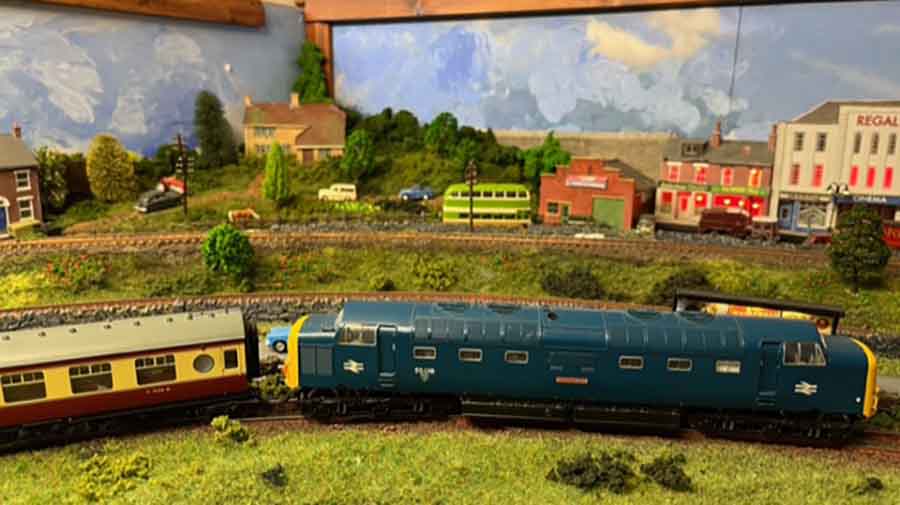
So here’s some comparison shots of the same scenes from my own model railroad, first we see vertically, then horizontally. There is a difference! The second example I’m including is something called video sequencing. In this case a locomotive leaving the roundhouse, going on to the turntable then heading out for work. I shot the same scene three times from different angles then edited the sequences together. The technique adds interest for the viewer.

Video editing is a skill set for sure, and I get to use it all the time with some pretty fancy productions. But like the equipment, video editing software like iMovie is so intuitive and easier to use than one would thing. And yes, empowering.

You just have to give it a try!

So here’s the video:


Brian”

A big thanks to Brian – I do get quite a few mails asking about How to get good videos of model trains – Brian’s youtube is very helpful.

Hall of Fame Rob also has a very good video on this: Filming model trains.

Now on to Kim:

“Hi Al.

These are my sidewalks .They are not tacked down yet or painted yet.

I used the shelf trim with the glue side up to walk on.

Then i used coffee stir sticks to stiffen it and to raise it up. When glueing the sticks, stagger them to keep it stiff.

I added a strip onto the bottom and attached to the stir stick’s to act as water guttering (warning Al, don’t use white glue as it wont stick well). I use instant glue.

To turn left or right with the sidewalks, place sticks left or right as in photo.

When you finished a section, take fine sandpaper and run it along the road side of the sidewalks yo make it square and smooth. Then glue a small strip to make the guttering.

Now for the 1/100 scale or Ho scale bike. I used left over Led posts ya cut off. If you are really interested in how to make those bike’s i will send in a more informative way to make them. Was pretty easy. But i think you agree and use the word dang it’s small, honestly Al.

I think my bikes look more realistic than any plastic bike you can buy at this scale, if you can get them and i dont think ya can. Seat and peddles will be added later.

Im trying to make a sort of jig to follow how to make a mass amount. I could see a bike race on the road with these. I also attempted a kids bike. Now understand,this is my first tiny bike, so wont be perfect.

Tell me what ya think.

Can ya see a bunch in a bike rack in front of a store or something, or a bike shop?

Kim”

how to make model train sidewalk


“i have a tip,i make a lot of stone walls,i first coat the screen or surface with plaster. after its dry i mix another batch with what’s called rainbow cement color (its cheep) comes in black or red,a little black makes gray.

i then coat the surface with almost smooth surface.let dry and take a small screw driver and drag across the surface to make bricks,the red really looks like brick.the screw driver goes through the red or gray layer and makes motor joints.

Mike”


“I use the plastic sprues left over from a model. I take them and use them for metal piping for oil refineries, gas stations, rooftop vents, etc. I also use them for scenery, pipe loads. I cut them down to the size of the load, I also drill out the ends, and then paint them whatever color you need to give it a more real appearance. I don’t have a pic handy, but I just made a fuel island for my truck stop. Hope someone can use this idea.

John”

And lastly, on to Michael:

“Interesting stuff. In case it might appeal….I’m an Englishman living in New York…building my second ‘N’ scale layout with the help of my stepdaughter who is now 32 yrs… the first one we made was in California when she was 11 yrs.

The whole point of this one is to use as little as possible things from the model shop (which are lousy in NYC anyway) and also to make it as individual and asymetric as possible…. it’s going to be a sculpture/diarama of New Mexico that happens to have trains.

My rolling stock is nearly all pre-owned (second-hand things) that we bought as ‘broken’ and rebulit/painted whatever…the baseboard is an open 3’x3’x3′ cube that the scultor downstairs in my factory/loft used to put sculptures on, covered with teo sheets of plywood from the dumpster….the furniture factory on my ground floor supplies foam that I grind up for foliage etc and we collect coffee/tea for ground cover/ballast etc.

We break ALL the rules..train liveries are all my designs, passenger cars all lit with their own LED/batteries inside…I have a flair for rebuilding locomotives, old pre-war American ones are particularly tricky in steam (the first trick is to put current pick-ups in the stupid 8 wheel,2 truck tenders so that the short wheelbase 6 driving wheels don’t stall on the turnouts (points) …the list goes on…just thought it might be of interest..specially ” What Not To Do’ written in a funny, entertaining way.

My loft overlooks the Harlem River by the Park Ave lift bridge which carries ALL the trains out of Grand Central (sadly now only boring details) and there is a freight line IN THE RIVER on piles which takes the CSX garbage trains from New York to Virginia twice a a day so I am not lost for references.

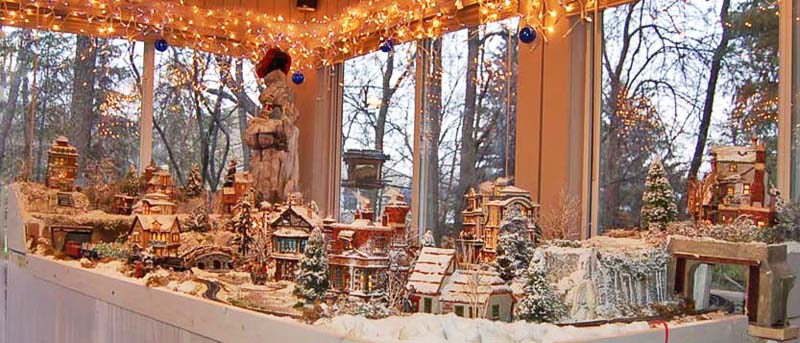
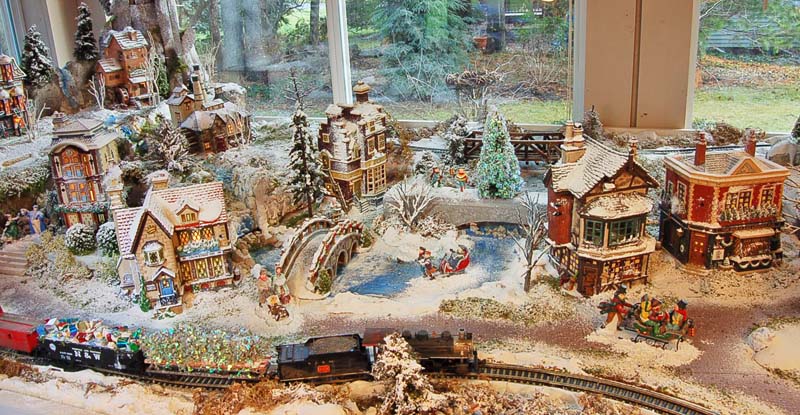
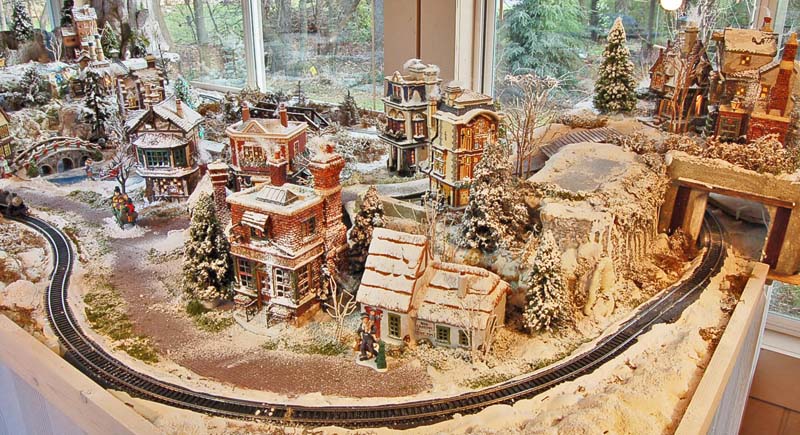
Here’s a few pix of how we have progressed since December

Michael”

model train bench

model train bench

model railroad making mountains

model railroad track plan

model train two level track plan

model train track plan

model railroad testing track

model train layout

model railroad layout

model railroad layout

model train layout

model railroad

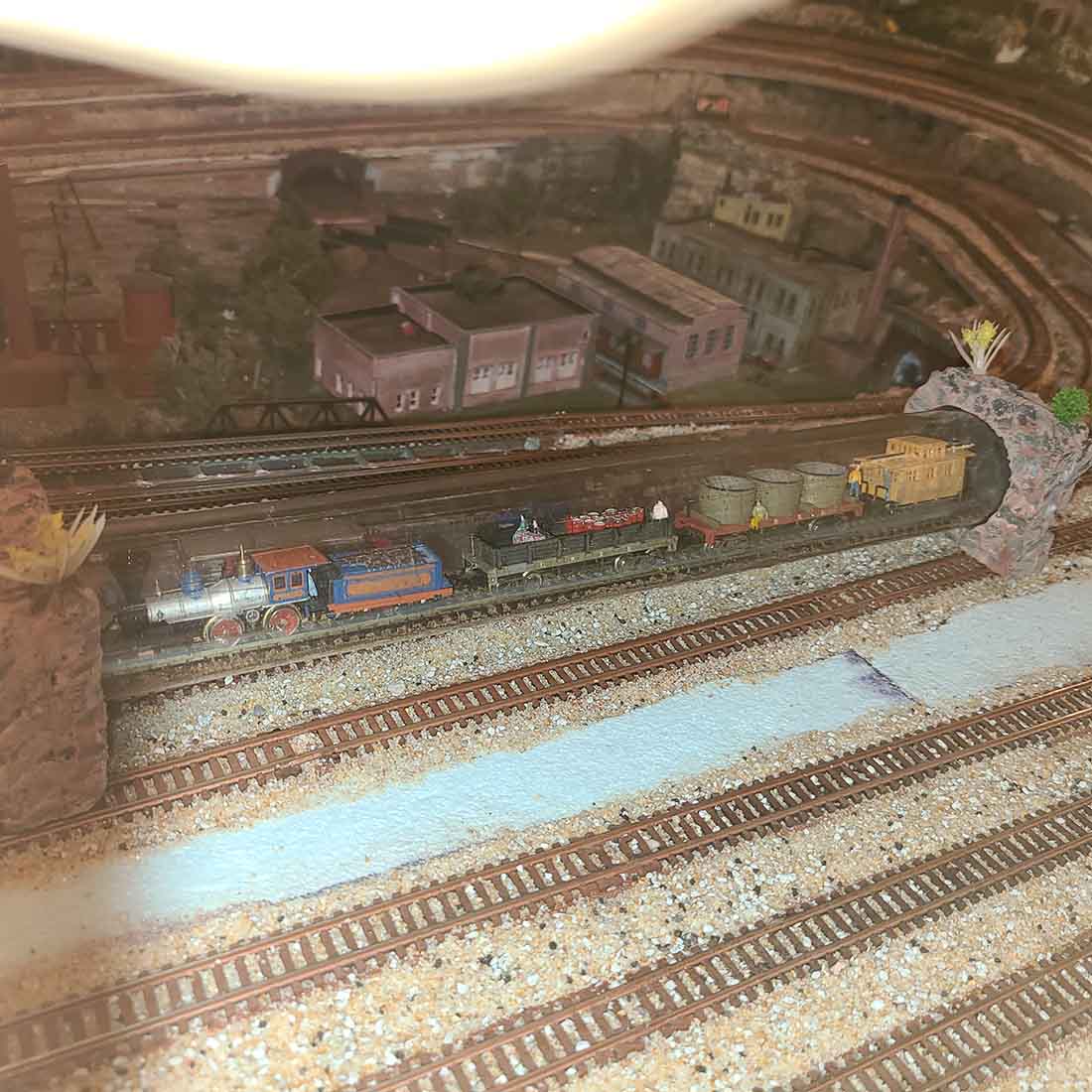
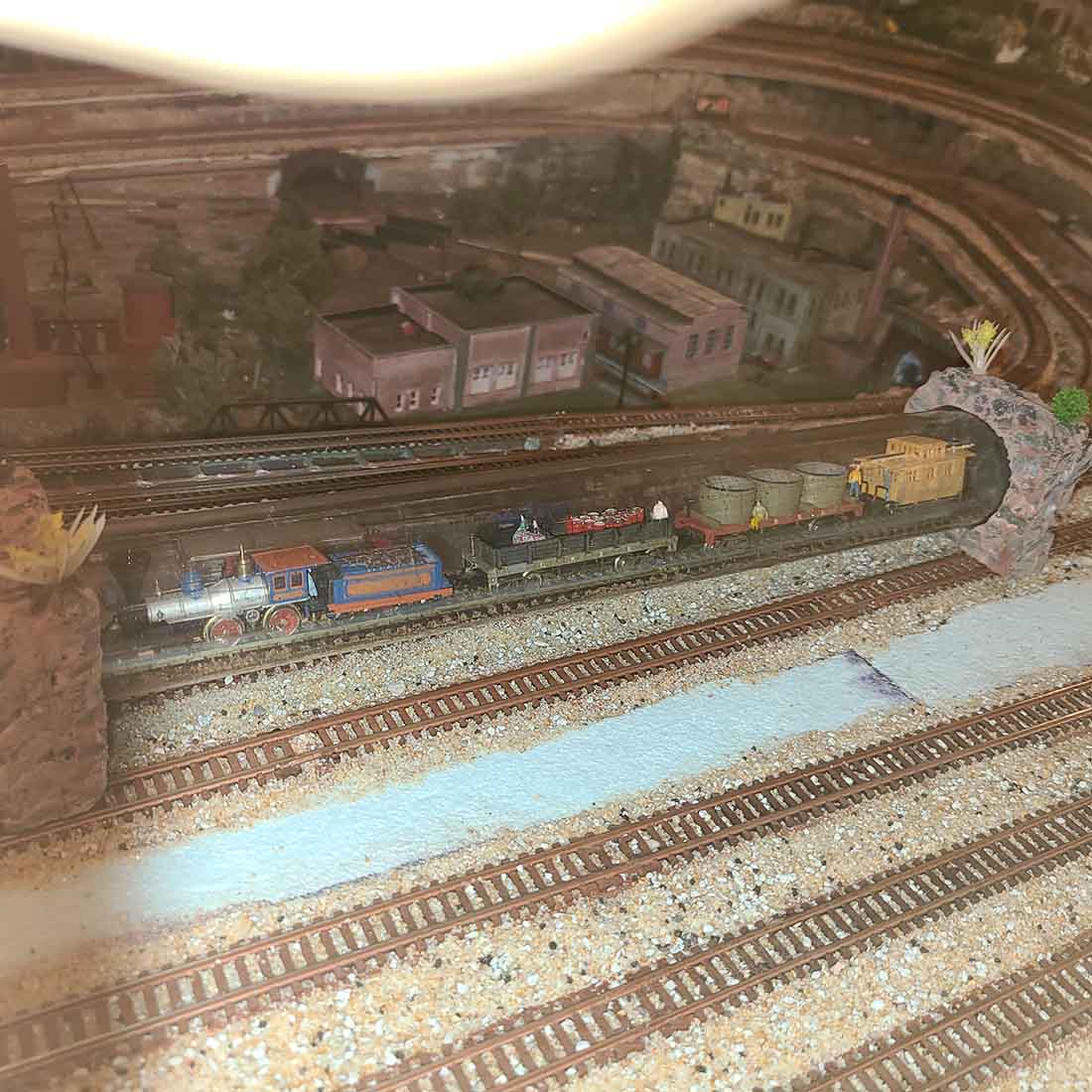
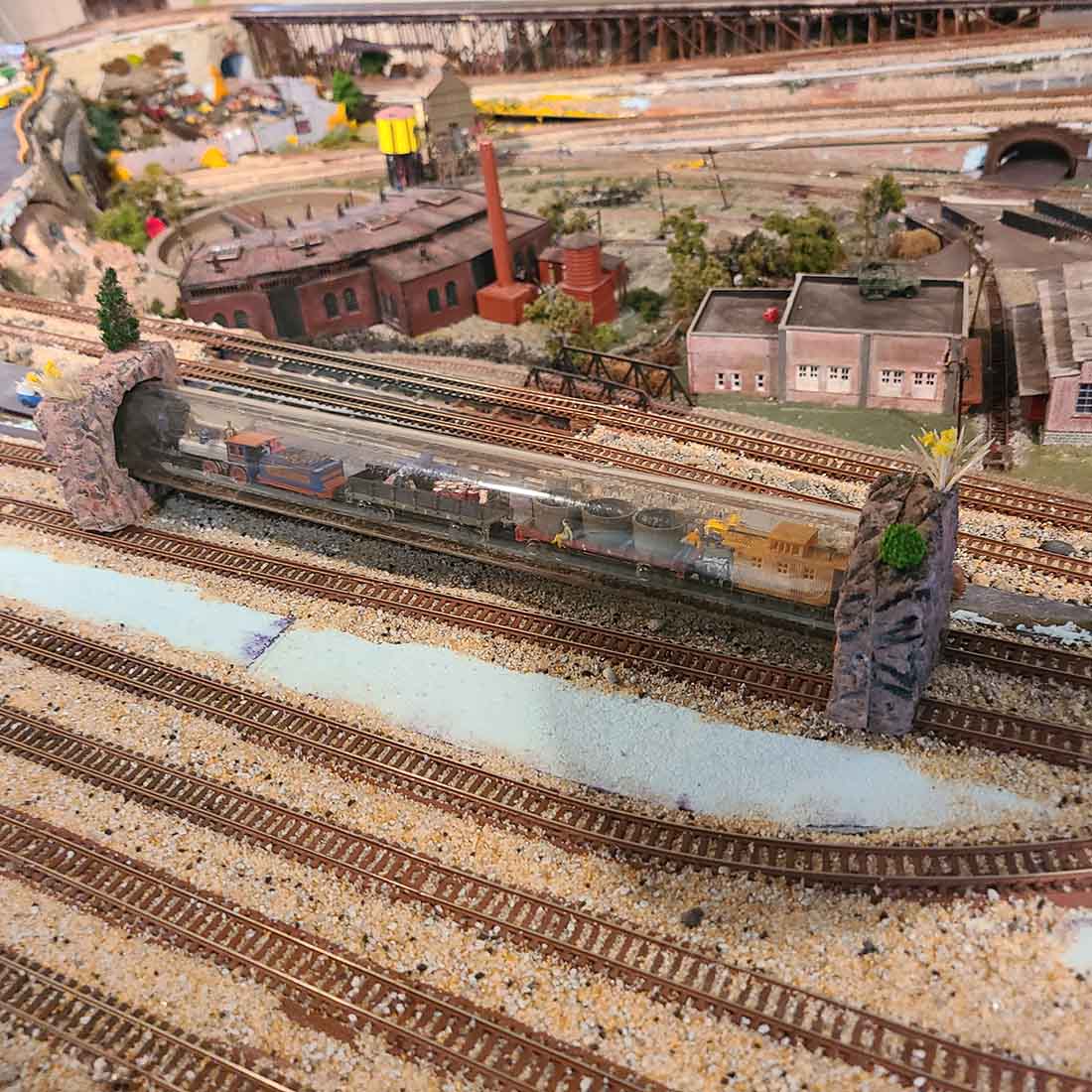
A big thanks to Brian for his how to get good videos of model trains youtube, and to Mike (his layout jogged my memory: N scale canyon layout.

That’s all for today folks.

Please do keep ’em coming, because it does feel like you’ve all gone to sleep from this end.

And if today is the day you stop dreaming, start doing, and join in the fun, the Beginner’s Guide is here.

Best

Al

PS Latest ebay cheat sheet is here.

PPS More N scale layouts here if that’s your thing.


printable buildings

And there’s the Silly Discount bundle too.

HO scale bench work

George has been in touch – he’s shared his HO scale bench work tips, all found out the hard way.

I always think it’s an overlooked part of the hobby.

Get it wrong and it makes the rest of the project an uphill battle:

“Hi Al,

I thought I would share my thoughts on my HO layout after it has been around for some time and has proven structurally that it is a viable solution for all HO and smaller scales.

It consists of a baseboard frame of 1×4 with minimum framing, 2×4 legs (6) & a minimum 3/8” to ½” plywood top, and it is only 2’-6” high.

My layout is 5’x12’ & requires some thought how to frame it with 4×8 ply & I am not going to into those framing details here.

On top of this frame is another one made up of the white compressed fiber board, 1 ½” thick, with 9” high fiber board joists on 16” centers.

The total height of the assembly is 3’-4 ½” which is OK for me. DO NOT use the pink insulation it is not strong enough. Use pink for scenery on top.

HO scale bench work diagram

HO scale bench work diagram with wiring

The reason for all this is that I don’t have to crawl under the ply for wiring. The under switch motors wound up close to edges and are do-able and cut the joist where you have to.

Pros:

    This HO scale bench work easy to install track, wiring, devices, and adjust heights for more complex schemes.

    Light but strong enough that warping was not an issue.

    You have a space below the track for transformers and complicated stuff.

Cons:

    Not strong enough for anything larger than HO.

    U shaped layouts need some thought about access.

    After a long time to prove this system is strong enough for a layout with mountains and stuff on top I can safely say this is one of my achievements against many failures.

    I have abused this system enough and it is standing up well.

Here is an old pic to show the concept of a fiberboard structure on a baseboard. The cut out- lower right is the water front one level below.

HO scale bench work wiring

This layout is the old over & under loop that is fabulous for running long trains but brutal for scenery work.

My fat gut destroys the track when I lean over and since I am really bad at scenery work the layout suffers.

As time moved on more stuff got into the “Storage space” but that’s OK when you have limited space.

Again the wiring was so easy to do. Perhaps there is a little more wire but it’s worth it.

Latest schemes demand higher tracks in the middle, S scale which is too heavy for this concept, and more scenery access.

So much to think about but it keeps old brain cells alive. Slow but alive. LOL.

Thanks for all your hard work!

George from LI, NY”

A huge big thanks to George for sharing his HO scale bench work tips.

Now on to Dan:

“Dan’s had fun with this project. He’s turned one of his freight cars in to a pumpkin shipper:

“It is pumpkin time and I came across a 1960’s Mantua gondola car that was Union Pacific orange and looked to be the perfect customer to turn into a pumpkin shipper. Some 91% alcohol and a Q-tip took care of the UP MOW markings.

The next step is to mask the sides with painters tape, being sure to burnish the outer posts so no paint seeps in. I primed the interior and upper sill then followed up with black gloss enamel. I wanted a color break between the car and the pumpkins.

Now to the new stuff. At Hobby Lobby I purchased TesTors decal paper for inkjet printers. I used my 40% coupon for this. Once I got home and opened it up I realized I should have also bought the TesTors decal bonding spray. Don’t try this without the bonding spray. Fortunately, my wife had to make a trip, so I followed along to pick up the spray.

I pulled some likely clip art from the internet and played with the sizing in Word so they would fit on the car. You do some dry fitting, just printing on regular paper.

As with any decal project, it is a good idea to wash the car in warm soapy water and let it dry. Once dry I sprayed the sides with a glossy coat. These TesTor decals require that kind of finish, as do most decals. Then wash your hands and glove up. There was a question a week or so back about the need to use gloves. It is just that the same oils that leave fingerprints for the CSI folks can also spoil paint and decal jobs.

I printed my decals, ganging them so they would fit on the smaller decal paper, and when dry, gave them 2-3 passes with the TesTors bonding spray. I let this dry overnight.

The next day I followed the instructions on the decal pac, cutting and soaking for 5-7 seconds in water [I use distilled] then placing it on a paper towel. I also dabbed a drop of water on top of the decal after placing it on the towel. 15-30 seconds later the decal would slide off the paper. Using tweezers and a very small straight cut brush I placed the decals where I wanted them. I put a dab of water on the spot before placement. I let it sit for a bit, then dabbed with a Q-tip very carefully to pick up excess moisture. Then on to the next decal. As the photos show, a smooth-sided car will make this process easier and faster. My next holiday car (Christmas) will have this advantage.

Now I needed some railroad markings, so I pulled out my D&H decals and dropped the seal and car reporting # on the car. These decals were followed up by a setting fluid as normal, but the printed decals only really needed a good gloss surface.

I was very happy with how they turned out, and actually, I found them sturdier than the decals you buy at the store. With this product, you can make any decals you want with your inkjet printer.

Now to the “pumpkins.” I found this ORB Micro Mosaics also at Hobby Lobby in a variety of colors. The black makes for good coal, and this material is malleable with a sticky back. One pack had two different orange colors and the scale seems to work for HO scale pumpkins. I dummied the gondola with foam, inserted a steel washer for a magnetic release if needed, then pulled apart the mosaics and placed them in the gondola, mixing up the colors.

The final step, a dull coat application, trucks, couplers and on to the produce distributor.

I did not weather the car, as this car had just been repainted at the shops in Oneonta. That is my story, and I am sticking to it.

I hope this provides some useful info for you folks.

MN Dan”

shipping car

freight car

freight car

shipping freight

railroad freight

railroad cargo

That’s all for today folks. A big thanks to George for his HO scale bench work and to Dan for sharing his pumpkin freight car.

Please do keep ’em coming.

And if today is the day you get going on your layout, the Beginner’s Guide is here.

Best

Al

PS Latest ebay cheat sheet is here.


Model train inclines

Dean’s been in touch with a useful post about model train inclines.

The transition from incline to flat track can be troublesome at times, here’s what Dean did to fix that:

“Al, cheers from Dean in New Mexico.

First of all, thanks to you, Al, for your great blog and many thanks to the people who watch my stuff. I appreciate their continual support and feedback.

The problem was, using Woodland Scenics inclined track supports with a 4% grade, trains had trouble passing over the transitions at each end as they are too severe.

I needed to smooth out the transitions at top and bottom of the grade.

Here’s a short update series on track repairs which helped to fix the transitions.

First, the upper bridge and track before their removal and track fixing.

model train inclines

The old abutments and supports were removed, and lengths of flex track were shaped and placed, then supported on foam roadbed before ballasting.

I made sure the grade transition was smooth and even. Next, I needed to install and glue (with white glue) the bridge abutment and supports under the flex track.

model train inclines bridge

Here, I installed and glued the other abutment.

model train inclines glueing track

Then, I taped, put down, and shaped plaster (with a flat-end knife).

glueing track to bridge

Put down ground cover over dark brown paint.

model train inclines grass embankment

A bit more touch-up will be needed, but finally, the job was finished.

adding ground cover to embankment

The lower transition from flat to a 4% grade was finished in a similar manner: Tear out old track, replace new track, add supports, and finish scenery. This is a photo after the fix.

start of incline

Here are some more photos of the railroad as of now:

start of incline model train


train on incline

train on incline tunnel


A big thanks to Dean for sharing his model train inclines – he has done a fine job of documenting his layout from start to finish.

Here’s a link to a one of his previous posts (which also links to the previous one, and so on…)

Dean’s Union Pacific N scale

Dean also posted this on his 3d printer:

Dean’s 3d model train print

There is also a very good incline post by Chris which will save you hours of toil: How to make inclines.

Now on to Steve, who has sent in a very useful tip, which again, is very useful when it comes to model train inclines:

“Hi Al,

Here is a tip I picked up from another source.

Did you know that you can bend Polystyrene with a soldering iron?

Cut the polystyrene to the required length.

Heat up a soldering iron.

Hold the polystyrene over the iron tip where you want a bend. After a few seconds, it should be possible to gently bend the material.

Remove the material and hold the bend for a short time.

Be careful not to burn the polystyrene in case the fumes are toxic.

I usually do a bend in a number of stages.

bending polystyrene for incline

bending polystyrene for incline

I find this trick very useful.

Regards

Steve (Sydney)”

A big thanks to Steve.

If you have a tip you’d like to share, just mail me. I’d love to hear from you.

That’s all for today folks.

Please do keep ’em coming.

And if today is the day you stop dreaming, starr doing and press the fun button, the Beginner’s Guide is here.

Best

Al

PS More HO scale train layouts here if that’s your thing.


Need buildings for your layout? Have a look at the Silly Discount bundle.