Model railway power station: Barry’s

Barry’s been in touch with his model railway power station scratch build:

“Hi Alistair,

As an avid reader of your e-mails, I thought it was about time I added some material.

I have a high detailed sub station with transmission towers but nothing to feed it power, so I decided to build a power station, and what more iconic than the Battersea power station.

Couldn’t find any suitable kits, so I decided to scratch build one.

I got hold of a set of the original plans and proceeded to scale them.

After wasting a couple of days building the towers, I realised they they were way too flimsy even with reinforcing, so second attempt I used stiffer brick card and machined timber formers for the top of the towers to save all the cutting.

Model railway power station

Model railway power station

Model railway power station

Then I started of the laborious task for marking the windows and cutting them out.

Then it came to glazing them all with some nice windows I managed to scam off Metcalfe Models. Dressing the top of the towers and gluing the front and rear walls to the towers. Then came to side walls completing the main building.


For the smoke stacks I used a suitable wooded dowel and tightly would and glued regular reflex paper.

Model railway power station

Model railway power station

I then found a suitable striped cement pattern on the web and printed that and glued onto the paper tube. Next I had to figure out how to make the conical bases for the chimneys. I tried making the out of stiff card, but a dismal failure, I really needed a lathe, so I went and bought one! I had all my old lathe tools from my engineering days, so turning them was easy.

Next was the final assembly and all went well. You can see all the progress photos in the photos along with the final finished model. It just needs some weathering on some of the edges.

Model railway power station

Model railway power station

It’s a large model, but pretty well to scale, and 400mm wide and over 400mm deep.

Just waiting on a couple of Heng Long smoke generators to connect to tubes going up the chimneys.

Enjoy the photos.

Regards

Barry”

A huge thanks to Barry – can’t wait to see the weatherd version of his model railway power station.

It’s wonderful seeing what you all get up to and how you overcome the issues of your layouts.

That’s all for today.

Please don’t forget the Beginner’s Guide is here if you want to get going on your own model railway adventure.

Best

Al


PS Latest ebay cheat sheet is here.

HO scale model trains

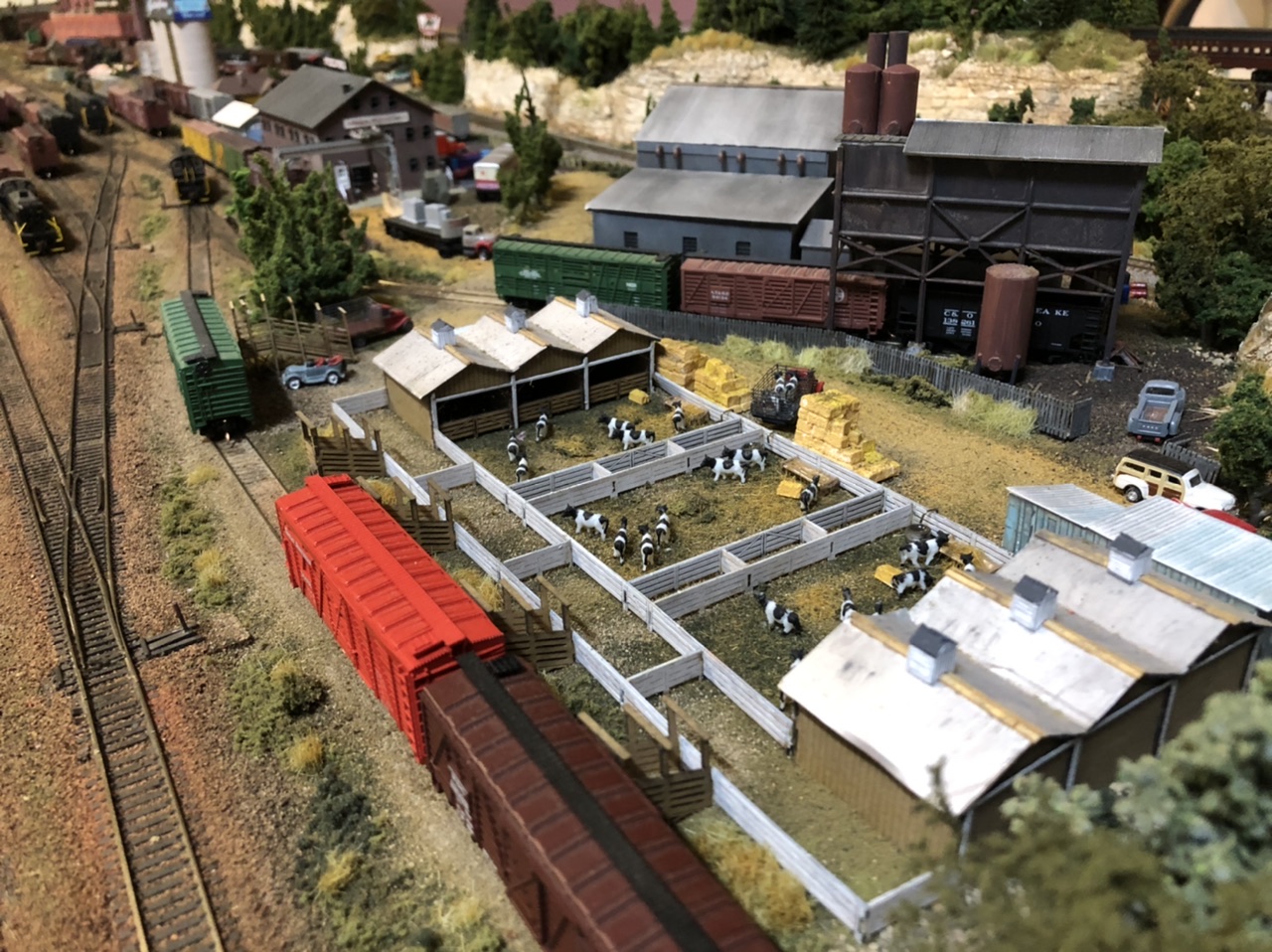
Wayne’s been busy with his HO scale model trains.

Have a look at what he’s done:

“Thought I would try and send some more pictures. I was looking at some of the older photos you reposted, the critic was right it does look like a meteor hit and broke up. Luckily the trees kind of soften them up.

My ride about this summer I took a lot of pictures of rock formations, trees, and things in general just to see how they fit together. I have a tree by the farm house. This tree I made about 7 years ago just to see if I could.

When I finished it I put it in one of my train storage boxes. I pulled it out and gave it a home. One limb was short, and I thought a tire swing would look good on it. Alas no rubber tire.

On my road trip I stopped in Lompock, Ca. To visit a niece. She said there was little store in town that sold model trains. We went there the next day, and to my delight he had a treasure trove of used HO scale model trains and STUFF. I was the kid in the candy store. One of the items was a sandwich bag full of rubber car tires.

All the goodies I got there was shipped home. Now one of those tires swings from my tree with the short limb. I am working on a young girl that will be swinging in it.

I will send a picture when I get it done.

Wayne.”

HO scale model trains livestock

HO scale model trains livestock loading

HO scale model trains loading platform

HO scale farmers house

HO scale livestock area

What I love about these pictures is they show how far Wayne has come on his HO scale model trains journey – his last post is here if you want to have a look.


Now on to Bill:

“Al,

No layout photos yet; still laying track. But I recently made a discovery that I think many of your viewers might like.

My layout is modeling the coal country of steam-era Norfolk and Western railroad. That means mountains and tunnels. In my case, half a dozen tunnel portals.

In some cases, the tunnel portal is on a curve complicating installation of a tunnel liner.

We all understand the advantage of having an inner liner for our tunnels, at least far enough for the sight lines of viewers to conceal the insides of our scenery from prying eyes. But fabricating a liner can sometimes be problematic, especially if the track curves in the tunnel.

Attached are photos of my tunnel liner solution. I start with a four-foot long segment of corrugated flexible plastic drainage pipe. (You can get half-a-dozen liners from a four-foot section; the pipes are also commonly available in longer lengths if more liners are needed.). These pipes come in a variety of diameters. 4” works well in HO scale.

Cut a 4”-5” segment; cutting in the “valley” between two corrugation folds works easiest. Stretch the corrugation to lengthen the pipe segment to approx. 6”.

These pipes typically have a series of parallel rows of drainage holes — 6 rows is common. Use one set of these drainage holes to make a lateral cut the length of the pipe. Make another cut along one of the rows nearest the first cut. Remove the 60 degree segment between the two parallel cuts.

Now trim the corrugation on one end to present a flat surface you can glue to the inside of the tunnel portal — this generally means trimming the top portion of the outside edge of corrugation off so the i side of the end corrugation is flush to the inner surface of the tunnel portal. Locate the liner and secure the other end with a quick setting glue or adhesive.

I find hot glue-gun glue works well: sets quickly as it cools; holds firmly (the corrugation tends to have a mind of its own). Once secured, use a narrow strip of plaster cloth to seal the bottom edge of the liner to whatever surface the tunnel track is mounted on.

When dry, paint the plaster cloth appropriately, spread some ballast material along the sides of the track, and you have a well detailed tunnel liner.

For those who desire even more “detail” or “authenticity,” before installing the liner spray adhesive on the inside and then sprinkle on a light coating of tan/brown ballast/gravel/fine talus to create a rough stone surface to the inside of the tunnel.

There you have it: a flexible tunnel liner you can install even on a curve fairly quickly and easily. Easy to vary the length as required.

Bill Demarest
N&W Steam Only”

tunnel liner

That’s all for today folks.

Please do keep ’em coming.

And if today is the day you get started on your layout, the Beginner’s Guide is here.

Best

Al

PS More HO scale train layouts here if that’s your thing.


Need buildings for your layout? Have a look at the Silly Discount bundle.
N scale scenic ridge layout

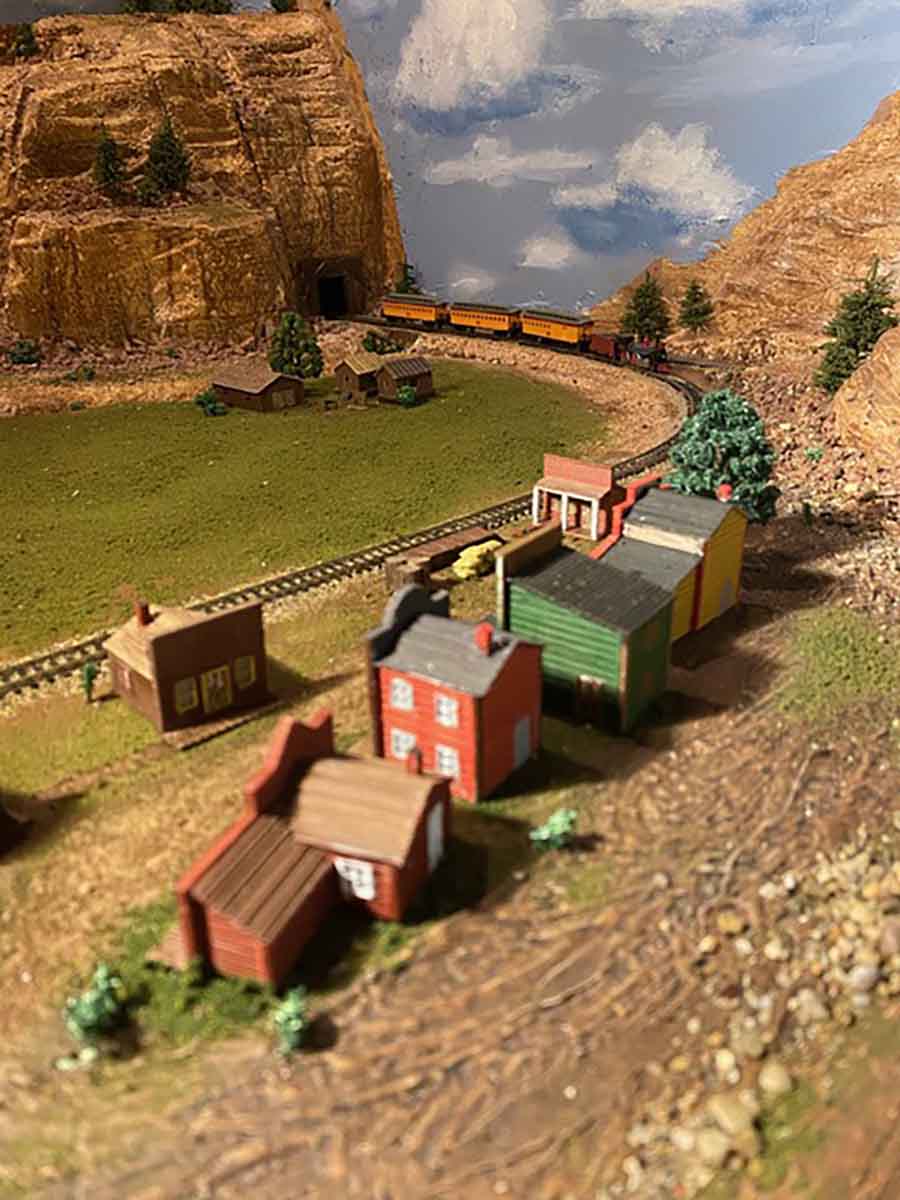
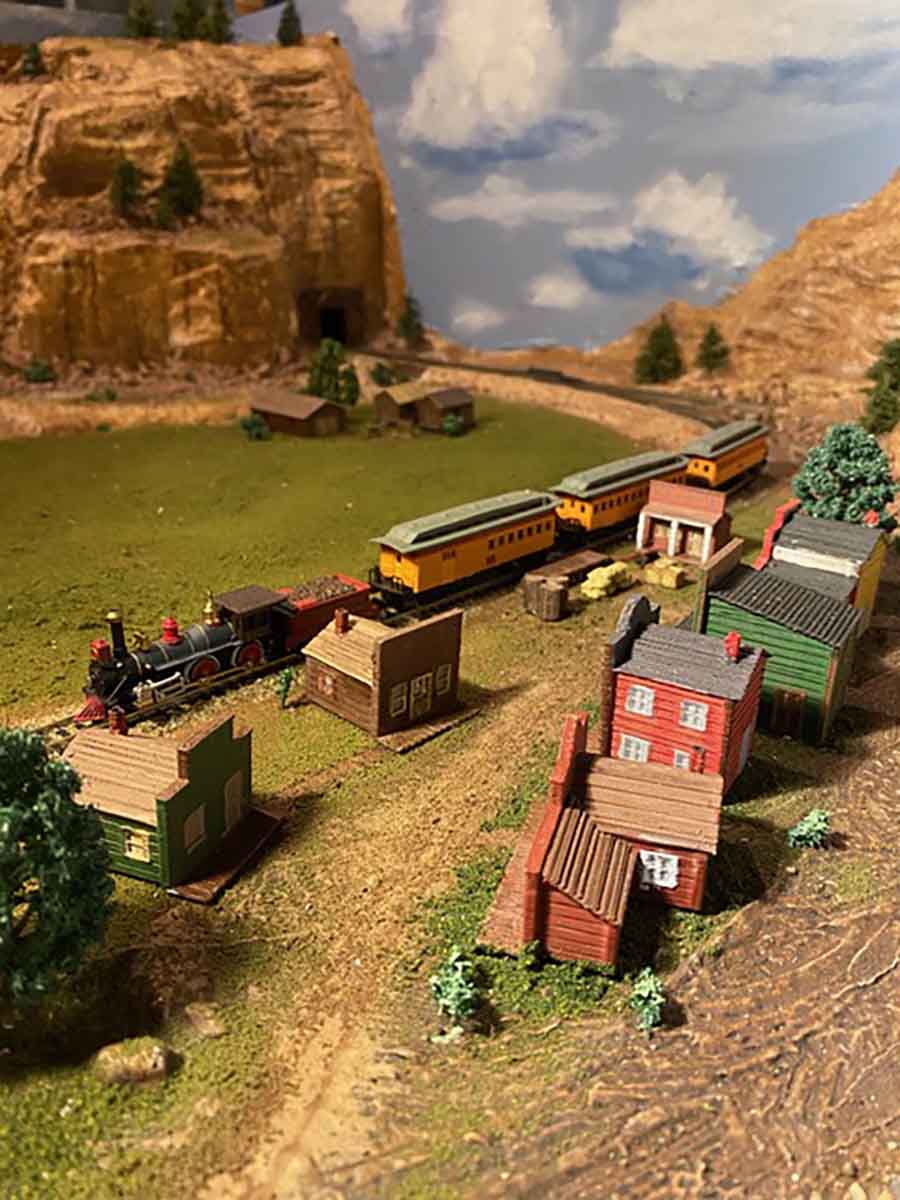
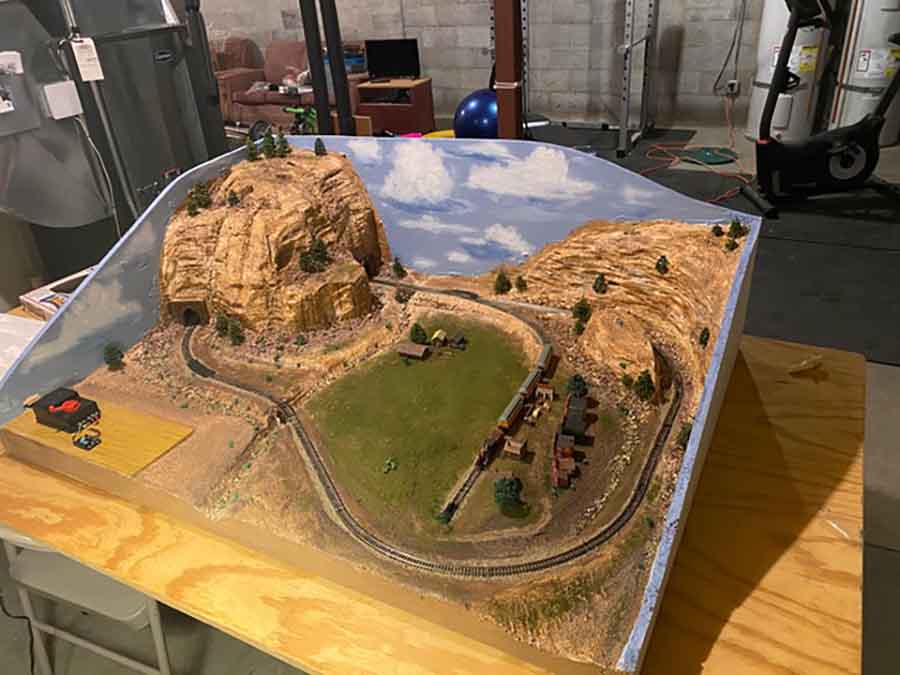
Dean’s been back in touch with part 4 of his N scale scenic ridge layout, which is a kit from Woodland Scenics.

“Al, this is the forth submission, in an 8-part series, discussing my construction of the N-Scale Scenic Ridge layout (kit from Woodland Scenics).

The series is aimed at a beginner model railroader, but I hope there are a lot of hints for those with more experience. In this session, I cover putting together and finishing the outer foam board walls and three fascia boards.

N scale scenic ridge layout

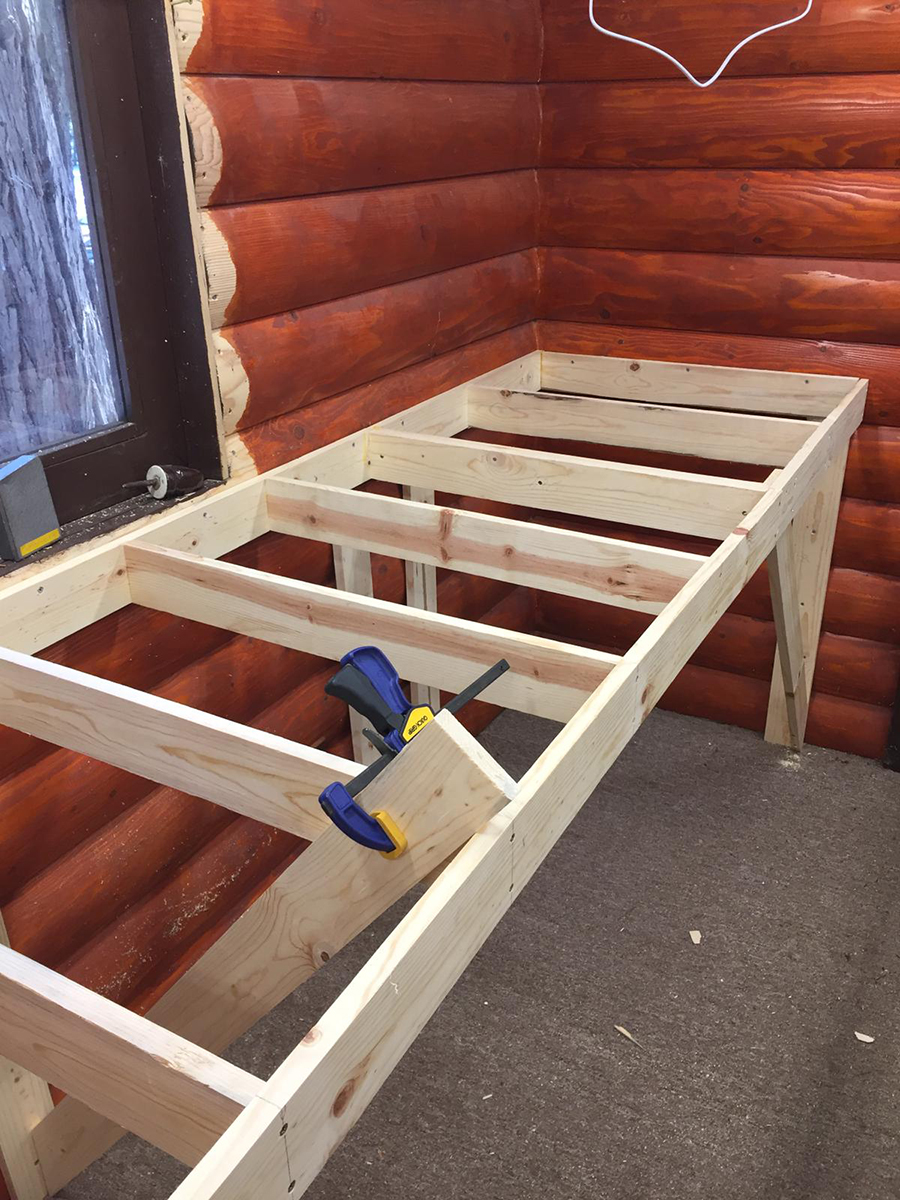
The foam board outer walls were cut and attached following the instructions in the Scenic Ridge manual. I added a ¼” horizontal foam board to help support to the left and back walls, as well as 2×2 boards at the corners, and 1×2 boards as shown to hold screws for the fascia boards.

N scale scenic ridge layout

Another photo of the supports and walls.

N scale support board

This shows the board and four supporting screws I added to strenthen the foam board I cut where I plan to run a road. The track will be repaired later.

The back wall was covered with plaster cloth to strengthen it.

After rolling out the plaster cloth, it was wetted heavily with water, then cloth was smoothed out.

The next shots show how I made the 1/8” (actually 3/16”) plywood to form the fascia boards for the three remaining sides. In all cases, the foam board walls were cut to the desired contours, then the plywood was cut to match the contours. The plywood was sanded smooth, then painted with matt, black paint.

plywood for n scale

Two more shots showing more info on fascia boards:

The front (in two pieces), note how the switch control board helps to hold the fascia straight.

The right side

N scale scenic ridge layout

The left and front side facia boards finished and painted. The DCC control panel can just be seen in its tray on the right.

The rear wall painted.

N scale scenic ridge layout

Finished front and right-side boards.

N scale scenic ridge layout

Bye, bye train.

And finally, here’s the youtube for my N scale Scenic Ridge layout:


A big thanks to Dean – if you want to see his previous post on his N scale scenic ridge layout, it’s here.

That’s all for today folks.

Please do keep ’em coming.

Don’t forget the Beginner’s Guide is here. Is today going to be the day you make your start?

Best

Al

PS Latest ebay cheat sheet is here.