HO DCC layout – Scott’s

Scott has been in touch with his HO DCC layout:

“Alastair:

Over a year ago, I posted some pics of the DCC HO layout my wife and i have been working on since December and wanted to send you an update.

Many years ago I had an HO DC layout in a spare bedroom with mountains built into the walls and very difficult under table access to the parts of the layout where the train always derailed.

That layout came down due to a ceiling leak and i put the track, table and buildings (many of which i have had since I was a child in the 50s and 60s) into the attic in my garage.

In December, when our grandson was almost one, my wife and i started work on the present HO DCC layout in the basement.

My wife insisted on not putting the layout against the walls so access wold be easy and people could walk around and see the table from all angles. This turned out to be a brilliant idea as i no longer had to worry about placing every building so you could see the font of it and no longer had to crawl under the table to fix problems.

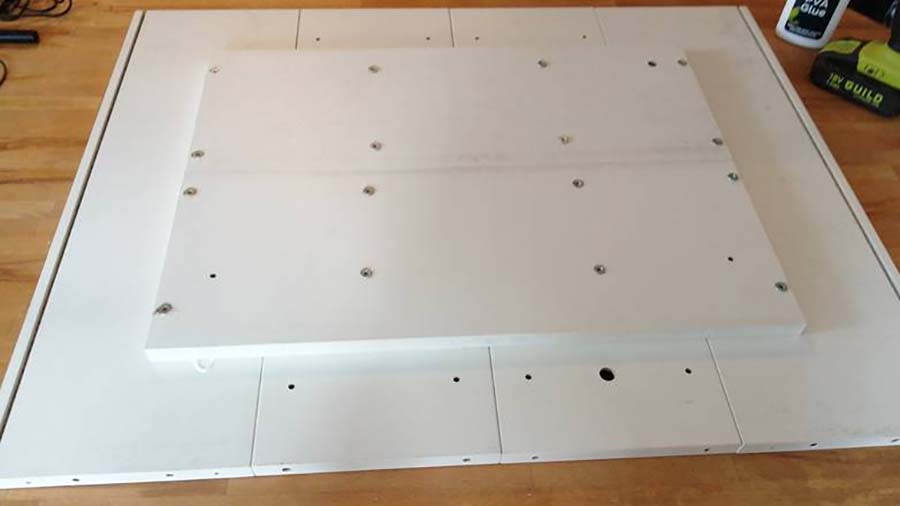
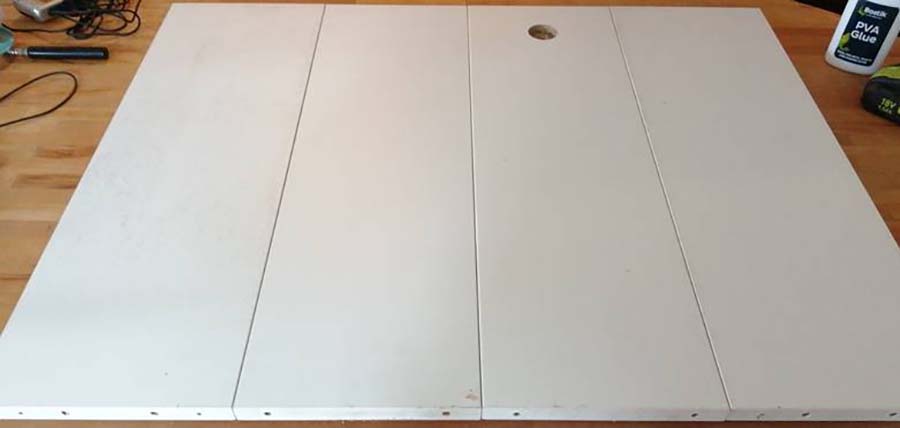
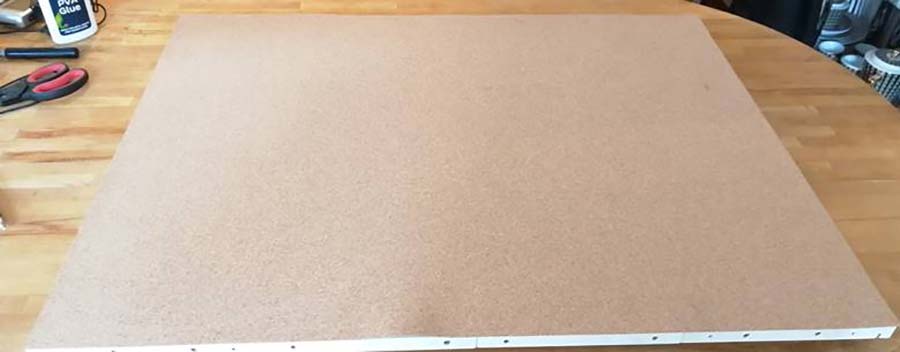
The table is designed to be seen from a height of three feet and the top is 5/8″ plywood squares screwed into 3/4′ x 34′ planks with 36′ x 1 3.4′ wood legs (unfortunately i did not install screw in spacers and has to use shims to level the table on the tiled basement floor.

The table surface measures 13 3/4′ x 5′ plus 7′ x 5′ for total area of 104 sq. ft.

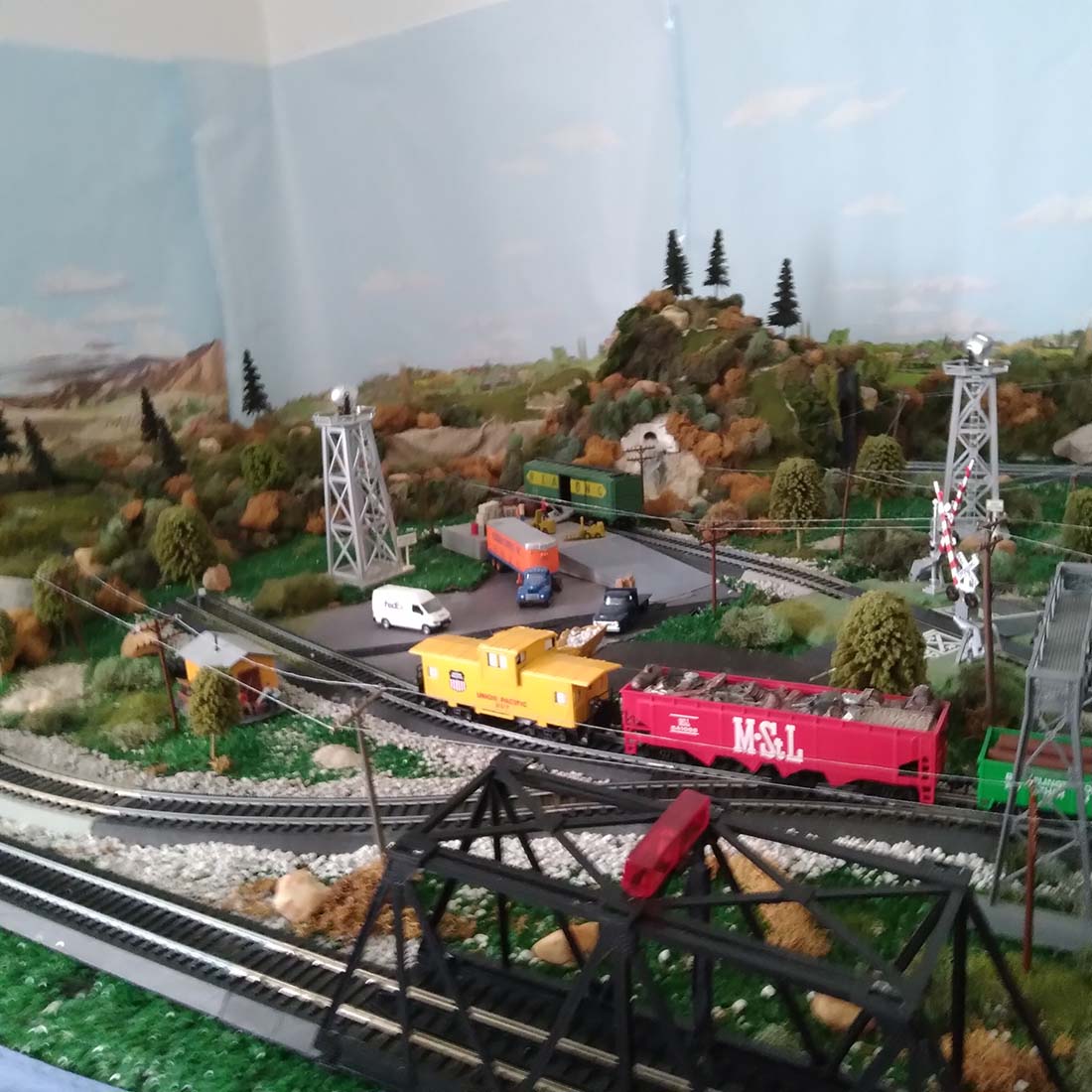
The track is old Atlas brass code 100.

The trains are DCC with NE Powercab controller.

We have 15 turnout switches and dc light bulbs in most of the buildings powered by an old Sound and Power & Light 9001 transformer. The bridge lights are X-Mas lights.

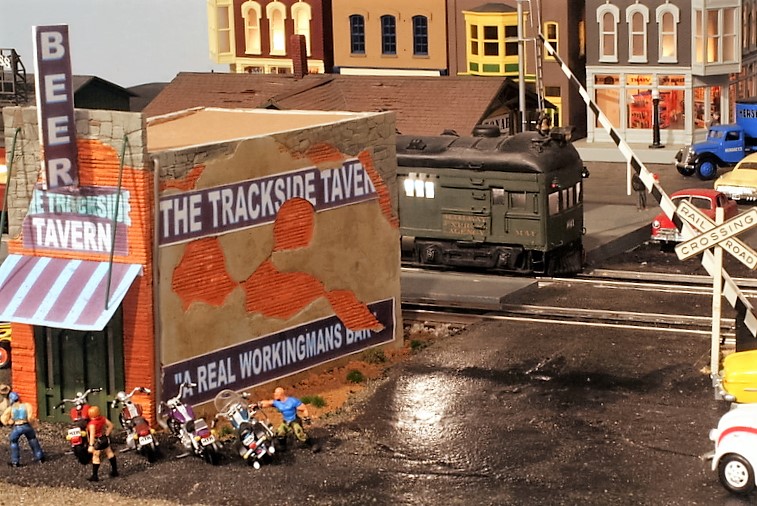
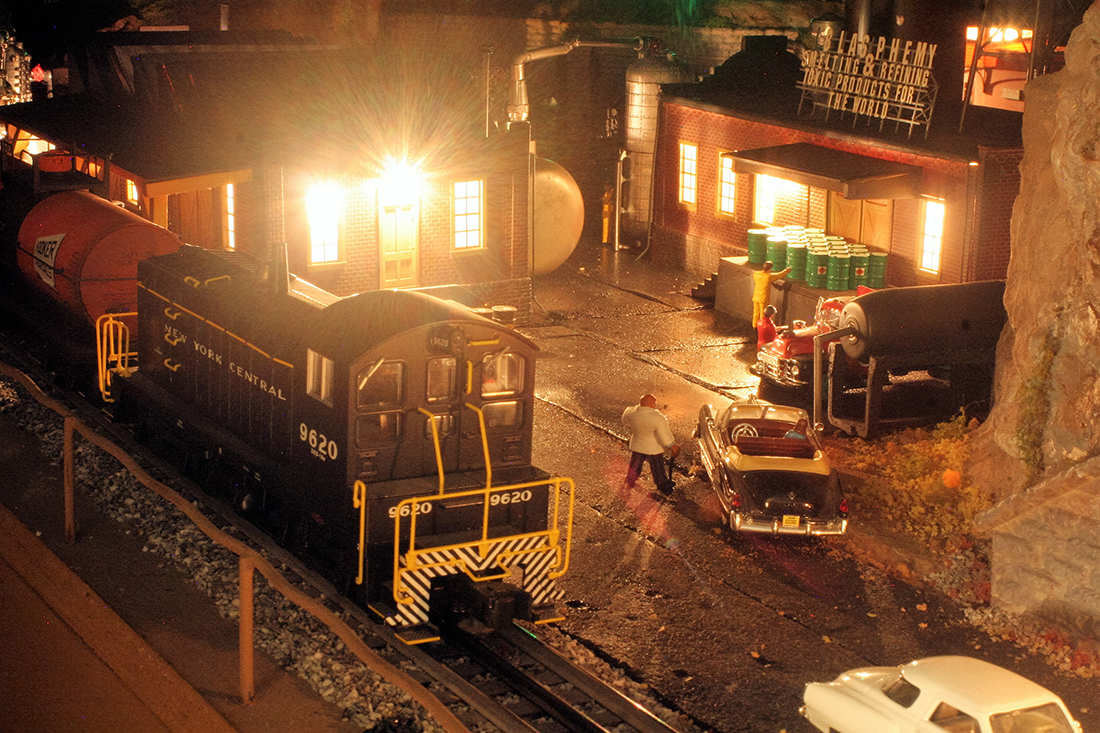
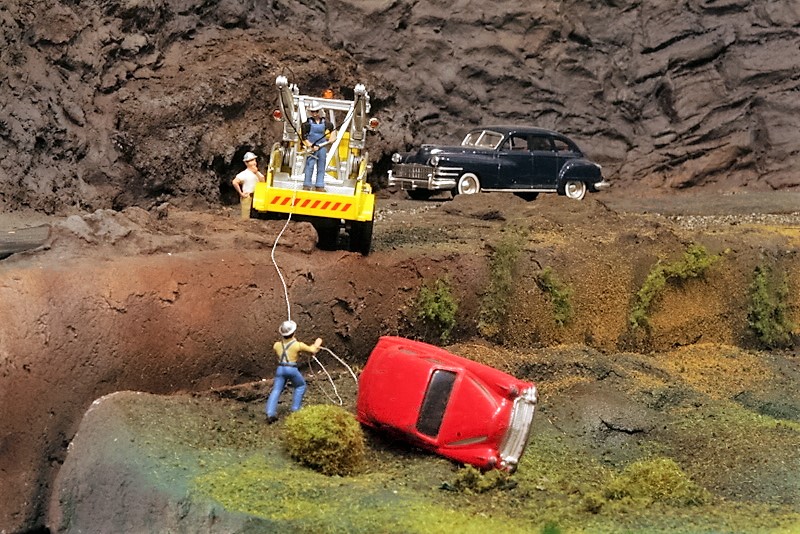
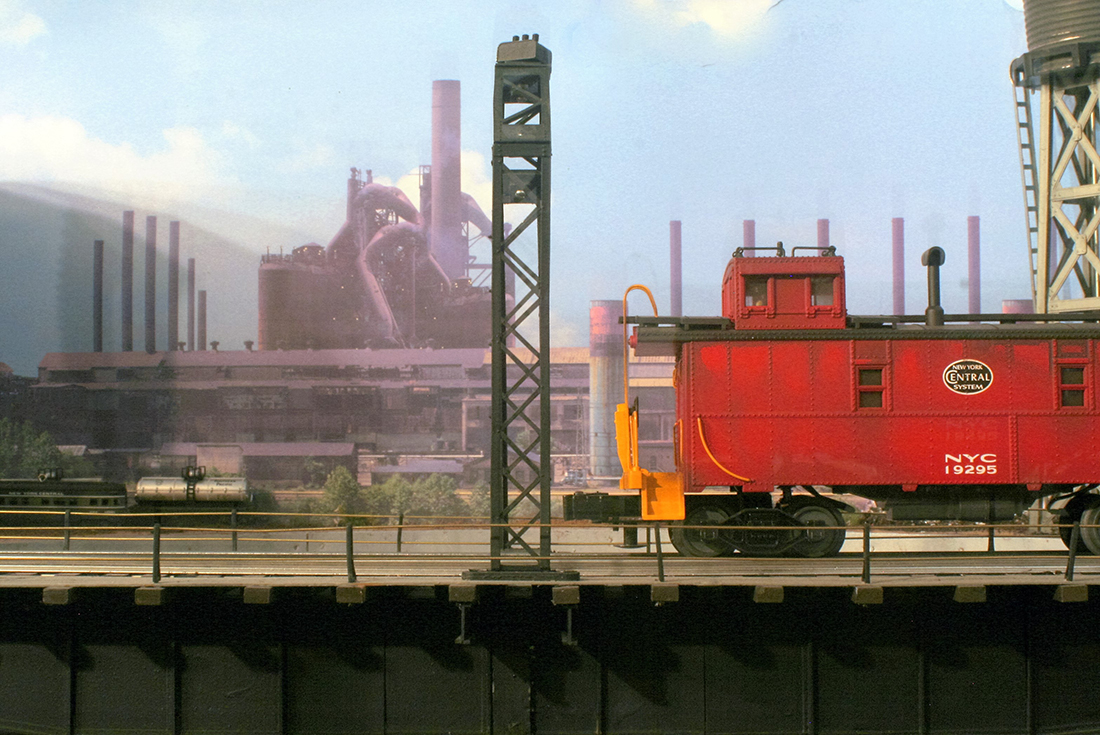
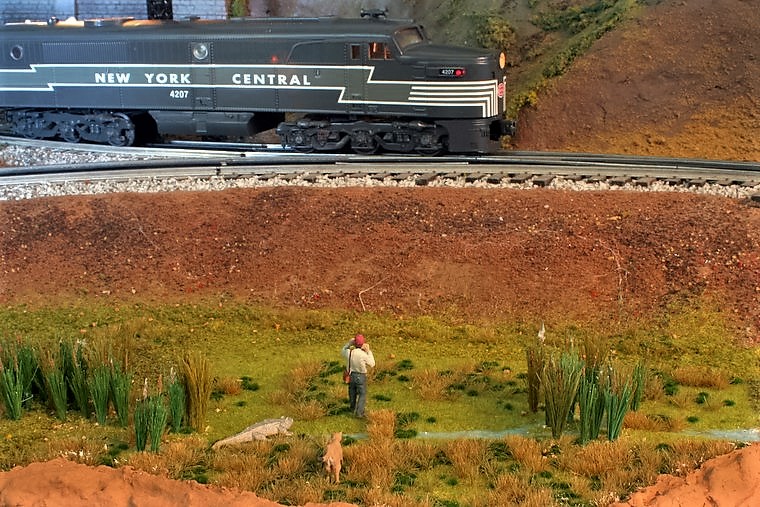
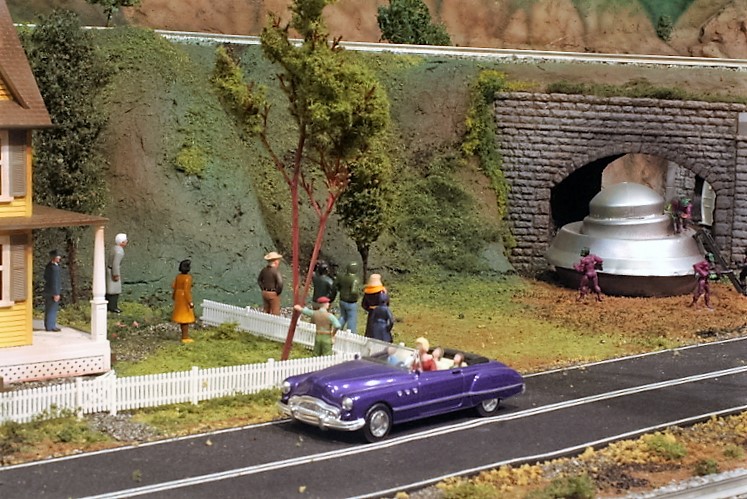
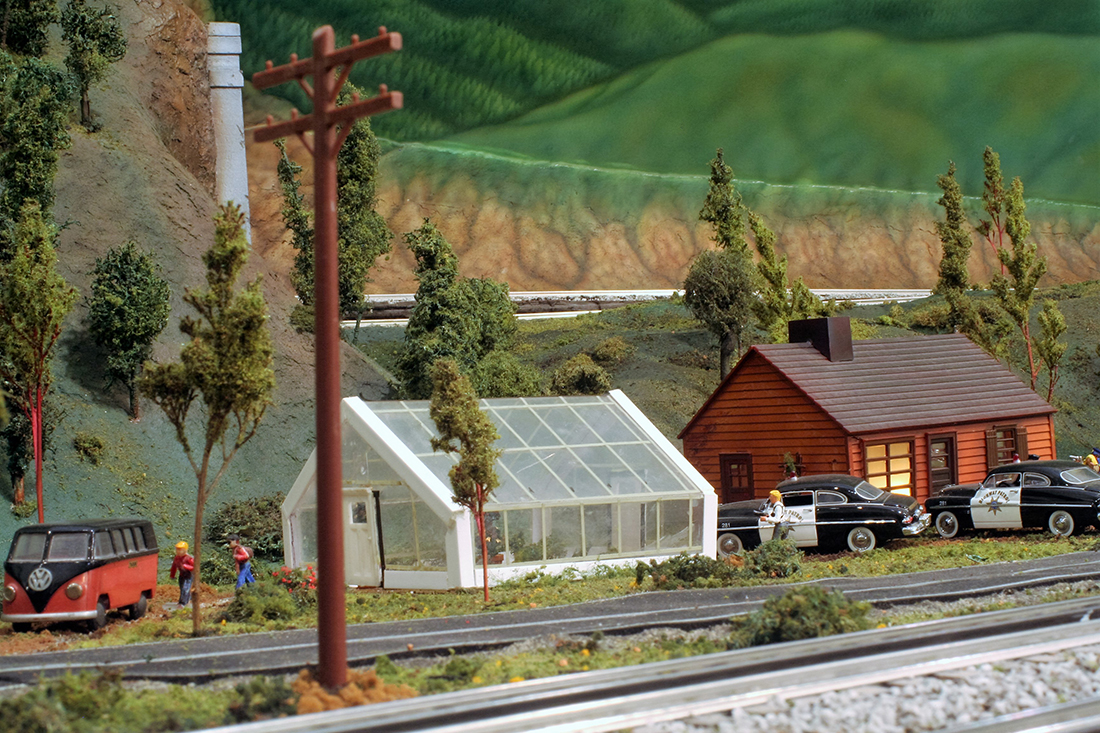
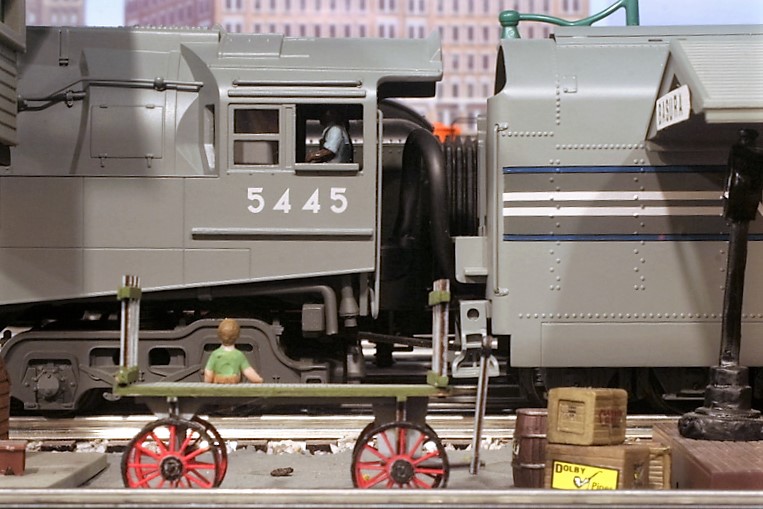
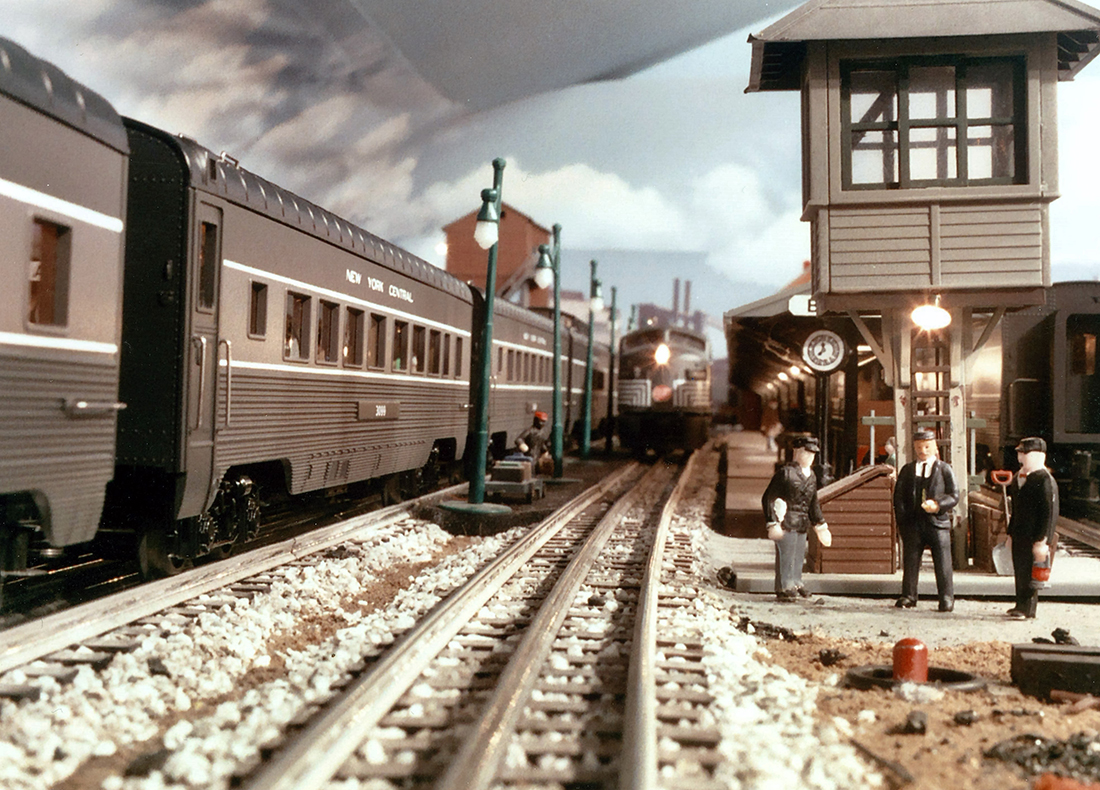
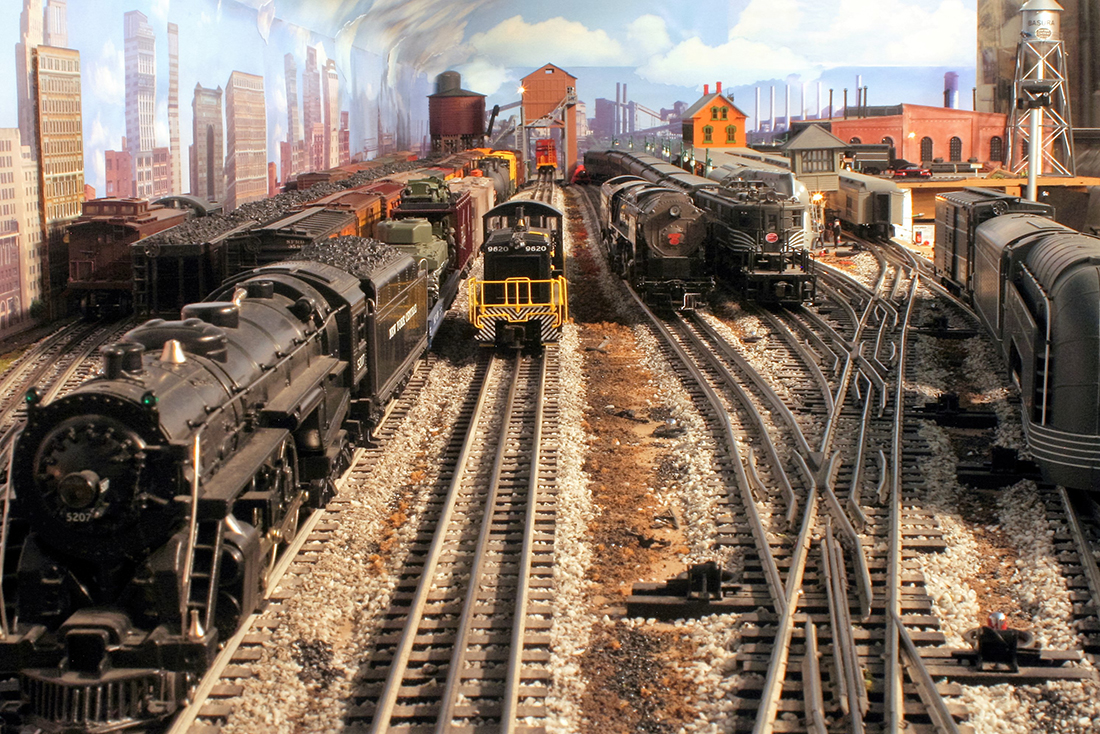
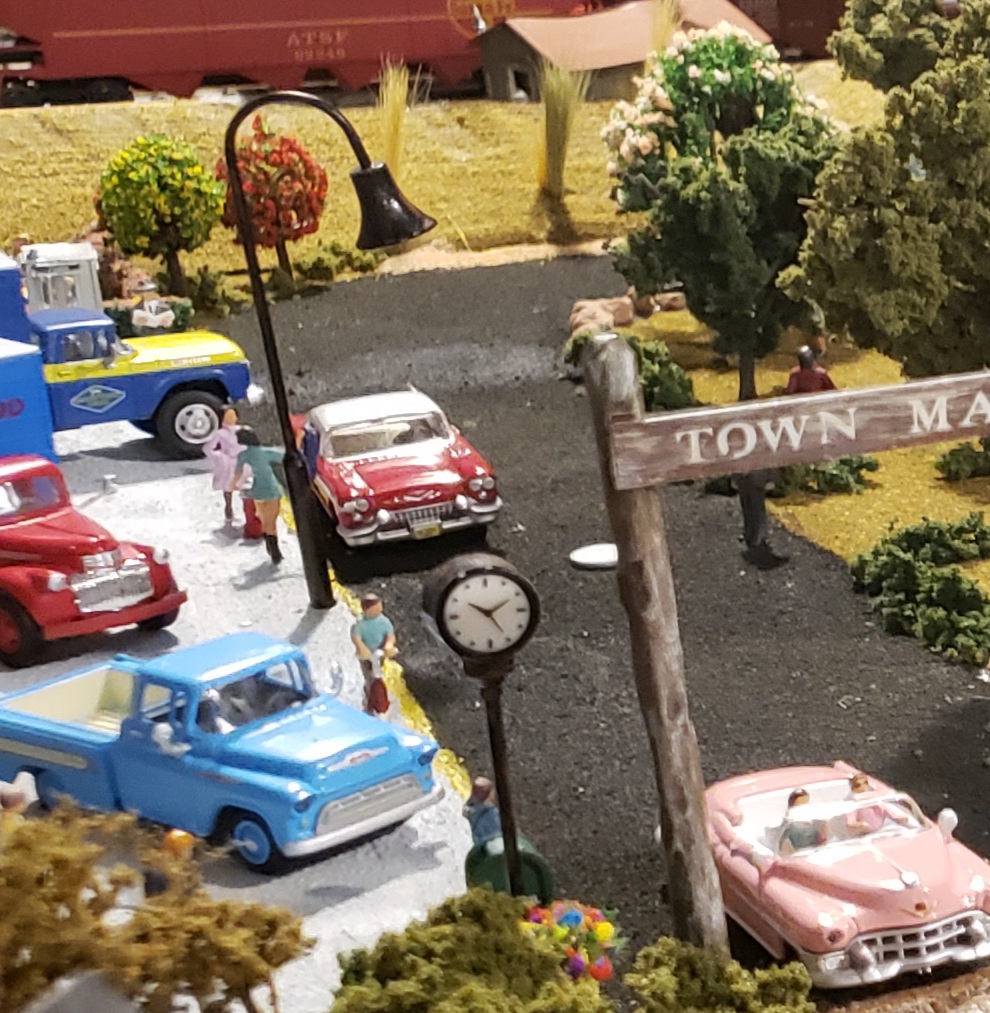
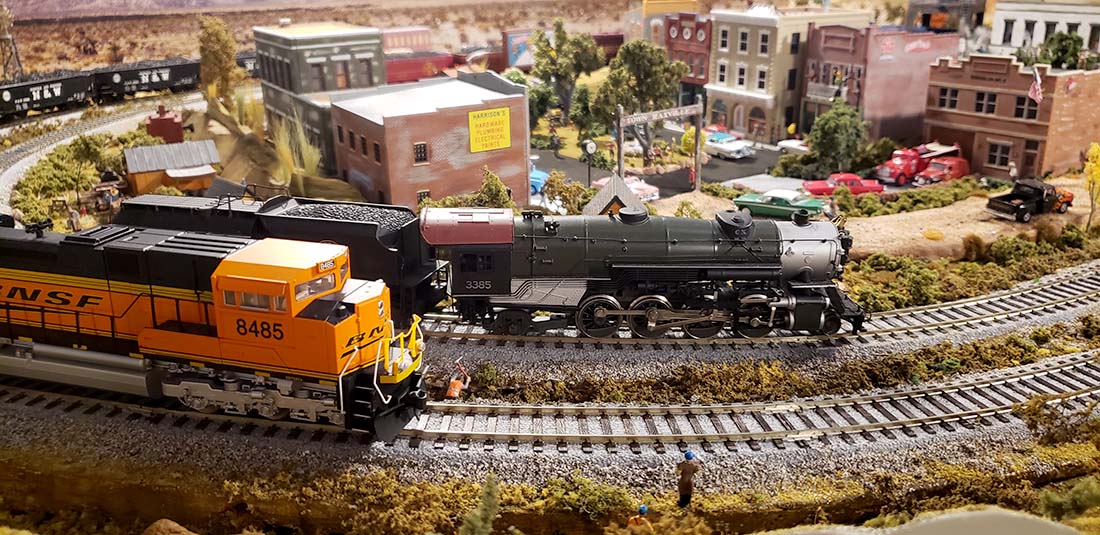
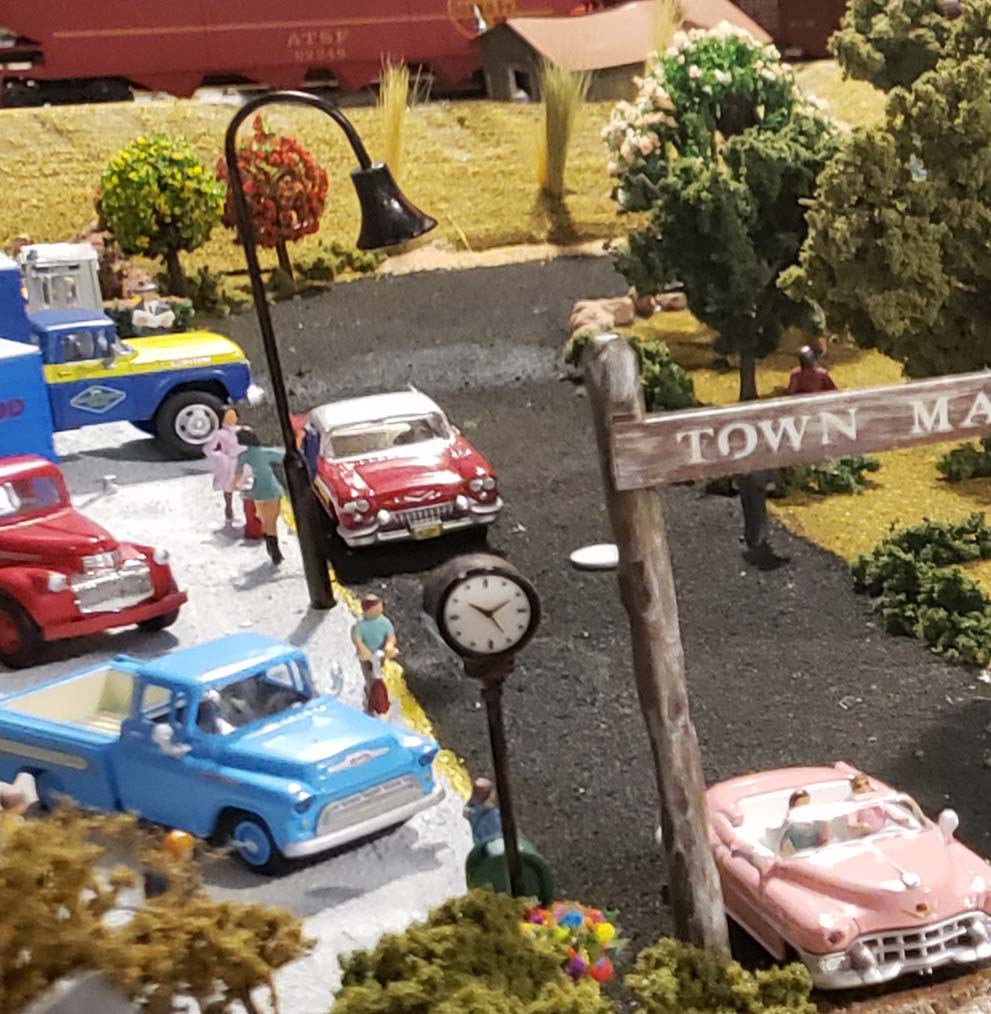
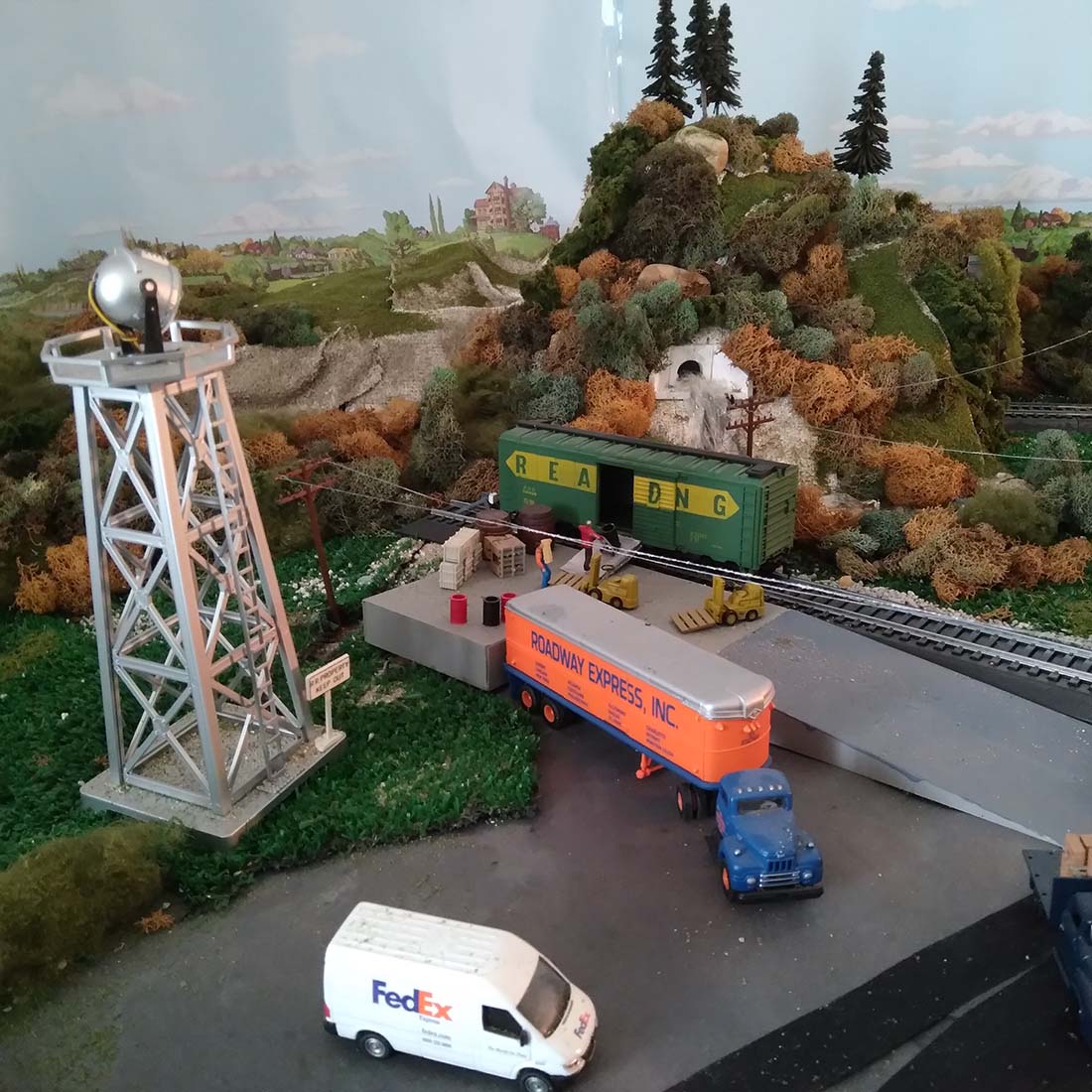
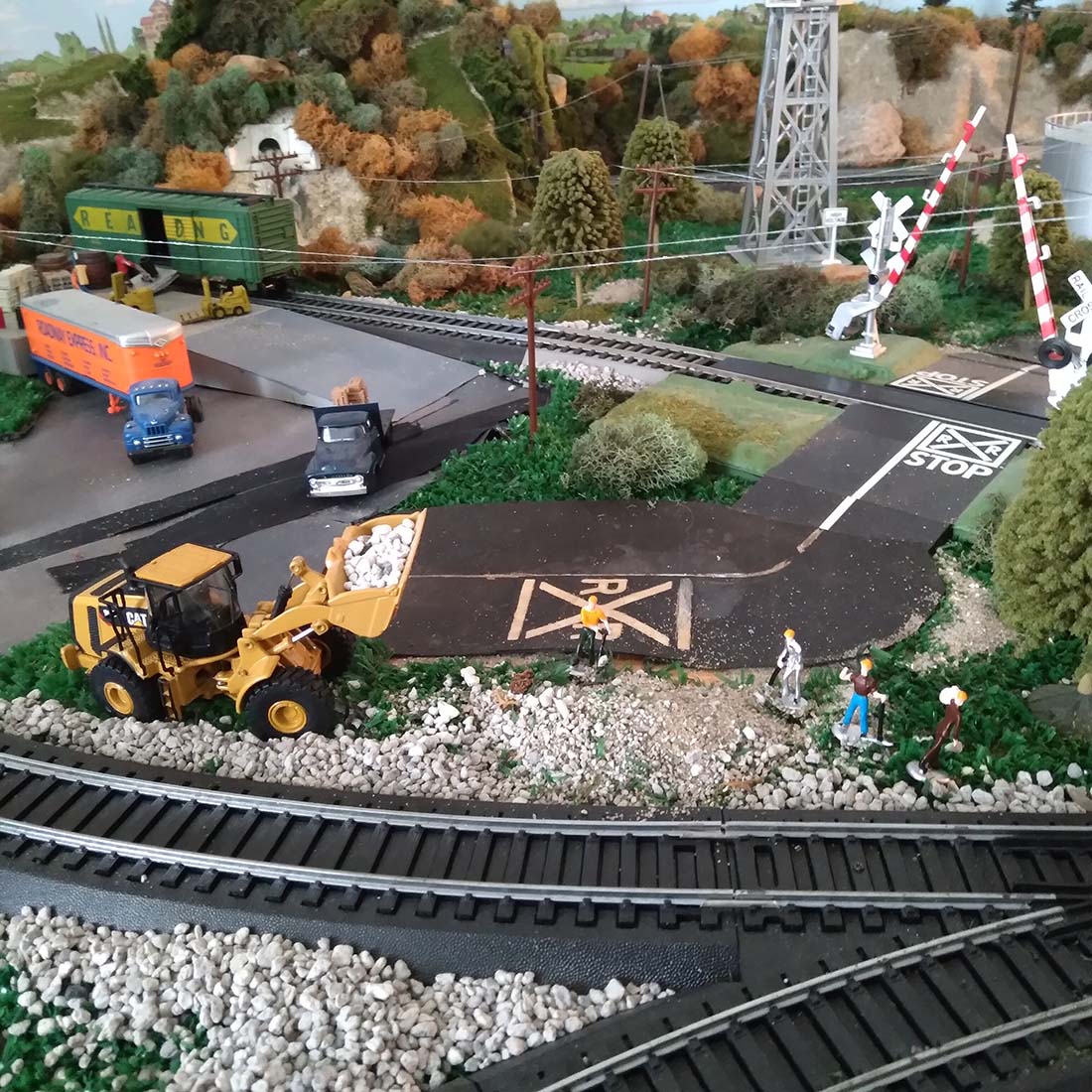
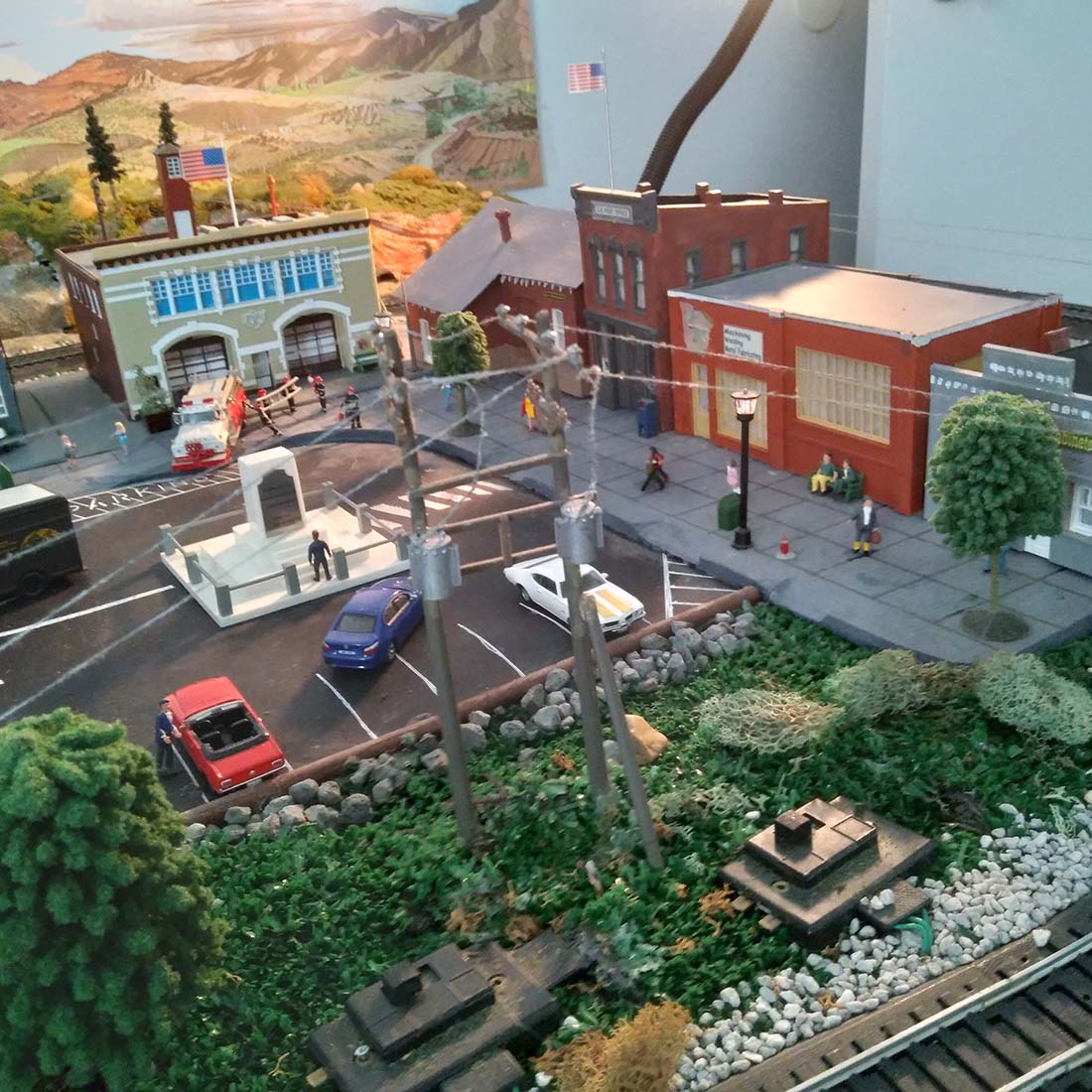
The setting is small town and rural 50s and early 60s. I run Broadway limited diesel and steam engines and many of my cars are from the 50s and 60s including the nuclear waste and chicken cars that light up and the nuclear missile and helicoptor carriers.

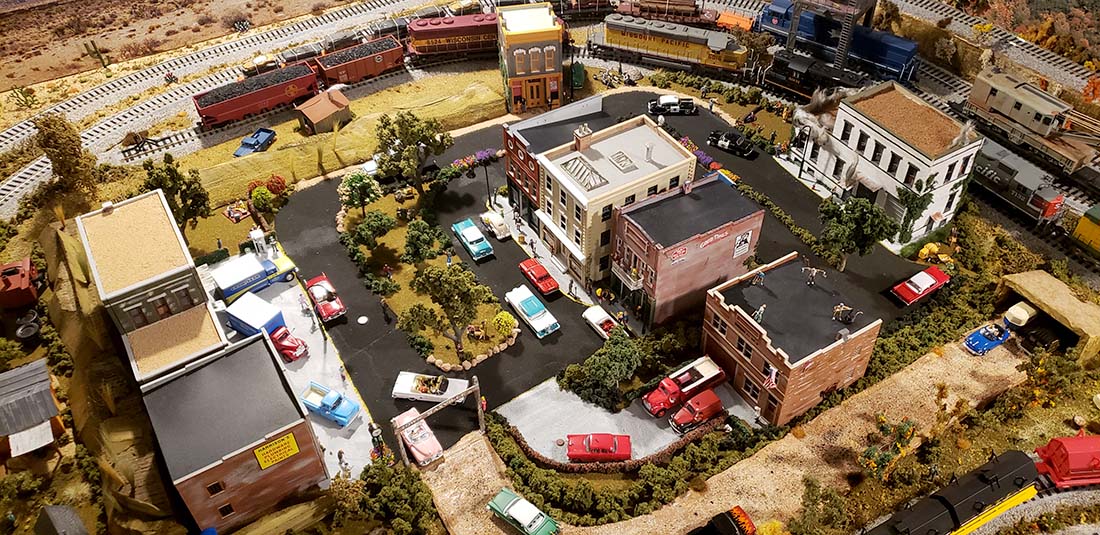
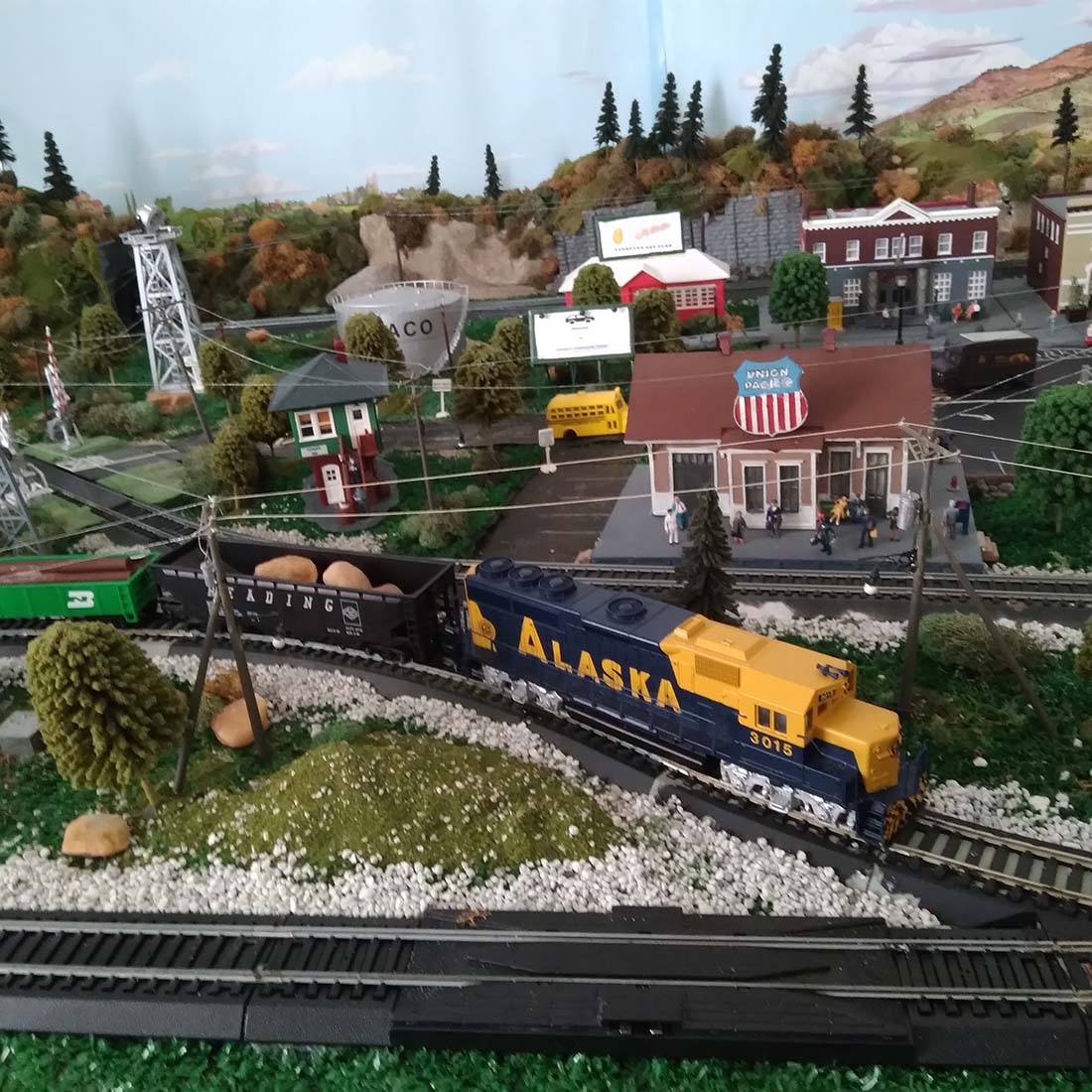
We have about 85 buildings, some of which are older than me (67) including a cardboard Purina Chow factory, old plasticville buildings, and a wooden butcher shop made from a German (possibly pre-war) kit where the roof lifts off so you can see the slabs of meat and the meat grinder on the counter.

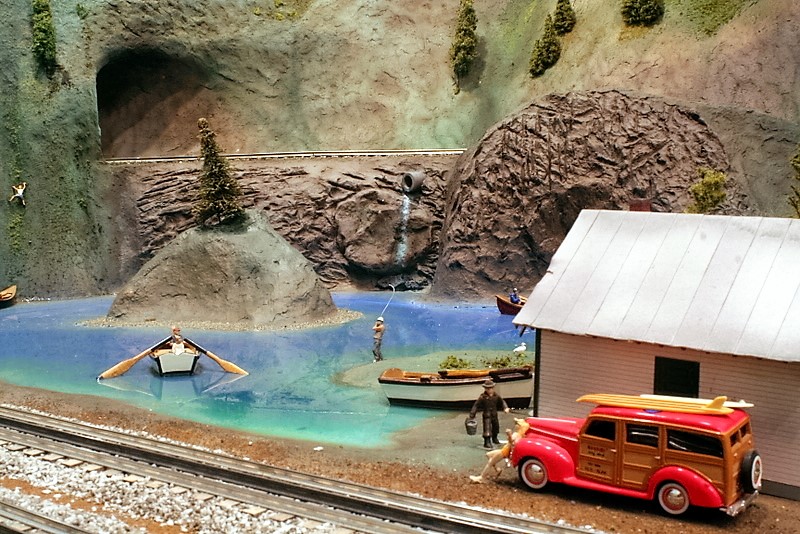
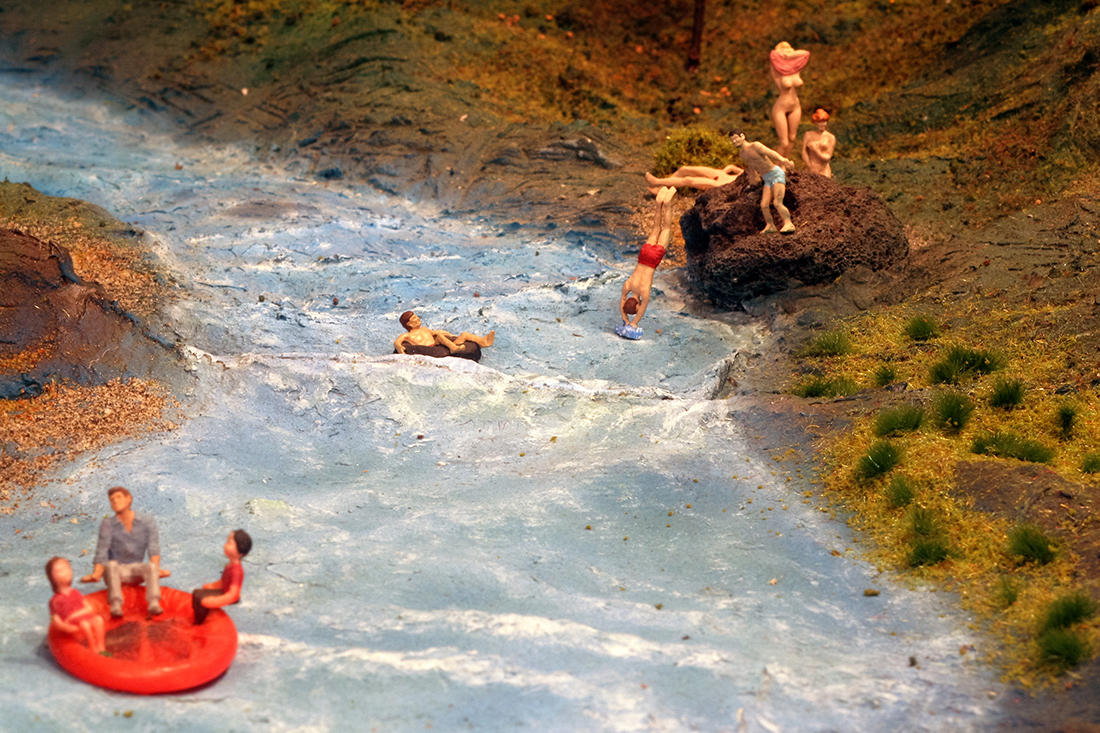
We have more than 200 people and animals and hundreds of trees. We try to use natural substances where possible. Actual sand, rocks, flowers or twigs or grape vines for trees.

Mountains are mostly old school wire mesh covered in plaster cloth. Snow is dried out plaster sanded into flakes.

My wife finds ways to use household items or items you would normally throw away: the tear off seals on eggbeater boxes become radar dishes for the air control tower; paper clips and screening become wire mesh fences, the metal at the bottom of small glass candle holders become bases for the runway lights and interior building lights, the raft in our lake was modeled after one we saw in Antigua and is made from the plastic covers on office phones that are labelled line 1 and line 2 with paper clips for the rails, the windmills are made from discarded electric tooth brush stems with bristles pulled out, the farm silo is a toilet paper role with a rubber cap from some household item, the green rope swng in the school playground is a clip from something, the air unit on the roof of Kentucky Fried Chicken was moisture absorbant from a package we received.

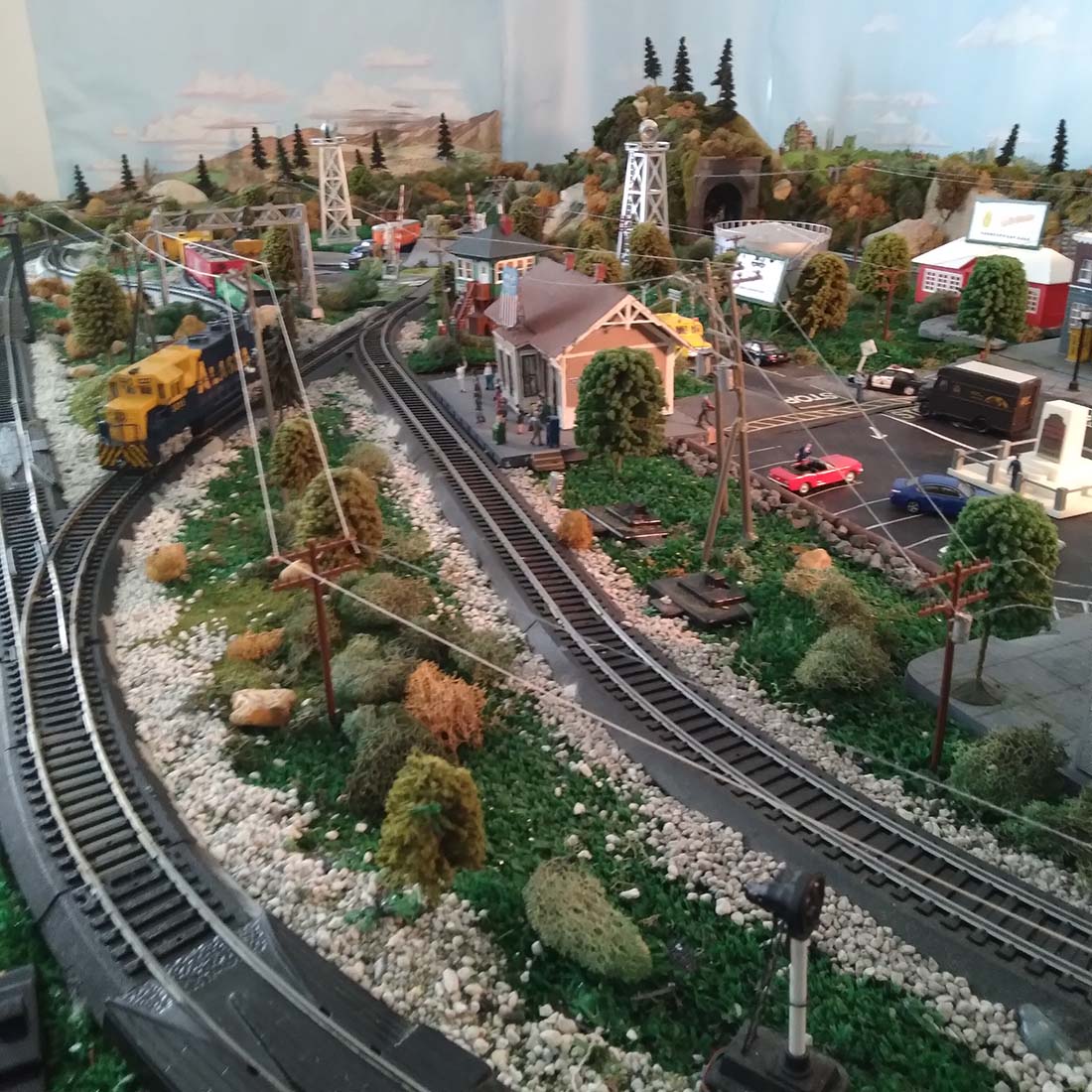
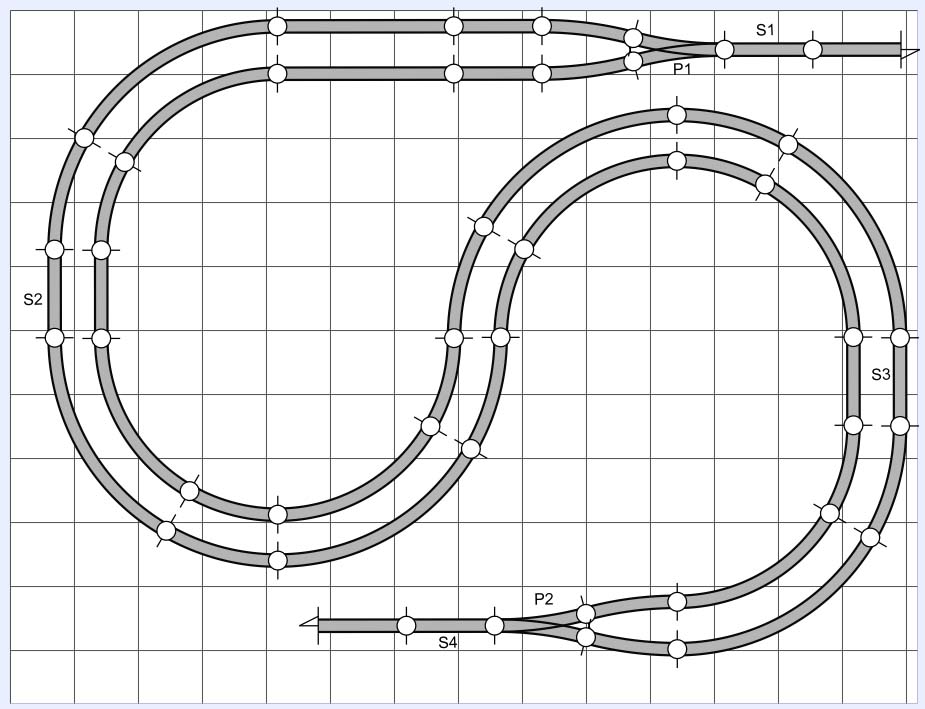
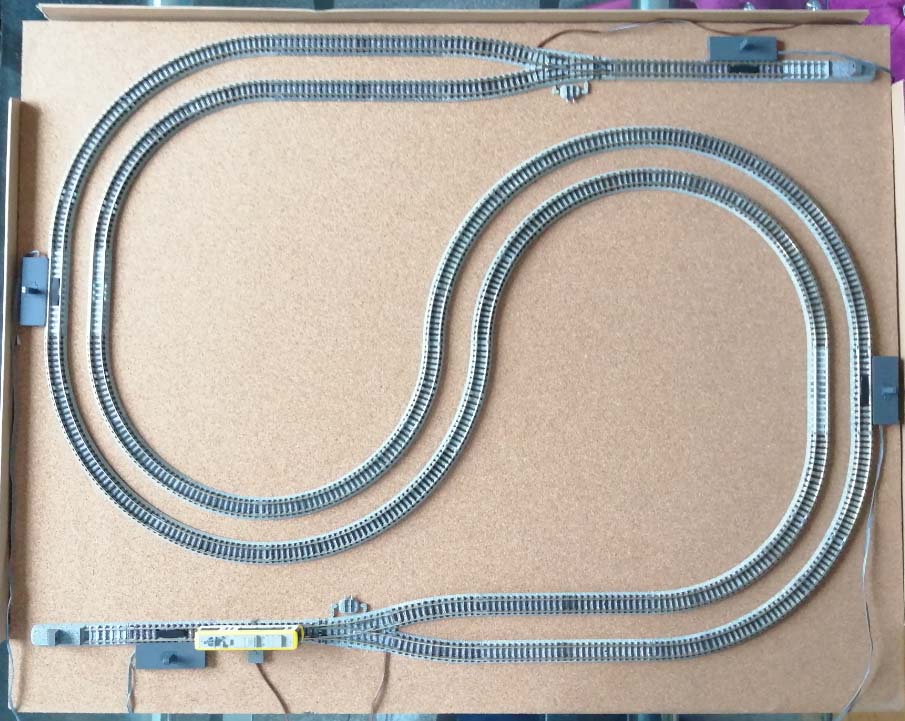
The layout consists of two lines. The inner was based on Atlas HO No. 16 6 x 10 and the outer as freelanced with an elevation to 3”.

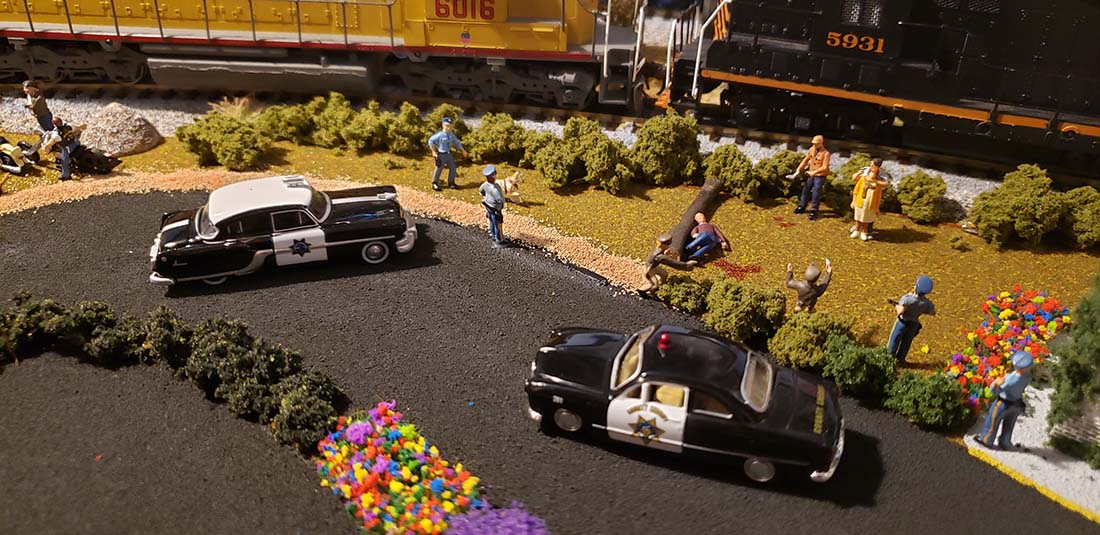
My wife designs the towns, does the streets and sidewalks, makes all of the signs, and is in charge of placement of people because everyone has a story and placement of each person must fit their story.

The two main towns are named for our grandchildren.

The industrial park is named for a friend who helped procure a number of the buildings. The houses are named for family and friends. When one couple told us they were moving, my wife had a for sale sign on their property the next day.

Here is the Atlas design for interior run and a pic of the layout in early days which was changed slightly to make the bridge cross water before turning.

laying track for HO DCC layout

laying track for HO DCC layout
Track plan for inner loop.

HO DCC layout track plan

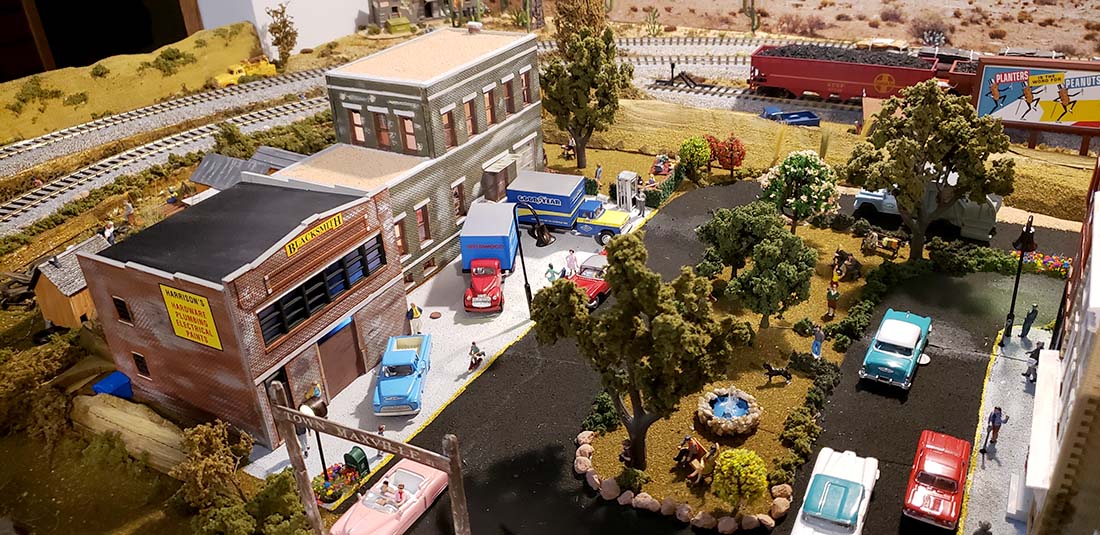
HO scale town

HO scale houses


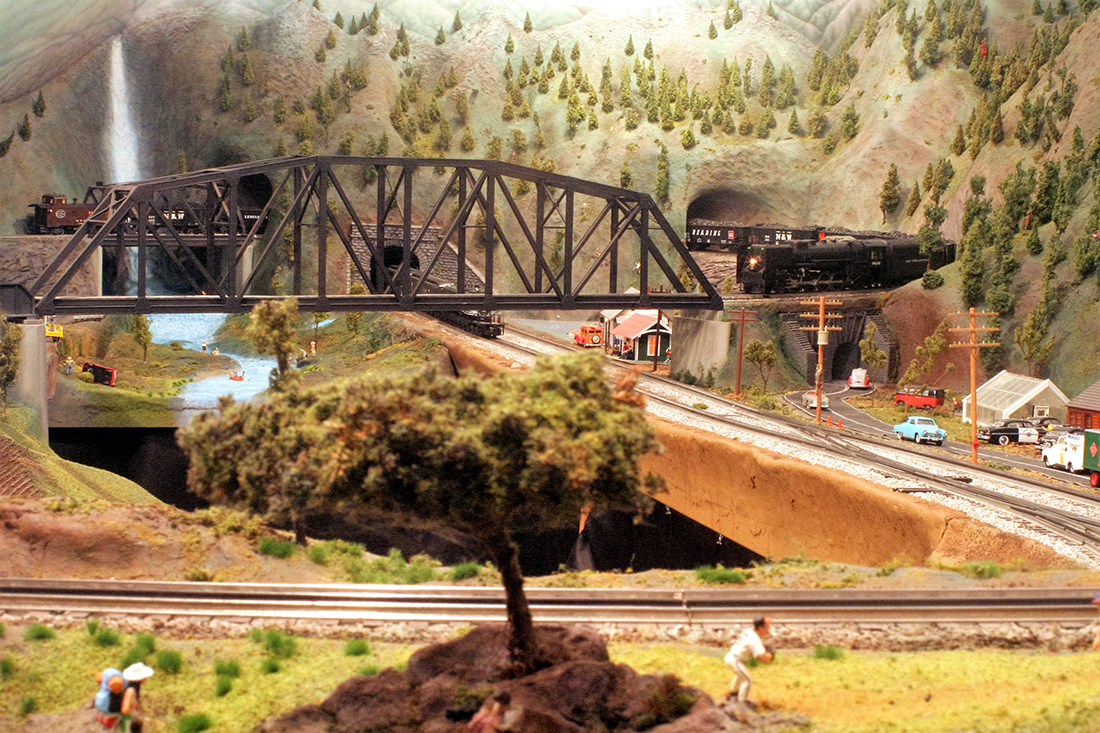
HO scale bridge

HO DCC layout shops

HO DCC layout shops

HO scale waterfall

HO scale KFC

HO scale park statue

HO DCC layout county courthouse

HO DCC layout houses


HO scale playground

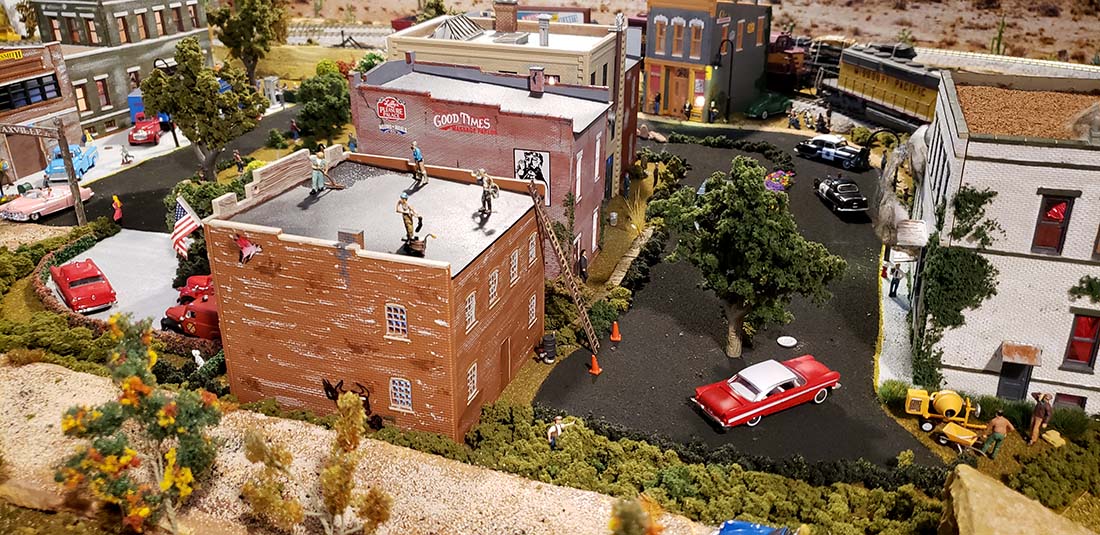
HO scale rock climbers

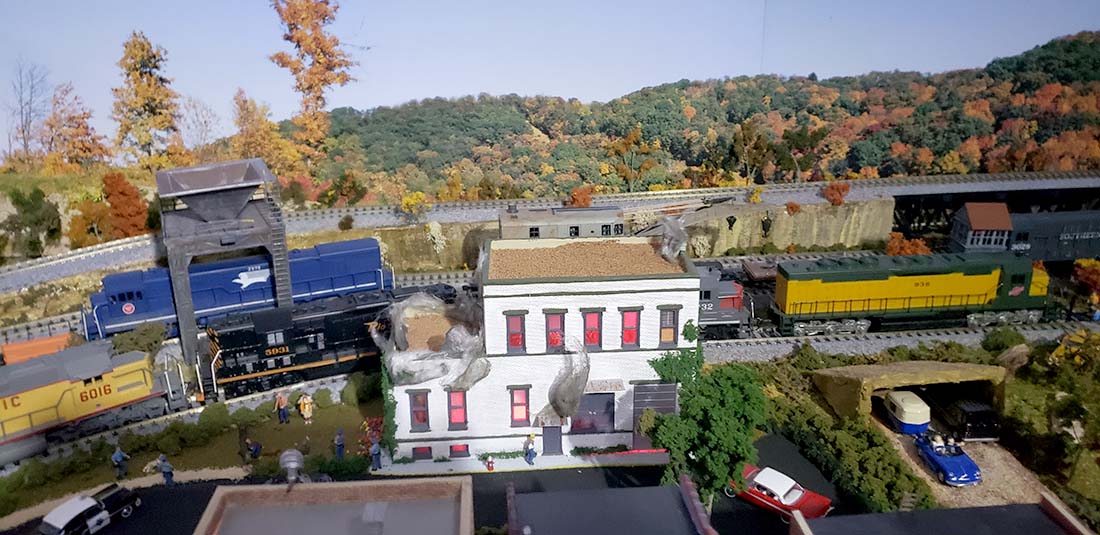
HO scale buildings

HO scale KFC restarant

HO DCC layout radio mast

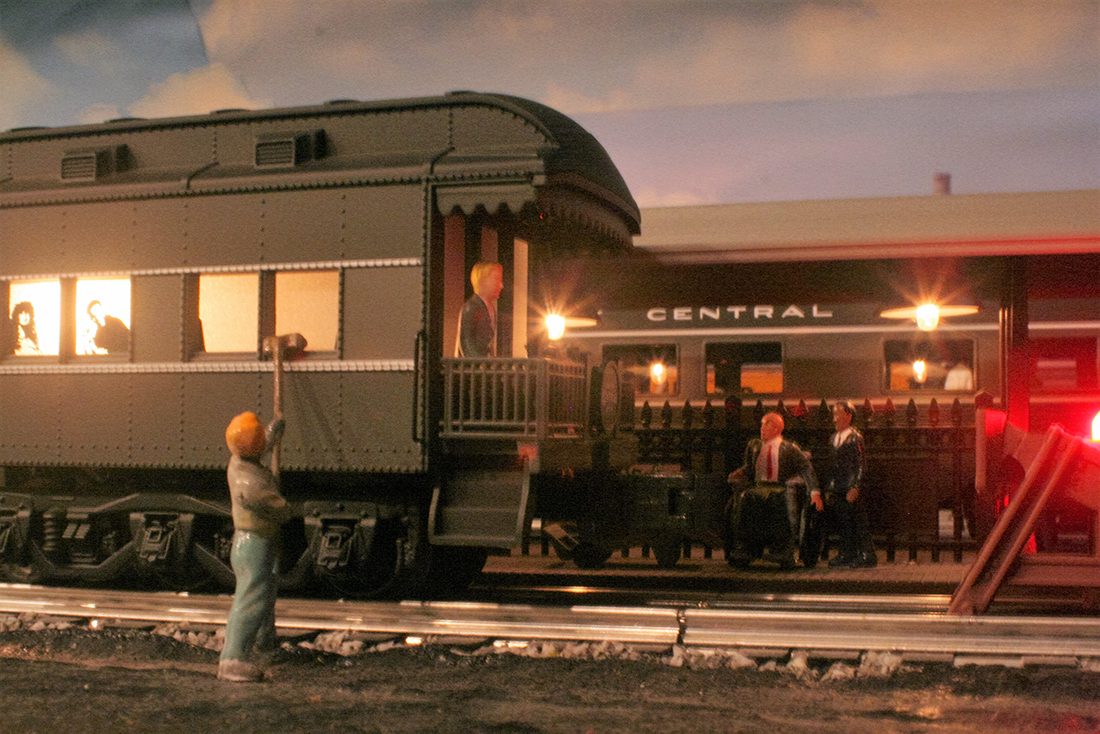
HO scale platform

HO DCC layout factory

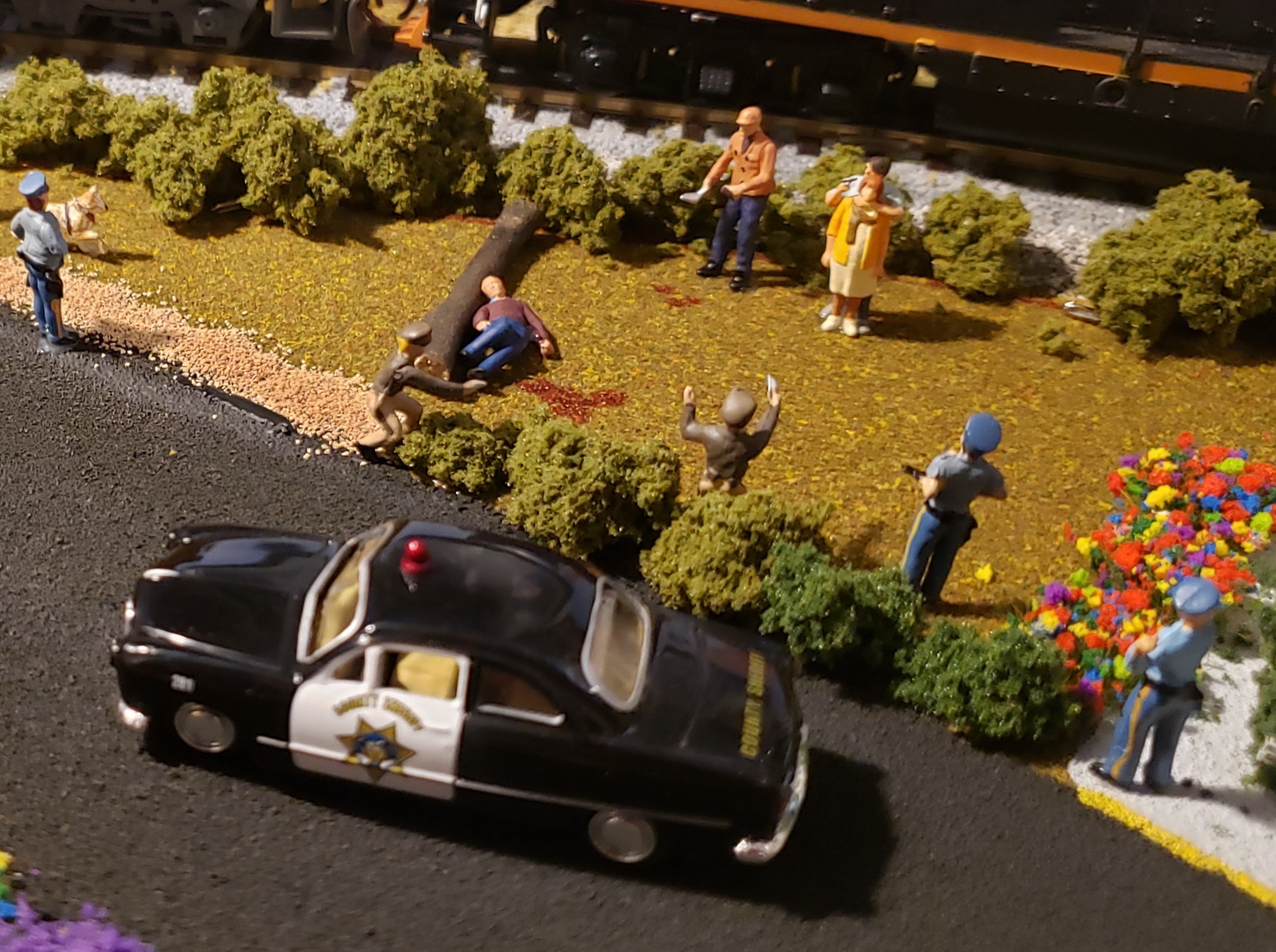
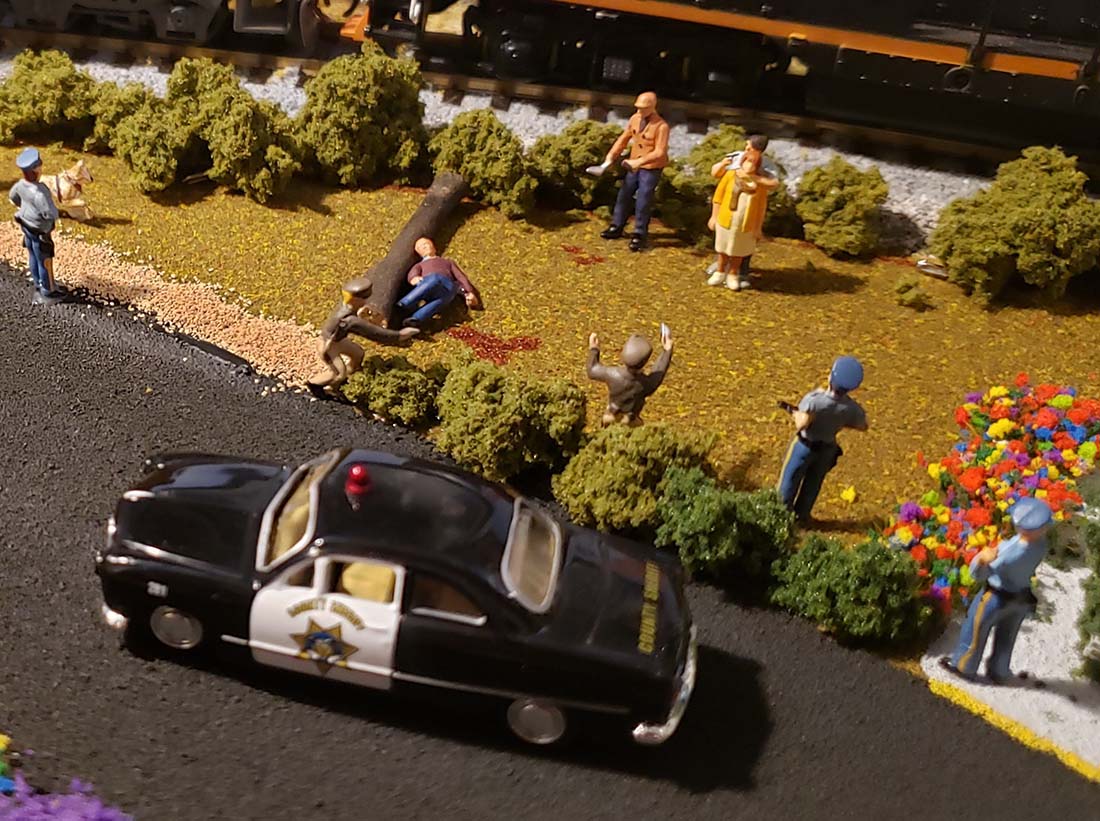
HO scale police chase

HO DCC layout theatre

HO scale model railroad platfrom

Hope you enjoy.

Scott”

What a layout – a big thanks to Scott for sharing his HO DCC layout. There’s a lot going on, but doesn’t look crowded. I loved it.

I’m sure some will wonder where the trains are. All in good time. Remember, a layout can be whatever you want it to be.

What’s more, this layout and Joe’s 10×12, proves a point in my mind. Over the years I’ve noticed the layouts which have had a theme from day one of the build, always look a lot more convincing – but you’ll appreciate, that’s just my opinion.

Please do leave a comment below if you agree- I’d love to know what you all think.

A huge thanks to Scott. His post reminded me of Joe’s:

HO scale layout DCC.

That’s all for today folks.

Please do keep ’em coming.

And if today is the day you get started on your layout, the Beginner’s Guide is here.

Best

Al

PS Latest ebay cheat sheet is here.

PPS More HO scale train layouts here if that’s your thing.


HO scale town buildings

Eric’s been back in touch – he’s been adding his HO scale town buildings.

This is part 3 of his latest run of updates.

If you have missed the others and want to get up to speed, they are here:

Part 1 is here.

Part 2 is here.

But before we dive into part 3, might want to look at Eric’s first ever post.

Eric’s very first post, really does get across how this hobby is a journey.

Take a look at his very first pic:

There’s quite a difference when you compare with today’s update.

It just goes to show if you’re just starting, or thinking of starting, your layout just take it step by step and enjoy the ride.

Now for his latest:

“This is part 3 of the new insert with building placement and a one way road through town.

HO scale town buildings were built and painted along with a couple extras which I may have an idea for later down the road.

Roads were than layed, well painted on along with sidewalks.

Vehicles and folks were sorta set in place but not permanent at this time.

Fire station had firefighters on duty on call, volunteers. Volunteers is where the fire service began back in January 1678.

Never mind the grasses on top the fire station, not put in place yet.

Thank you Al

Eric the Firefighter St. Louis Area.”

HO scale town buildings

HO scale town buildings

HO scale town buildings

HO scale town buildings

And here’s Eric’s latest youtube:


A huge thanks to Eric for his HO scale town buildings update.

It’s wonderful to see your layouts come to life.

I never know what will be in my inbox each morning. I don’t think I’ll ever tire of finding out too.

Please do keep ’em coming.

And don’t forget the Beginner’s Guide is here if you want to get going on your own layout.

Best

Al

PS Latest ebay cheat sheet is here.


Model train paint

Before you get busy with your model train paint – there is another way.

Peter shows us how he gets a fabulous effect on his locos.

You may remember Peter from his last post, which is here.

“Al

Further to the last article on transfers for locomotives etc..

When I used transparent A4 vinyl self adhesive paper…printed on the ink jet printer..

But this paper was too thick to follow the ribbed contours on the loco side…and just went across them.

There were a couple of people in Germany who were using proper decal paper..

And their results were exceptional…

I made contact with them and managed to get some information on how to do these transfers..–

I had to obtain the decal paper from a source in Germany who gave the thickness of the paper [12 microns] [7 micron paper is too thin and not easily manageable]..

No one I approached in the UK was able to give this information, out of dozens of companies I approached..

This decal paper follows the ribbed lines on the side of the loco..[Swiss re 460/465 loco’s]

The decal paper I purchased was for laser jet printing…hence the inks do not run when placed in water…

It takes a lot of practice and I am still on a learning curve..

With this virus pandemic, it is now difficult to purchase the paper and the printing shops I used are now closed..

The original logo’s on the loco’s have to be air brushed out, first with a grey primer and then white..

All the art work was done in Coral Draw..

Attached some pictures along with the real live loco’s

Regards

Peter”

model train paint

model train paint

model train paint

model train paint

model train paint

model train paint

model train paint

model train paint


A big thanks to Peter. Now on to Ivan:

“Al,

I was intrigued by the photos in the recent “Creating realistic interiors for your carriages” email article, I received recently.

I too have made additions to my passenger train. Several years ago I purchased a Bachmann Industries “Ohio River & Western Passenger Train Set” On30 Scale.

I also run an American Flyer #293 S scale train set, from my childhood, around the tree. The Bachmann engine was #12. I contacted the Ohio Railroad Historical Society and asked them what engines ran on the OR&W RW line. The last engine built to run on the line was a 2-6-0 Mogul.

Last year, I purchased a new engine, painted and unlettered, and added DCC sound to it. I attached new letters and the number 16 on my new engine. So, now I have the last engine which ran on the line from Bellaire, Ohio, which is close to Wheeling, WV to Zanesville/Cincinnati, Ohio.

I noticed a roof on a passenger car was loose on one corner. I pulled up on it and it removed, exposing seats and pot belly stove in the back corner.

I ordered 50, O scale seated passengers and 50, ho scale passengers. When they arrived, I removed the tops on the 3 cars and glued the passengers, both adults and “children, ho” into the seats.

Various long tweezers are a must. Then I snapped the tops back on. The cars are lighted, so the passengers show up real well.

I also purchased O scale luggage to go in the baggage car. I am quite pleased with the results. I have ordered Engineer and a Fireman to add to the engine.

I have moved the trains to our family room downstairs and yes I still play in the floor with my trains. I am 71.

Ivan”

model train figures passenger car

model train figures passenger car

O scale

O scale passenger

model train figures passenger car

O scale passenger car

A big thank you to Peter for sharing his model train paint alternative. And to Ivan too.

That’s all for today folks – please do keep ’em coming.

And don’t forget the Beginner’s Guide is here if you want to get going on your own layout.

Best

Al

PS Latest ebay cheat sheet is here.