DC wiring model trains

Bob’s been back in touch with a top for DC wiring model trains.

(his last post is here.)

Just have a look at his wiring!

“Alastair,

The adage “necessity is the mother of invention” holds true.

In setting up my signaling on my new layout, I am using three-headed signal masts.

Telephone wire works great for these since each signal has a Black ground wire and Red, Green, and Yellow wires for the LEDs and that is what phone wire has.

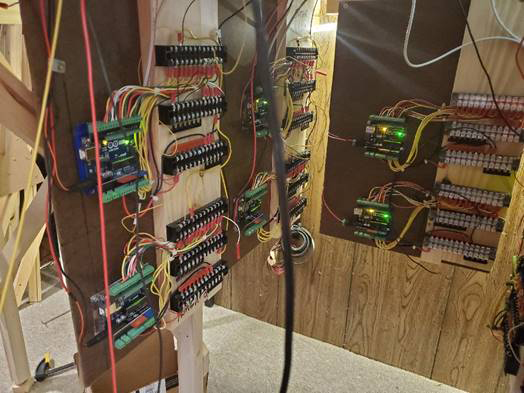
That makes it easy to run wire from my signal control panels to the signals (first picture).

Now the IR sensors I am using only use three wires: positive, ground and data. I could use phone wire again band just not use the green wire, but I decided to use separate Red, Black, and Yellow wires.
DC wiring model trains

It was going to be more work than using three different spools instead of one phone wire. Then the light came on.

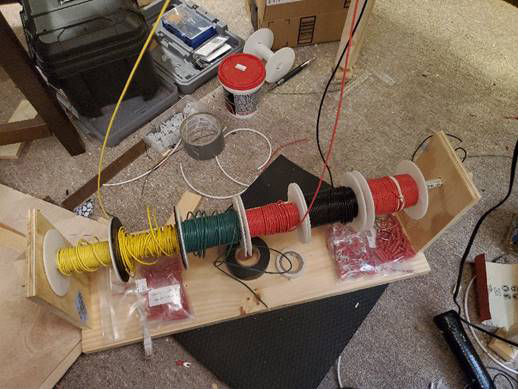
I fashioned a spool rack using a ½ in dowel and some scrap wood(picture two).

It works great for DC wiring model trains. I just tape the ends of the three wires together and pull the wires together from the control panel to each sensor.
DC wiring model trains

The spool rack is also a great way to store wire and it is portable.

Here it is on the floor where I am working but I also use it on my workbench when I am putting together and wiring the dwarf lights for my turnouts.

Bob in Virginia”

Now on to Ashley:

“Hi Al,

I have been enjoying your posts for a couple of years now. So it’s probably time I contributed something. As well as the modelling and running a layout I enjoy working on the controls side of things.

With DCC loco’s the reading and changing CV’s becomes tedious if you have to remove the engine and put it on a programming track each time. So I devised a simple improvement.

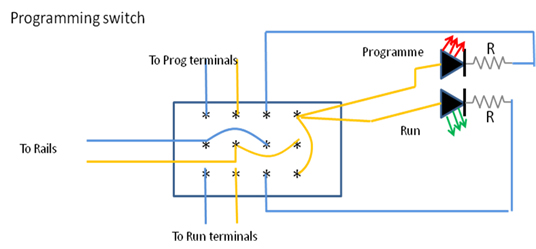
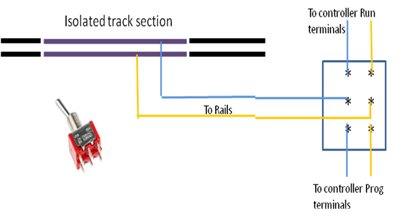
I made a section of track isolated and wired it to a switch that can connect either to the running output or programming output of the controller.

I simply run the engine onto the isolated section ( switch set to run) then switch to programme, read and change CV’s. Then switch back to Run and check it out.

I never have to takethe engine from the track.

The diagram below shows a simple installation using a double pole double throw switch.

The second diagram shows how I added LED indicators. The resistor value depends on how bright you want the LED. between 270 Ohm and 1k Ohm will be ok.

As the track voltage is alternating the LEDs can be connected either way.
DC wiring model trains diagram

diagram

Ashley”

And now some pics from Cassio. His last post is here.

He’s a man of very few words, but we’ll make an exception again because of the language barrier:

HO scale model train

HO scale model train


HO scale model train

HO scale model train

HO scale model train

“HI Al

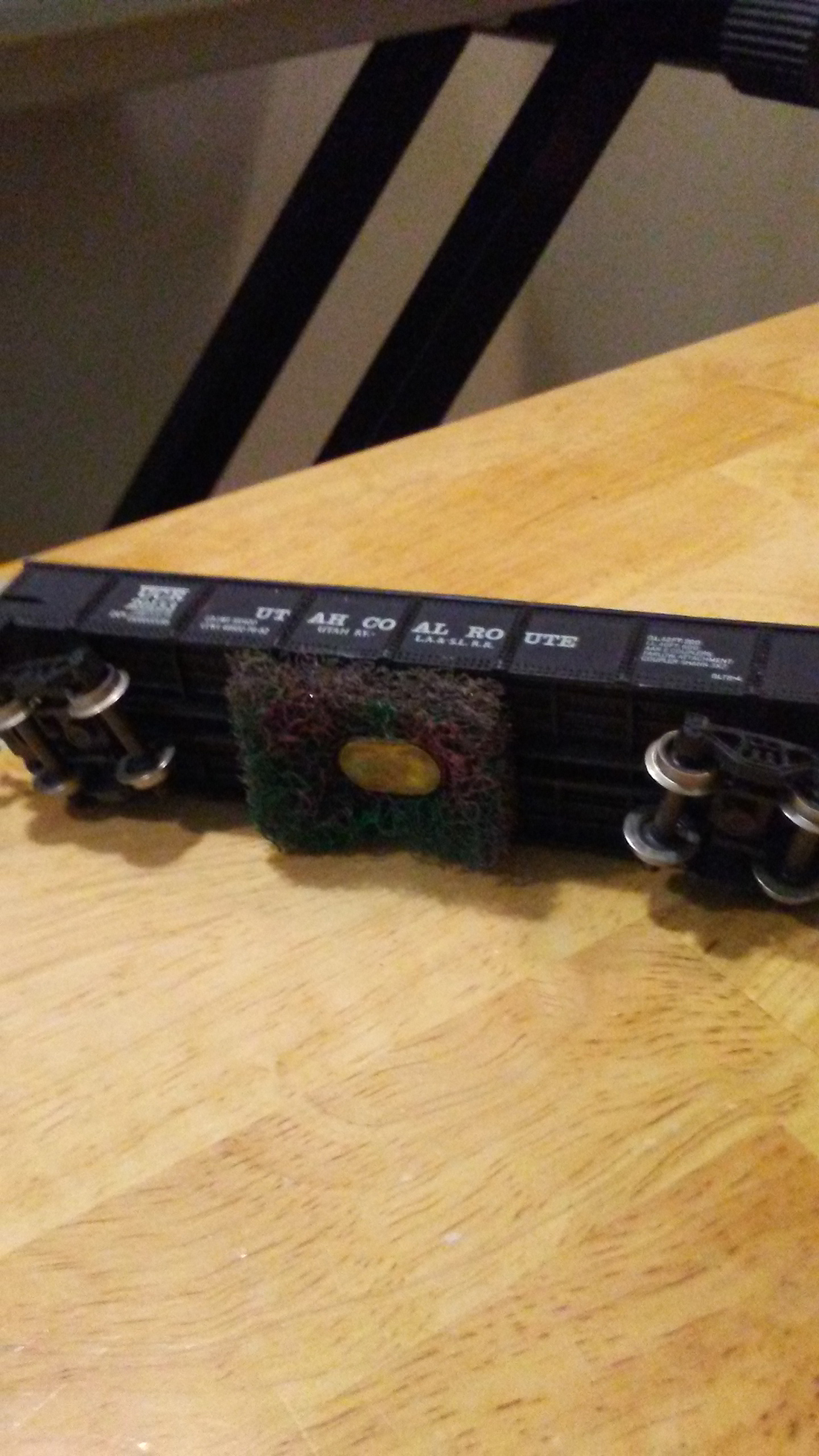
Robert here just made this track cleaner and works better then any store bought Simple to make track cleaning car.

Look for a gondola you won’t mind drilling a hole through the middle, drill through the weight. Get yourself a floor scrubbing pad and cut to size.

Your Home Depot / Lowes has 16” size or the paint isle has smaller hand held scrubbers.

You can buy a flat head bolt. Mine is from a toilet seat kit that i didn’t use.

For the cleaning liquid is your call. I use rubbing alcohol because it cleans and evaporates quickly. Buy any size cut to fit.

Enjoy

Robert”
track cleaner

track cleaner

“As an “Old School Modeler” I learned from my Dad a long Time ago that if you don’t have “good track work” as in “Your Track/Layout and connections are PERFECT… It won’t be fun to run the trains!”

This is exactly what my dad instilled in me over forty two years ago when I was in my pre/early teens.

Back then we had switched from American Flyer ‘S’ gage to HO, because back then we didn’t have “E-Bay” or the internet or “after markets” and “Re-Pops”. Sooo getting parts and stuff for those old American Flyer trains was alot more difficult!

So when we switched to HO… first off we could build alot bigger layouts with the tables we already had… and do alot more detailing! And it was pretty affordable too.

And I’ve always loves seeing what I could do with Smaller Trains and slot cars too! 🙂 so this was a win-win for us!

but… it also meant taking much more time to get things right!

In Smaller Scale… things like tight curves, gaps etc. get alot worse and made for attention to what we were doing much more critical!

If your track work does not work flawlessly, no amount of electronics. scenery, realism, operations, etc. will ever make you want to head for the train room. Take your time on the track work, make if bullet proof, and everything else will be a delight!”

However It wasn’t easy for me (as a Kid!) because my Dad and I had spent a good chunk of money getting all New Stuff! And of course being a kid I couldn’t wait to run it all! (Hell I’m still that way now! LOL 😀 )

So “patience” and “time taking” was something I really had to learn! But it did all pay off! Once we got ALL of the “bugs” worked out on the main layout… which also taught us a lot in just how “tight” we could make turns and how steeo we could make grades and such… and when we later added on the back “Train Yards” on the other side of our wreck room wall (And into the laundry/utility room!) it went down without a hitch including the “Round House” and “Repair Yards”!

What also Helped was using what we dubbed “The “Bitch” because it was a Steam Locomotive that would de-rail from a shadow it was so Sensitive!

So once “The Bitch” ran the entire Layout five times without a hitch or stopping or de-railing, then we knew it was all ready to nail down permanently!

I will also add to this… If you don’t have enough ‘power’ for your layout… especially if it’s a gin one like we ended up with… that too will add to frustrations!

So Power the tracks / trains with multiple power sources, add “bypass” wires from the Power Sources to multiple areas of the tracks to ensure continues power flow so you won’t get “dead Spots” and Power the “extras” (i.e. Lights. Switches, Etc.) with seperate power sources!

This will make for a much nicer time running things and if you have a “Snafu” in anything… you only have to mess with that circuit setup and not the entire layout.

Joe

Wisconsin”

That’s all for today folks. A big thanks to Joe, Robert, Ashley and to Bob for his DC wiring model trains ‘how to’.

Please do keep ’em coming – it’s all getting a bit thin on the ground again this end.

And if you want to your start, on your very own layout, the Beginner’s Guide is here.

Best

Al

PS Latest ebay cheat sheet is here.


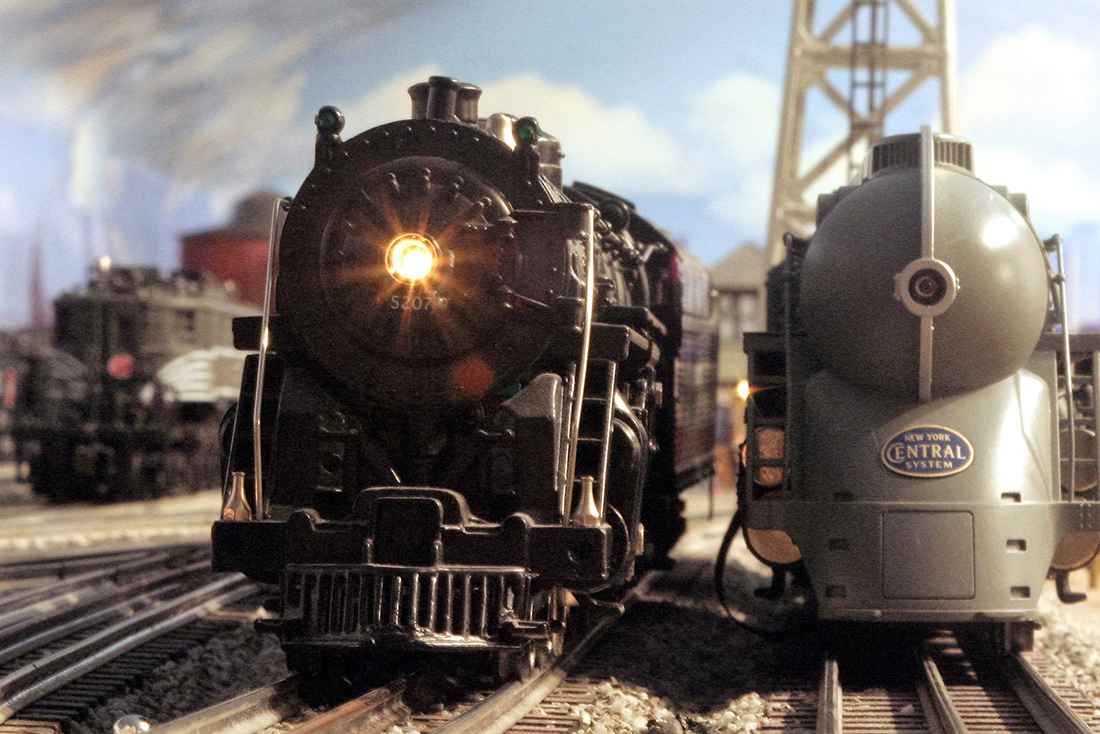
O scale NYC Hudson

Rich has been back in touch with his O scale NYC Hudson locos.

If you missed his last post, it’s here.

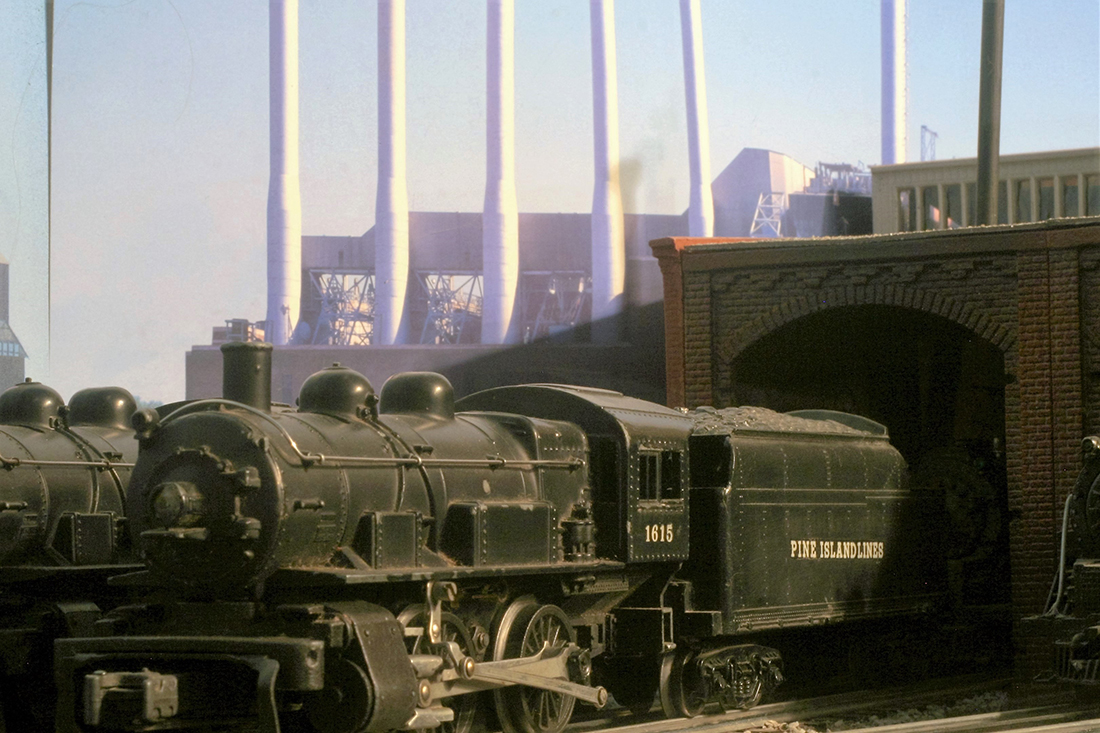
“I want to thank you all for your kind comments about the Pine Island Railroad and encouragement to send more.

Many of you wanted to see some video but, unfortunately, I don’t have the capacity to produce it. My friend, and tech wizard Jeff, could help me out and we will be in touch as soon as life starts to open up again around here. (Jeff is also the airbrush virtuoso for the backdrop work.)

My technique for photographing the Pine Island is to use a tripod and time exposure.

Also shoot at night because natural light through windows and flash photography leads to unrealistic color and overly reflective highlights.

Set the f stop as high as it will go (22-29) and regulate the shutter speed slower than 1 second.

The high f stop keeps more of the depth in focus (although nothing’s perfect) but the shutter speed requires an absolutely still camera; setting the timer helps too.

Also try to stay low at track level. Too many aerial shots are unrealistic and don’t do justice to detail.

I will send still more pictures at another time and hopefully draw up a track plan.

Thank you Alastair for again posting my photos.

Robert”

O scale NYC Hudson

O scale NYC Hudsons prepare to depart.

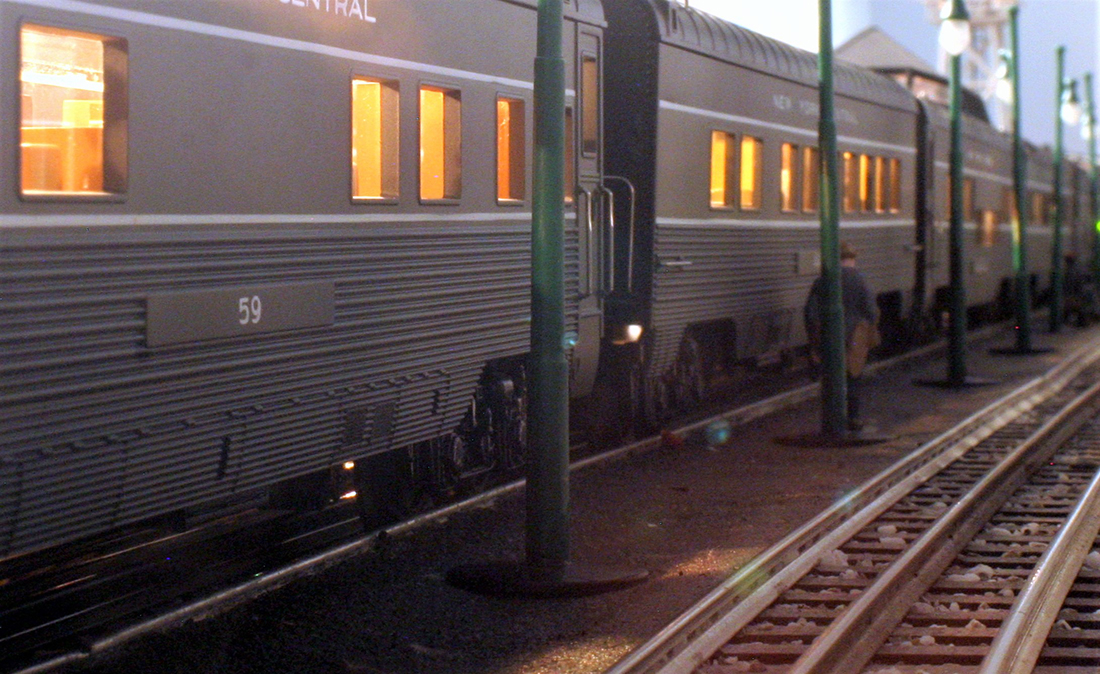
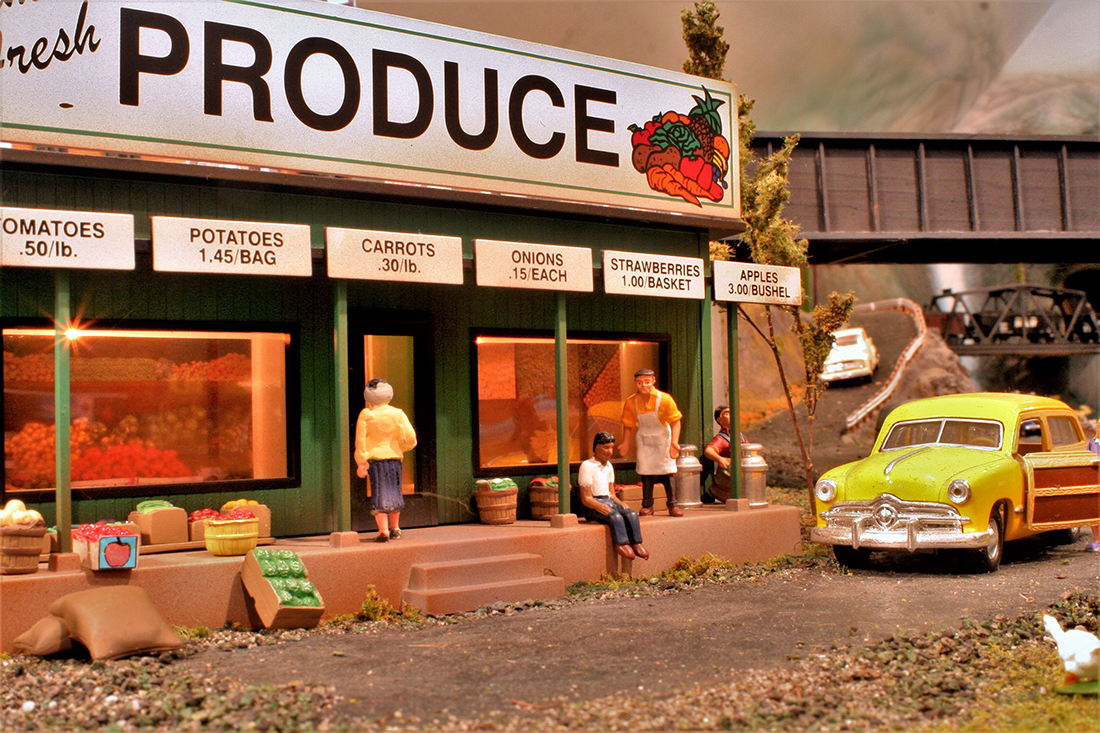
O scale platform

A long quiet platform.

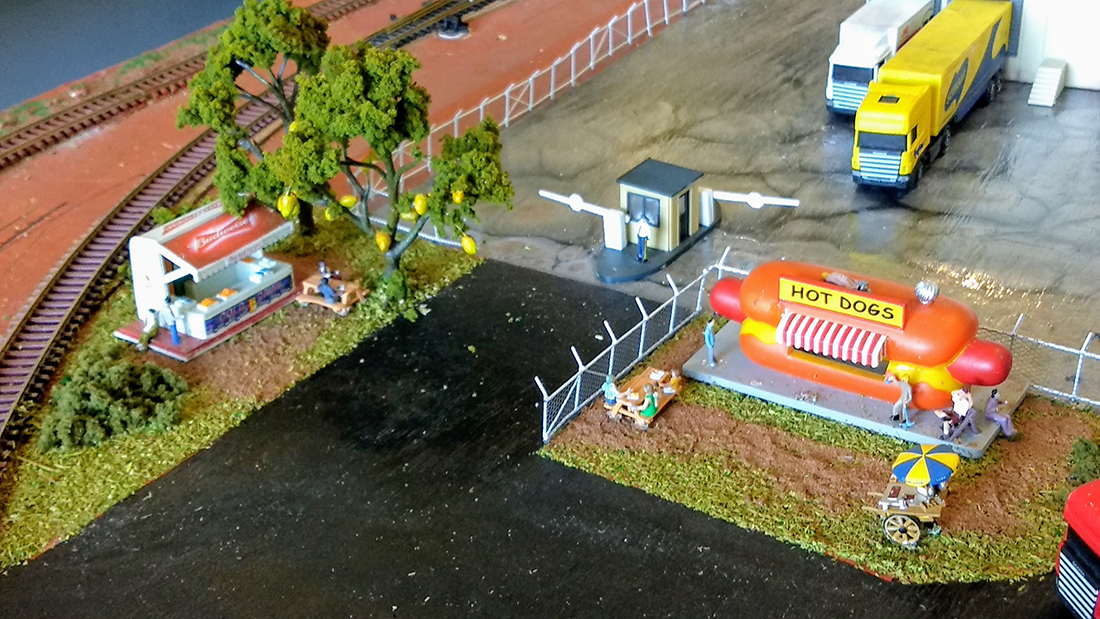
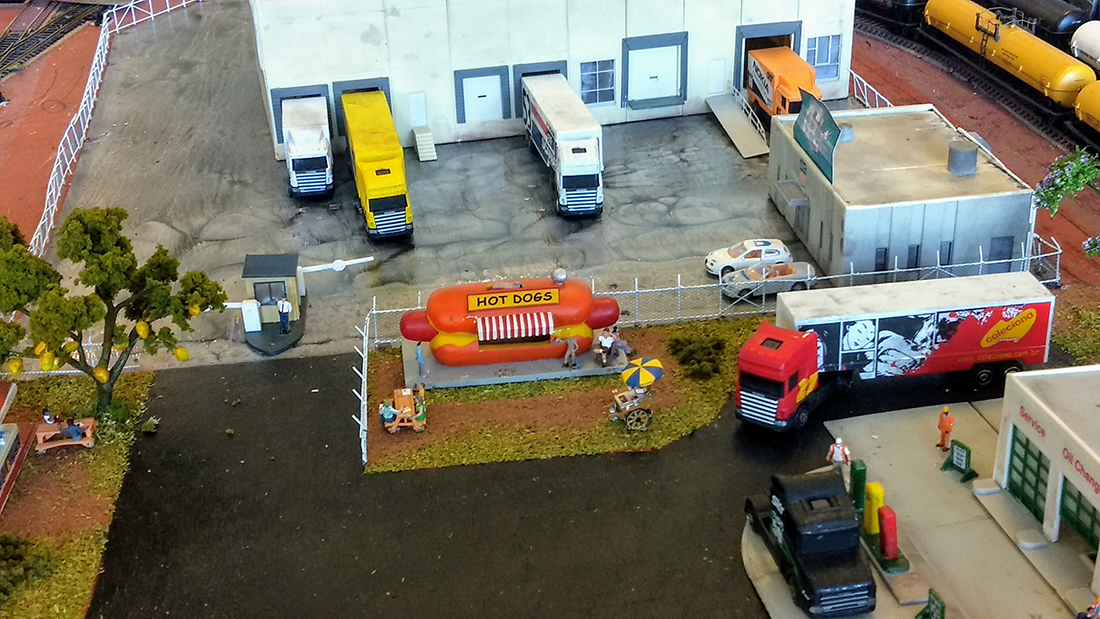
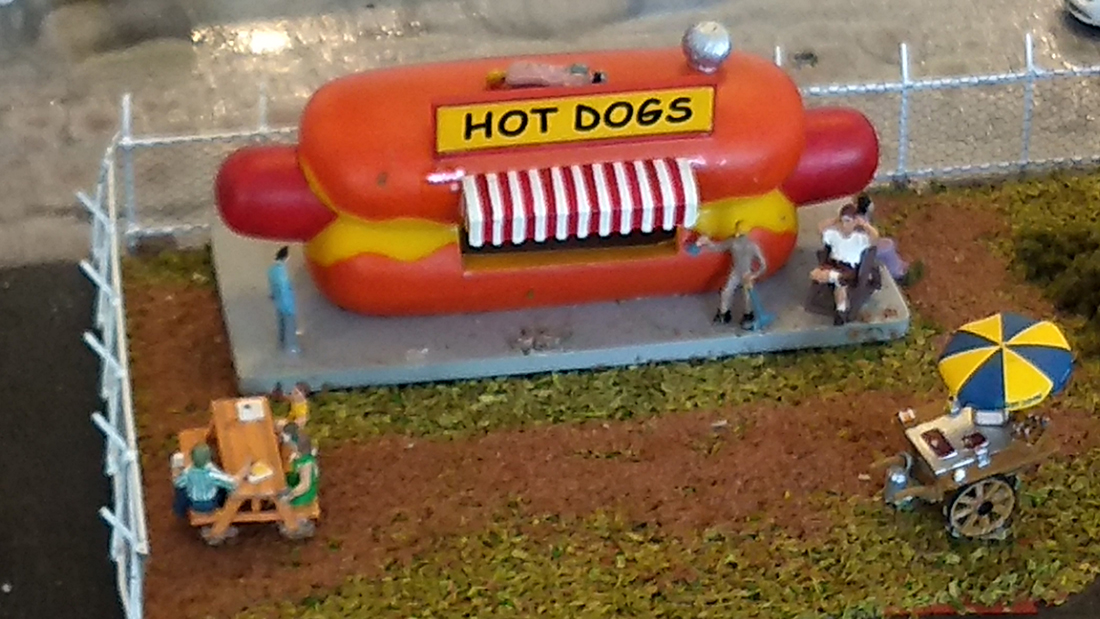
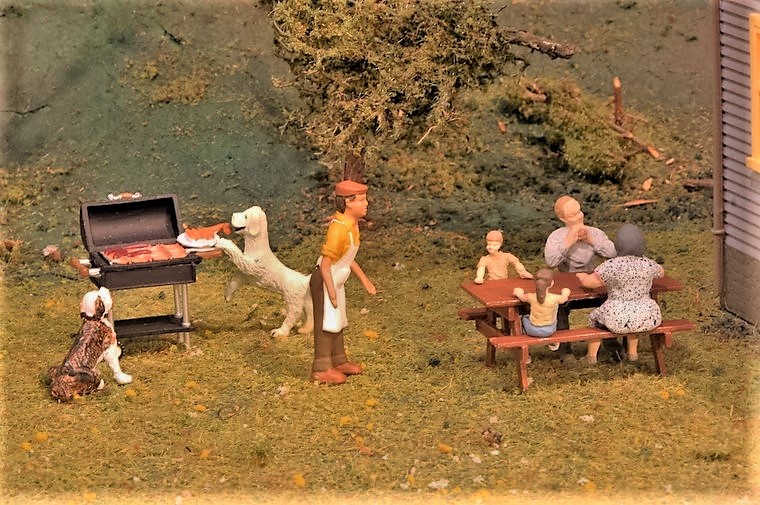
O scale hot dog stand

BBQ gone to the dogs.

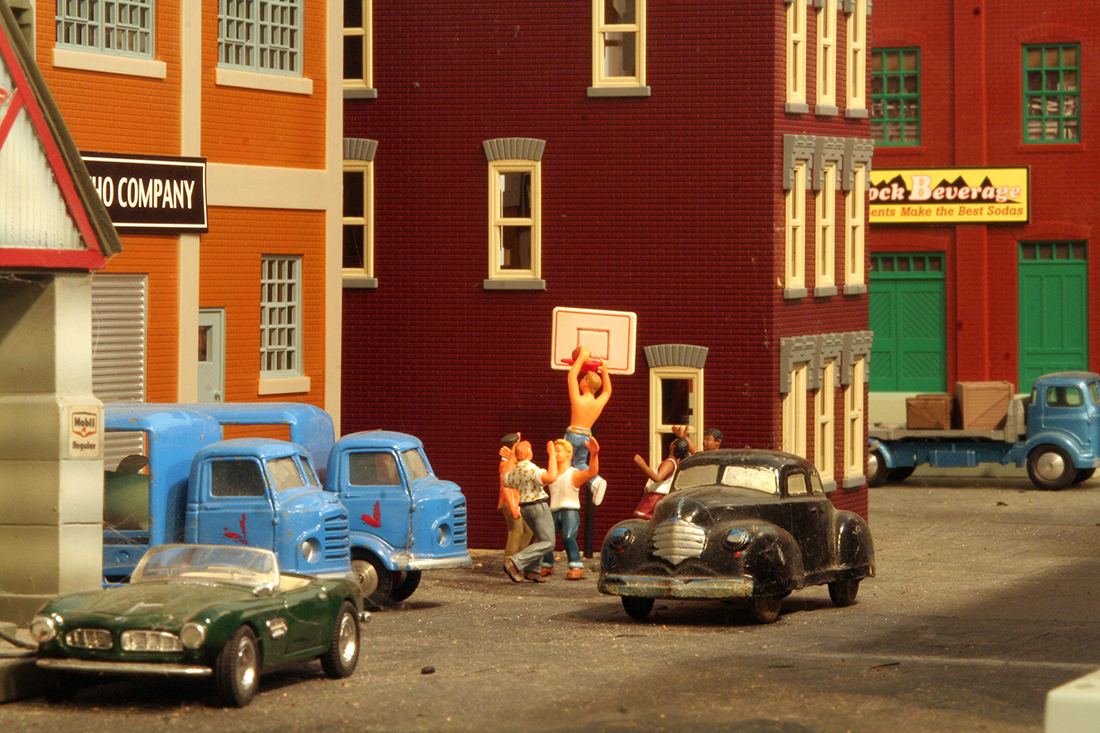
O scale street scene

Back street game of hoops.

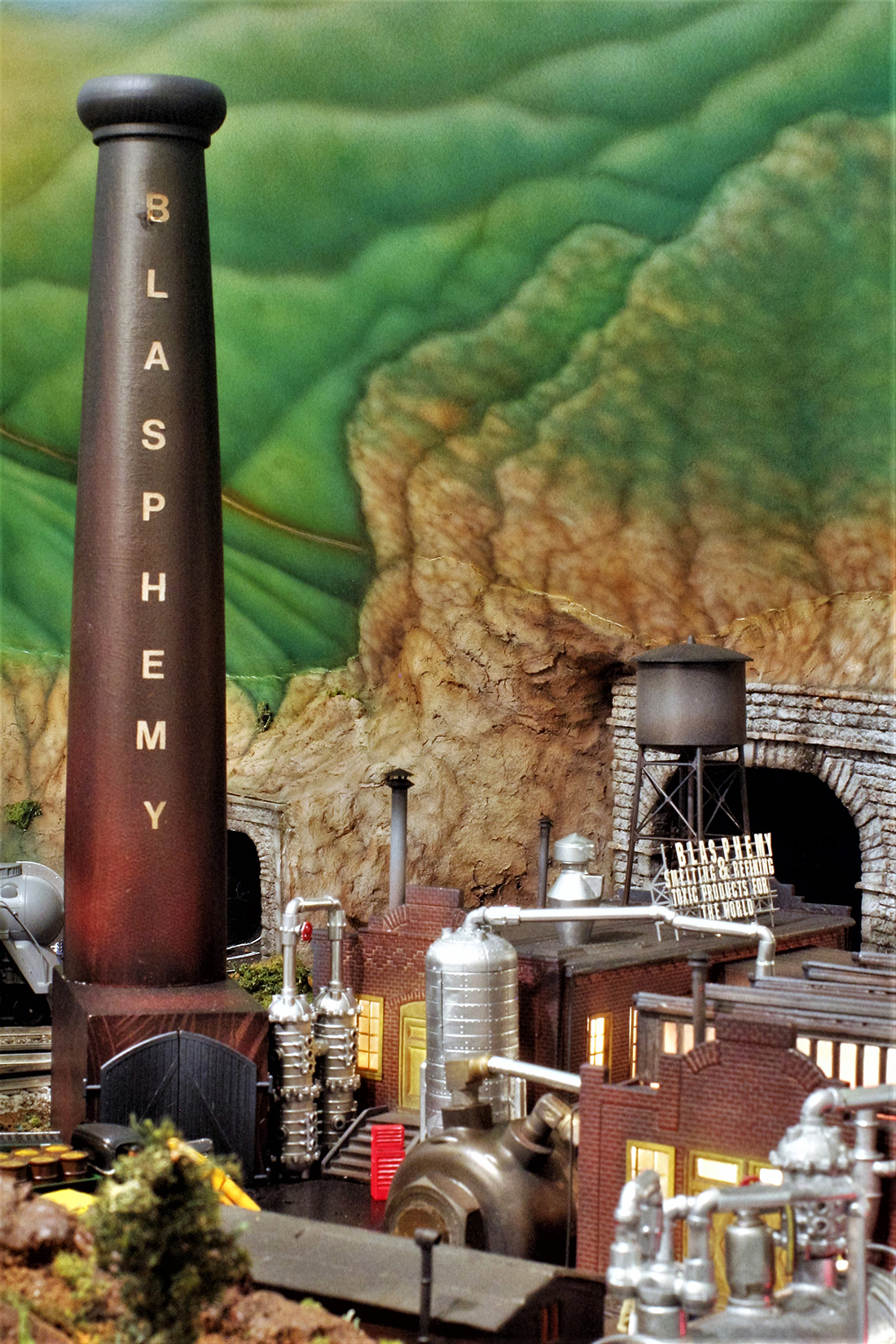
O scale factory smoke stack

Smoke stack.

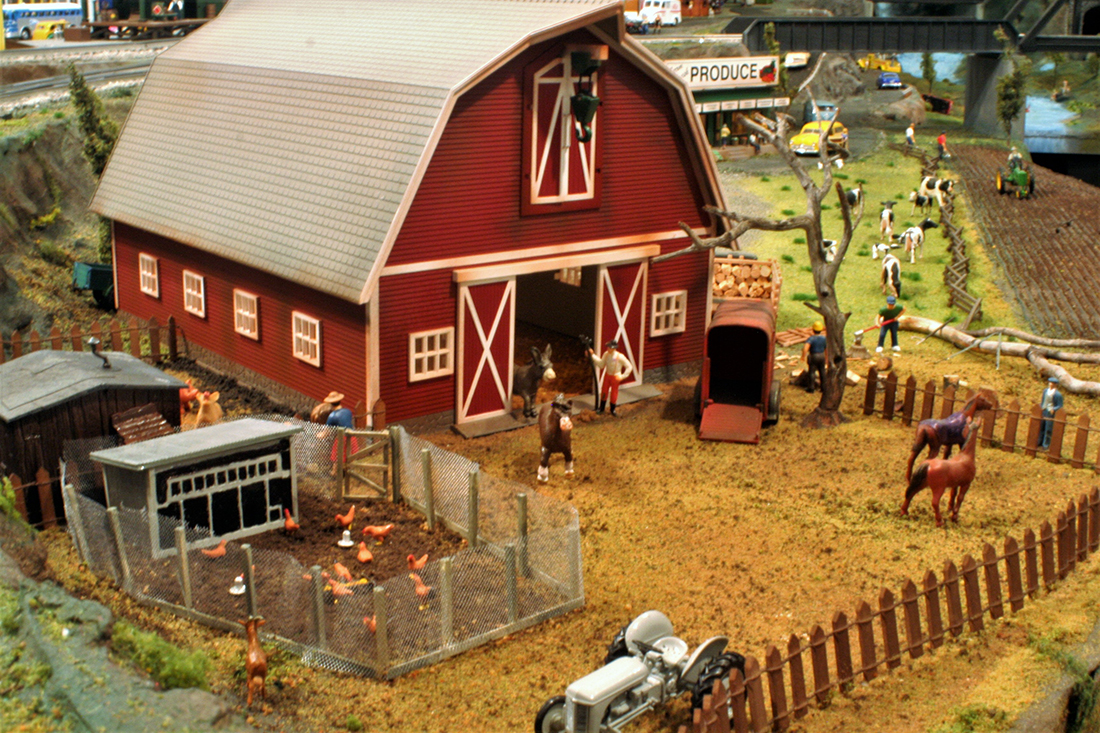
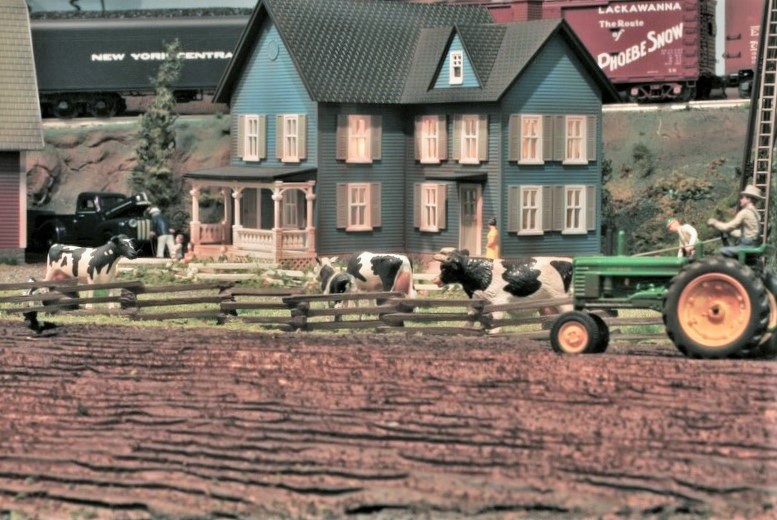
O scale barnyard

Busy barnyard.

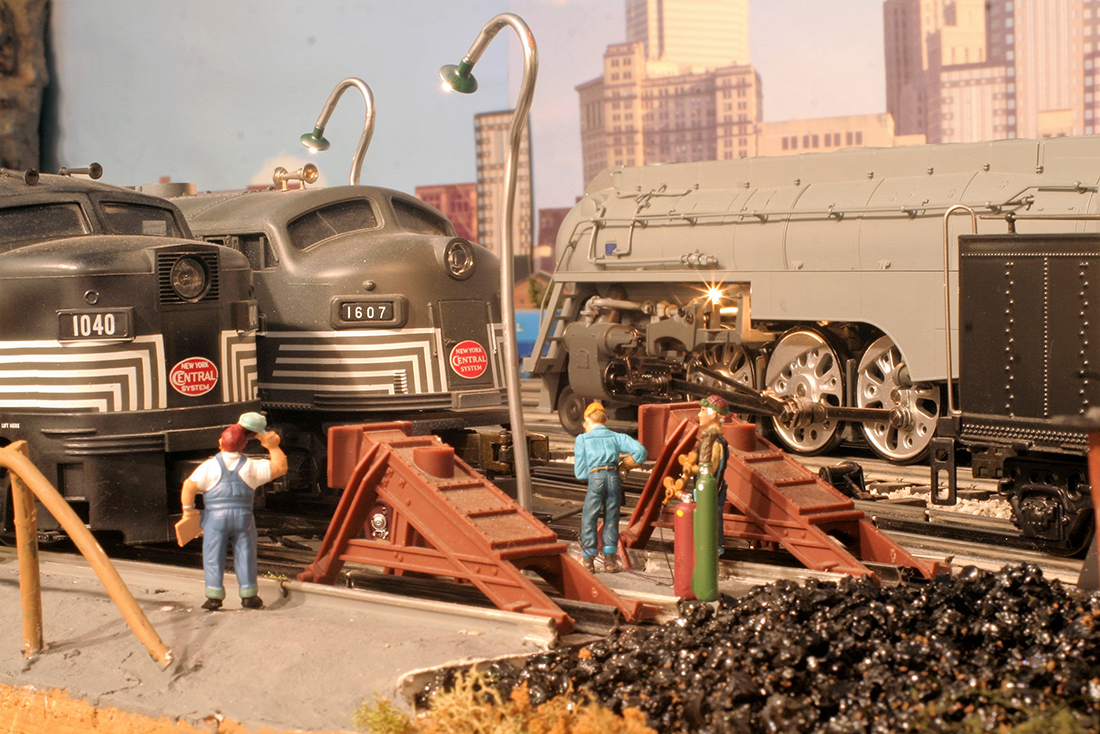
O scale diesel yard

Diesel service yard.


model railroad street scene

Dad scolds lazy son for not helping out.

model railroad farm

Farm plowed field was cardboard box.

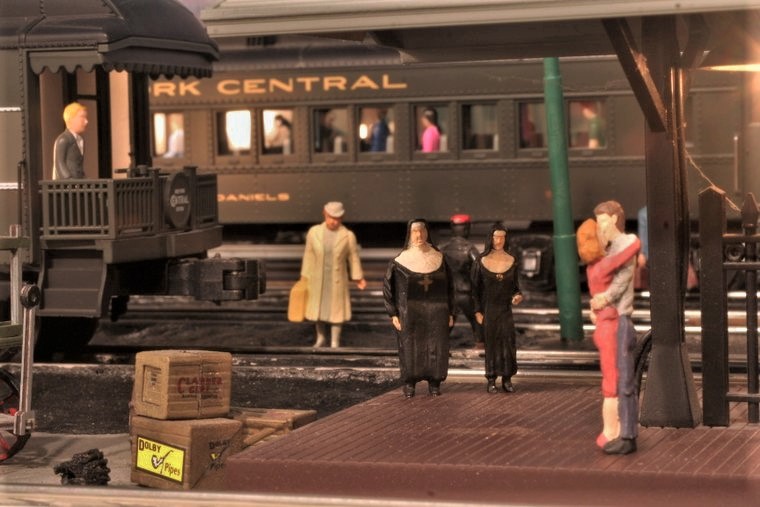
O scale people

Lovers kiss as nuns look on.

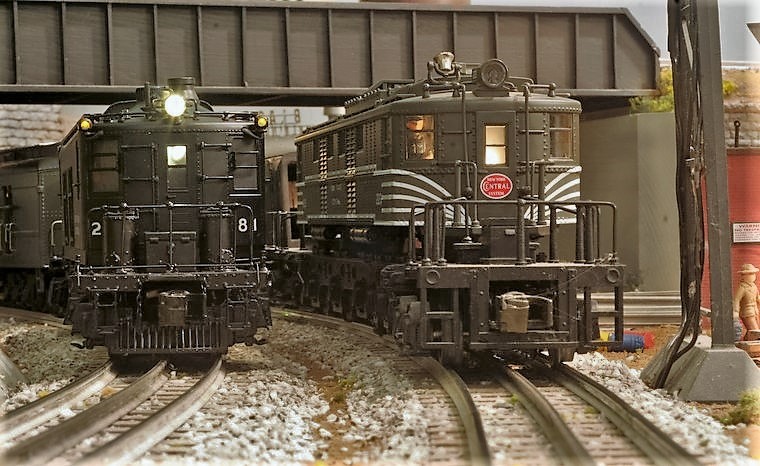
O scale NYC Hudson

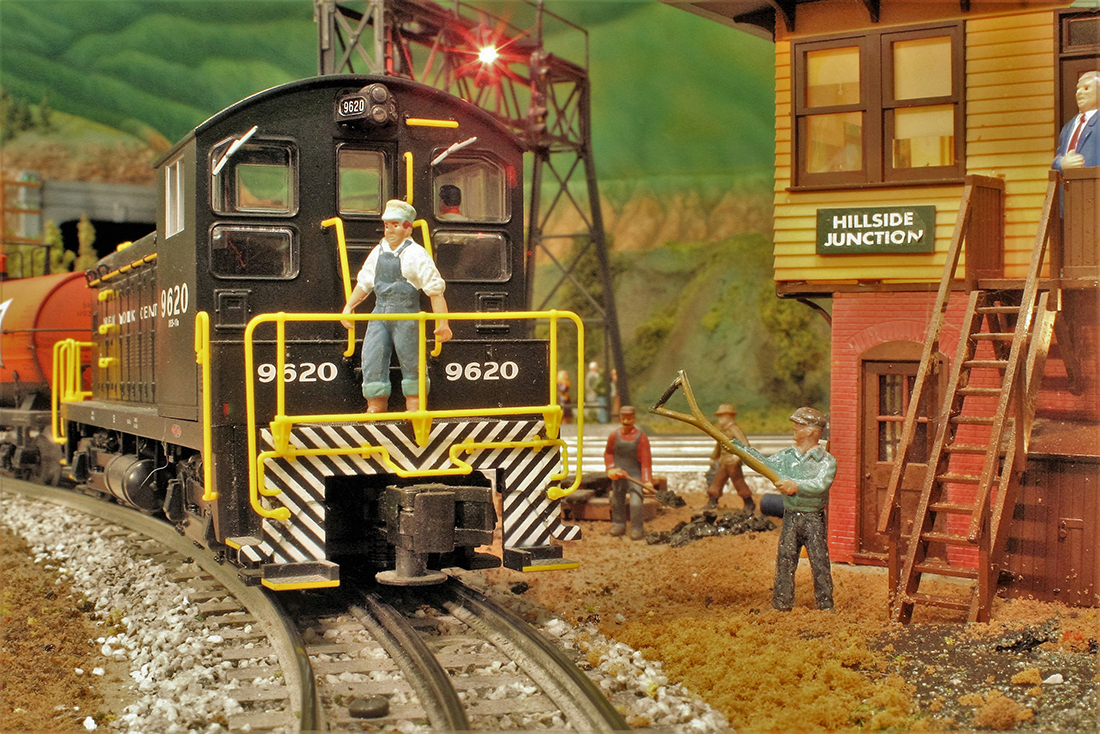
NYC T&P motors at hillside junction.

O scale model railroad

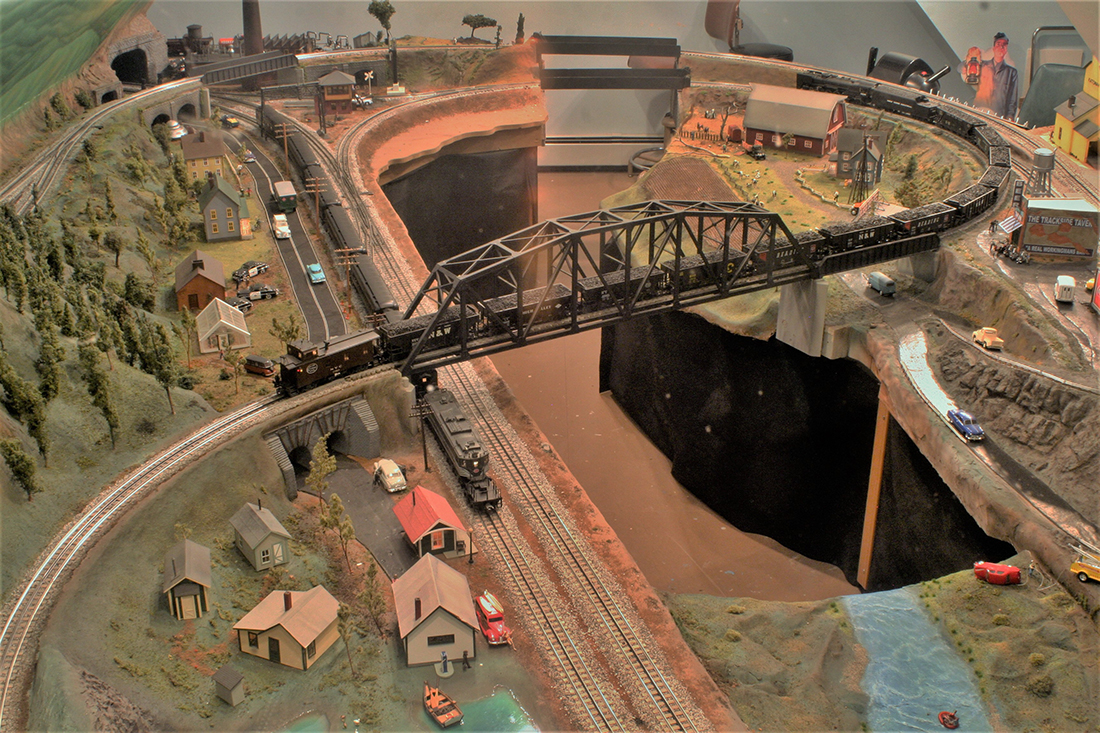
Overview of layout taken through window.


model railroad street scene

Ready to hoop up orders.

model railroad O scale scenery

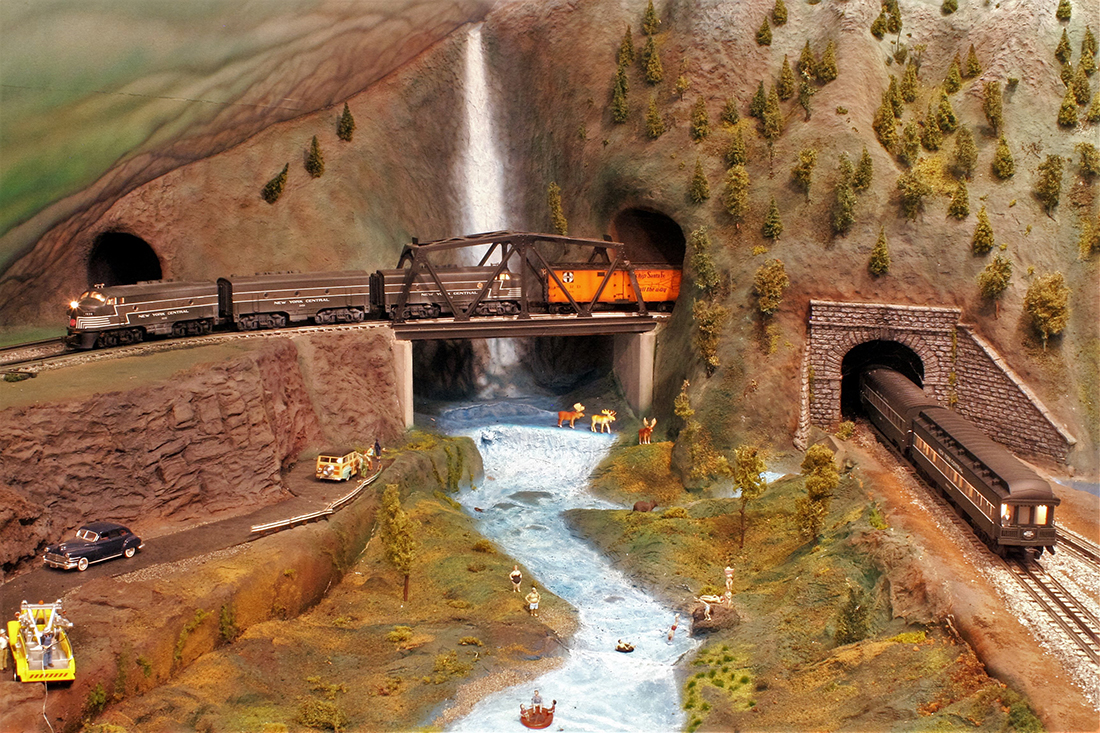
River valley looking south.

O scale model railroad yard

O scale NYC Hudson

Pine Island 0-4-0s and 2-6-4s croud roundhouse whisker tracks

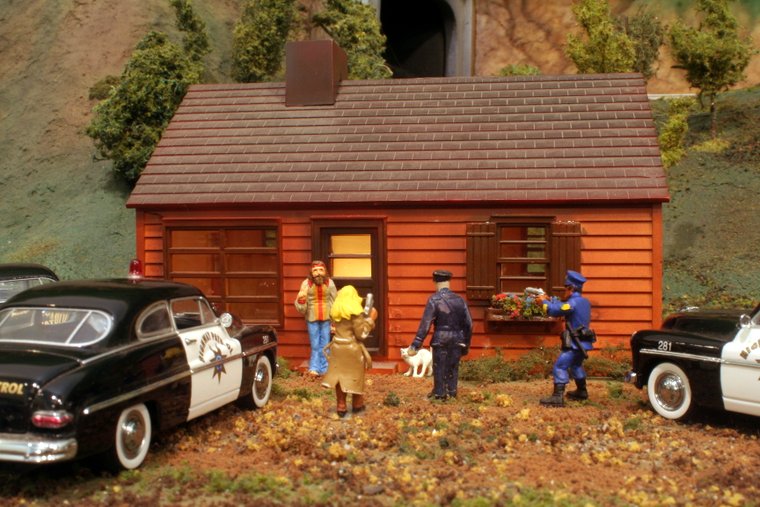
O scale police figure

This is a bust!

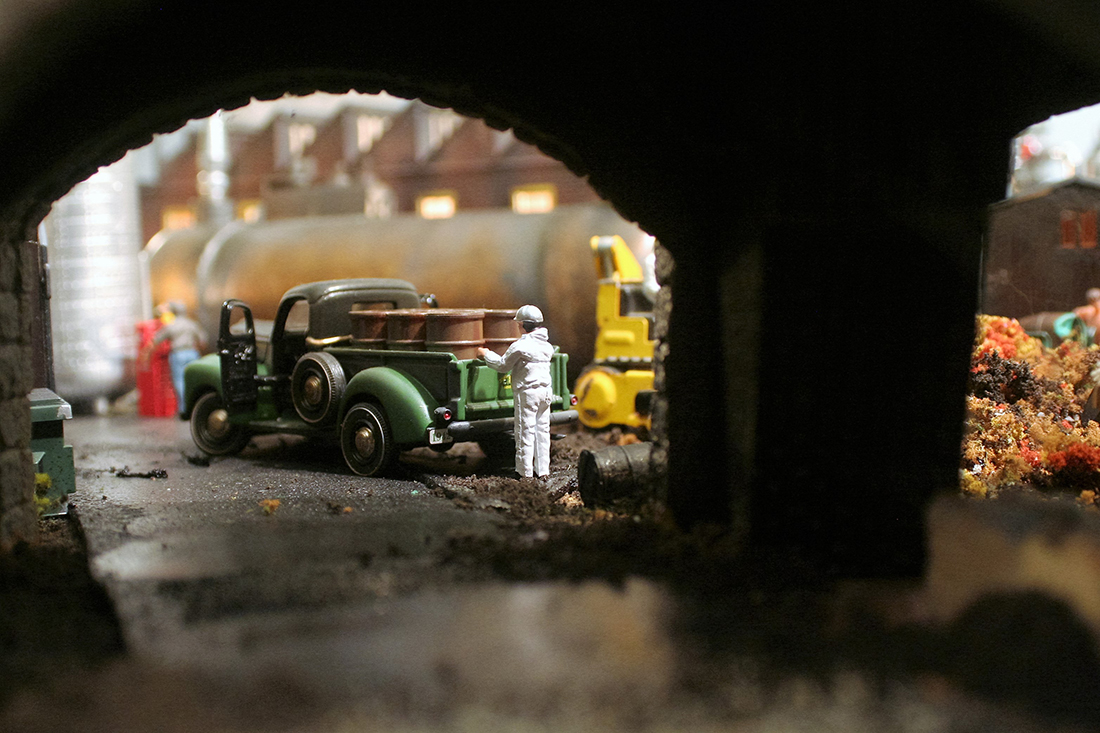
Toxic dump creates puddle under the bridge

O scale people

I do love the story that the captions tell.

Stunning stuff from Robert and his O scale NYC Hudsons. His pics are as a good as his layout – it’s good of him to share his photography tips too.

That’s all for today folks.

Please do keep ’em coming.

And don’t forget the The Beginner’s Guide is here if today is the day you get thoughts together to get going on your very own layout.

Best

Al

PS Latest ebay cheat sheet is here.


Model railroad track cleaning tips

Robert’s been in touch with his model railroad track cleaning tips:

“Hi Al

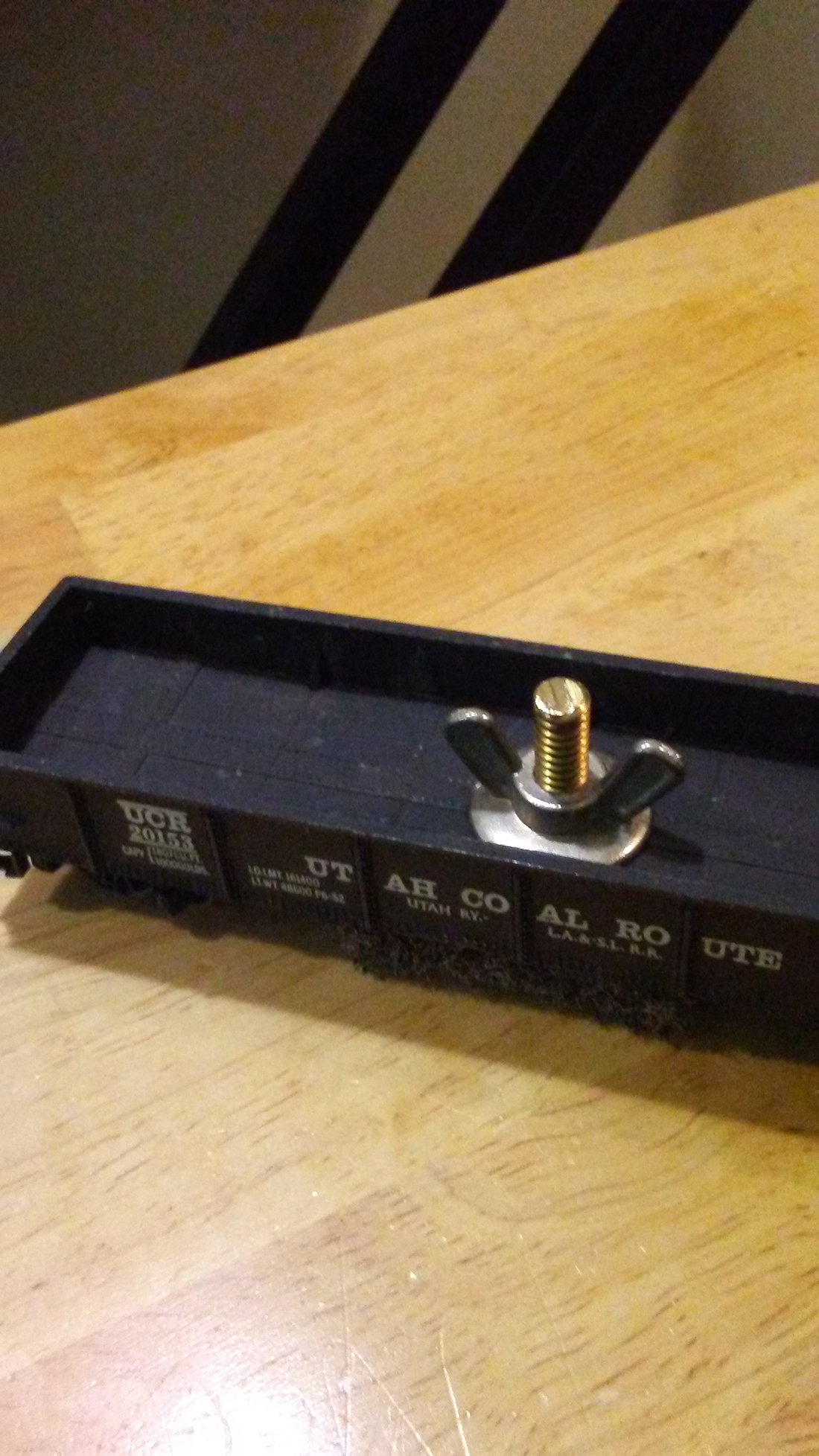
Robert here just made this track cleaner and works better then any store bought Simple to make track cleaning car.

Look for a gondola you won’t mind drilling a hole through the middle, drill through the weight. Get yourself a floor scrubbing pad and cut to size.

Your Home Depot / Lowes has 16” size or the paint isle has smaller hand held scrubbers.

You can buy a flat head bolt. Mine is from a toilet seat kit that i didn’t use.

For the cleaning liquid is your call. I use rubbing alcohol because it cleans and evaporates quickly. Buy any size cut to fit.

Enjoy Robert”
model railroad track cleaning tips

model railroad track cleaning tips

When it comes to model railroad track cleaning tips, there’s quite a few on the blog now.

These spring to mind:

Model railroad track cleaning car.

Cleaning model train track.

Clean your track.

Track cleaner

“As an “Old School Modeler” I learned from my Dad a long Time ago that if you don’t have “good track work” as in “Your Track/Layout and connections are PERFECT… It won’t be fun to run the trains!”

This is exactly what my dad instilled in me over forty two years ago when I was in my pre/early teens.

Back then we had switched from American Flyer ‘S’ gage to HO, because back then we didn’t have “E-Bay” or the internet or “after markets” and “Re-Pops”. Sooo getting parts and stuff for those old American Flyer trains was alot more difficult!

So when we switched to HO… first off we could build alot bigger layouts with the tables we already had… and do alot more detailing! And it was pretty affordable too.

And I’ve always loves seeing what I could do with Smaller Trains and slot cars too! 🙂 so this was a win-win for us!

but… it also meant taking much more time to get things right!

In Smaller Scale… things like tight curves, gaps etc. get alot worse and made for attention to what we were doing much more critical!

If your track work does not work flawlessly, no amount of electronics. scenery, realism, operations, etc. will ever make you want to head for the train room. Take your time on the track work, make if bullet proof, and everything else will be a delight!”

However It wasn’t easy for me (as a Kid!) because my Dad and I had spent a good chunk of money getting all New Stuff! And of course being a kid I couldn’t wait to run it all! (Hell I’m still that way now! LOL 😀 )

So “patience” and “time taking” was something I really had to learn! But it did all pay off! Once we got ALL of the “bugs” worked out on the main layout… which also taught us a lot in just how “tight” we could make turns and how steeo we could make grades and such… and when we later added on the back “Train Yards” on the other side of our wreck room wall (And into the laundry/utility room!) it went down without a hitch including the “Round House” and “Repair Yards”!

What also Helped was using what we dubbed “The “Bitch” because it was a Steam Locomotive that would de-rail from a shadow it was so Sensitive!

So once “The Bitch” ran the entire Layout five times without a hitch or stopping or de-railing, then we knew it was all ready to nail down permanently!

I will also add to this… If you don’t have enough ‘power’ for your layout… especially if it’s a gin one like we ended up with… that too will add to frustrations!

So Power the tracks / trains with multiple power sources, add “bypass” wires from the Power Sources to multiple areas of the tracks to ensure continues power flow so you won’t get “dead Spots” and Power the “extras” (i.e. Lights. Switches, Etc.) with seperate power sources!

This will make for a much nicer time running things and if you have a “Snafu” in anything… you only have to mess with that circuit setup and not the entire layout.

Joe
Jefferson Wisconsin”


“I have an HO two level, (not inter-connected), layout which fills a room of about 25 by 25 feet. I built it myself and made every mistake in the book and then some.

Some thoughts:

I find it a problem when the track is further away than my arm’s reach.
I find it a problem when there are no “emergency hand access” holes in totally covered mountain scenery.
I find it a problem where there are no “people access holes” on large table tops.
I find it a problem when a layout is densely complex with turn-outs, switch backs, short sidings, etc.

Another point:

It was a BIG Problem when I added a second main line next to and basically following the already installed, original main line:

Clearance problems, (particularly for tunnel entrances, and for long freight/passenger cars), radius problems, wiring problems, turn-out interferences, track side structures, etc. Disappointed

Another problem: if you are going to install a Round House and turntable, make sure you have sufficient, (yes, more than you think necessary), “lead in track” so that your longest locomotive can line up properly and enter the turntable and exit the turntable and smoothly enter the Round House.

Also watch out for track alignment and track elevation problems on the entrance and exit of the turntable.Weary

Another issue: I used flex track around the long curves. Watch out. Flex track is great. However when you bend it around to make a curve you are inducing “locked in stresses”, (yes I know, I am an engineer).

These “locked in stresses”, over time, may cause track misalignments and may even cause the track to warp in a vertical plane, popping off the road bed. If the involved section of track is beyond your arm’s reach, you may have an “Advil” headache problem.

Frank in San Diego”


“Hi Al…

just downloaded this video showing a problem I have, maybe someone can sort for me, also a tip on cleaning the tracks, and a bit of a running session.

Just sit back and enjoy…

Regards

Dave”


Latest ebay cheat sheet is here.

And finally for today, cast your mind back to the scratch building competition.

I said the winning building will be put on the site for a free download. Well, here it is:

Click here to download John’s winning freight shed.

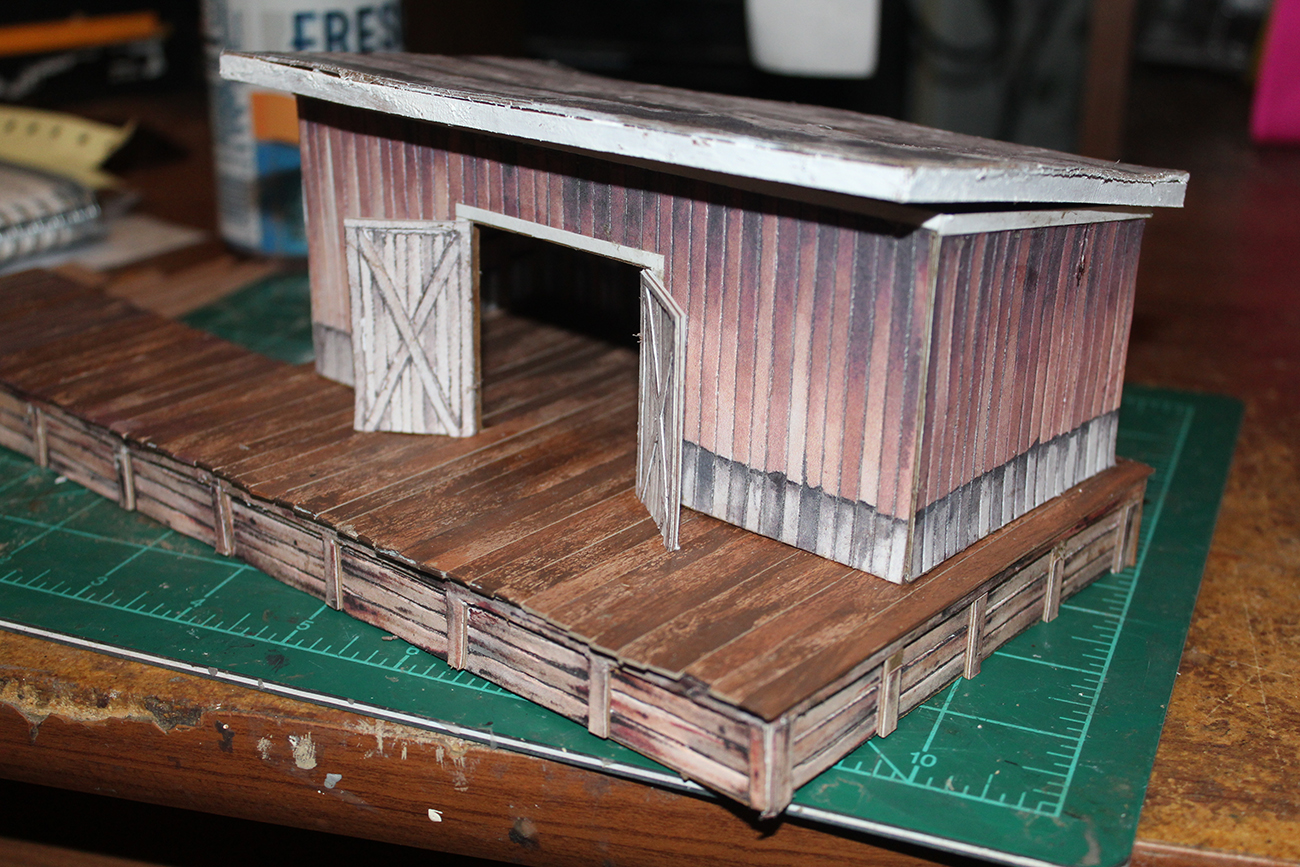
And here’s a pic of it:

That’s all for today folks. Who can help Dave? Leave a comment below if you can.

Thanks to Robert for his model railroad track cleaning tips.

Please do keep ’em coming.

And if today is the day you get started on your layout, the Beginner’s Guide is here.

Best

Al

PS Latest ebay cheat sheet is here.

PPS More HO scale train layouts here if that’s your thing.


printable buildings

And there’s the Silly Discount bundle too.