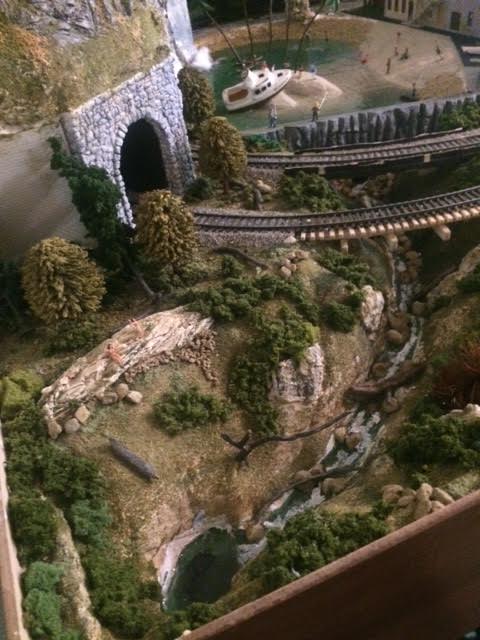
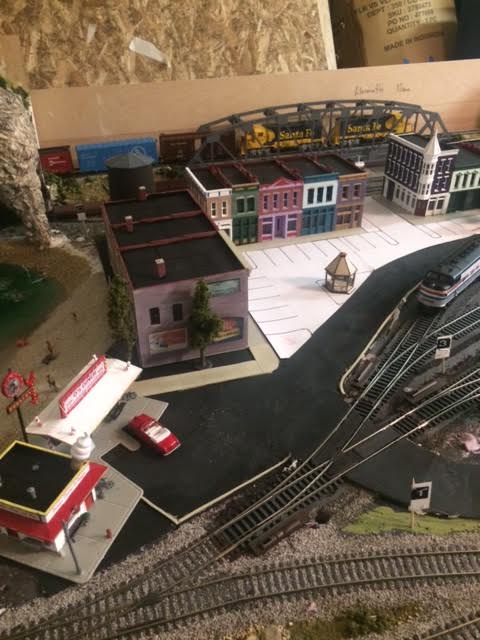
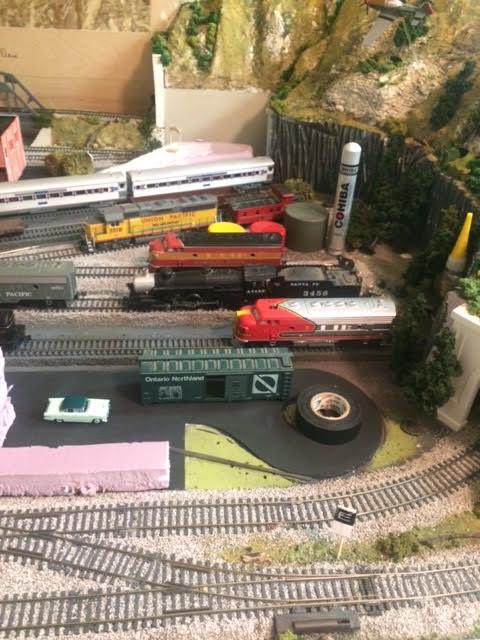
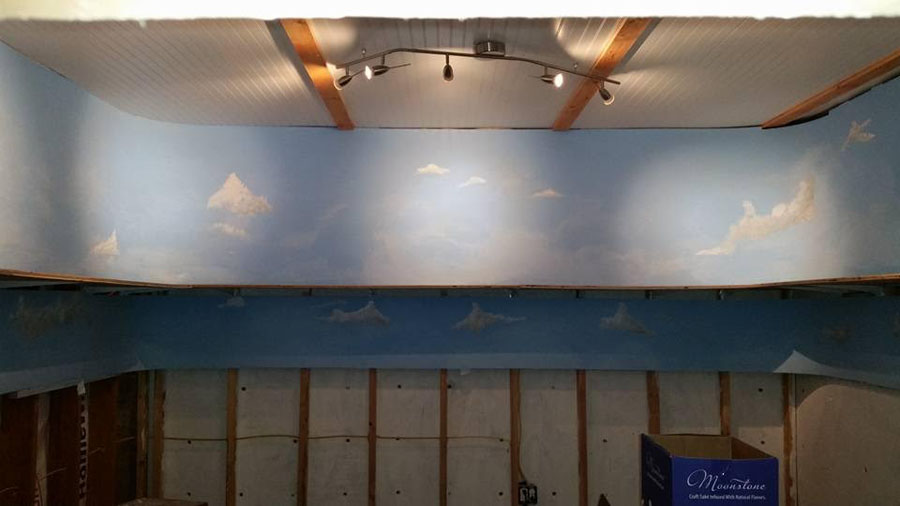
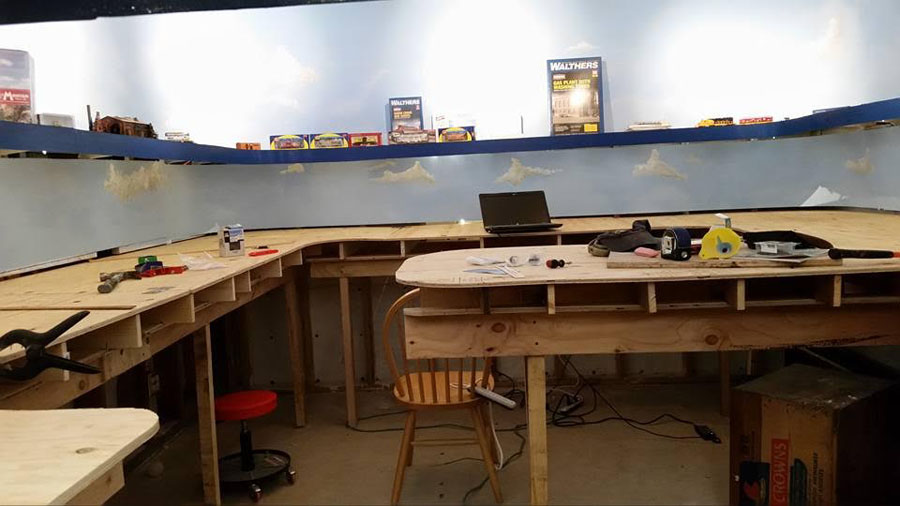
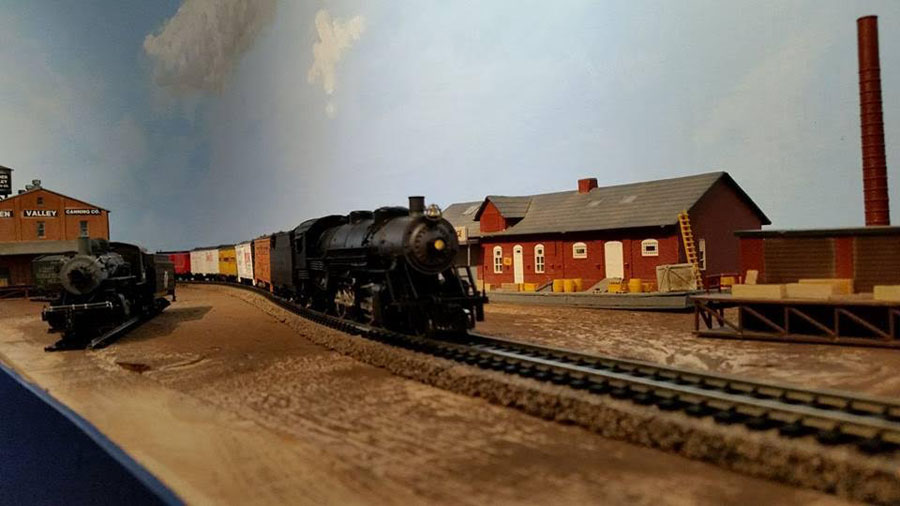
The area my old layout was in was an unfinished area of my basement.
The lighting was jury rigged and probably dangerous, it was alway uncomfortable there too cold in the winter and summer. Well bottom line, it had to go.
In order for the construction of the new room to occur, I had to tear down my layout Farland Howe. It was sad, but I was also looking forward to building an all new layout without all the problems a beginner can create on his first layout.
I wanted to eliminate for the start the poorly laid track, the added onto supporting train tables, the inability to reach certain areas so I was excited to build it new after, of course, once I got over the shock of tearing down 4 years work.
I started off using a computer program called Anyrail. There are several good computer track planning programs out there I chose anyrail due to a recommendation of a friend. It did have some drawbacks but it worked fine for what I was doing.
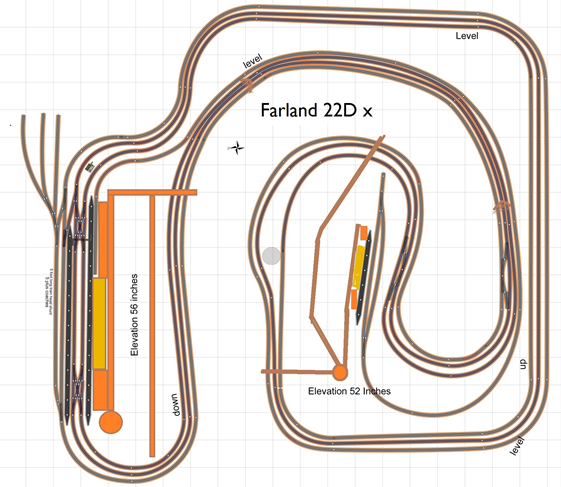
After exploring 3 completely different concepts for a track plan and studying all your online material and buying a couple books, I arrived at my swirl design as I call it. I experimented with many iterations of the basic plan while I was waiting for construction to be completed, but I think the plan I have started building will be a good one for shooting video and a fun one to run as well.
I chose a three main track layout. I considered four tracks, but in the end settled on three because I thought 4 mainline tracks would take up too much space and 3 would give me some flexibility.
Here is the final plan:
There are three basic heights to it. The town scene around the large main station will be set at the same elevation as platform height. The trains will then run slightly below that height. The smaller station will have a small village surrounding it and will be at a lower elevation. The main lines will have to decline down to that lower elevation and go under scenery to get there.
Any way, I have started building it and I am on part 4 so far. Here is a link to the latest installment of building Farland Two.
He’s been kind enough to answer some of the questions that were posted on his 4×8 HO train layouts:
“It’s DC. I’m not ready to take that step yet.
But I designed the track so I can run 2 trains at the same time and I can run a locomotive in the yard all at once. I have a controller with 2 cabs.
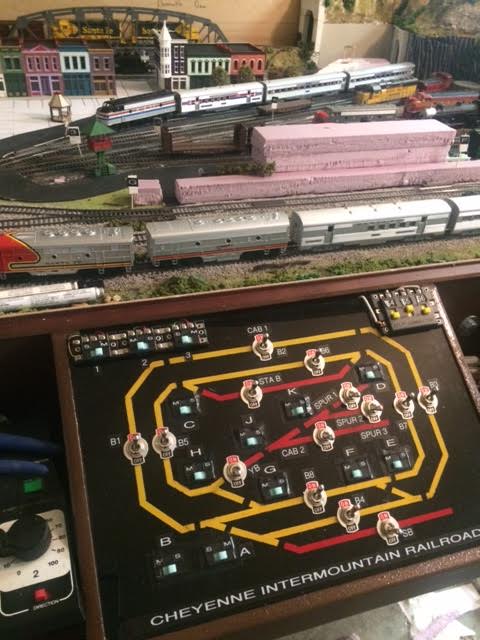
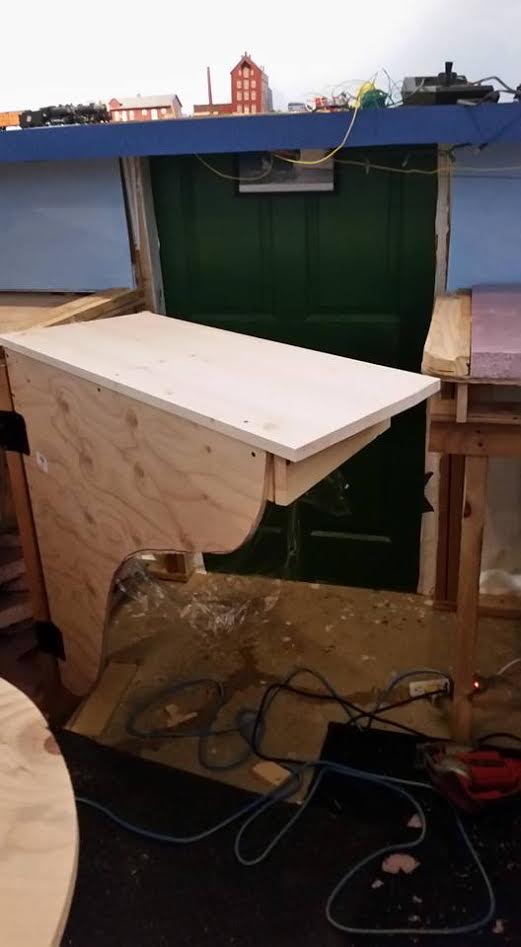
As far as the switchboard goes, I made it up as I went along. First I got a piece of plexiglass that o thought would be big enough for the track schematic. Then I built a box with a slant on it for ease of access to the switches. I then printed out a track schematic that I drew on my computer and I taped it to my plexiglass in mirror image.
Then I put pin stripe tape down using my template as my guide. Carefully cutting the tape etc to achieve my blocks in my track. Then I spray painted the back side (the taped side) and peeled away the tape as needed for color change. I.e. Red, Yellow and black.
Then flip it over to the correct side and the panel is all nice and shiney and terrific. Then I carefully drilled holes for the switches I bought from Model Train Stuff on line.
Be careful drilling the holes. You need to drill them very very slow or the panel will crack and become useless. It took me 4 times to finally get it right. I went through 3 switchboard plexiglass by either breaking them or used the wrong paint. After trial and error I finally got it right. The fourth time was the charm.
I wired the track in blocks. I used one negative feed for the entire layout. Then I used a positive feed from the transformer to the switch then to the track. (Block). That way I have better power for the entire layout and I can switch on and off sections of track when I see an imminent collision getting ready to happen. I wired the turnout switches the same way and I just used the atlas switches that come with the turnouts.
I wired them per the instructions and before that was the hard part. I used a Dremil tool to cut out the squares needed for the switch boxes. I slightly made them a hair smaller than the boxes so they would pressure fit into the plexiglas. Then I glued them from the back side with CA glue to insure them not popping out.
I used black tape to trim around the switch boxes to keep it looking a bit better than leaving the raggedy edges of the plexiglass on view. It’s not the best solution but it’s the First control panel I ever made. I’m not savvy enough to build one with red and green LED’s yet but maybe someday I will and replace the one I have now with it. But that’s on the back burner. No hurry. At all.
In the next few days, I’m going to do another walk through video and really get into detail with my commentary. I’m new at this video thing and i wasn’t sure how people would receive my video. But I am getting a lot of positive feedback, so I’ve decided to do another update.
Alastair has really helped me with his blogs, videos, pictures, and what not. I really enjoy reading his emails every day because I have received lots of valuable information that has helped me build this layout. This layout is about my life. All the things that are dear to me, places I’ve been, favorite shows, movies etc. I will have my family and friends all throughout the Layout.
Get this. My mom is 82 and she likes the layout so much, she reserved a spot in my BOOT HILL CEMETERY to put a vial of her ashes in a plot she picked out when she leaves this earth. Lol.
I’ve never dreamed of burying someone on my layout. Lol. Let alone my own mother. But I think it’s a cool idea.
Building this railroad has been a long wait. I’m 61 and have been yearning to build one for decades. I had to wait too the kids grew up and moved out before I had the time and the space to build one. Finally the day arrived. In mid November of last year, I got the urge. I watched tons of YouTube videos and learned a heck of a lot.
Anyway. I hope I’ve answered your question.
Take care and happy railroading.
Thanks so much
Cal”
HO layout 4×8:
There are so many HO layout 4×8 on the blog, but Cal’s is really one that stands out, judging by all the comments.
Now on to Steven:
“Hi Alastair
I have followed your blog for many years and I have a question for you and your bloggers
I have a layout that I keep changing (growing) my issue is I see so many great layout plans. How many times do people change their layout it takes me years to build one?
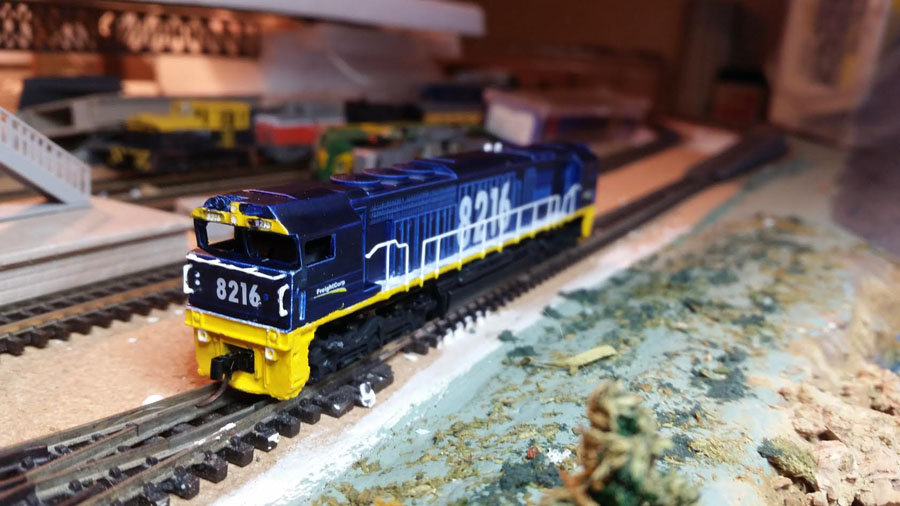
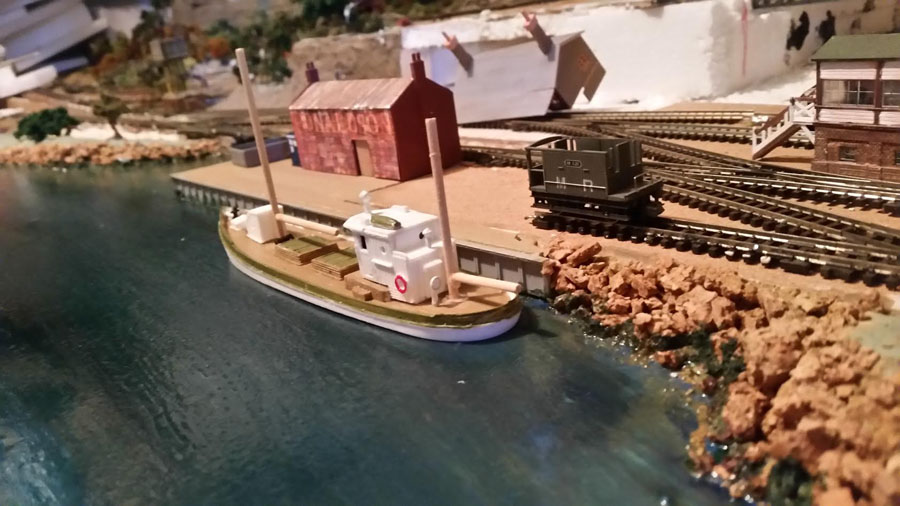
I have attached my latest loco (n scale) and sea port for interest. Loco is a 8200 found on east pulling coal that pass my way sometimes 3 in a row.
Port is made from paint and varish for water, crush cork for rocks, Boat is 3d printed, building is a mix of card and plastic leftovers.
Steven
Sydney Aus”
Now on to Joe:
“I have heard many people say they have problems drilling plexiglas, or similar material, because it cracks so easily.
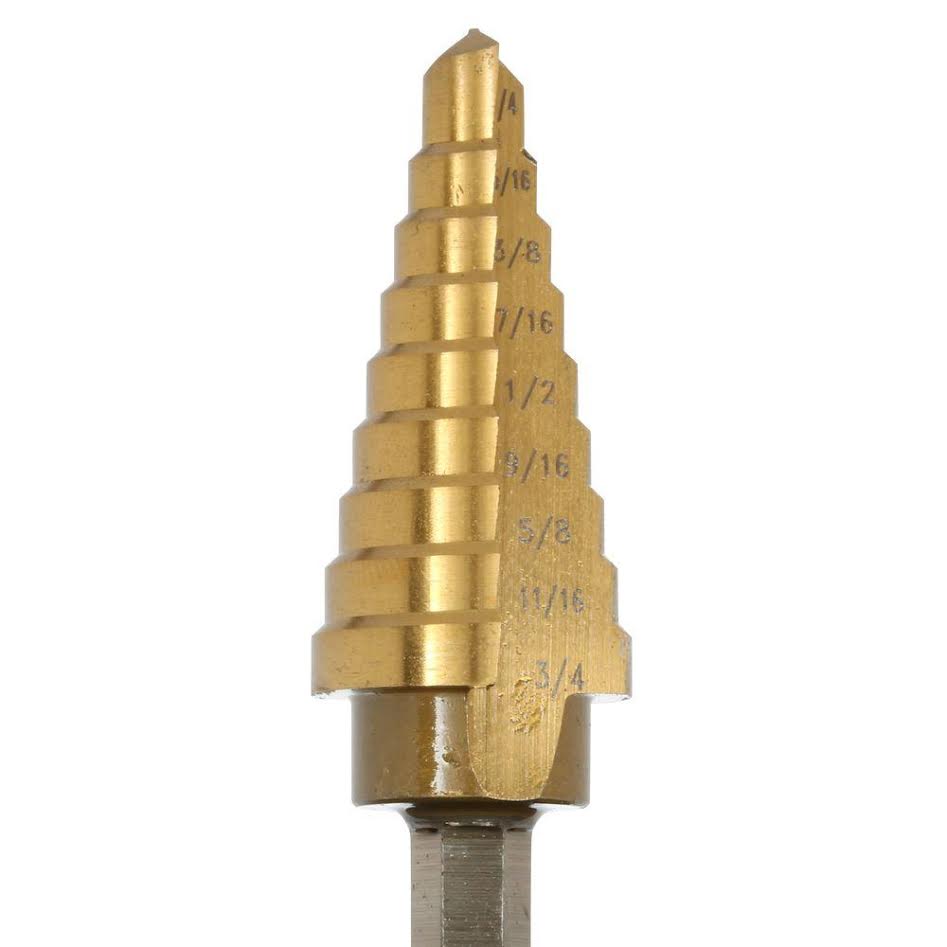
You may want to pass it around that the best way to drill plexiglas is with a step drill. See below.
You start by drilling a small (1/8”) hole, then finish with the step drill. The beauty of the step drill is that it does not have teeth to chip the plexiglas. Rather, there is a smooth transition from one diameter to the next. You then stop drilling when you reach the diameter you want.
Joe”
“Greetings, Al. Your site is better and better every week, Great that the new folks are getting into or back into this hobby. They have great ideas and limitless imagination. And the effort is truly remarkable.
A huge thanks to Cal for sharing his HO layout 4×8. It’s another example that proves bagging some space of your own and just starting, is the only way your layout will ever happen…
That’s all this time folks.
If you’ve enjoyed this one as much as me, please help keep the doors open and support the blog.
Paul’s been in touch with his very own model train room:
“Hi Al,
I have been receiving your emails for several years now, and found all the hints, tips and suggestions extremely helpful.
I got my first train set when I was about 6 years old in the mid 50s: a Triang R52 Jinty and two carriages. Over the next few years I accumulated several trains and trucks and changed all my standard track to series 3 when it came out in 1958.
By the early 60s when I became a teenager I found other interests, guitars and girls! So the railway went in a box, where it stayed for many years.
It used to come out occasionally and I set it up and enjoyed seeing the trains go round again. And I always had the ambition to have a proper layout some day.
Well now I am in my 60s the time has come. First I went to model railway shows to get ideas and to see how things were done. Then I found your site and learned a lot from it.
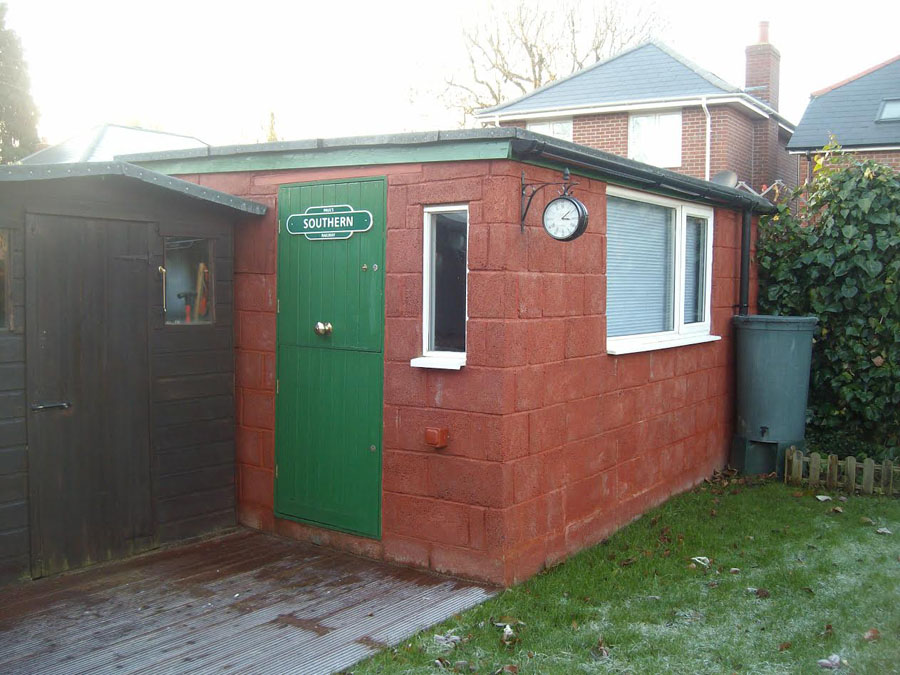
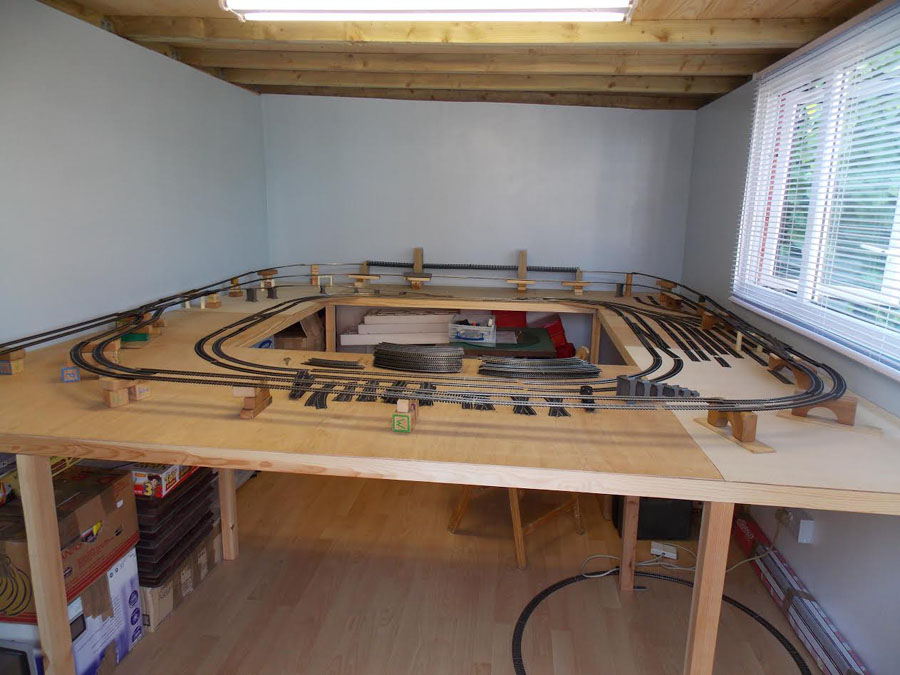
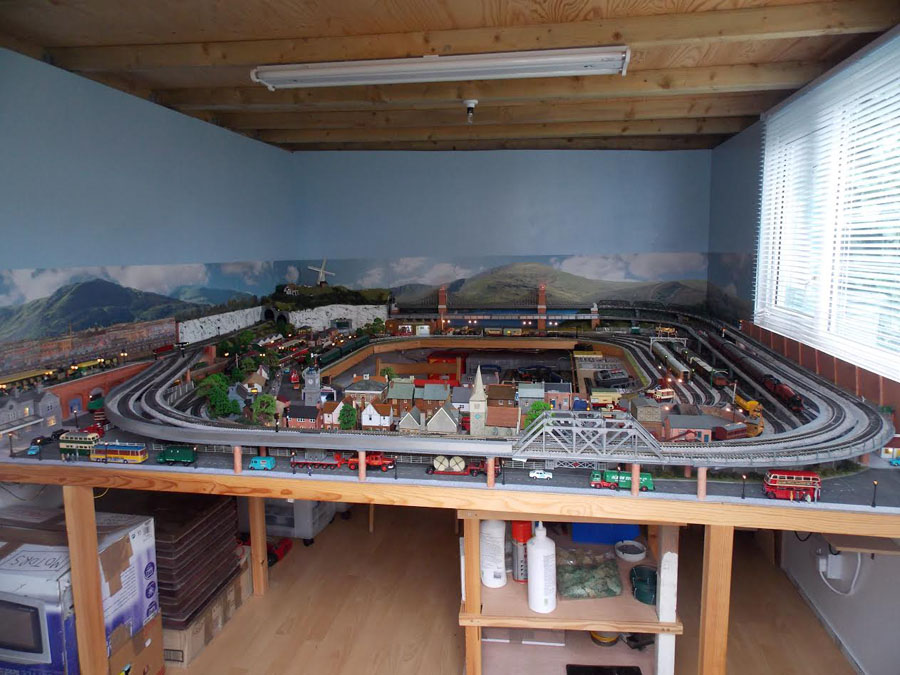
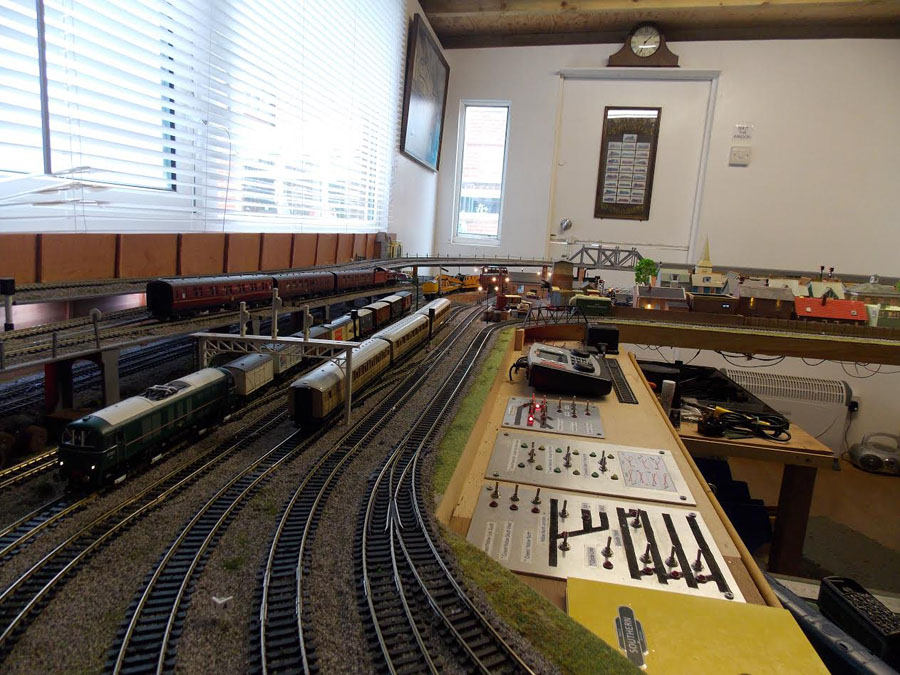
I thought of building my railway in the loft, but realised that in few years time I would probably find it difficult to climb the ladder. So I built a Train House in my garden. This was my first attempt at building so again I had to learn from scratch, by watching and reading. This took a year of slow but steady progress.
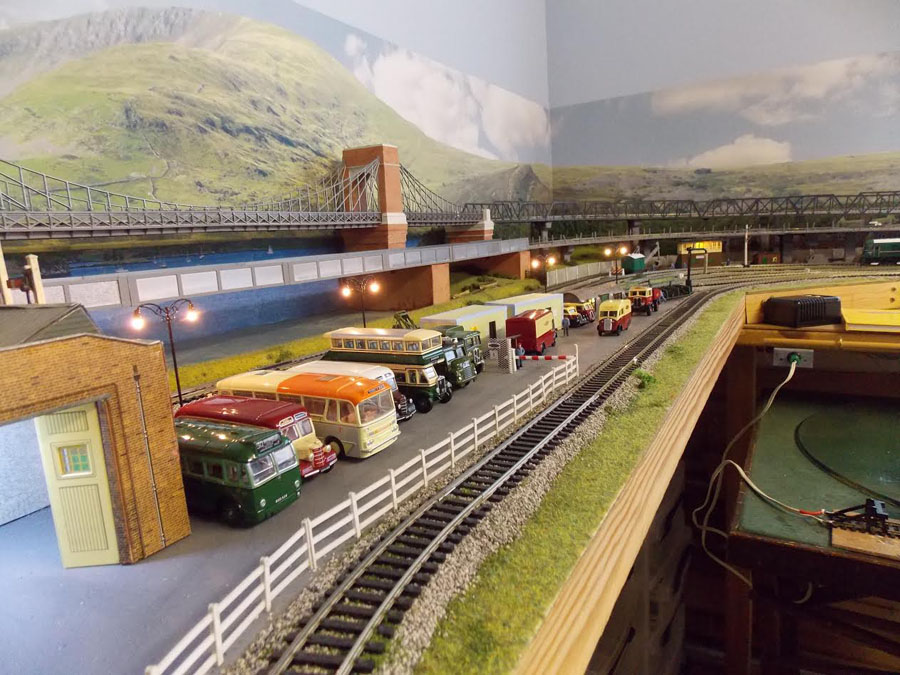
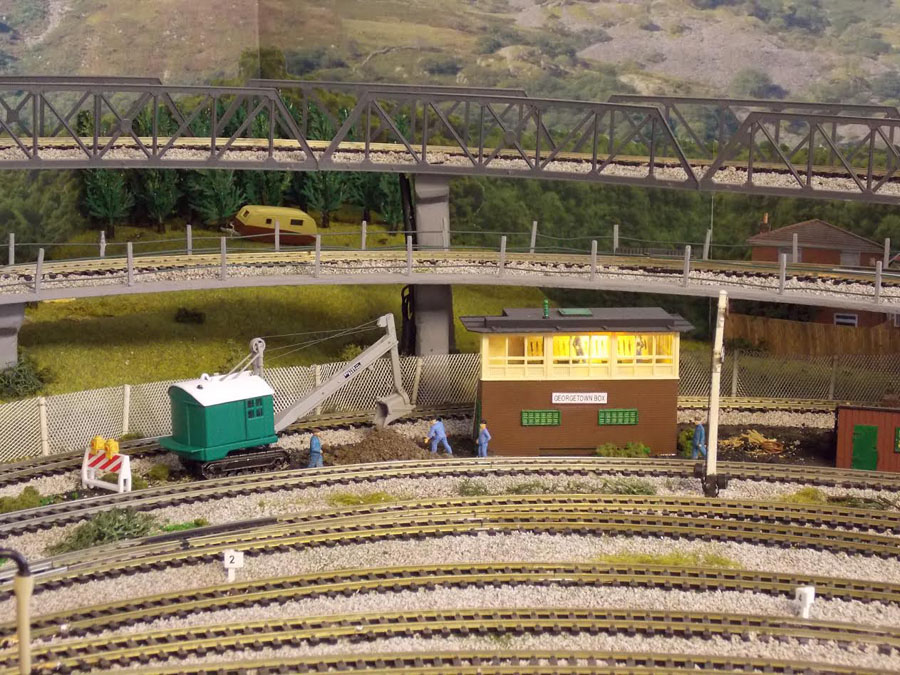
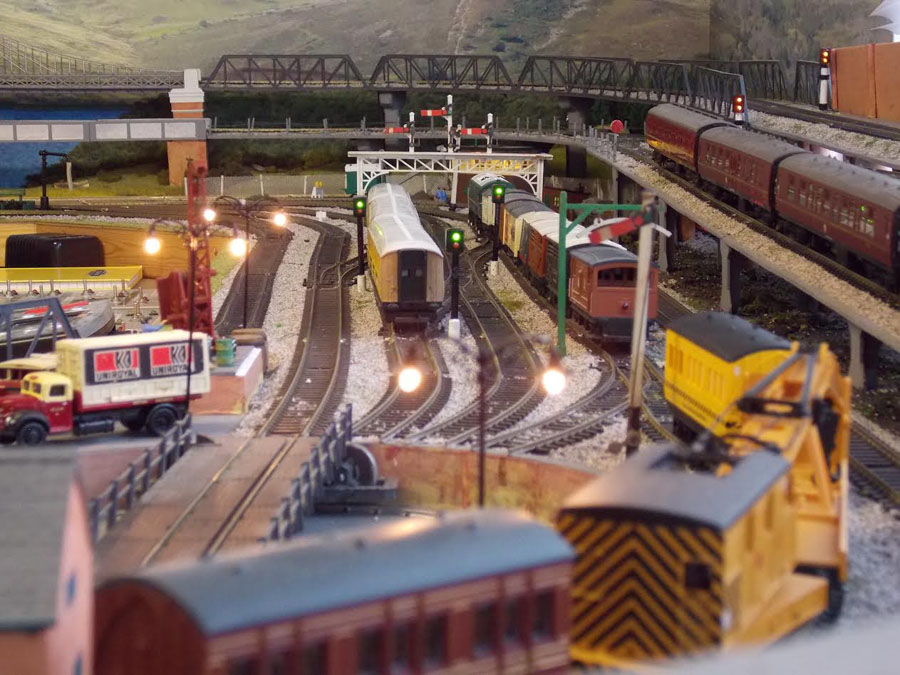
Then the trains. I wanted a circular layout with as many tracks as possible. I thought four would be possible. I also had always wanted a suspension bridge. So that is where I started. I had an overall plan in my head but more or less made it up as I went along, learning all the time as I progressed.
The first decision I had to make was analogue or digital? I had no idea about digital, it seemed very daunting, but seeing as I was starting from scratch it was the obvious choice. I had kept all my old trains for all those years so I wanted to see them working. I had to change all the wheels so that they world go on the modern track and fit them all with decoders. They said I couldn’t be done, but they all work!
When I started was to understand exactly what DCC was and how it worked and then to put it into practice. In hindsight I actually think it is probably easier than analogue, in the fact that all the engines are independent and you don’t have to have a lot of isolating track to run it.
I have finally completed it after several years work, and the addition of a fifth centre track.
This has been a very interesting and exciting project, working out the designs and the electronics and getting it all to work. Your contributors are right to not throw anything away, that was good advice. It really hasn’t cost a lot, apart from the obvious most of it is scratch built and the Chinese lights etc. are very cheap.
The scale is OO. I had aquired a few HO bits and pieces over the years but they didn’t match my old Triang engines.
In all, it probably took about a year to build the Train House and about 3 years for the layout.
As far as the cost is concerned the most expensive part was buying the blocks to build the house in the first place! Then all the plywood for the floor, walls and roof, then the trestle to put the layout on. This of course was all new, But in all no more than about £500.
As for the layout itself, I had a lot of track already so I only needed to buy a few extra bits and some points, mostly 2nd hand from eBay.
I bought most of the switches etc. from China. I bought some of the backscene, but made most of the rest by taking photographs and printing it up to scale on my computer.
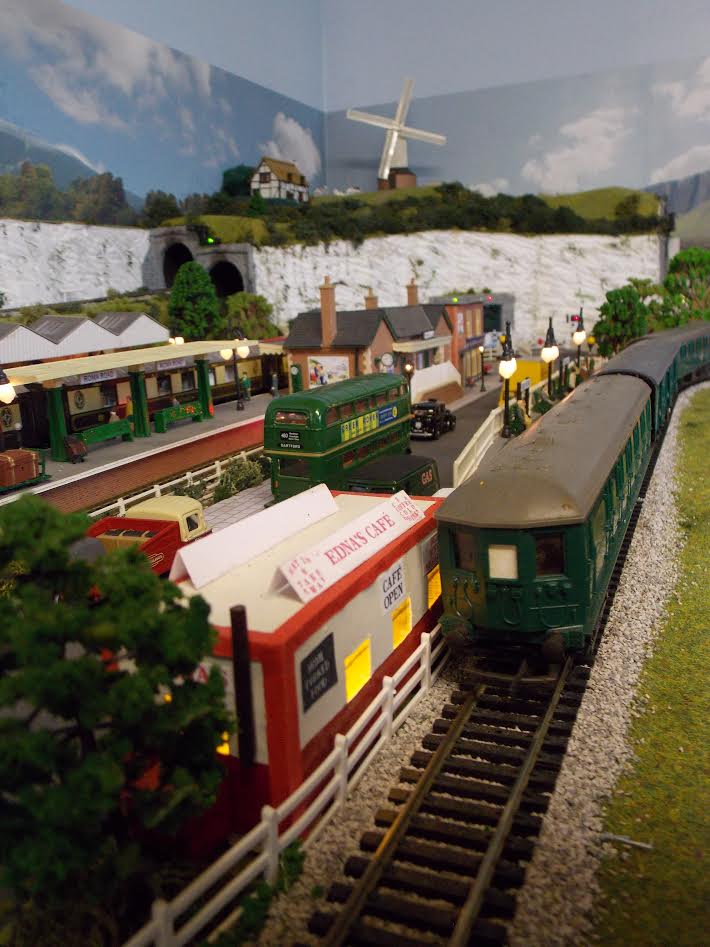
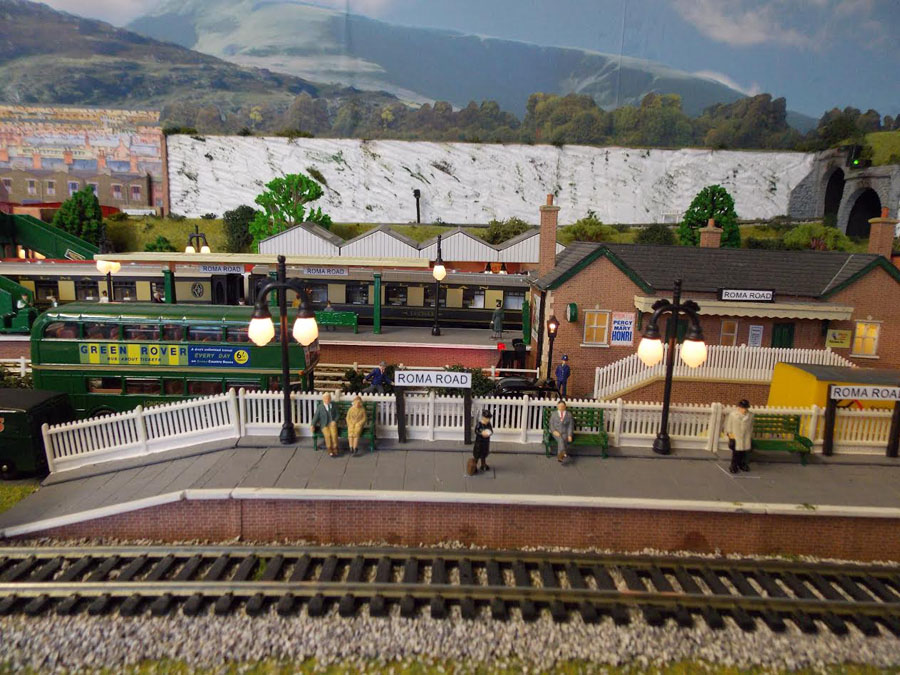
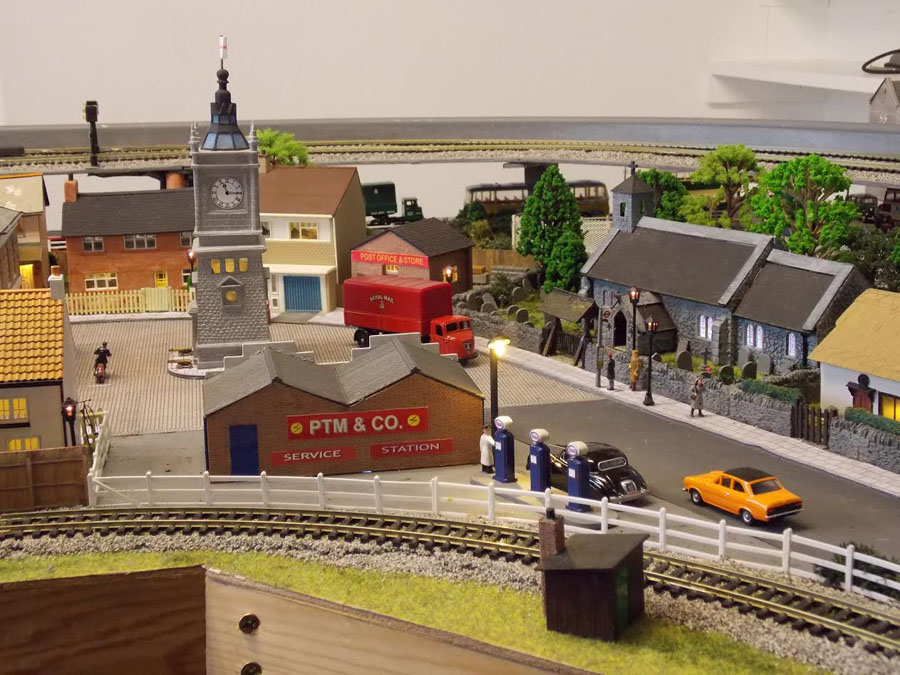
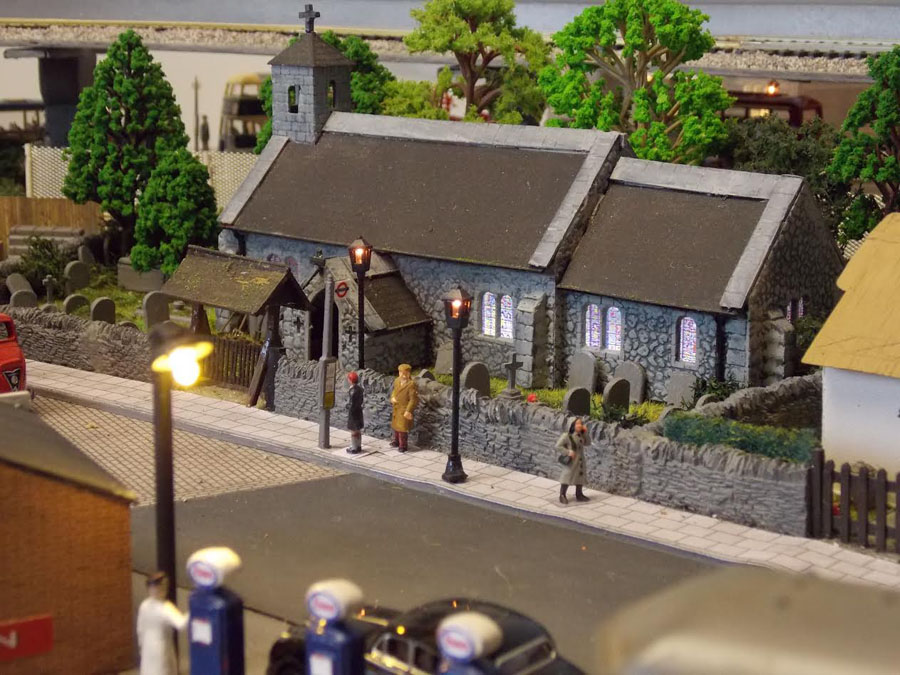
The main station was, as you can probably see, a Metcalfe kit, this I bought new. But most of the other buildings and scenery was made from revamped old 60s Airfix kits, some superquick kits I was given as presents, or as I progressed and learned how to do things, scratch built.
I bought replacement wheels and other odds and ends from local Model Railway shows. Of course the decoders had to be new.
The street lights and trees also came from China via eBay, very cheap and good value. I have not made a note of my expenditure but over the approximate 3 years I would be surprised if I had spent over a further £500.
In all a very satisfying experience. I am now a builder, an architect, and electrician, a carpenter, an engineer a model maker, a station master, chief cook and bottle washer!!
I’ve been following your site for a while getting ideas as I slowly build my first real HO layout. It’s taking a while.
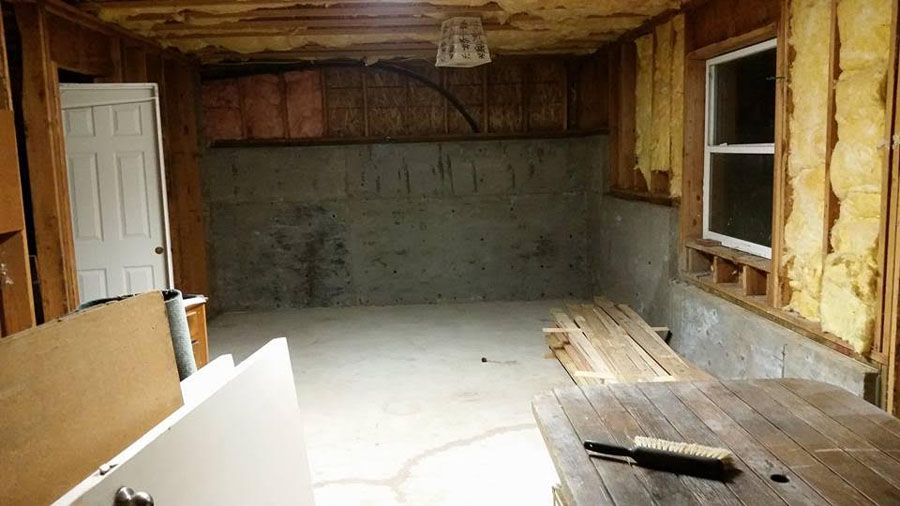
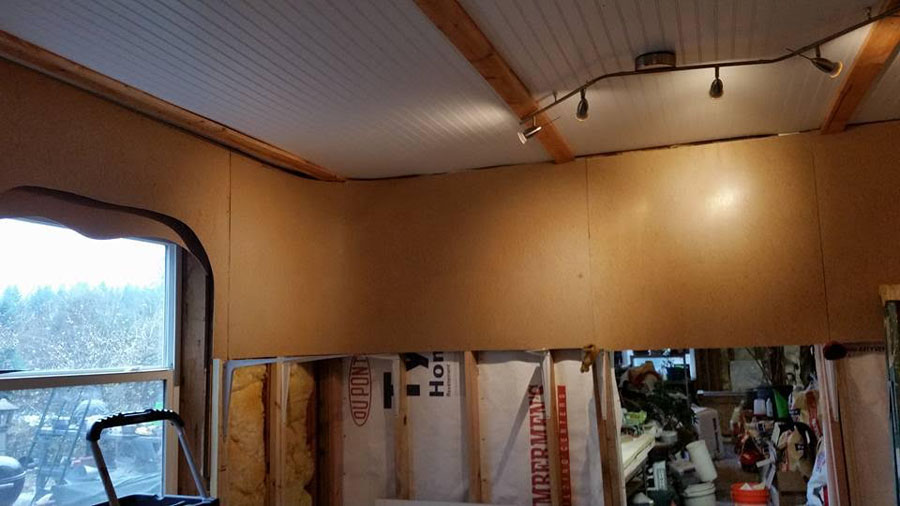
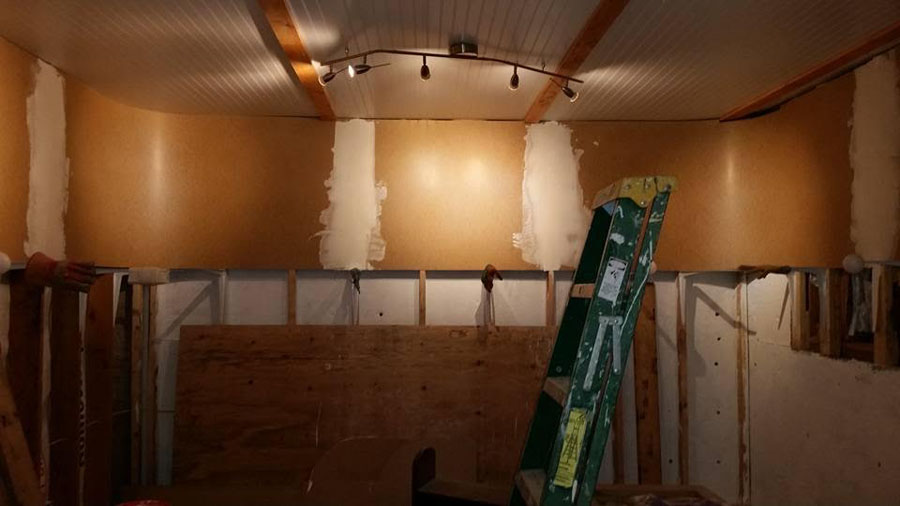
I had to start by actually building a separate room in my basement. I’ve had to learn how to build stud walls, anchor them to concrete floors, run power and build bench work on my own. It’s been a challenge with a lot of swearing sometimes. 😉 I;m proud of what I’ve built. My room it tight enough I get no dust even though my husbands hobby is very dusty. And my bench work is solid as a rock.
Thankfully I’ve had a friend who’s been able to come help occasionally. I have two levels, steam above and diesel below. So far we have the first circuit of track running on the steam. Right now I have most of the foam underlayment down for the diesel level. Once I finish the swing gate I can finish the foam and then the real challenge of serious track planning.
I don’t have a specific rail line I’m reproducing or era. Once I really have a layout running and don’t have the building costs I might start focusing down more. Right now if I can afford a working engine and some nifty cars I buy them.
Christie
Farm Wife”
What a model train room! I’m envious of all that space. Thanks to Christie. And it’s another great example of what needs to be done to build a layout: claim some space of your own and just making a start.
A huge thanks to Paul too for sharing his model train room. Embarrassingly, he mailed me some time ago and I managed to miss it. Thankfully he got in touch again, and I’m so glad he did.
It just goes to show there are two key steps for any layout:
1) Claiming a space for your own – even if you have to build it!
2) Just make a start!
That’s all this time folks, hope you enjoyed Paul and Christie’s model train room missive as much as I did.