Cameron’s been in touch with the start of his Inglenook shunting puzzle:
“Dear Al,
It’s been a while since I’ve been in touch but fear not it has not all been idle time.
During the last 12 months I have been working on a small shunting layout called “Lanarth”. Over the next couple of weeks I will email through the commentary and progress photos I took along the way.
The story starts at a model railway show I attended last year. One of the gentlemen at the show had a small shunting layout based on an Inglenook Shunting Puzzle. If any of you get the chance to try out an Inglenook shunting layout I would highly recommend it.
They are a lot of fun to operate and have the benefit of being quite compact. Google “Inglenook” and you can get all the details and track plans. Needless to say I was hooked and had to have one of my own.
I had already started to have thoughts of doing a larger layout set in North Cornwall at some point. I had also collected some LSWR rolling stock and a Beattie Well Tank locomotive that suit that region.
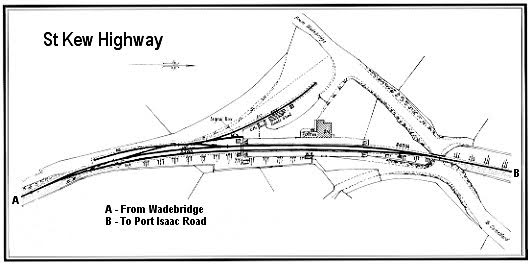
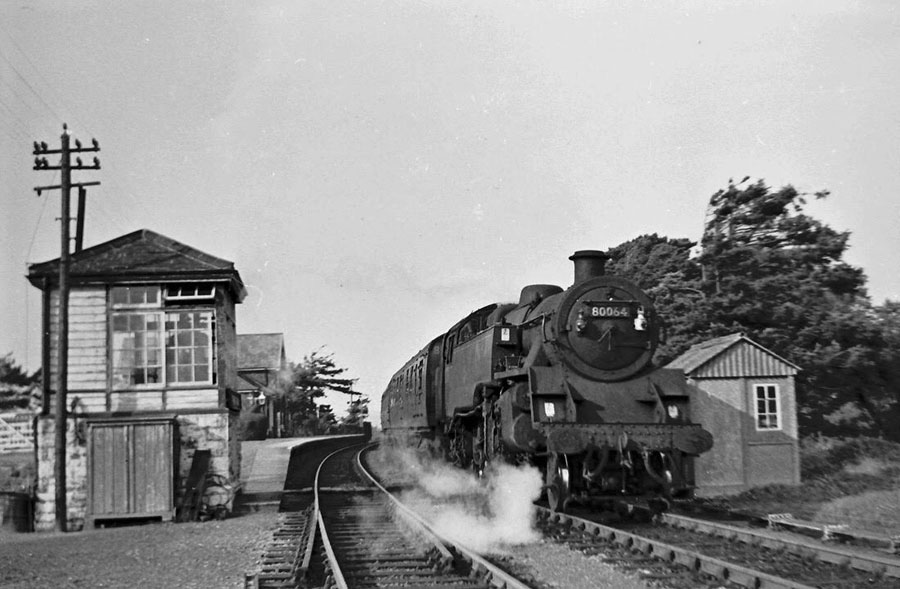
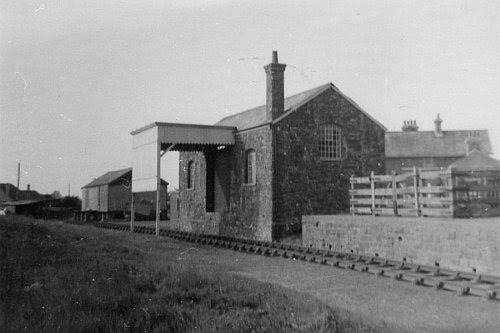
After a bit of research I discovered an older station called St. Kew Highway that had a nice compact goods yard that I thought would lend itself to the shunting layout.
Using the inter-web I found old photos and plans of the station and started to amass the research material I needed to complete the layout. Since I was not slavishly duplicating the station I have called my layout “Lanarth”, named after an old farm next to the original station.
The final layout is 1′ x 4′ which is great because I can fit it on top of the side board in our dining room.
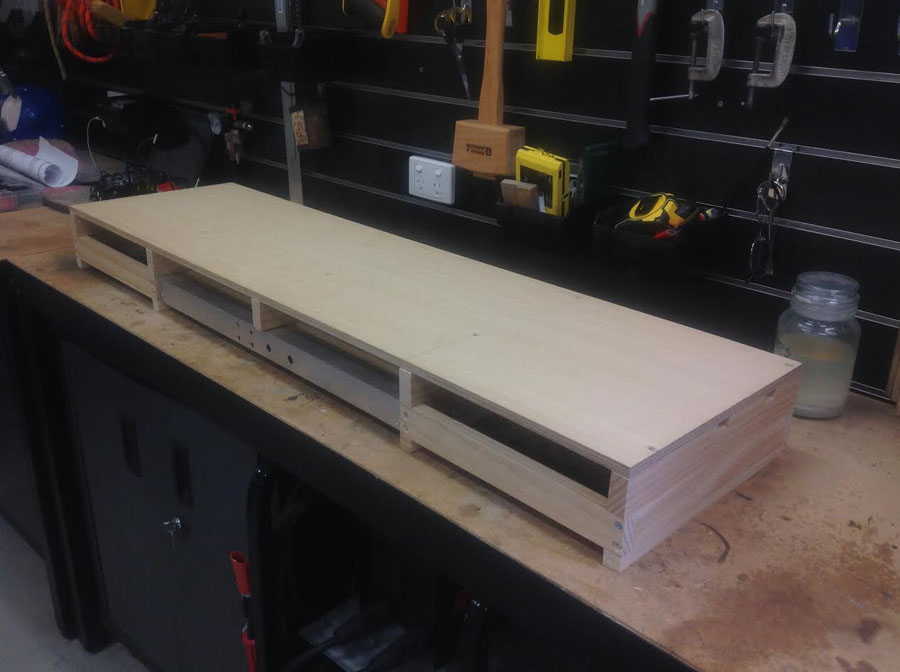
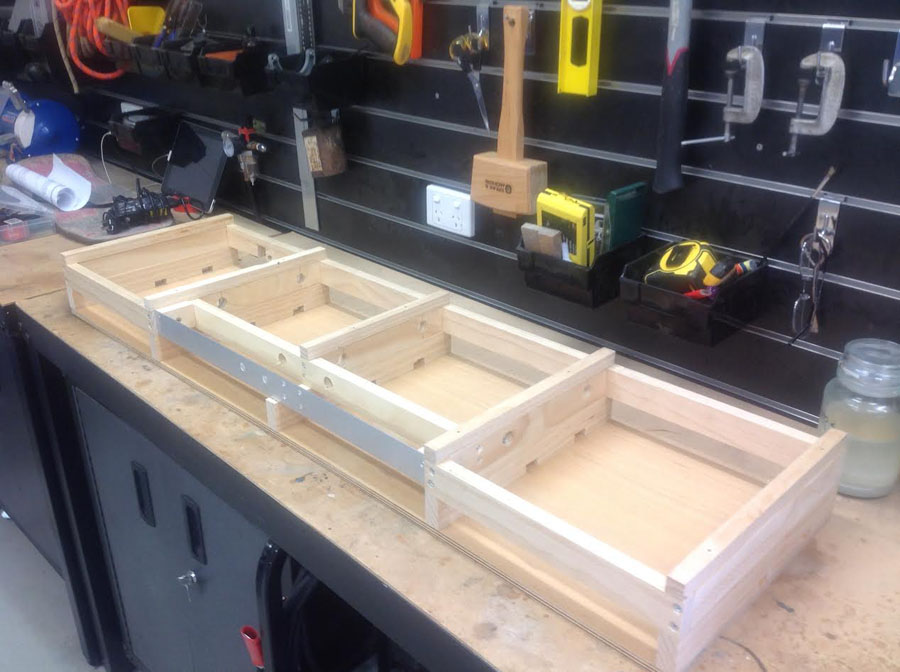
With a track plan sorted and some research sitting behind me I got on with the base board. This is always a great starting point with any layout as you seem to get a lot done in a small amount of time. The base board is 1200x300mm.
For its construction used 9mm marine ply top with a 42x19mm pine support frame under. My last layout was built on with an MDF top and
35x70mm pine frame.
This ended up at 200kg and proved to be very difficult to move. The marine ply has proven to be very stable and quite light. I also wanted this layout to be contained within a large box. The idea here is to protect the layout during transport and keep the dust if it.
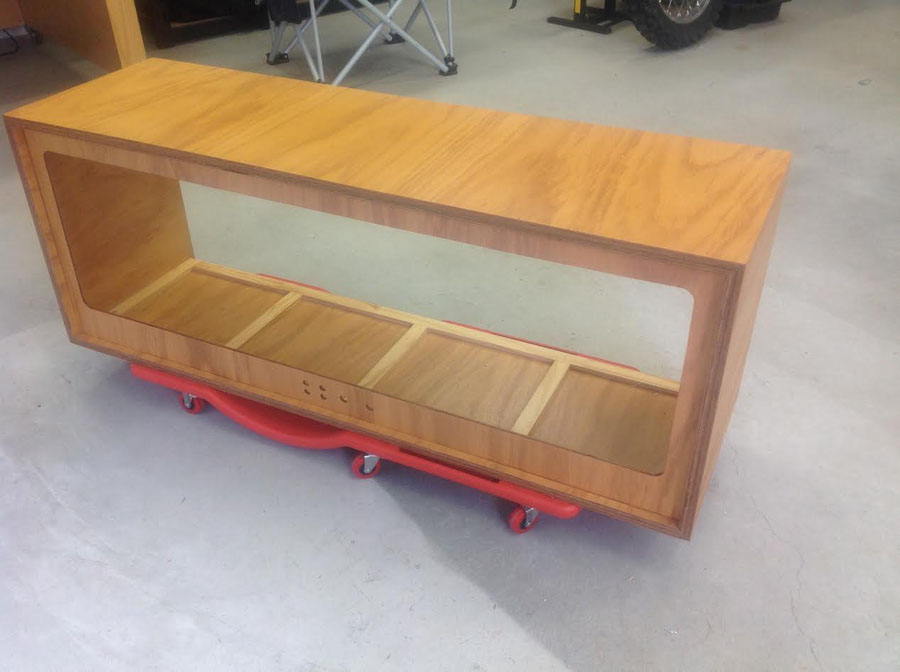
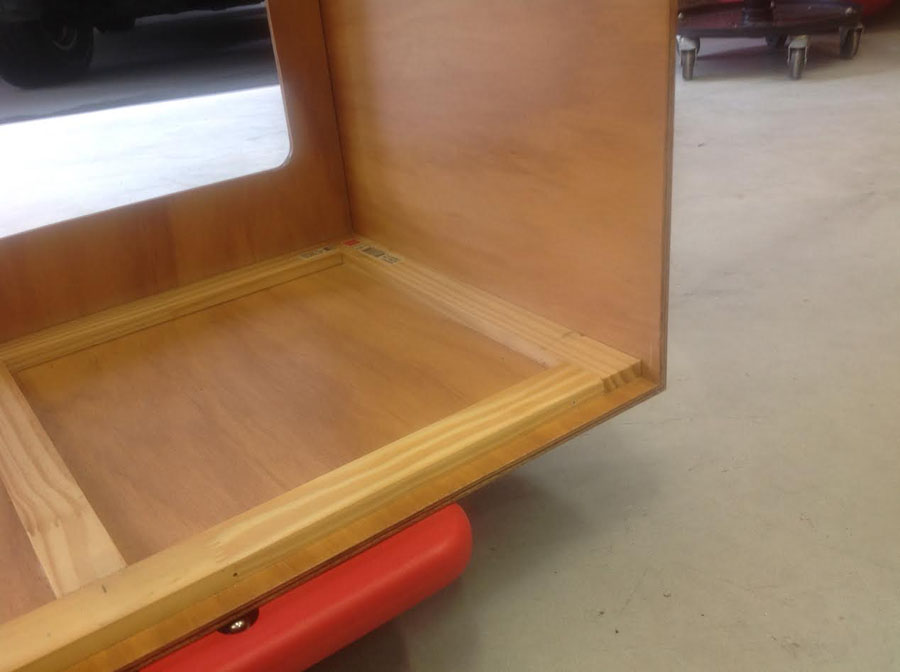
Rather than doing this after I had completed the layout I made the box first. This way I was able to bit fit the base board and box together without worrying about damaging any scenery.
The box is made with 6mm ply and 42x12mm framing. The front edge of the box has the ply built up to look like it is much thicker than it actually is.
Cheers
Cameron”
A huge thanks to Dave and to Cameron for sharing his inglenook shunting puzzle. Can’t wait to see his updates.
So here you are. I hope you enjoy reading these as much as I did.
Of course, I’m biased, but it’s solid gold advice, that’s because I asked the Hall of Fame members what their advice would be.
Let’s begin with Rob on how to start a model train layout:
“If you are thinking about a model train layout with a few trains running around, but you don’t know where to start, buy a train set with a controller and a simple train.
They come with a little track. It will be enough to form a loop usually, although it may be small.
Set it up on the floor or a table (like I did) and enjoy it. See what you think. When you are ready to try something more permanent, get a small sheet of plywood.
You can get half a sheet or a quarter sheet at your local home store or lumber yard (if they still have any lumber yards) and mount the track on it. Maybe get a turnout/point or two and some additional track, Just enjoy it and decide if it is for you. It is a learning thing.
You will start learning immediately on the table and then more on the plywood. Mostly enjoy it. Just remember, Farland started on a table top and then as a 4 foot by 8 foot sheet of plywood on 2×4 legs. That original sheet is buried under it somewhere.
Always run for a while when new track is installed to make sure there are no rough areas like turnouts that are not level or track joiners/fishplates that are not put in right. There could be a track pin too high as well. Many things can cause problems.
Remember it is all a learning experience and the more you learn the more fun it can be. Don’t get discouraged. If you want to do something and you are not sure how, search for it on YouTube or ask someone you respect. They will be very happy to help you over a rough spot, I promise.
Inclines, I cannot emphasize this enough. Trains of all kinds like flat level track. If you want to go uphill with either a diesel or a steam engine, keep the grade to a minimum. 2% is the reasonable max for steam. Don’t think, oh I can get away with 3 1/2% this time, no you cannot. That grade will be doomed to failure. 16 feet to go up 3 1/2 inches/85 mm is your limit. There are magnets and things people have used for steep grades, but if you do it, then you cannot have a friend bring his locomotive over to run it on your layout.
If you want to know how big say a parking space should be or a platform width. You can always find one on a satellite view and compare it to the width of standard gauge track which is always 4 feet 8 1/2 inches or 1435 mm the world over. With a little bit of calculating you can closely approximate the size. They both need to be on the screen together. Above all patience and have fun.
A big thanks to Rob, here’s one of his post on the blog – how to make a Model railroad backdrop
As you can see he really knows what he’s talking about, as do all the Hall of Fame members.
Now Dave’s advice on how to start a model train layout:
“Hi Al …getting started !!!
Starting out is in this Hobby can be made easy or hard…. my advice would be to start with a DCC train set… and just the 6ft.x 3 ft base… then add a oval track probably 4ft x 2ft.
Learn all you can first re having a BUS wire feeding the track (these are feeds to the track and given distances )… then when laying track make sure everything is very level, and if you add points I would advise going for the longer Express points (gives a smoother run especially turning ).
As for the track underlay… maybe one of the best and cheapest is cork , cut the strips to just over width of your track and lay this down before adding track (you can disguise this with ballast later ) your track can then be Pinned down or glued down (I tend to use Copydex).
Once all this is set up and dependent on which control system you choose , I would just get used to running and then when happy with the track and smooth running , you can proceed with Ballasting … and then on to Scenics ..a lot of scenic material out there these days… woodland scenics is one of the best for starting out with and they do have a lot of Tutorials on YTube… as for buildings I would leave until happy with the running… but again big choices out there from build your own to ready made…
A Great Hobby and one which I have said before… we are never too old to start with.
Now here’s Cameron’s advice on how to start a model train layout:
“Dear Al,
I think first it’s great just to set up some track, however simple, and start running trains.
Set it up on the floor or the dining table and invite others to have a go as well. A simple set was my entry point into this hobby and I still have every piece of it.
If you get the bug it’s not too long before you are wanting a permanent base board. 8 foot by 4 foot is a popular starting point with boards readily available from hardwares and lumber yards. You can do a lot on an 8×4 layout without biting off more than you can chew.
I always let other people, especially kids, have a go of my layout and am quite happy to sit back and let them learn. They derail a few times but generally no harm done. There is a lot of fun to be had in the quiet solitude of creating a layout but there is also great enjoyment in sharing the creation itself.
And here’s what Brian has to say on how to start a model train layout:
“Hi Al,
1 – if you are thinking about getting into the hobby of model trains and have nothing in the model hobby other than reading matter, then my suggestion would be as follows: (this is what I used to say to customers when I had my hobby shop, when asking for advice on ‘what do I buy to get started’) you should start with a train set of your choice.
The reason for this is that you will get – possibly an oval of track, a transformer, some rolling stock and a locomotive. You can be operating your model set within a short period of time when you get home.
This is the time when you look for space in your home for a layout be it a 6ft X 4ft or 8ft X 4ft table. If space is a problem then maybe have a shelf where you can a least run a train backwards and forwards until you find the space or go around the walls on a shelf for your layout.
2 – once you have the “space” available and a track plan in mind (and on paper) it can always be changed as you progress. Do NOT be afraid to start building as you will learn as you progress and mistakes can ALWAYS be rectified. TALK to other modelers who can give you advice as well as the Internet for advice and photographs.
3 – as you progress, you can buy extras for your set as and when you can afford it. Do NOT be tempted to buy willy nilly as you may regret the purchase later (buying something you liked and not fitting with your theme). Plans WILL change a you progress but carry on and really have FUN doing it.
Never have a fear (False Evidence Appearing Real) of starting or failing just DO IT and learn from your mistakes. As said by many people, model railroading is fun. Enjoy.
And it’s not just the Hall of Fame members that have pearls of wisdom. Here’s a selection of comments I have pulled from the year on how to start a model train layout:
“Get Started!! Build a table. Lay some track. Put a work train on it. Start running. The rest will happen.
Arthur.”
“I can not agree with you more about your statement today about helping beginers or even some more experienced modelers I am a circus modeler or converted model railroader and converted for that very reason meet some people that said it was more important to try to show your talent no matter what level you are at and not count all the rivets so to speak and now have a saying when ever some one picks something apart “its my show” or “It is my railroad” some of the best ideas I have gotten for adding detail is from kids some are very observant and can really add to your project.
Thanks for your posts and efforts I do enjoy getting the hints.
Ned”
“I have found it is a life long hobby, I started with an OO railway, when I was 14/15.
That one was sold off due to space and I was around 48 when I got the bug again and restarted with N gauge and have spent many happy hours over the last 21 years building and rebuilding layouts.
Now at 69 I get much more fun out of building the tracks and scenery than actually running the engines. I have bad rheumatoid arthritis especially in my hands and in this scale it actually helps my hands keep active, frustrating and annoying at times trying to fit things together with fingers that don’t want to do what you want. If I stop building then my hands would probably just give up. But the joy of seeing the layout coming together is what makes it a worthwhile hobby to me at least.
Eric (Leeds) UK”
“Tom – Just remember that when you go to get started what you may have forgotten will come back to you, little by little. Why don’t you try putting in a helix and then your trains can go up to different levels more gradual. Do worry everything will work out. Remember Model Railroading is Fun. Don’t worry what people say if it’s not finished – layout is never finished just more fun to do more and to change things around.
Darrel”
“Paul – Who was it who said a journey starts with a single step? Put a piece of track on a shelf and run one loco up and down. Maybe add a point and a siding and take it from there Good luck and happy modelling.
Andrew”
“I am very impressed! As I’m only 72 and my very first layout is in its plywood stage, Mike’s place is inspirational. He has started! All of us – it only works if you start! Don’t be afraid to make mistakes. That’s the learning part, I was told.
It’s also the FUN part, to my surprise. I wish I’d started sooner, as I’m having so much fun now.
Excuse me, I’ve got a railroad to build.
– Graeme, on a small island in Canada.”
“I think the most important thing about a model railroad is just start and build it to your liking. Start simple and work up as you go and learn. Oh and by the way a model railroad is never completed. Too much information can at times be overwhelming, but let it work to your advantage … ideas … hints, tips, of all areas of model railroading are great tools to use along the way, a learning process. Model railroading; it is, a piece; a time; a place; that is brought back to
life in miniature. Enjoy!!
Tom: Central Maryland, U S of A”
“I started modeling about 5 years ago and am currently working on my third layout. When I started I knew nothing about modeling but was looking for something to do because it was too cold to play golf. Since then I have found a group guys who have been into railroading for many years. We meet every Thursday nite at each others homes and work on their model. I enjoy reading your posting and have learned from them Please continue to send them. Thanks for all your help and knowledge!!!! Art
Art”
“I agree with the philosopy of small bites at a time. Mountain climbers did not go to mount Everest for their first climb. They learned the basics,bought their gear, and worked on their skills as time permitted. If you start to feel overwhelmed, just work on some small aspect of your layout and enjoy that bit of progress.
Ron”
“Step by step is the best way to build a layout. Start with a plan, or at least your basic plan. If you want a big layout, you might start with a loop or a double loop, get the track powered up and run your trains. Want a super yard? Include a turnout on your loop now which will eventually lead to your yard – it is easier to add some turnouts in the initial stage than to add them later. Next, plan a section of scenery. Before you start that, paint the rest of the layout tan and call it desert. It is easy to do, and it sorta looks finished. Now hit the computer, make a sign (billboard) “Under Construction, enter at your own risk”. Your layout is now complete – for now. More to come at your own pace.
Carl”
“Getting started is half the battle. Make a plan and see how big you can go. Think about what kind of train and land you want and just start at one end and do a little at a time. Look for help like places like this, this web site has open dee my eyes a lot of times. Your train lay out is looking real good. Keep up your good work. Dave in Savannah, G. USA
Dave”
“If you have not built a layout before, then set that layout to one side and by running that one will keep you encouraged. Then start planning a new layout. The hardest part is deciding what you want in your layout.
Start by were you going to have it setup and placed in what area. This will help in what size the layout will be.
Then plan what the theme will be (IE: a town, a industry, A mine. ) you get the idea.
All this will help in how you are going to lay out the track and scenery.
One of my biggest joys is in the creation of the layout. And I recommend you should at least build one yourself. There is lots of help and ideas you can draw from the model railroad community.
The old layout you can incorporate into your new one later or change to fit.
I like to build in modules much like you see from railroad clubs. And each module I do in a different theme. then I can add it into my layout at any time.
I hope this will help you decide on what you do next.
Most important have fun with it. And if you are not carful you will be hooked forever.
PS. if you build in the basement just remember the post hold up the house. And should not be knocked down to make room for your railway. ( HA HA) Note: I know of someone who really did that.
Scot”
“Never ceases to amaze me how this part (Planning a layout) always brings a wealth of ideas and opinions.
And it makes sense since this is the basis of our Day Dreaming and fantasizing about what our final result could be with the proper planning.
It also makes sense that the novice (myself included) fears the starting and commitment portion of the hobby.
But if the novice pays close attention to the more experienced Modelers they will pick up on the fact that No layout is ever “really” finished and that the repeating questions are resources, Space, Money and time and so long as my funeral is not planned the Space and Money will eventually take care of themselves.
The lesson is “Just Start”, Learning to disassemble and rebuild is what has been focused on about Dave’s layout for the past couple of months.
Give up the Fear, Enjoy the Hobby, it is a practice, like Doctoring, never a completely skill set.
Fred”
So there you go. I think this hobby is just like any other hobby, chore, job or task: making a start takes most of the effort. After that first step, and the seal is broken, you’re on your way.
Again, I’m baised about it, but here’s what Rob, the latest Hall of Fame member had to say about it:
“When you are beginning to think about a model train layout, as a beginner you are full of questions. Forging on without the best answers can be frustrating and very costly. I recommend Beginner’s Guide as your go to guide. All those hazy things you don’t know are explained in this book. Learning the hard way, is the expensive and slow way, this book is the road to modeling bliss. Read it first or refer to it as you go along It can be very overwhelming in the beginning. A slow and steady approach is the best when modeling and this book will help you get there.
As you’ll see from the links on Rob’s Hall of Fame page, he’s been a solid contributor over the years. I just loved his ‘peep hole’ video. I’m very glad to have him onboard.