How to build a model train mountain

Alan’s been in touch with his tips on How to build a model train mountain:

“Hi Alastair.

Suggestions: ( mistakes made and techniques refined )

1) Mountains:

a) Foamboard
-Use 1” thick segments carved to profile of mountain; placed vertically.

-Cover with nylon netting…hot glued

-Use either thin paper towel material or ( even better) old rags material cut into 1’ squares soaked in dilute plaster — to apply over netting ( cost effective vis-a-vis orthopedic plaster roll materials ) …creates a shell of the mountain.

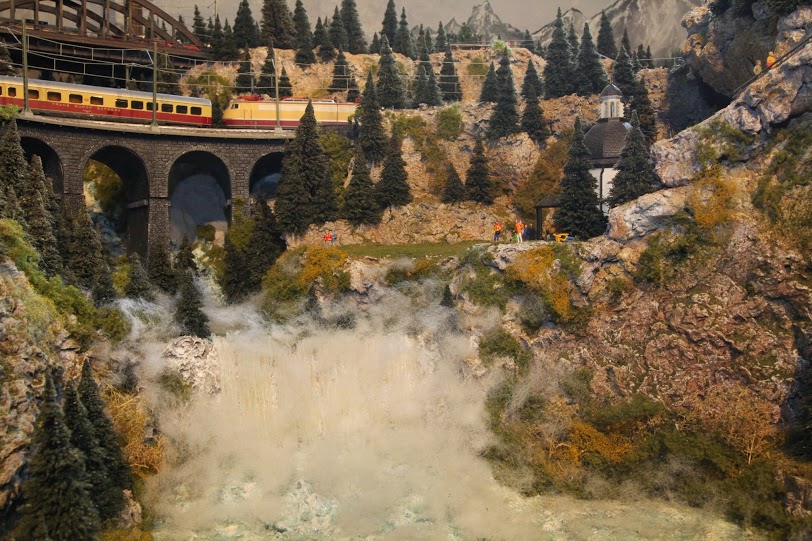
-Hot glue smaller pieces of pink foam board to the shell just created —for outcroppings, ledges, waterfalls, etc

-Sculptomold:

-Buy in bulk…25# or more….

-When mixing sculptomold, use at least 50% cheap gray paint…with the water ( you’ll appreciate the gray paint when drilling holes in the plaster cast to plant trees. )

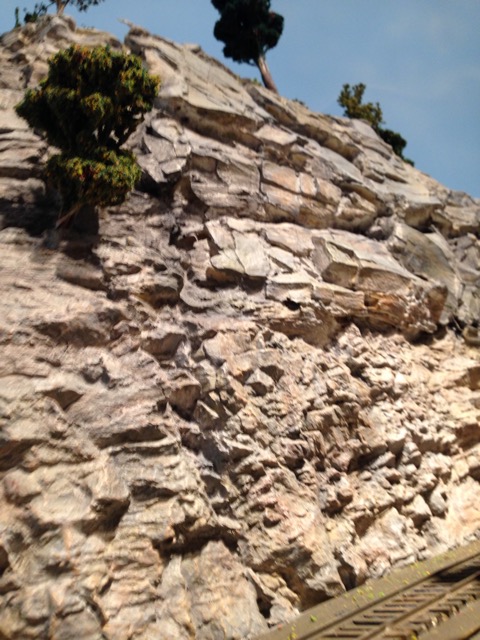
-After Scupltomold dries, “dry brush” or “wash” various colors ( burnt ochre, sienna, etc )

-Dry Brush acrylic white paint over Sculptomold to bring out the texture of the material….makes the scene “pop”!

-Add snow…commercial or sifted plaster material.

-If prefer greenery, mist matte medium over dried Sculptomold and “blow” fine greenery over the vertical faces of the mountain…

b) Wood Frame:

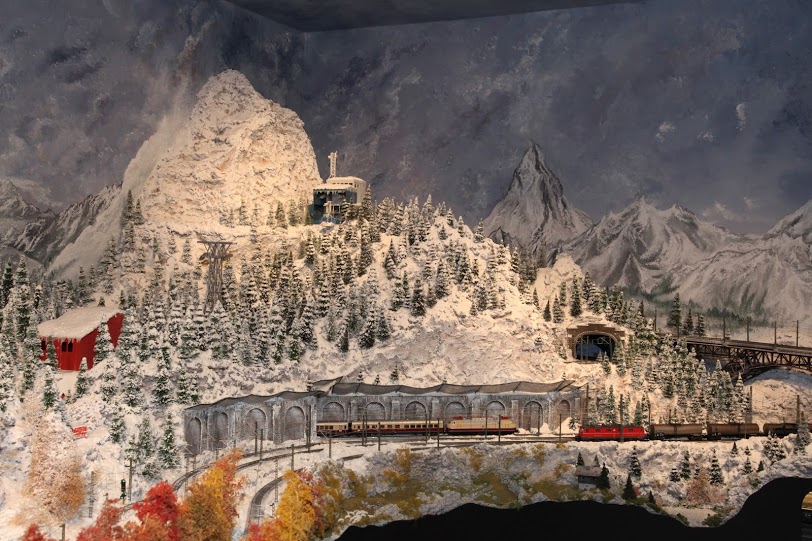
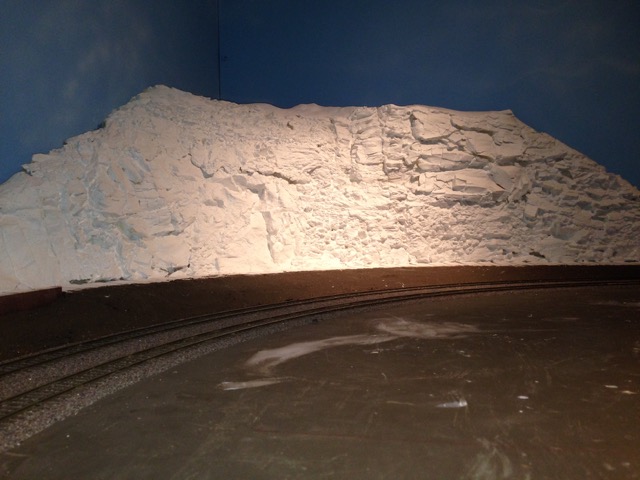
-Basically same concepts but more amenable approach to cover staging yards, helices, etc. ( see my pix)

-( I have never used the cardboard strip approach….I guess I’m too lazy to cut all those strips )

2) Tunnels:

-Various materials available…plaster casts, etc

-Don’t forget to paint interior of tunnel with black paint “deeply” into tunnel past tunnel entrance.( amazing how far a visitor can see deeply past the tunnel entrance! )

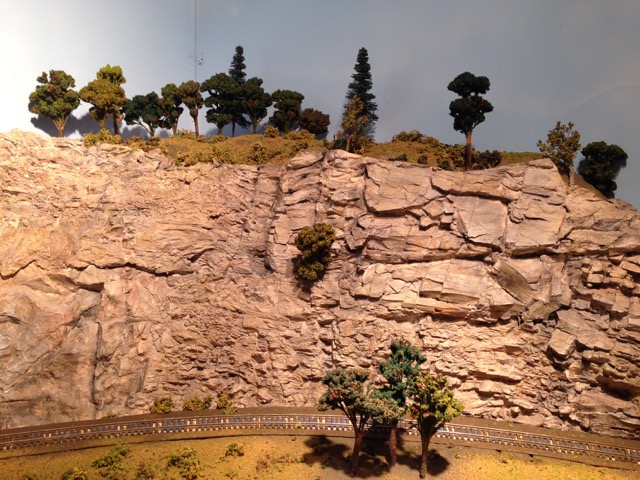
3) Mountain “Relief” against a wall:

-Hot glue a thin ( 1”) segment of foam board against the wall adjacent to the track “scene”.

-Carve / round off – the top edge.

-Apply a thin coat of sculptomold to the face of the foam board and “scenic” as above.

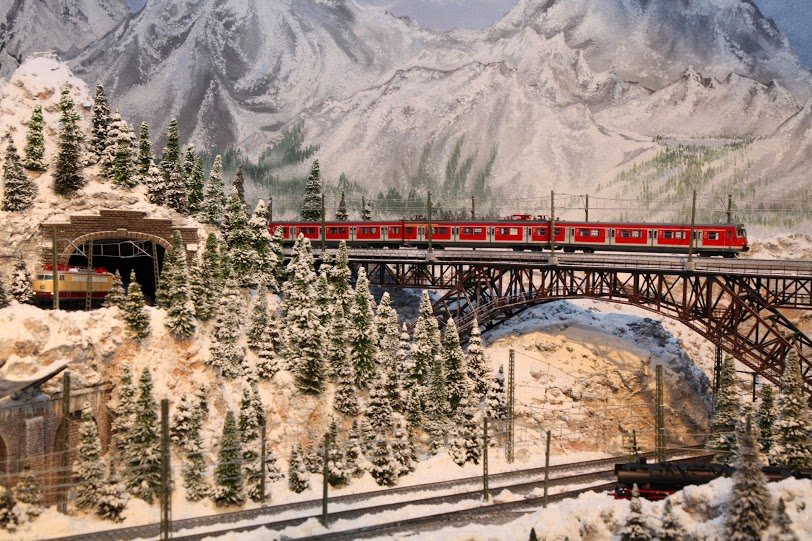
-Amazing how much depth this adds to a narrow scene….( see my pic of the Bietschtal Bridge—just behind the bridge is this technique )

That’s all for now…thanks for the opportunity to share…
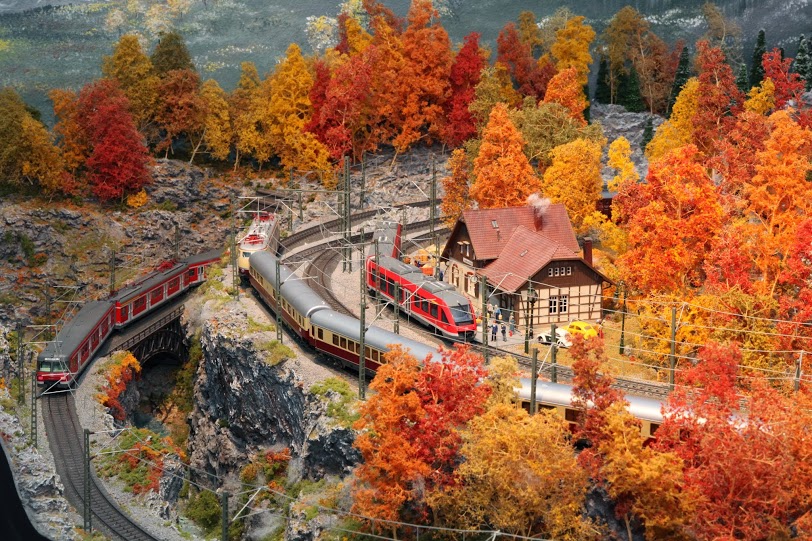
How to build a model train mountain

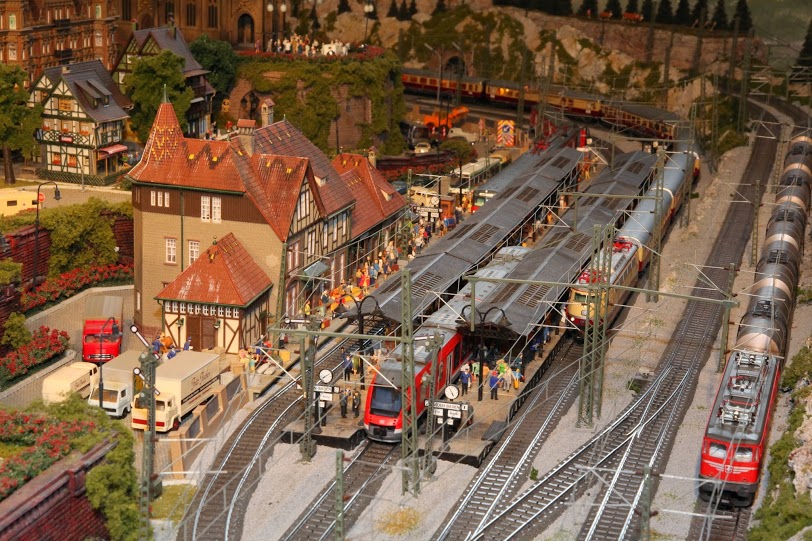
HO scale layout

How to build a model train mountain


How to build a model train mountain waterfall

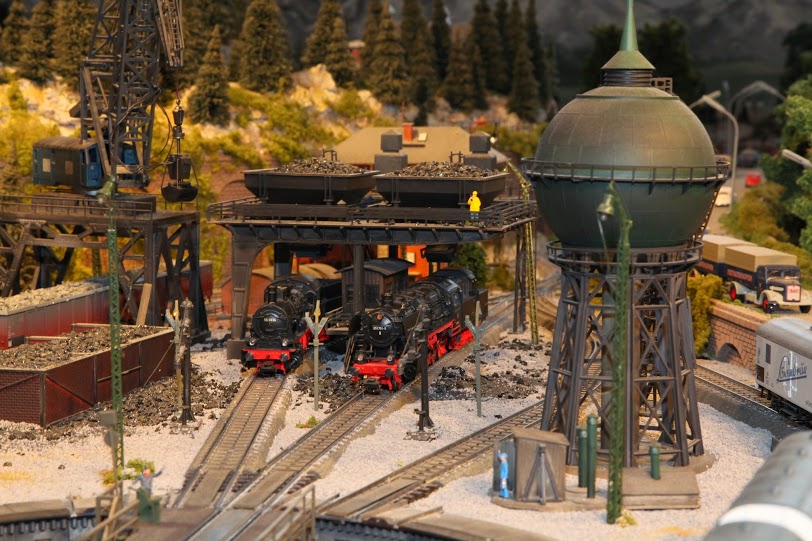
HO scale engine house

model train station

Alan”

Next on to Lou, who also has some good advice on how to build a model train mountain.

“Depending on the type of mountains you are trying to model, there are different techniques. This is also the case for color.

I have played with numerous ways and my best technique was to use the styrofoam for the base and shape only.

Once the shape was maintained, I casted molds using very large molds from Bragdon enterprises and used a resin for the castings instead of plaster. The resin will give you much sharper edges and detail.

If you choose to use a plaster, make sure you use the same material for the fills from one cast to another, otherwise your color will not match based on the material you are painting.

Once this is done, I painted the whole mountain using white gesso paint mixed with latex Kilz2 primer. At this point, you are now painting on gesso like a normal artist does.

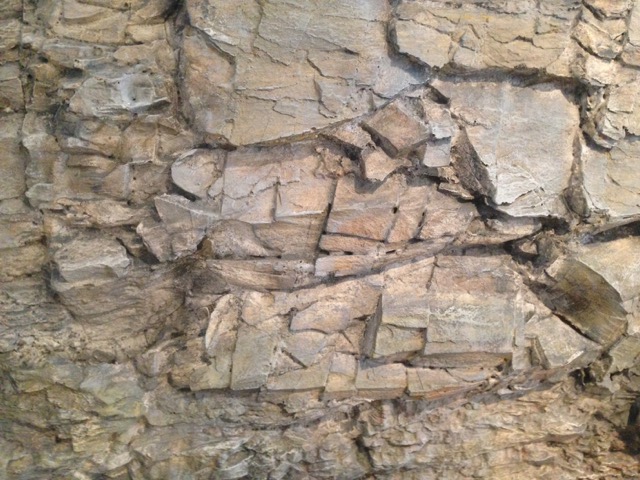
Everything from here started with a black powder that was sponged into the crevices. Once dry, I started with a diluted layer of yellow ocre. EVERY coat must be dry before continuing. After 3 coats of yellow ocre, your mountain is still no darker than a manilla folder.

After the yellow ocre, continue DRY BRUSHING with raw sienna, then a mix of titanium white and paynes grey….again light coats and never covering completely over what you did. Continue with your dry brushing moving toward your darkest color.

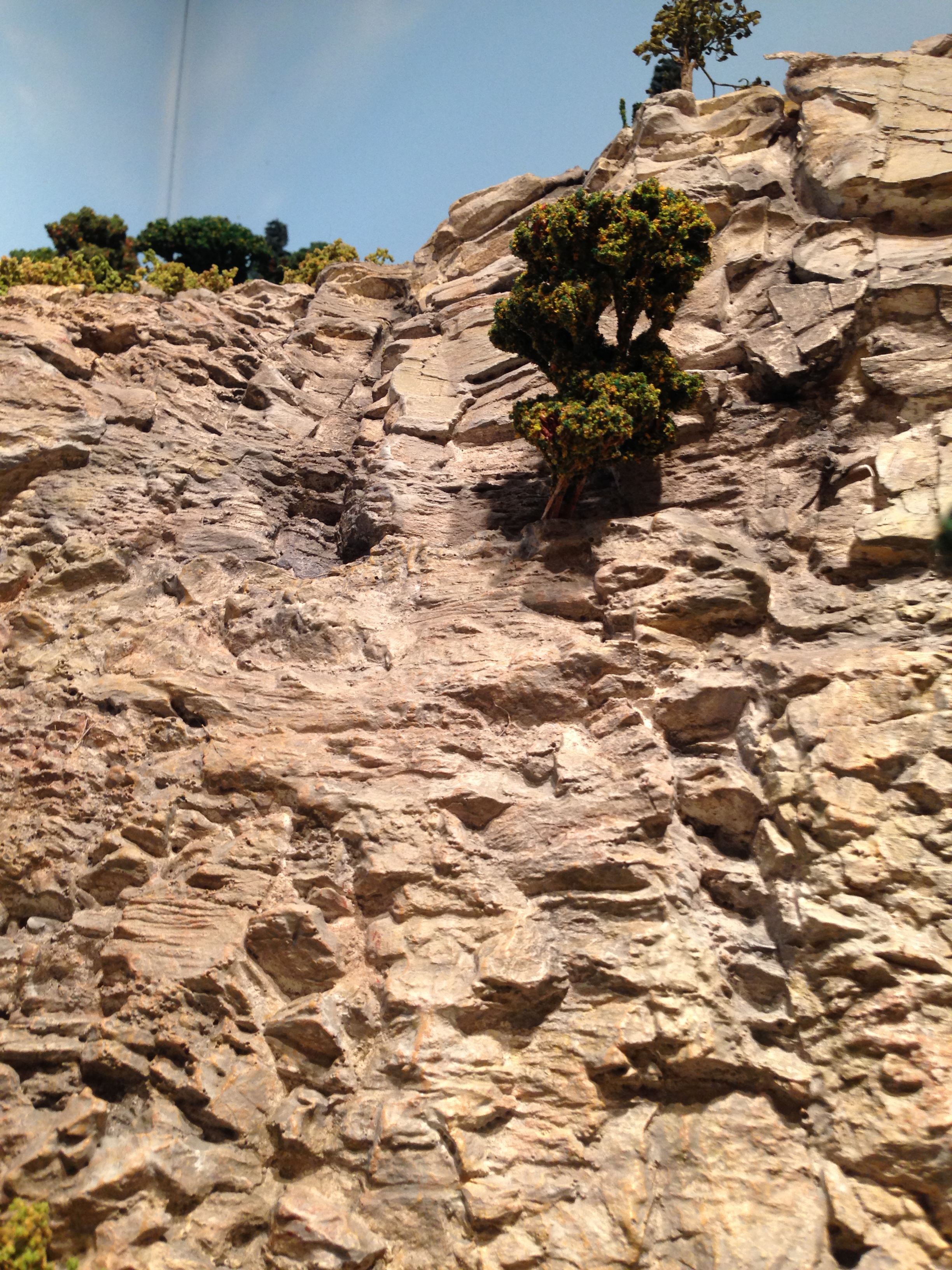
A final slight dry brush stroke of titanium white is then placed on the edges to enhance contrast and highlights. This sounds tedious but the result is astonishing..like real rock and not painted styrofoam.

Lou”
How to build a model train mountain

How to build a model train mountain

HO scale scenery

HO scale scenery

model train mountain

model train mountain


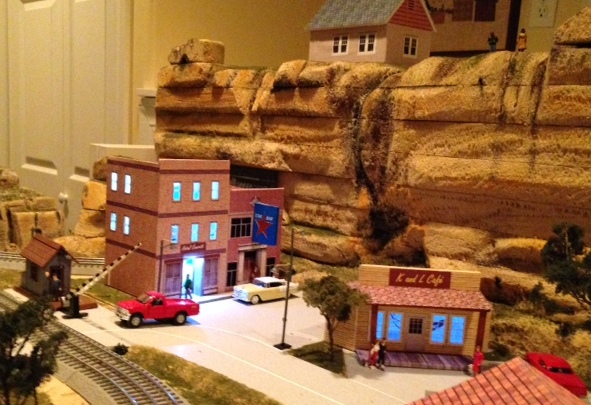
“Al …. I have an O gauge Lionel Fastrack layout. I use battery operated LED Christmas lights for interior lighting in my buildings. A string of 20 lights costs less than $10 and runs on three AA batteries. I cut the string in pieces and add wire as needed to place inside of buildings. Attached is a photo of a couple of lighted buildings.

Enjoy your emails.. Bill”
Hotel


Lastly, I had one or two encouraging comments on the ‘ai’ video I made of Don’s HO scale steel mill.

So I thought I’d have a go at Fred’s stunning layout too. I thought the running water worked really well:

(Watch on youtube here.)

Thanks to Alan, Lou, Bill and Tony. Please do keep ’em coming.

That’s all for today folks.

Please do keep ’em coming.

And if today is the day you get started on your layout, the Beginner’s Guide is here.

Best

Al

PS More HO scale train layouts here if that’s your thing.


Need buildings for your layout? Have a look at the Silly Discount bundle.
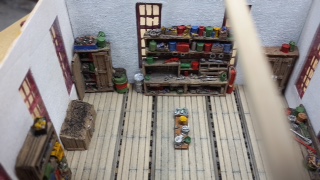
Brian’s engine house

“You can salvage that vintage Polystyrene N scale clear jewel case!

If you have ever been frustrated by both the beauty, and frailty, of those vintage Rivarossi and similar N scale polystyrene jewel cases, this might offer a solution.

All too often they are crushed, corners snapped, split, or broken and crumbling. It was a cruel fate offered to the poor one that sat at the bottom of the box which housed all those trains in jewel cases. The usual remedy was to tape it with some poor choice alternative. Masking tape which either turns to crystals or mush, depending on the day of the week, or clear cheap tape that dried to stone. That, or you ended up buying that odd lot to get the one good lid, nesting liner, and the locomotive identification card that was saved and spared because of a case that did not suffer some cruel fate or damage.

But I have found a partial remedy. PVC and CPVC clear cement can work wonders. The Oatey brand, available in the states is a good example, although I am sure there are others.

If you have all the pieces, carefully place them together. If needed, support the joint beneath and underneath with wax paper and then some blue painter’s tape. Grab a couple flat toothpicks and carefully apply a few thins wipes of the glue. Thin is better. It won’t shrink, dries quicker, and is easier to work with. Don’t pull more than once or twice, as it sets quickly. And it will start to get ugly. Like a choppy sea, instead of a smooth lake on a still day.

I have found that three or four thin applications over several hours is best. Don’t place it on the inside edges where the case lid meets the base upper edges. And if you get too much, very careful scraping with a sharp X-Acto blade can remedy that.

Will it have the beauty of the original? No. Will it look as good as it did the day you brought it home? No. Will it have the original dimensional stability, it never really did? No, and I would not drive the family sedan over it or support your favorite two-wheel with it either.

But, it will keep it together. It can prevent further deterioration, and help secure that valuable (or invaluable) gem and its contents. Besides, there is nothing like a snoot full of tetrahydrofuran and acetone to get you going on those cold mornings. (No, not serious, do work with good ventilation and avoid breathing the stuff.)

I hope this helps. And to all those other contributors, thank you for your wonderful ideas.

All the best.

Terry”


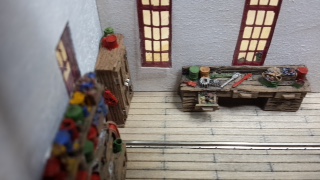
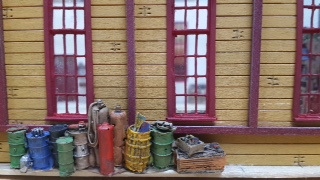
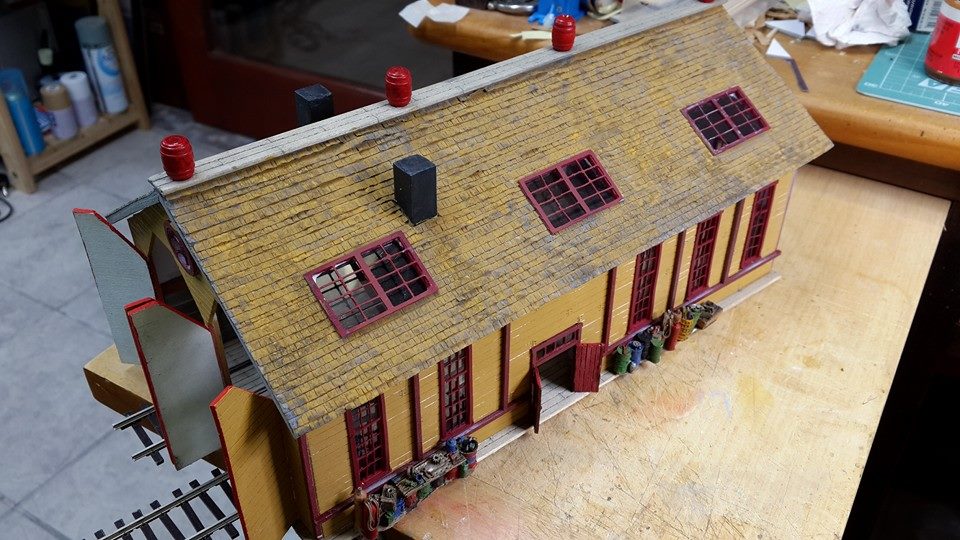
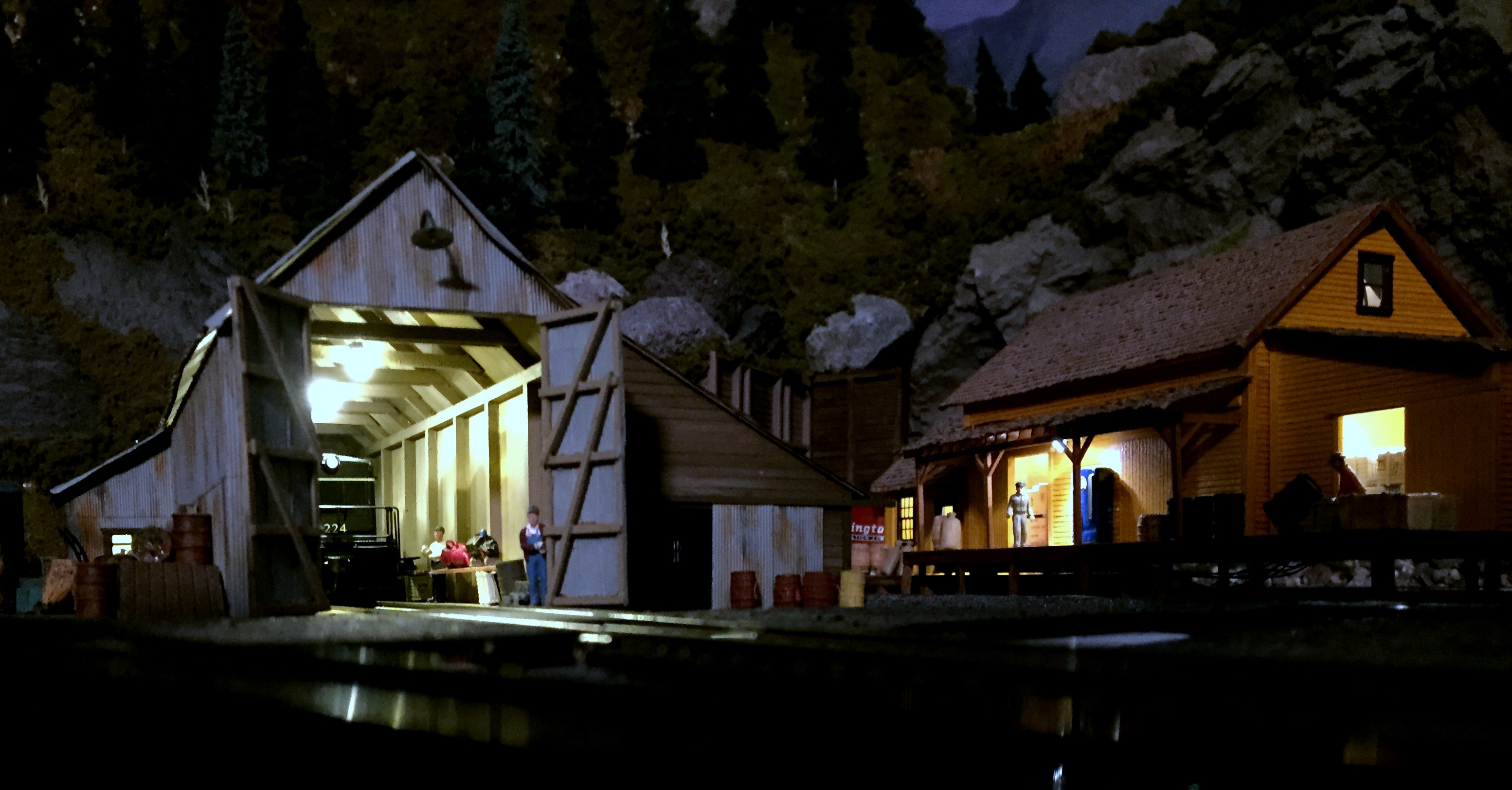
“Hi Al, progress on my friends two stall engine house. (54 hours of work so far).

Putting and positioning the painted details inside. Castings from my “bits box” all painted and weathered.

Then to mount all the interior lighting.

Next step is to weather it and make it look well used (weathered). Note the distressed siding on the walls and the “nail heads” all ready for the weathering process.

All the best and keep up the excellent work.

From a golden key subscriber.

Brian

Cape Town South Africa”

image1

image2

image3

image4


“Al

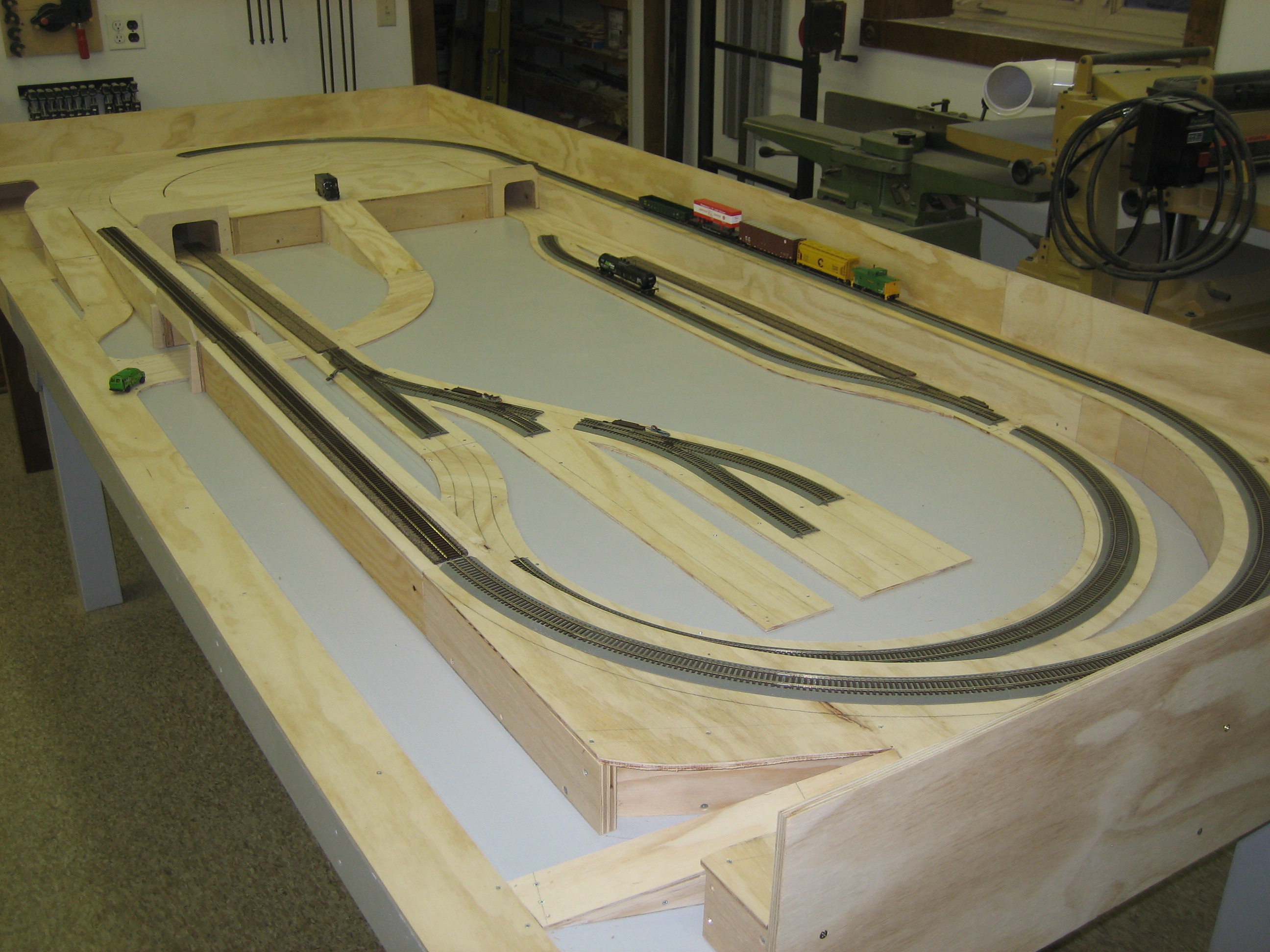
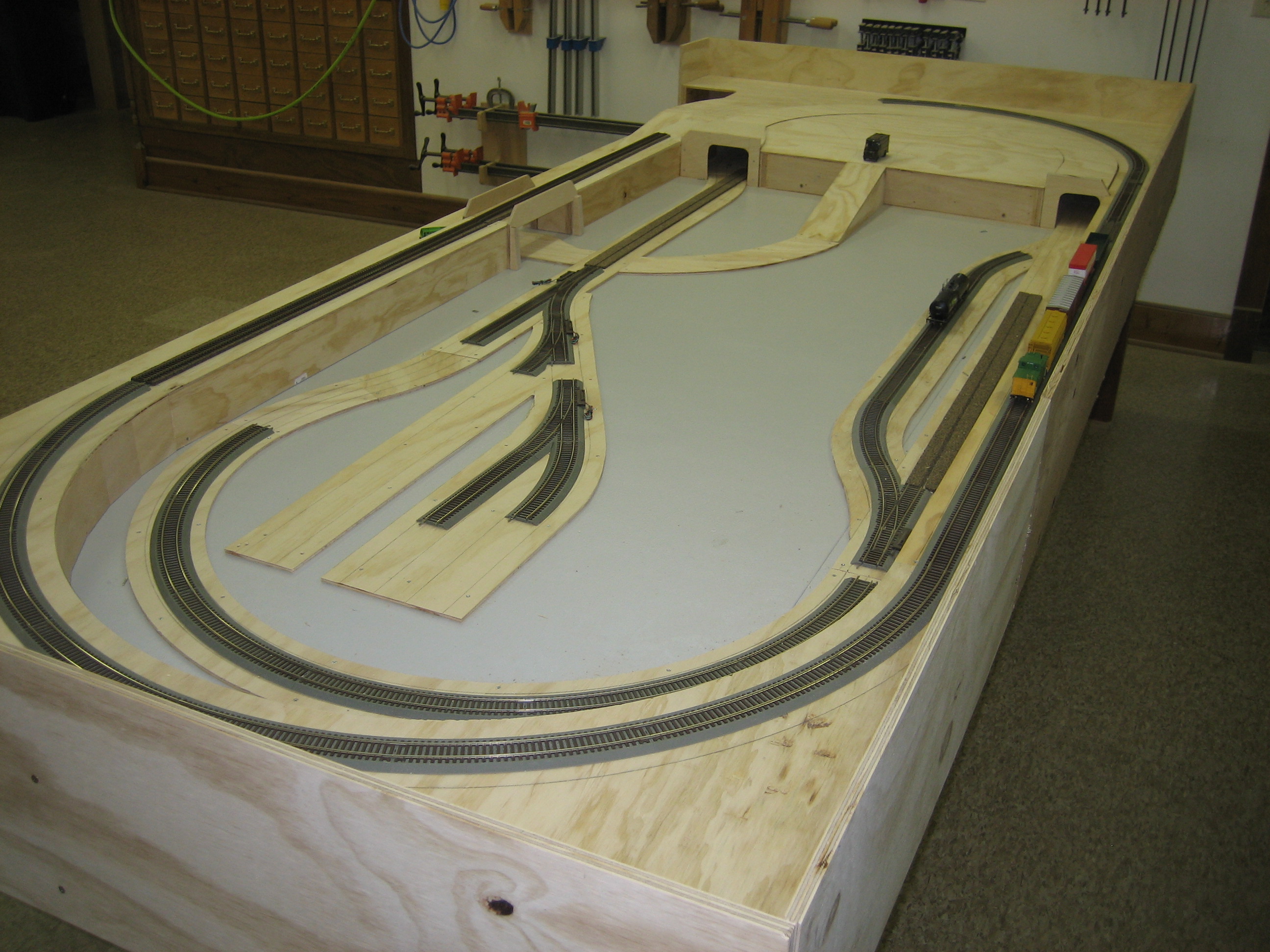
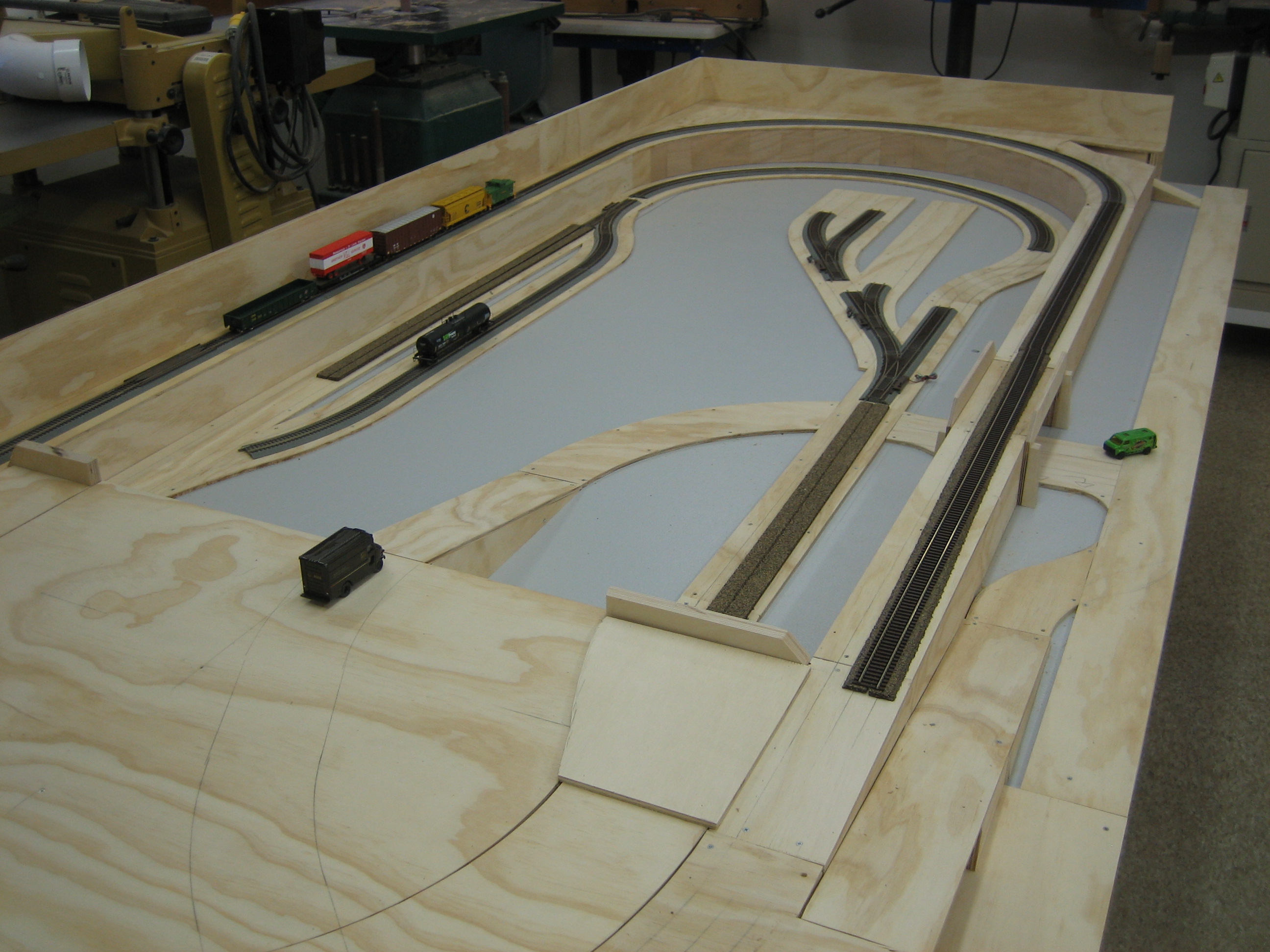
I am working with my 7 year old son on our first railroad layout (I never owned a train either). The layout is 4’8″x11′, One section is 4’8″‘x8’ and the other section is 3’x4’8” that is the only way I can get it up the stairs to the attic.

I find your e-mails very useful. Right now I have the layout in my wood shop but I finished a room in our attic complete with finished wall, floor insulation, and heat, where I will soon put it. I plan to do some painting in the wood shop before I bring it up stairs to lay the track and slowly do the scenery.

I have attached a couple pictures of the layout. If anyone has any suggestions for me I would appreciate hearing (or reading) them. Driving cars and trucks are just as important to him so those will not be stationary, or at least not all of them.

I do have one question which is “how do I make the pink foam board look like rocks? Do I use carving tools or something else? And how do I paint them to make them look real? Ok. that is more than one question!

Thank you

Larry”

IMG_0265

IMG_0267

IMG_0270


Can anyone help Larry? I do enjoy reading the different suggestions and approaches. I’m looking forward to see what comes in.

That’s all for today folks.

Please do keep ’em coming.

And if today is the day you get started on your layout, the Beginner’s Guide is here.

Best

Al

PS Latest ebay cheat sheet is here.

PPS More HO scale train layouts here if that’s your thing.


Weathering gondola

Will’s been in touch with his weathering gondola ‘how to’:

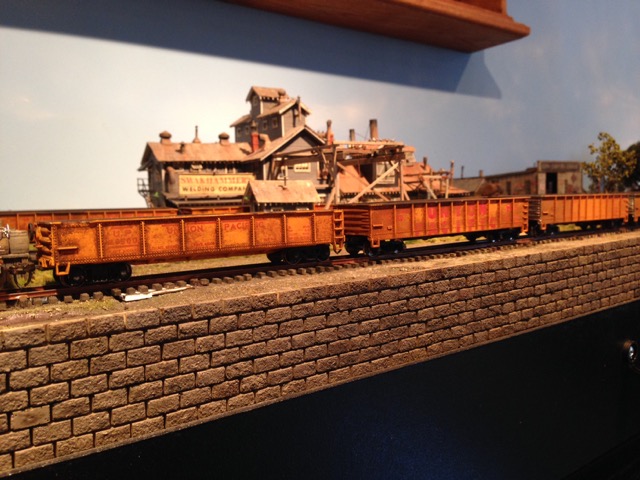
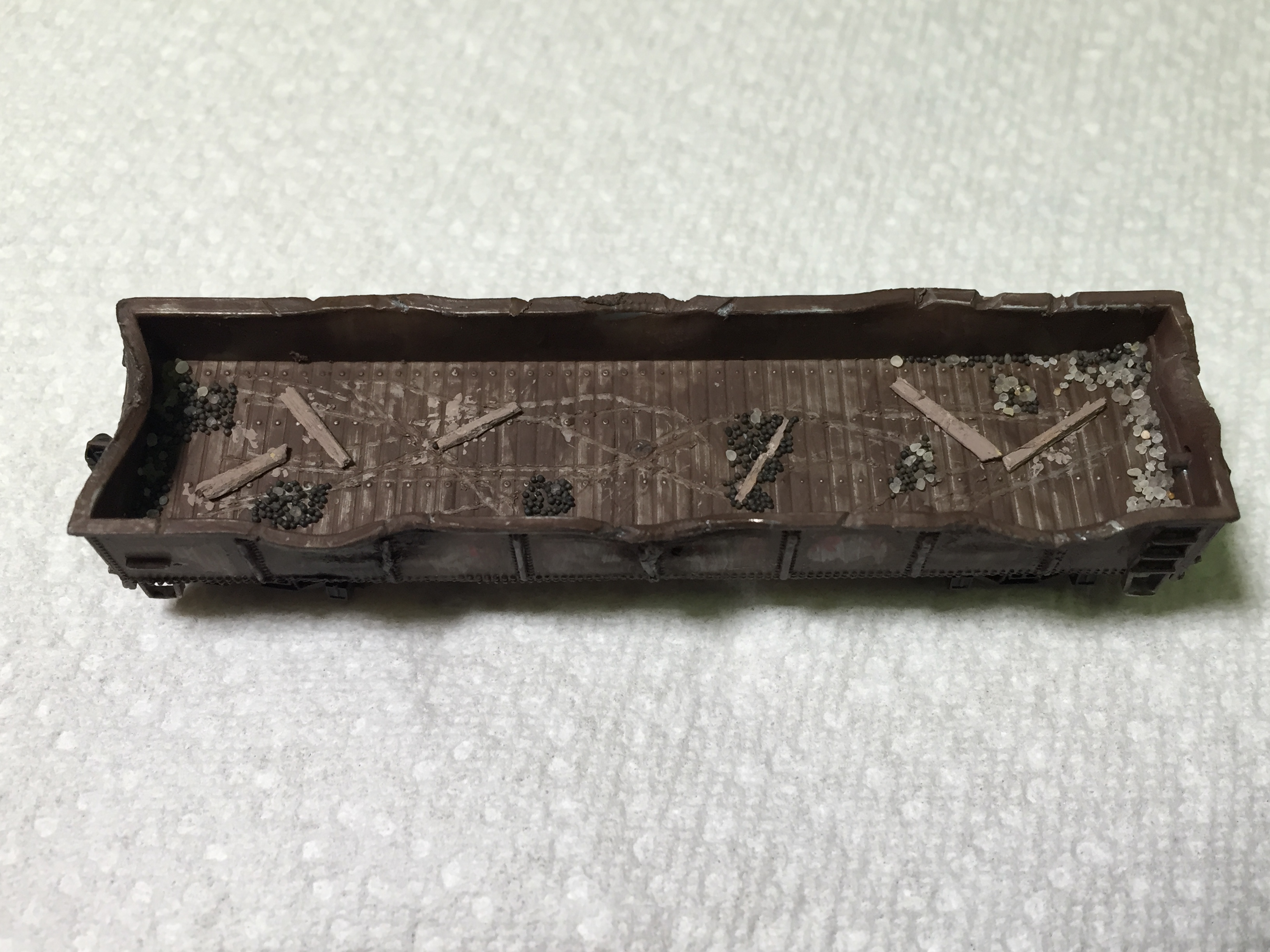
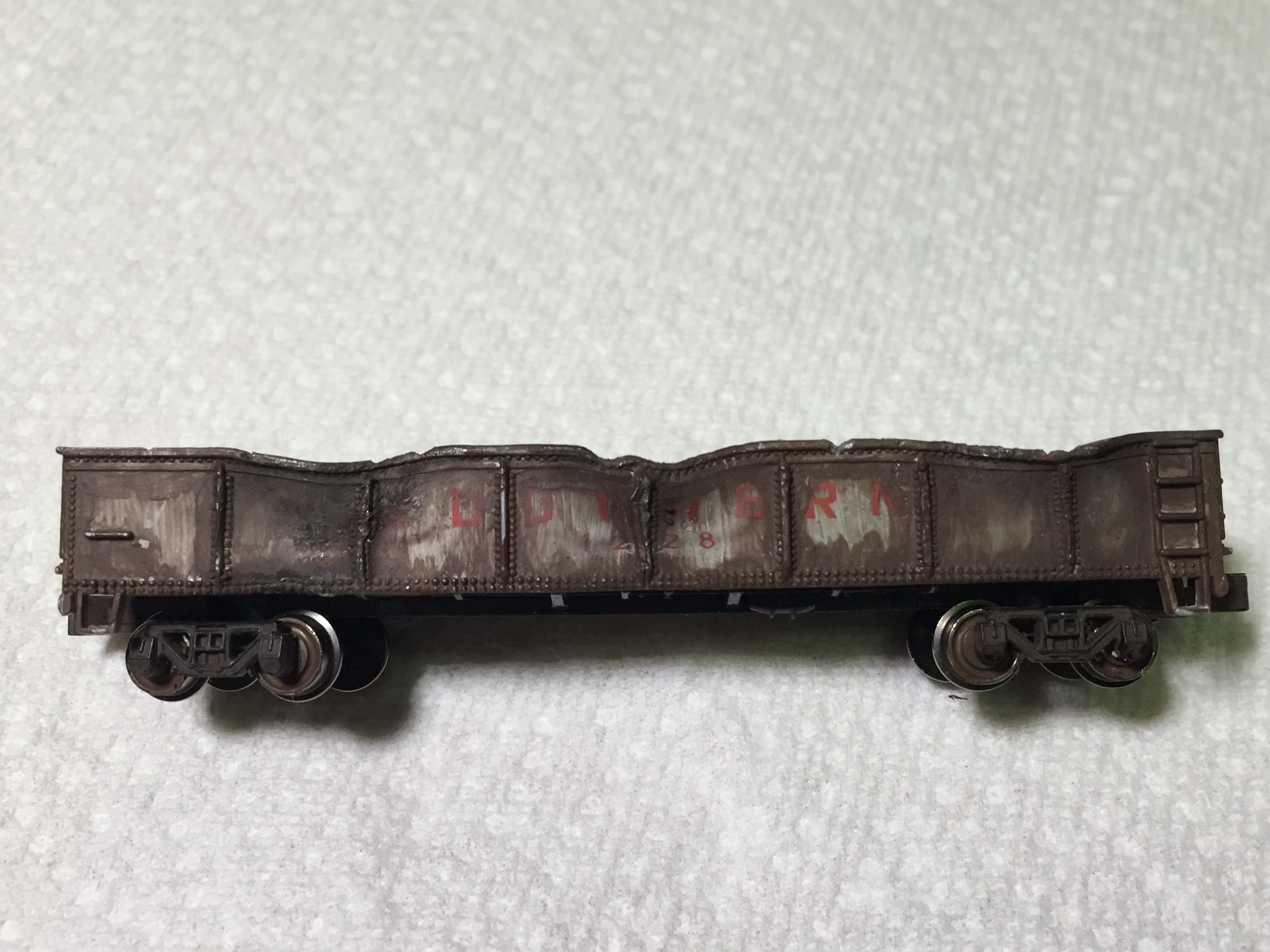
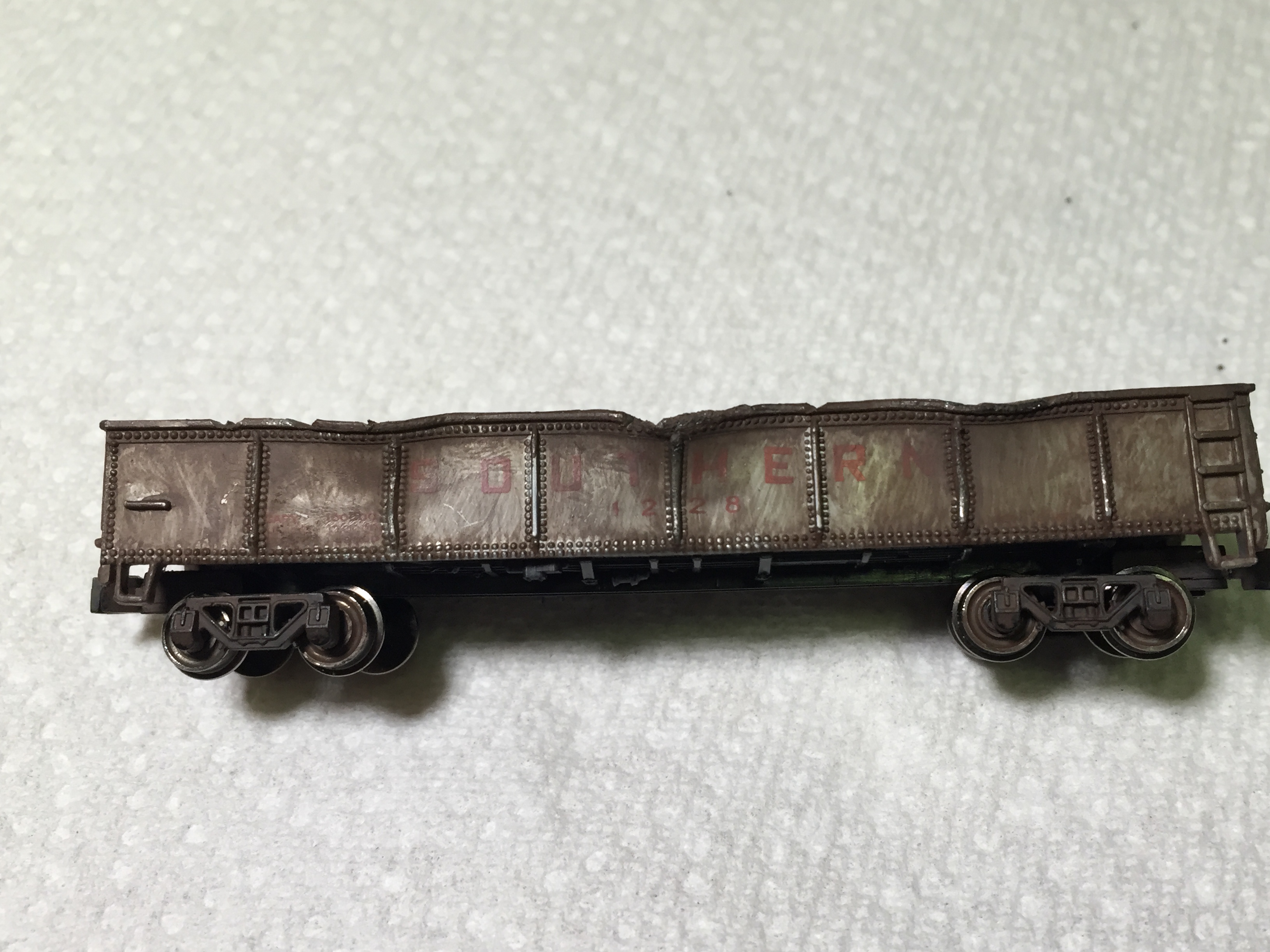
“For my first attempt at weathering a rail car i chose an inexpensive bachman gondola.

The nicks on the side and gouges in the bottom were done with a file.

Next i heated the sides with a lighter and pushed them in or out.

The weathering was dry brushed with acrylic paint, i chose burnt amber for the paint color to resemble a rust type color.

The scrap wood is a tooth pick cut up and painted and the dirt is frack sand. I then sealed the car with Dulcote.

The sand is a little big so next time i will use a finer grade.

The effect i was going for was to have a car that was very used and abused and i think it turned out o.k.

At least my girlfriend thinks so also !!

Will send further attempts as we progress.

Plan on modeling a west texas oilfield area where i live and work.

best Will…”

weathering gondola

weathering gondola

weathering gondola

A big thanks to Rooster, it reminded me of these:

Weathering HO freight cars.

HO scale gondola loads.

HO scale single hopper coal gondola

Making loads for HO gondolasMaking loads for HO gondolas.

Making HO scale gondola loads.

Weather a model train.

Now on to Mark:

“Hi Al.

Here is a fun photo, titled “Late evening after a horrendous thunderstorm”.

The tip here is for those that use their iPhone for layout photos.

Turn the iPhone upside-down so that the lens is right down on the ground level of the layout. Focus on the subject.

The foreground will be blurry but you can crop it out or, in this case, with the night shot it doesn’t really show up. Gives a good perspective!

Mark”

model railroad After Storm


“Mr. Lee Alastair,

I have been in RR employ over 46yrs retired in May 2000. Now am 78yrs old, Also a model railroader since teenage years. Settling in HO scale.

In 1970 I designed the HO layout of the Walnut Creek Model RR Society in Walnut Creek, CA 2751 Buena Vista (in Larky Park) my pet peeve was lack of bright headlights on engines. Some members engines still don’t have headlights and some that barely can be seen at all. Factory headlights mostly are still not scale proficient in brightness.

I have perfected that by installing bright White LEDS in the unit shell complete with 1000ohm resister to power the LEDS. I apply brass contact plates to the inside of the locomotive shell on both sides. All the light wiring is in the shell.

On the power chassis I install power connector plates on each side of the motor to match the contact plates in the shell. Note: all these have to be custom made for the type unit you are lighting. I have five sets of F7’s ABBA’s of which four sets are of Ahearn super power mechanisms and 1 set F3 ABBA Stewarts. And all now have full bright headlights even at minimum voltage.

I also provided a Red LED for reverse movements on all the cab units. I have also lighted other members locomotives this way.

I also have replaced the incandescent lighting in KATO’s business cars to twin bright white 1.8MM LED’s each directly below the red & green plastic light receiving end on underside of car top plastic panel. N9ow there is a bright red rear light plus the green and red side markers. Red to rear and green forward. Another club member had 5 of these business cars that I lighted for him also.

Sincerely on track.

Robert”

Now on to Bobby:

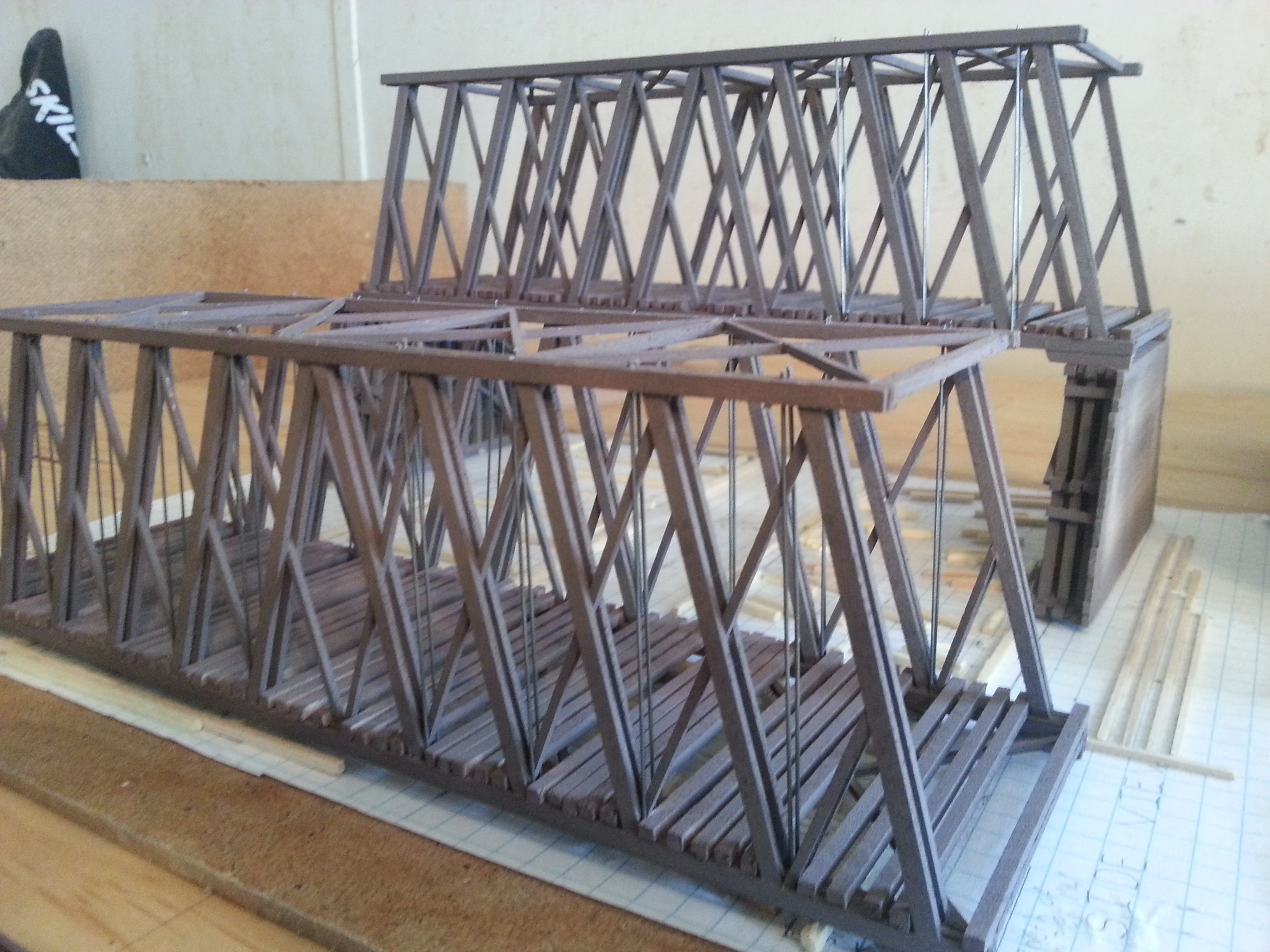
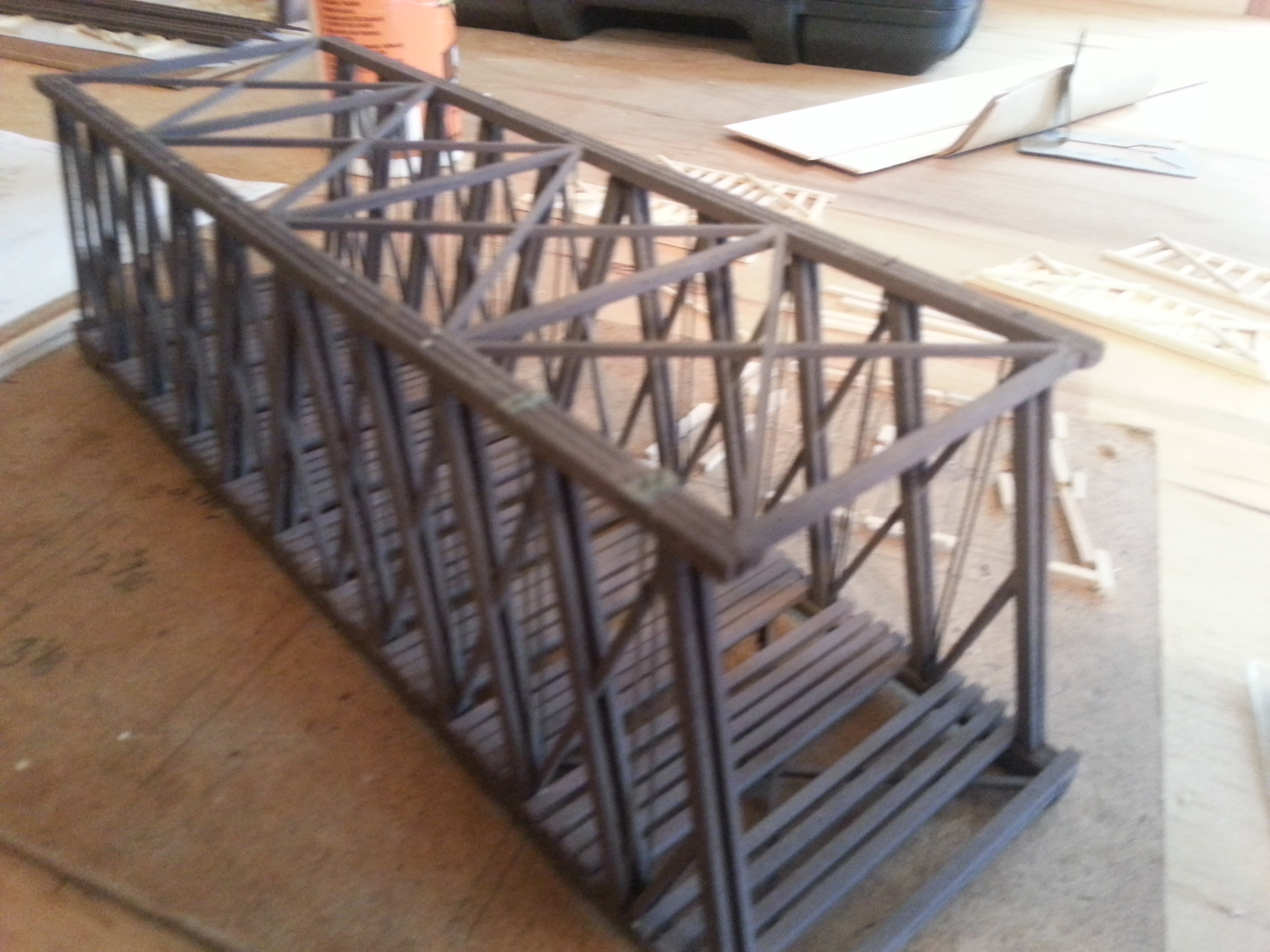
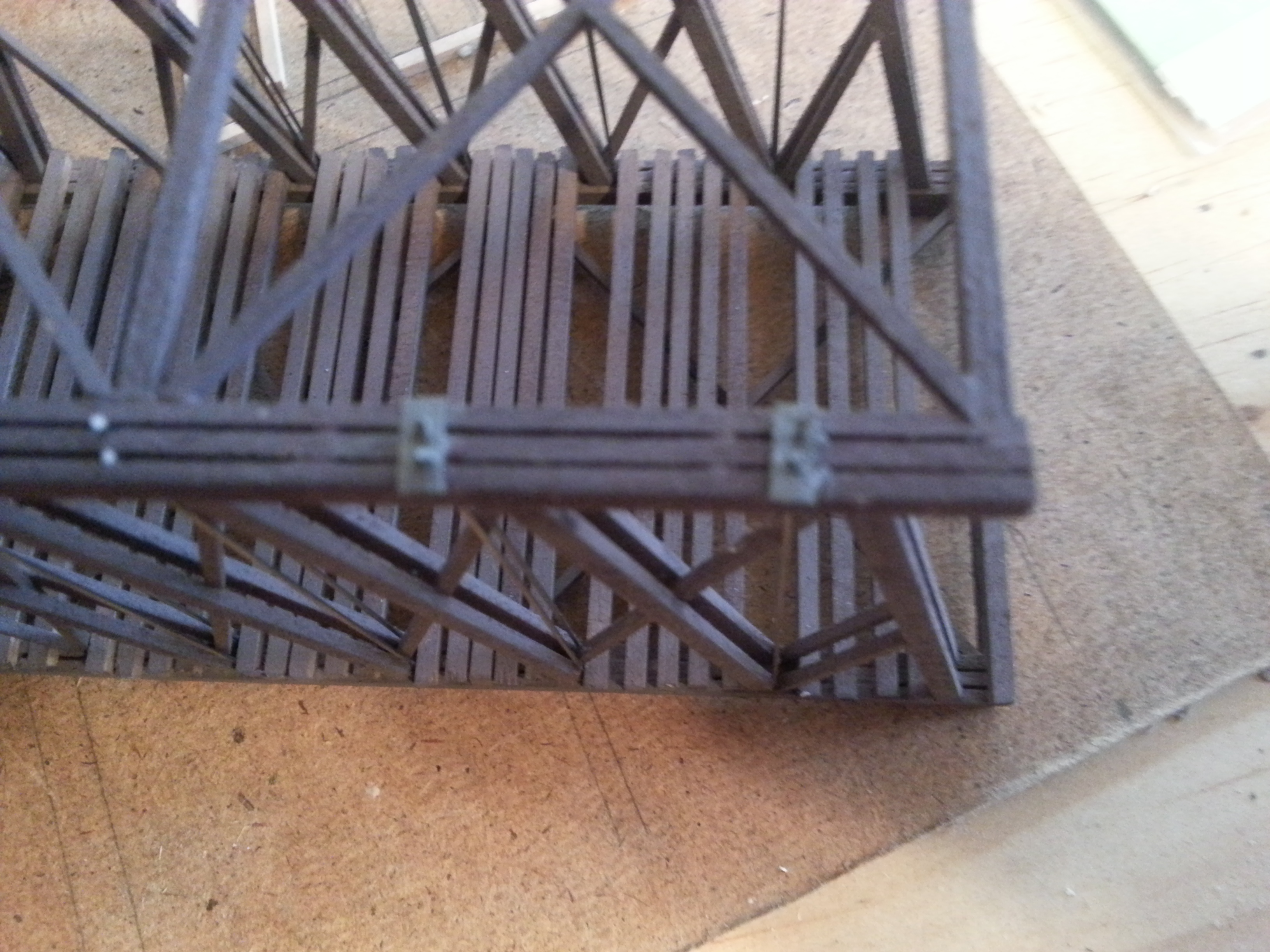
“My name is Bobby and wanted to share my first scratch built bridges. Two are Howe through truss bridges. I have always been interested in scratch building so I gave it a shot. They are almost done so let me know what you think. Thanks.

Bobby”

trestle bridge

model train trestle bridge

model railroad trestle bridge

(When it comes to trestle bridges, I always think of Dan’s post: HO scale trestle template.

Next up, Paul:

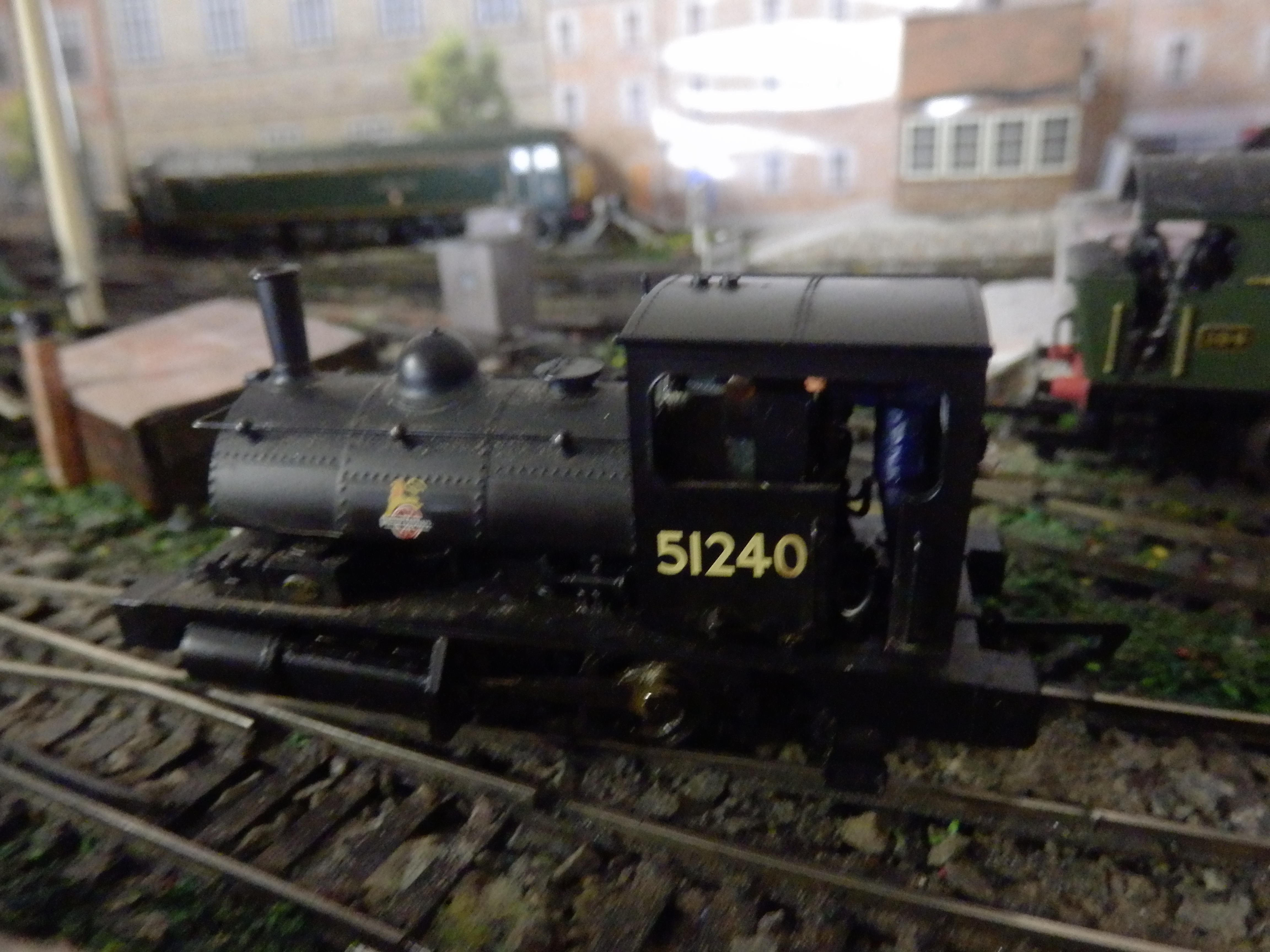
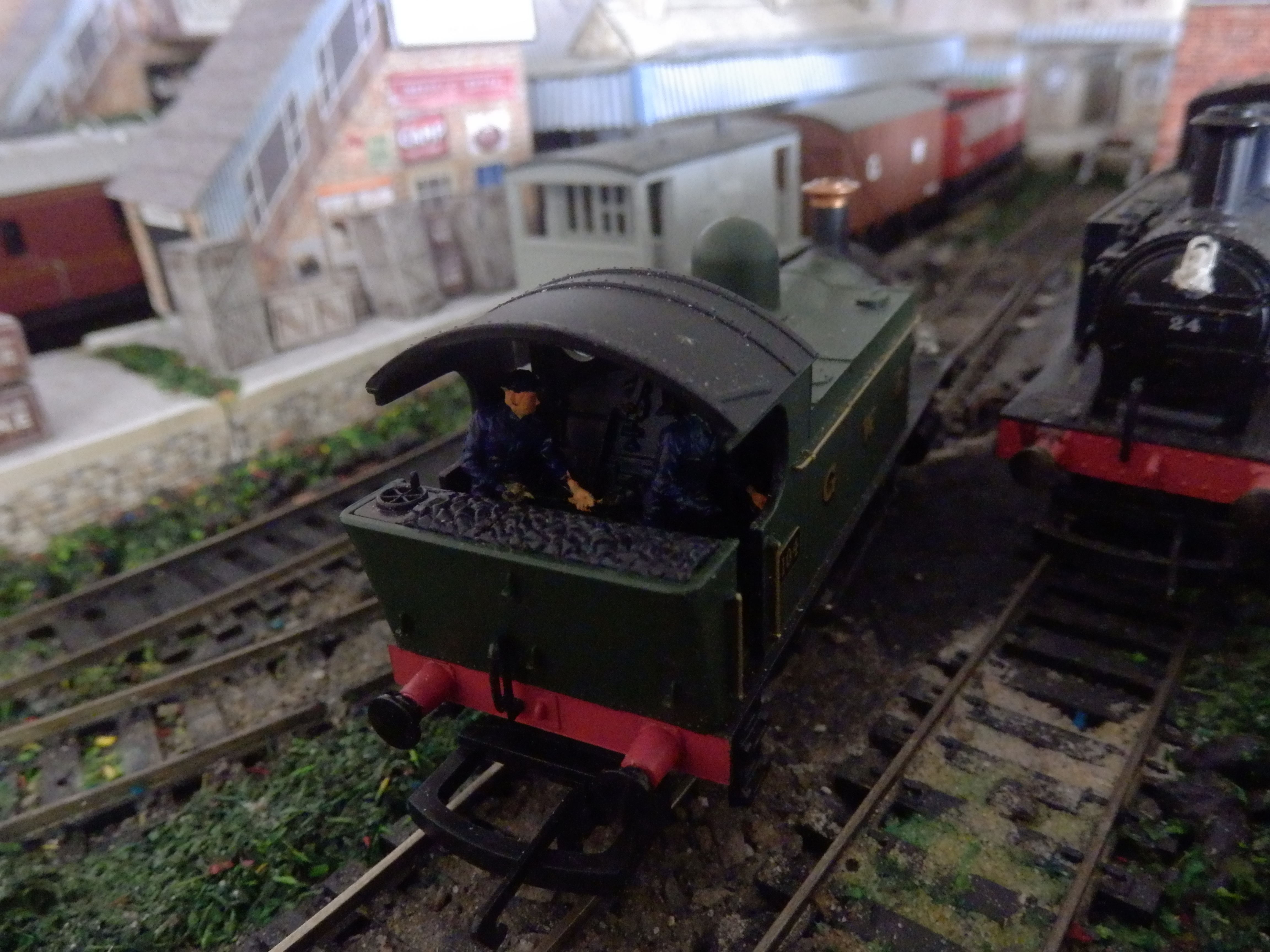
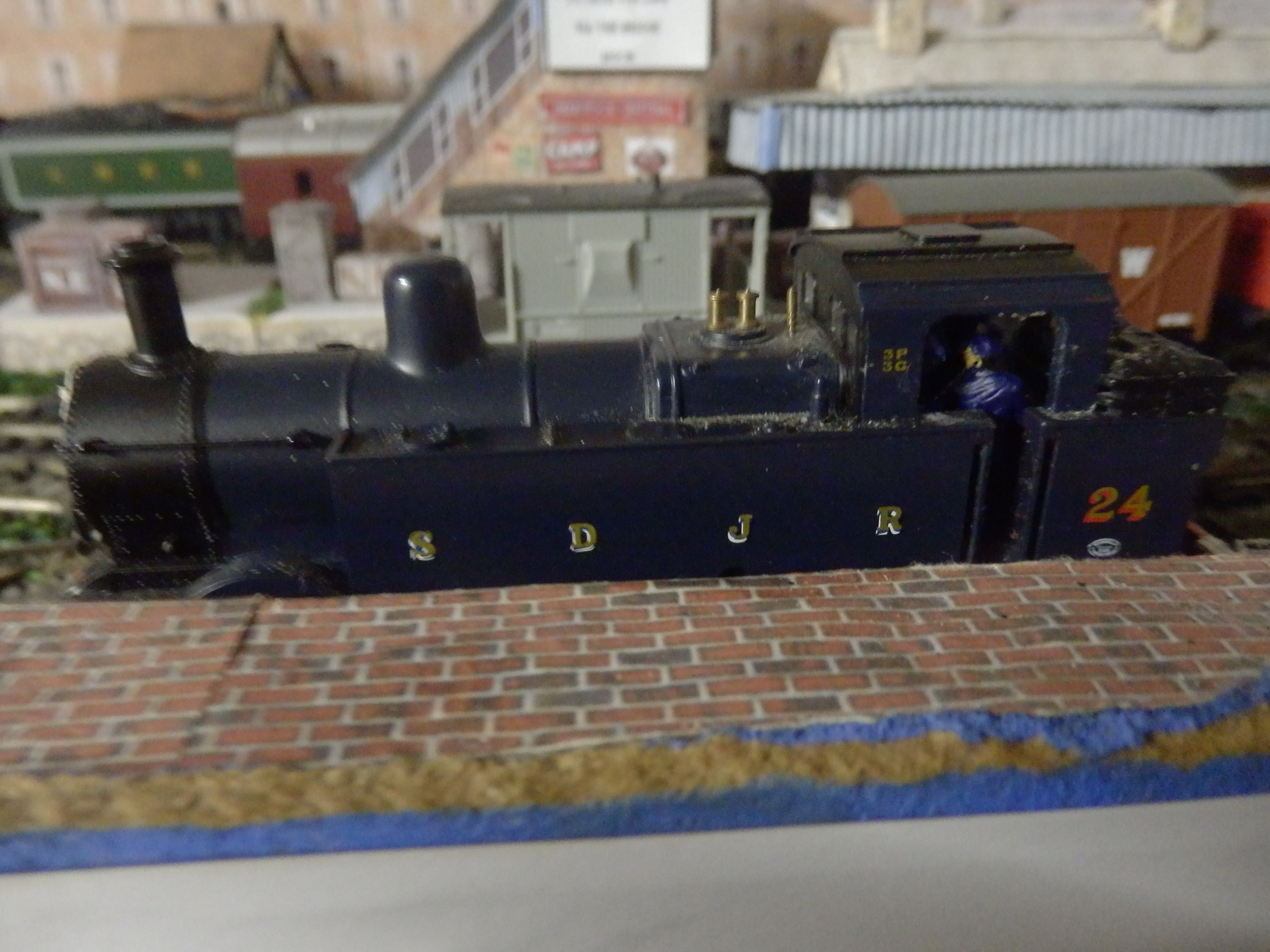
“These photos show hornby locomotives with crew figures in the cabs.

The 1st photo is the hornby pug, it has a crew of one.

The others are of a 101 clas tank, and a jinty.

The crew figures were supplied unpainted black.

I painted the figures using water colour paint. I used water colour because if you make a mistake it is easy to fix up the mistake.

Paul”

model train driver

model train fireman

model train fireman


“Use thrown-away charcoal filter elements (like body shop respirators use) stripped open for REAL looking coal in coal hoppers.

It is light weight, and an exact match for coal. It is a might large for N scale. but looks great for HO and larger scales.

Gregg”


“Ground charcoal makes great scale coal…………keep breaking it till it’s the right size….then use the dust mixed with white sprit to age the rolling stock..

Dry cleaning hangers(plain) can be cut to make telegraph polls (solder cross bars) fence posts etc.

Eric”

That’s all this time folks. Thanks to Robert, Mark and to ‘Roadrooster’ for his weathering gondola ‘how to’.

Please do keep ’em coming.

And if you want to roll your sleeves up and get back in to this fine, fun hobby, the Beginner’s Guide is here.

Best

Al

printable buildings

And there’s the Silly Discount bundle too.