I have labored and triumphed. The Big Curve Project is complete and trains can now ride around it’s great arcs. I replaced several small radius and choppy curves to acheive a smooth slope and curve from the crossover bridge to the prairie section of Farland. I hope it will yield great views of trains when the scenery is installed. It will be a while before I start the scenery process, however. For a while, I just want to enjoy running trains.
Rob”
A big thanks to Rob. I enjoy his tutorials.
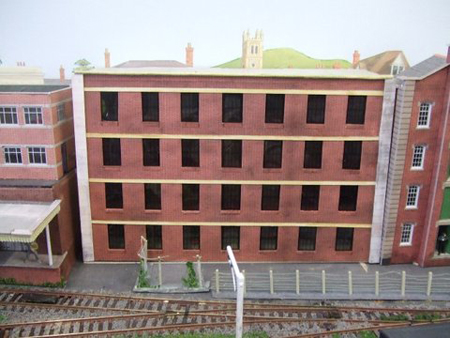
Seems like my boy’s prints are like buses – they all come along together. He’s added an office block and department store to the collection.
Actually, there’s a funny story behind them, but I’m really pushed for time today. Next time!
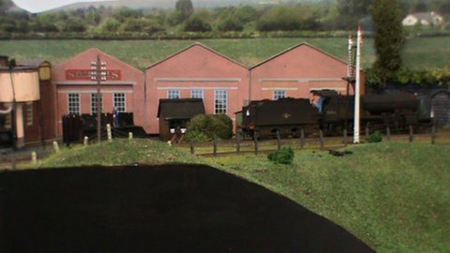
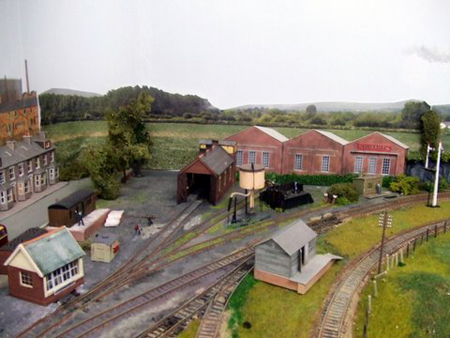
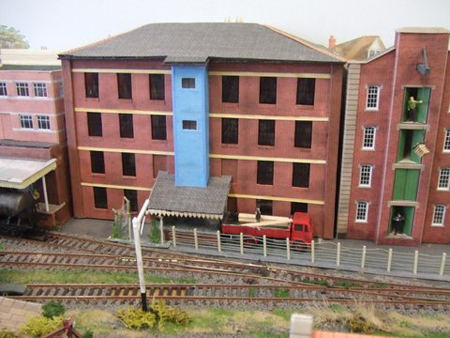
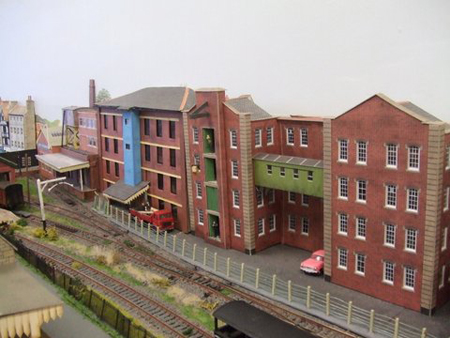
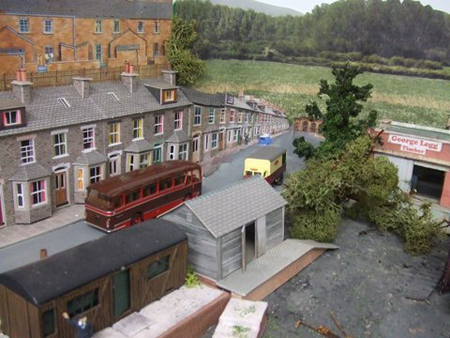
I have been tweaking my South Wales layout lately. I have modified the scratch built warehouse by fitting a loading dock and winch shaft, – see before and after pictures. Also I have given it a pitched roof. I think it looks better as it was rather plain and uninteresting before. I have also given the 3 gables of the bus garage a roof which looks like it’s receding into the distance. It’s actually flat pieces of card cut to shape. The garage was from my first layout but was not needed here. I used part of it to construct the creamery.
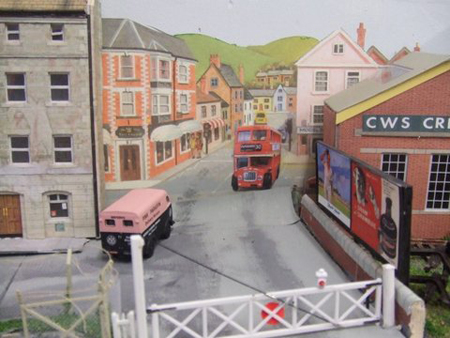
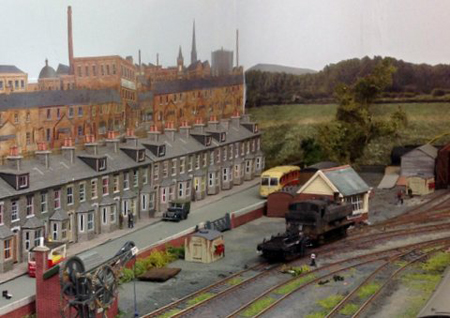
I have also experimented in trying to make the terraced houses recede into the distance but am not happy with it, but i’ve included the picture to show what I mean.
The last picture shows how I blended the road into the back scene using a small piece of paper curved upward and painted to blend in with the road colour. The bus is a photo stuck to the backscene.
Thats all for now, happy modelling
Alan”
“Cigarette ash makes a good medium for making anything look grubby, it’s a bit gross and smelly but you can add a drop or two of aftershave to mask the stale smell then let it dry.
Also cable ties are great for keeping track pieces together when storing them, or for securing if you are not sure about the layout and are experimenting with designs.
Peter”
And lastly, if you missed the Dave and Ken’s last post you can see it here.. It’s been a long time since I’ve had so many comments on one post.
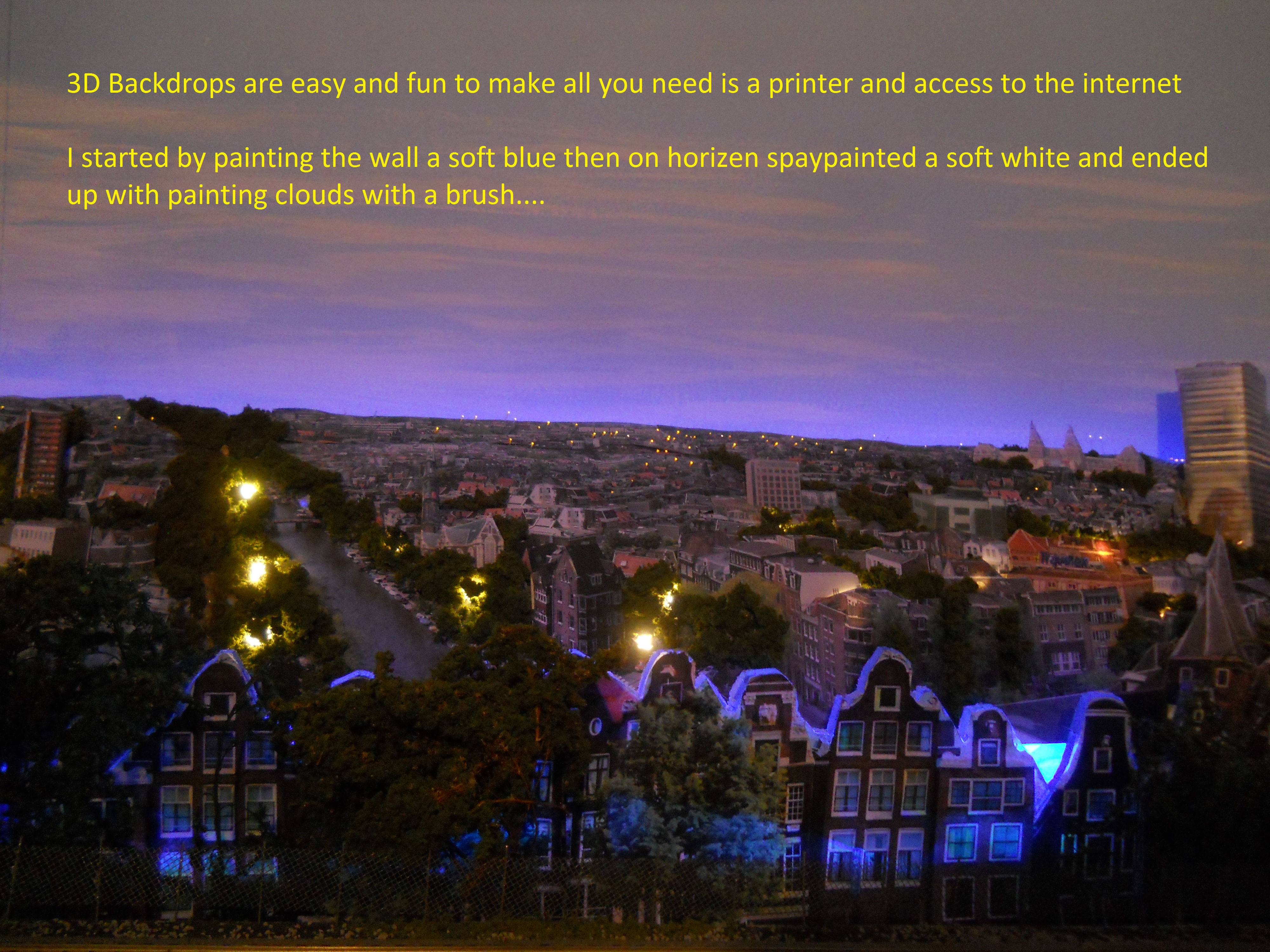
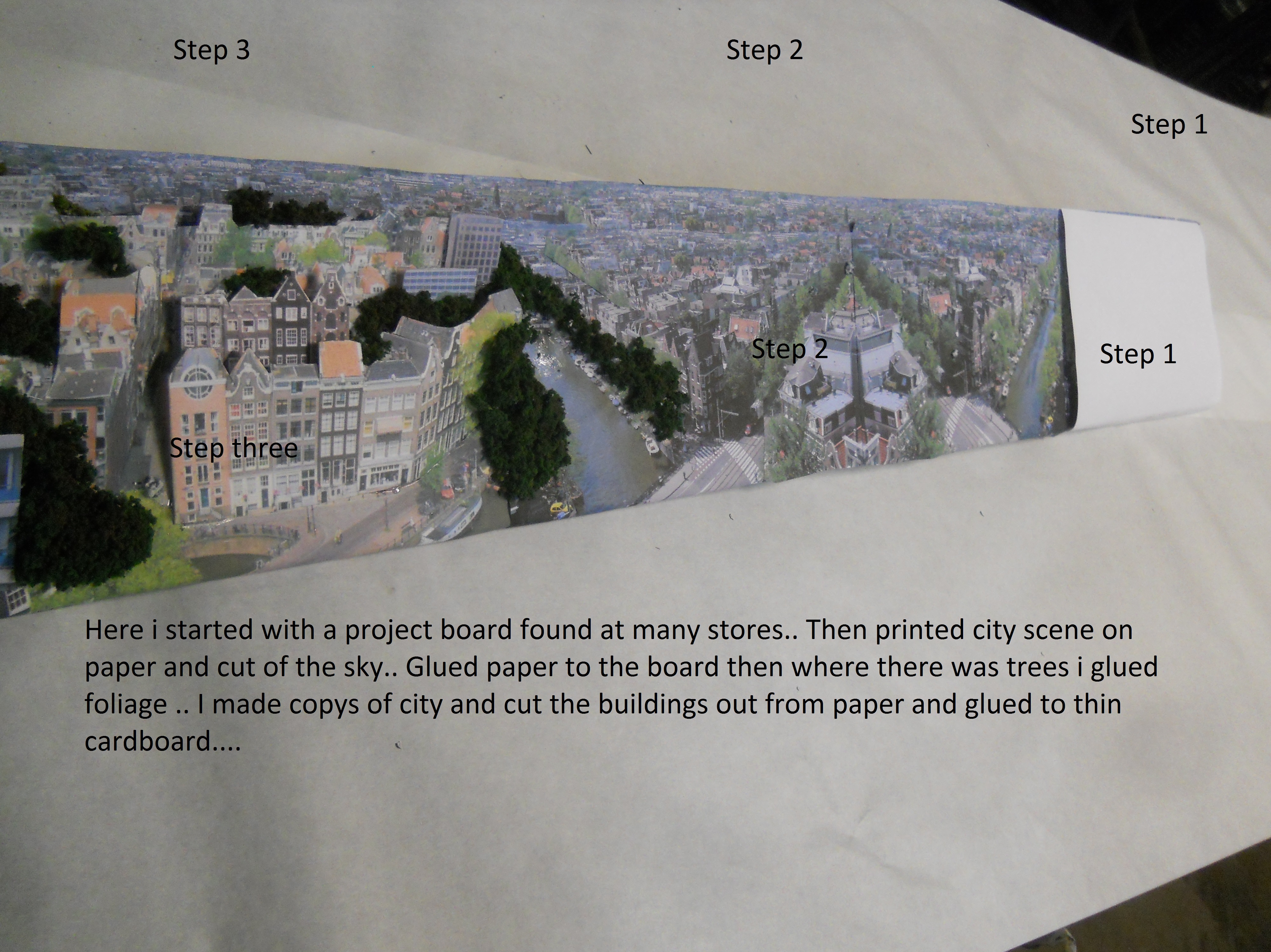
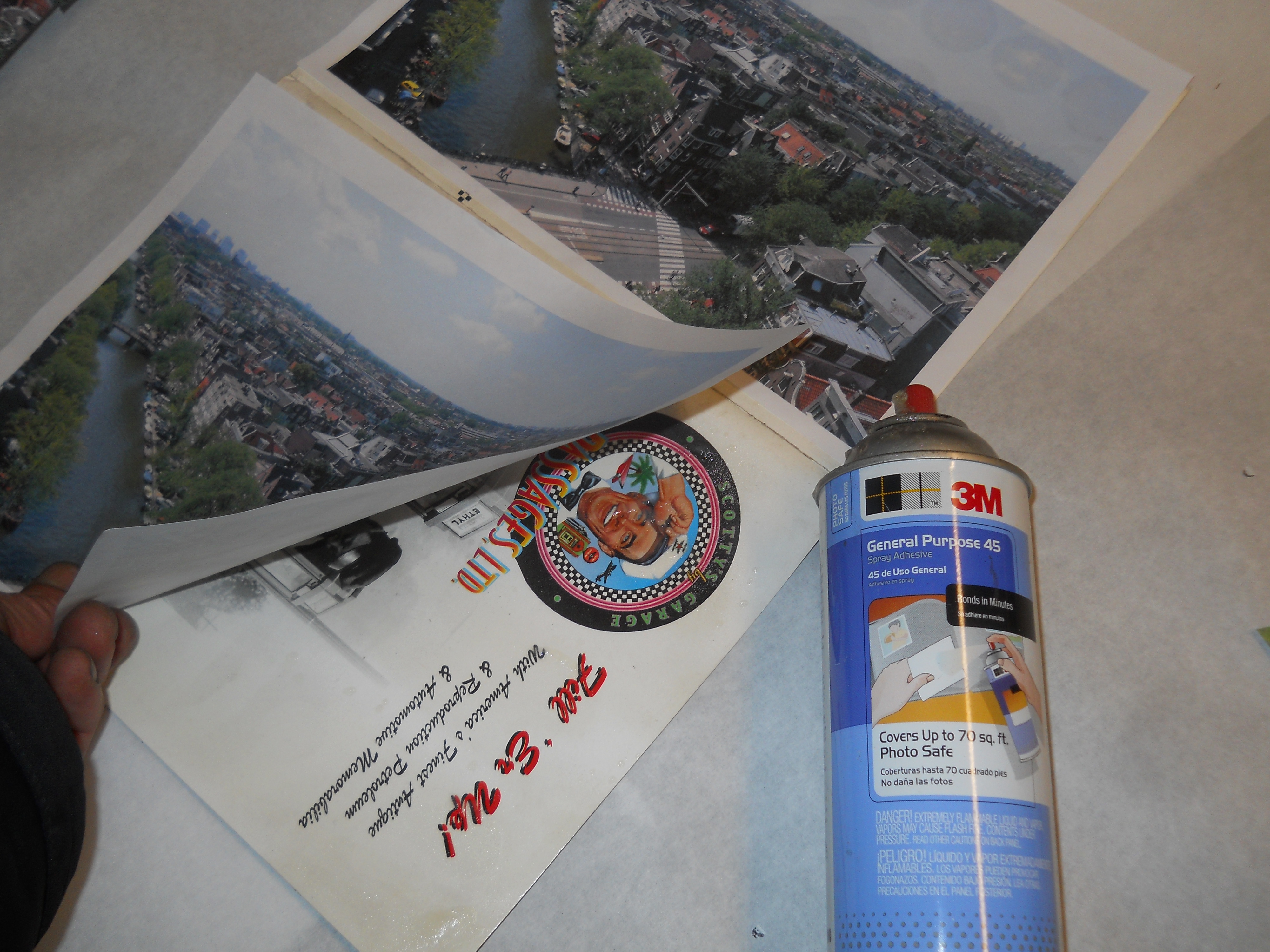
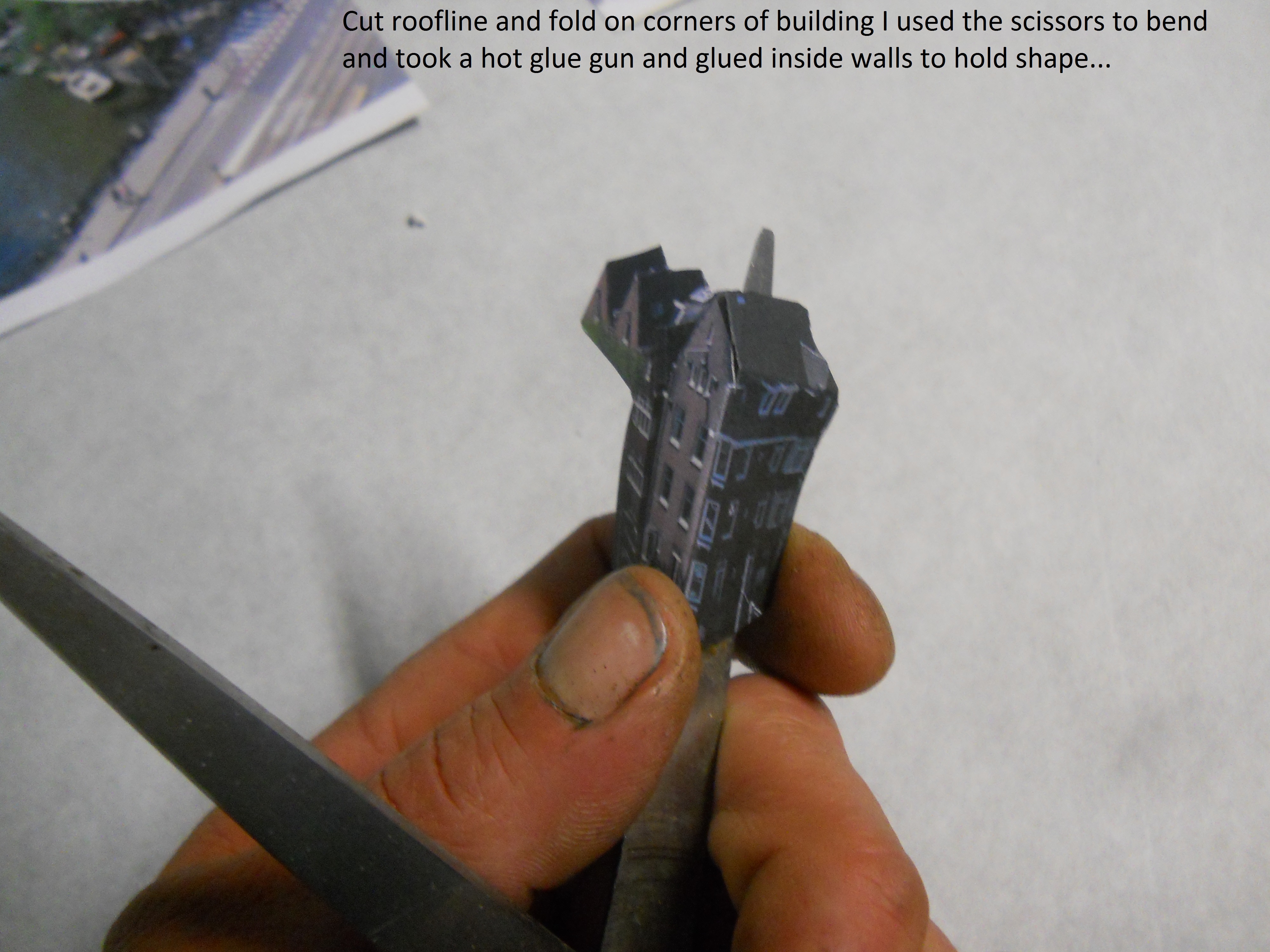
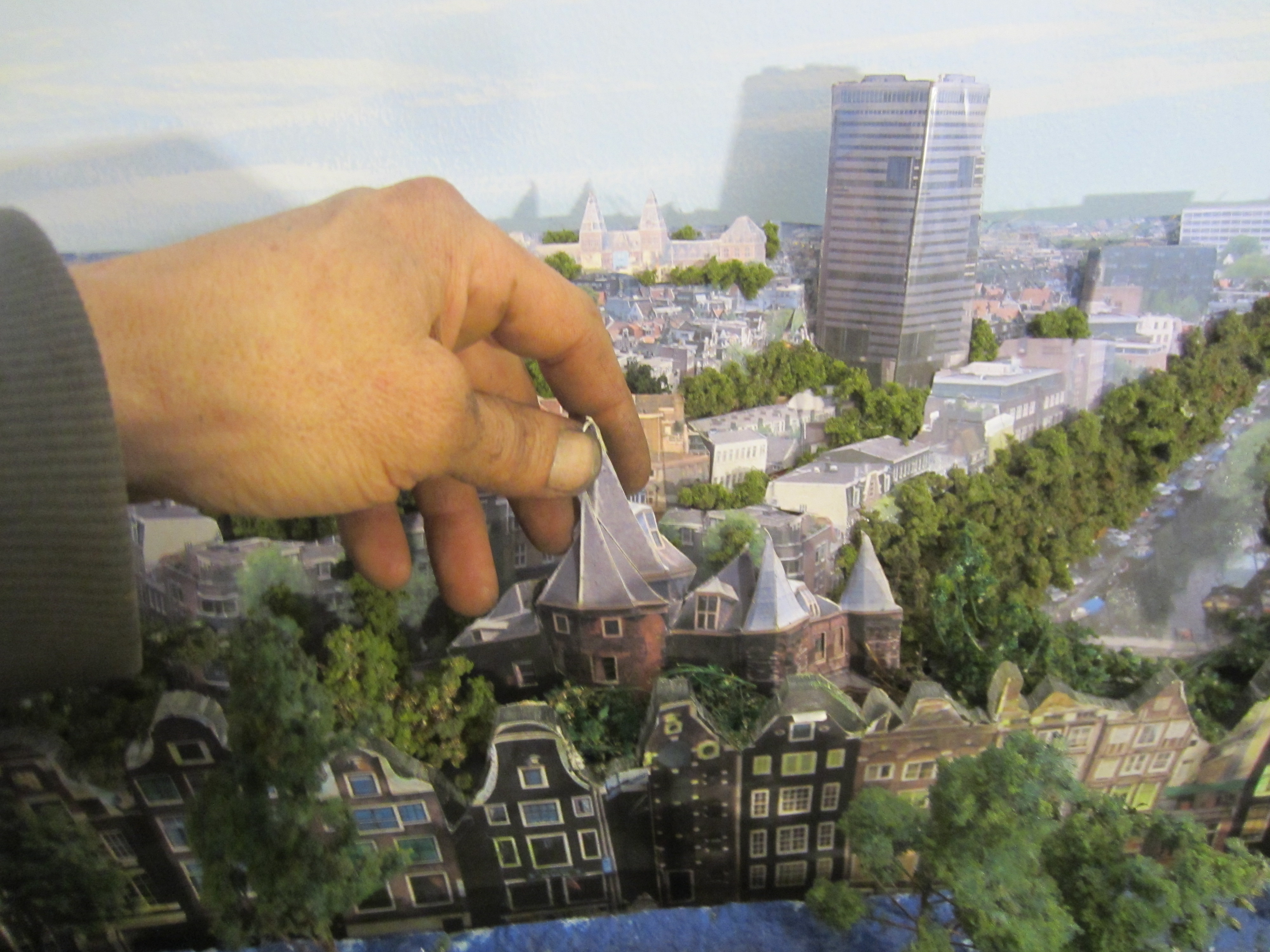
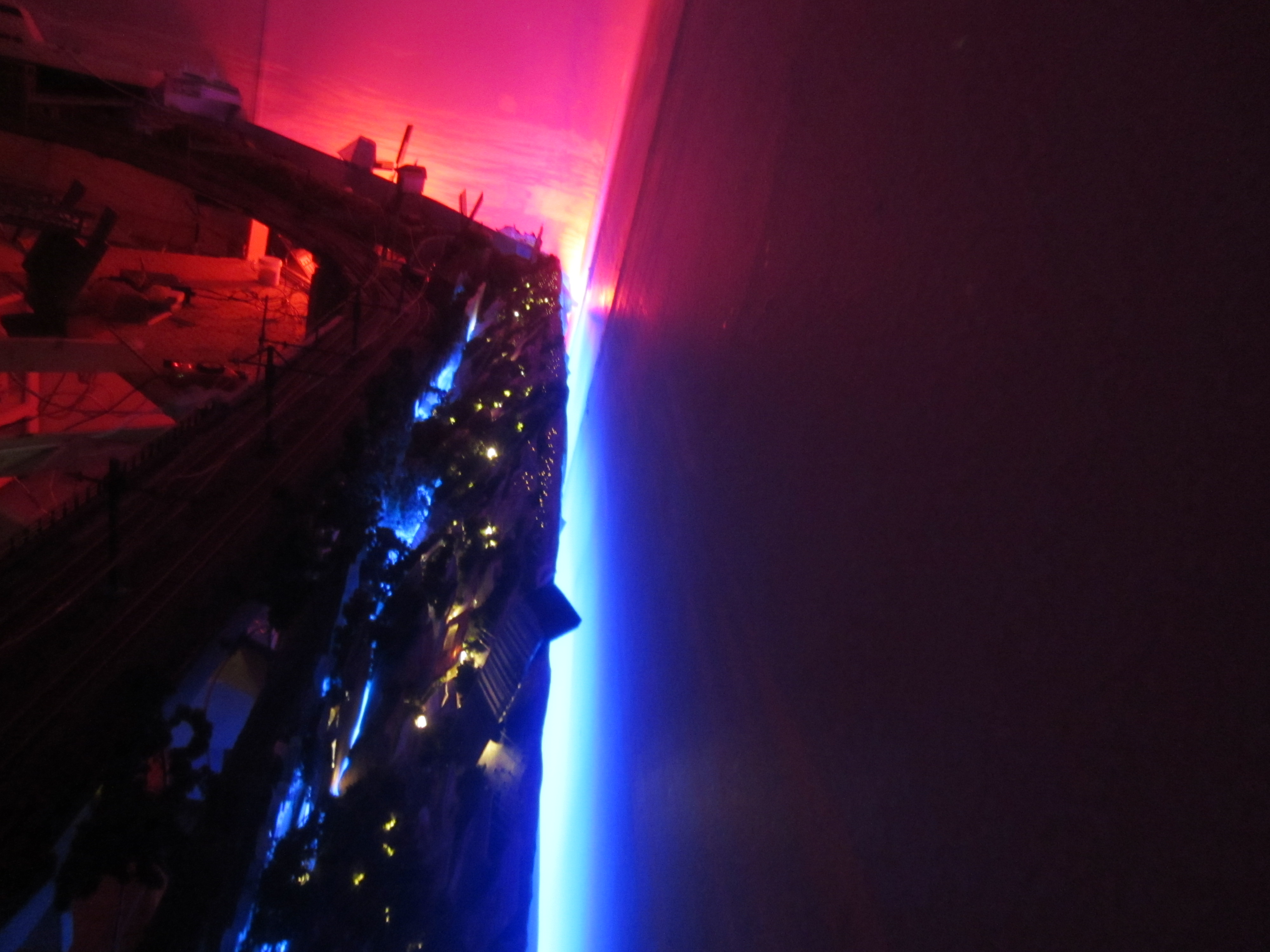
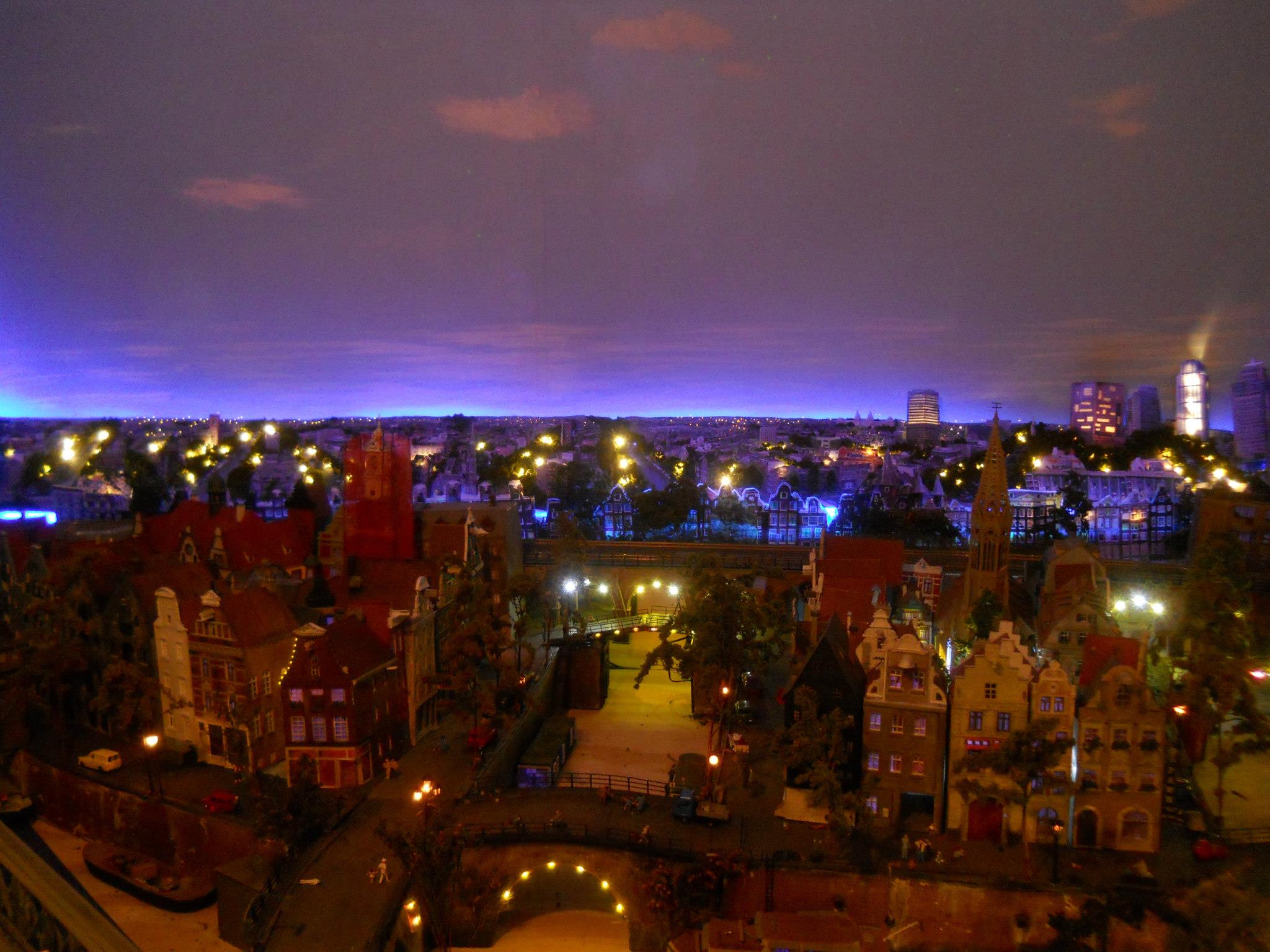
Ken’s been in touch with this very clever model railroad urban backdrop ‘how to’:
“Hi Al,
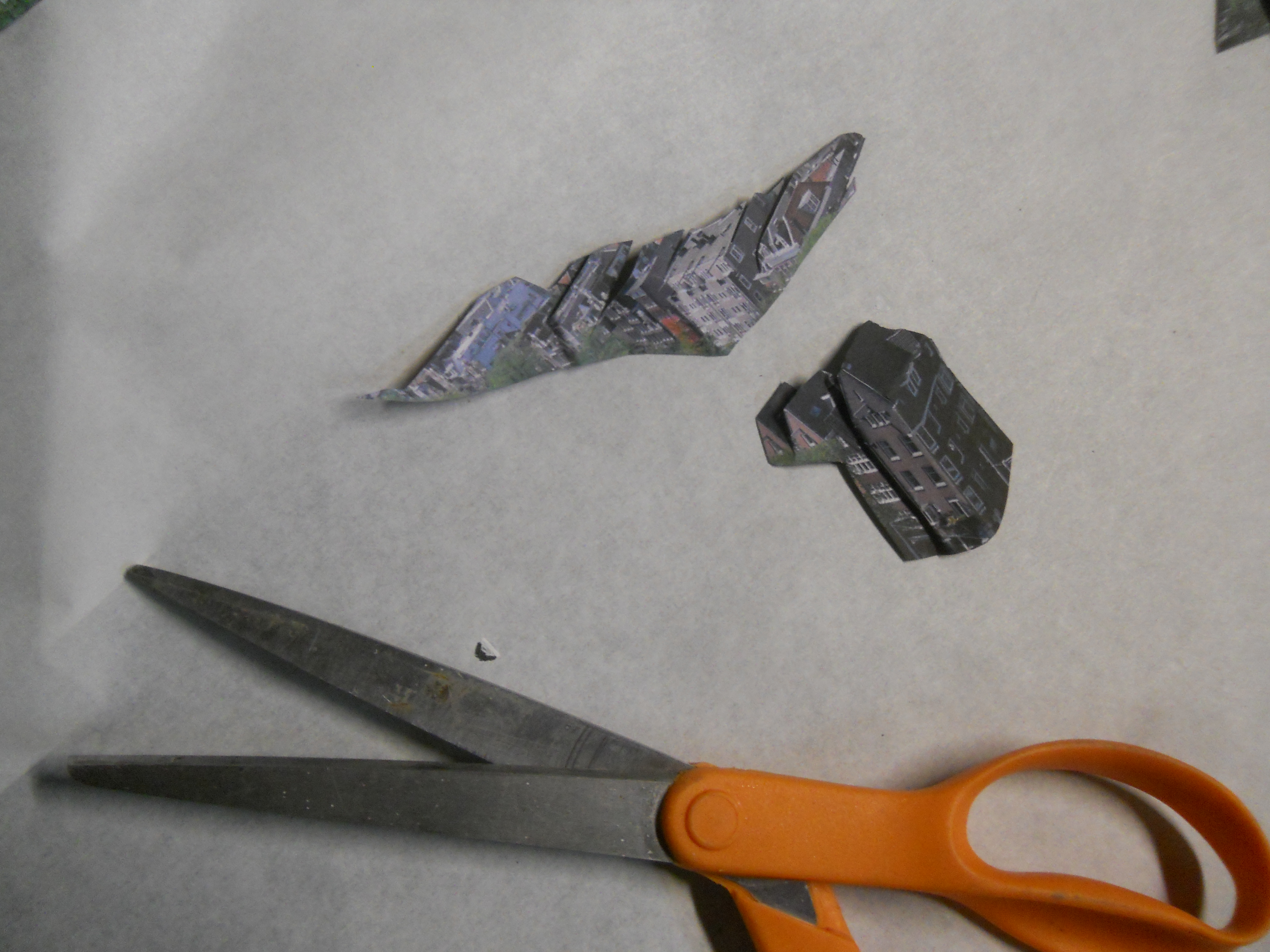
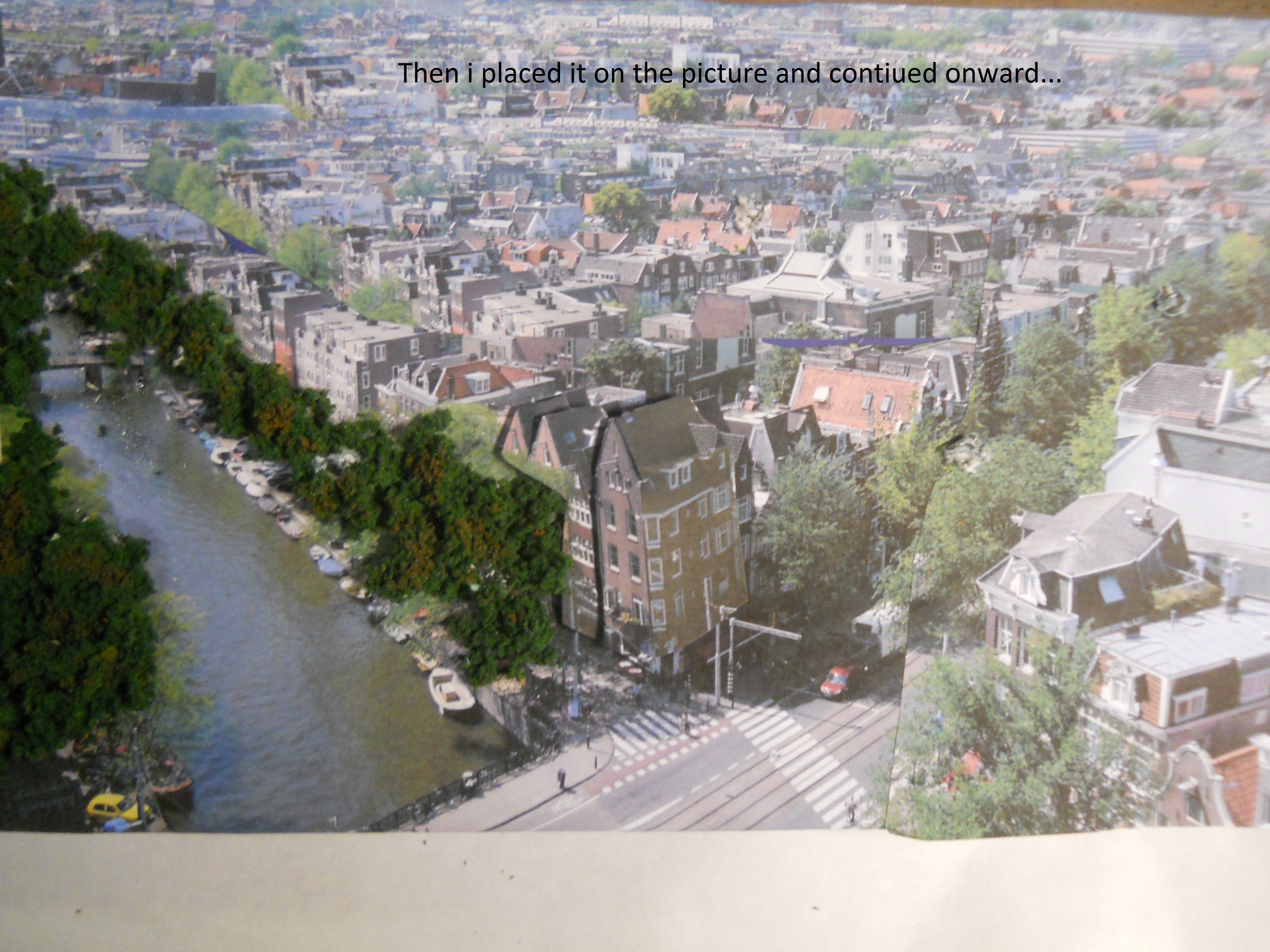
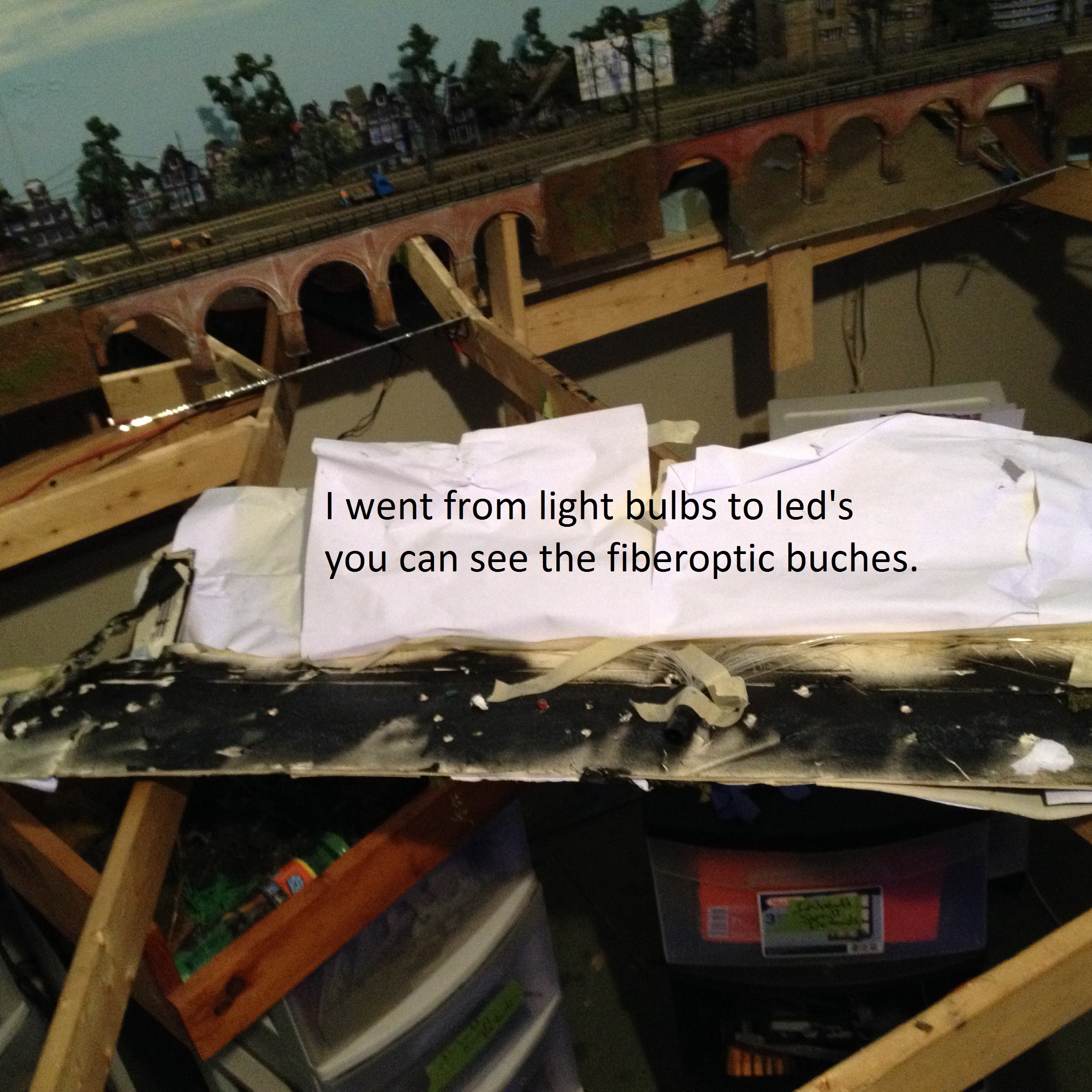
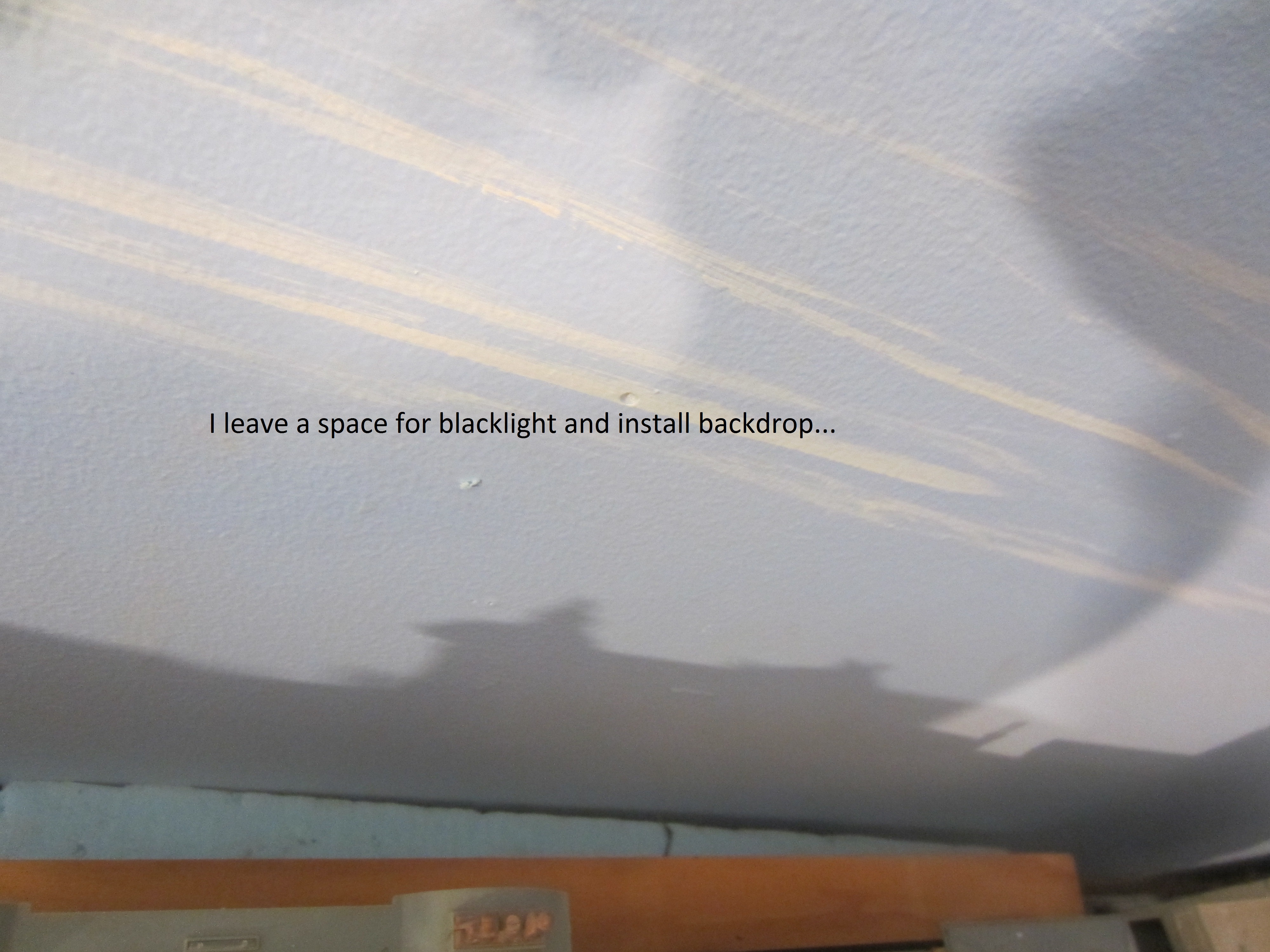
here is the ‘how 2’ on backdrops built at a angle to show more depth and increase layouts projection … This process can be utilized in many ways !!! Enjoy…..Amsterken”
(All images are clickable).
Model railroad urban backdrop:
A huge big thanks to Ken for sharing his model railroad urban backdrop ‘how to’.
Now onto Richard:
“Hi Al,
I love reading your emails and get a lot of ideas from them. I am struggling to start my layout ,returning to the hobby after 40 + years.
I have a loft space 20ft x 5ft to build a layout and have a couple of “train sets” including the hornby elink / railmaster control.
I have installed DCC into 4 of my old stock and bought a new Castle loco with TTS sound. My problem is I can’t decide on a track layout !!.
My Dad was an engine fireman/driver in Wolverhampton (Stafford Road and Oxley) all his career and my plan is to run all the engines he may have worked on so quite a challenge. Any suggestions would be greatly received
In the meantime I have been making buildings( putting of the inevitable I guess).
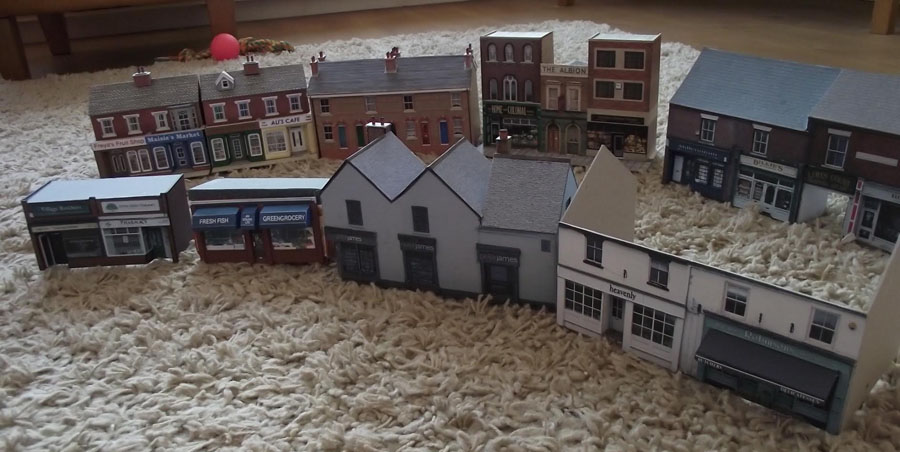
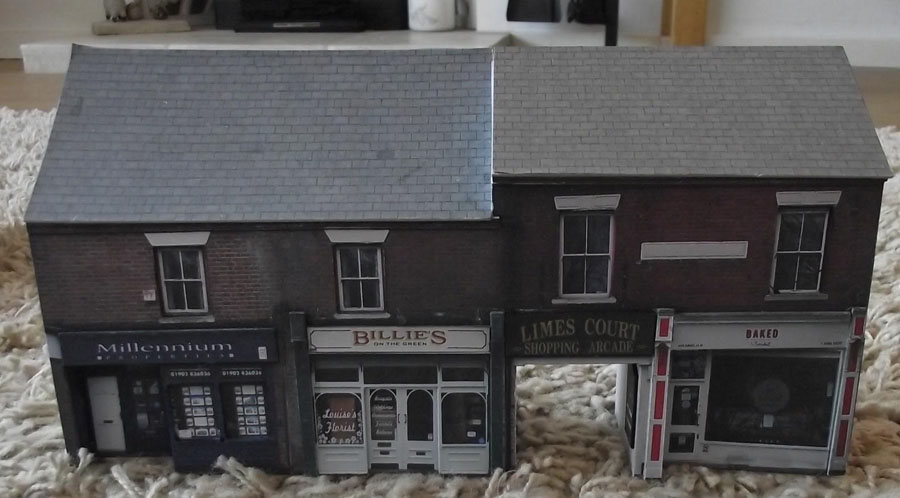
I then thought I could do something similar. I photographed the shops in Tettenhall village and turned them into my own creations (see the pics) I am quite pleased with the results.
My creations are the ones at the front of the picture. and a large photo of the Limes court building.