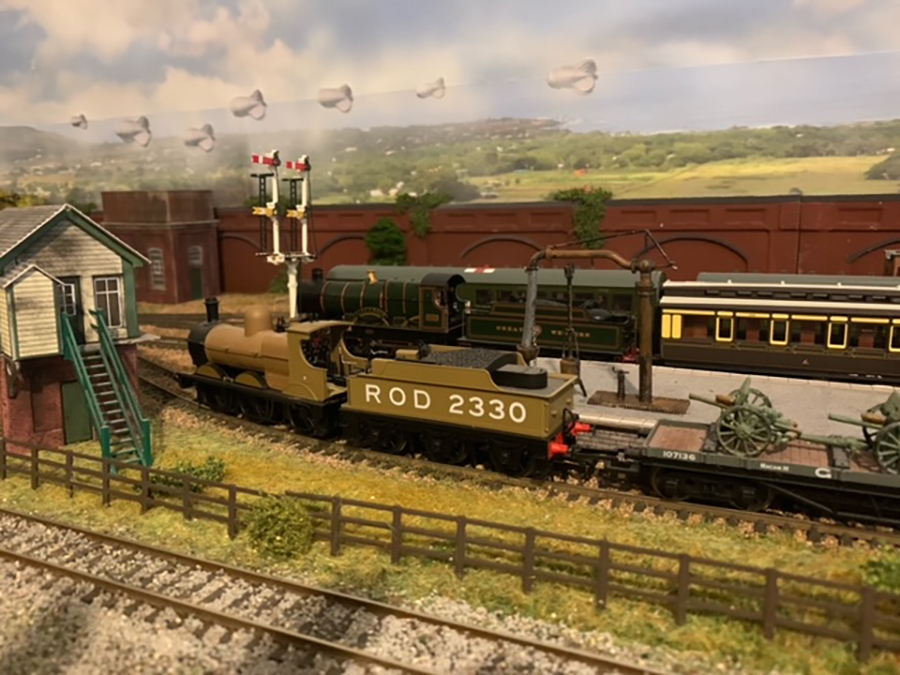
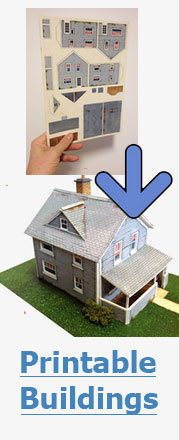
Model train printable buildings

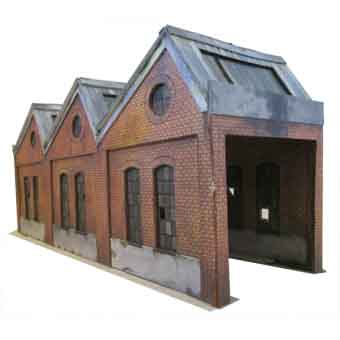
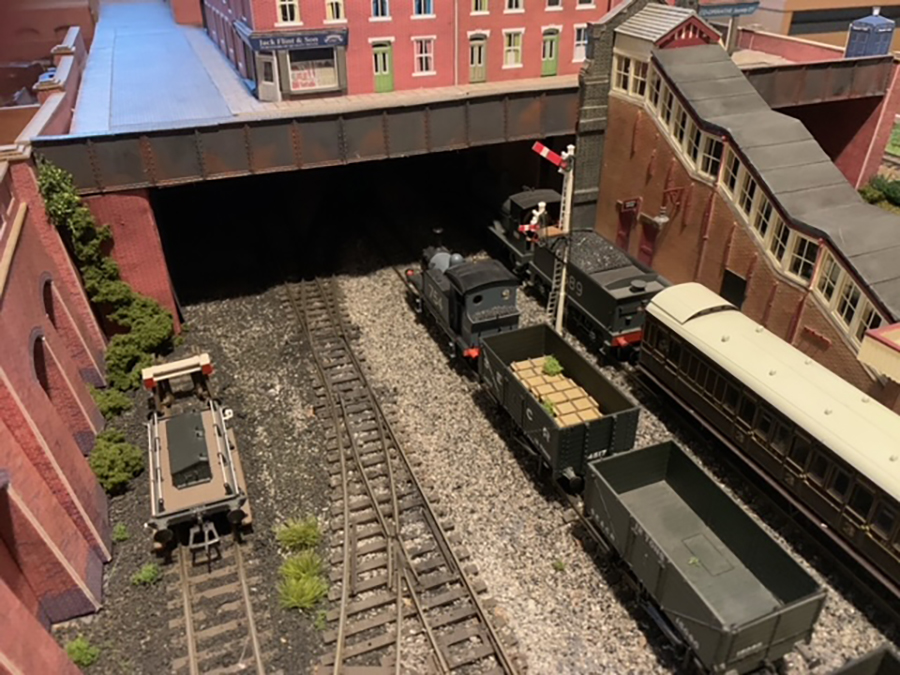
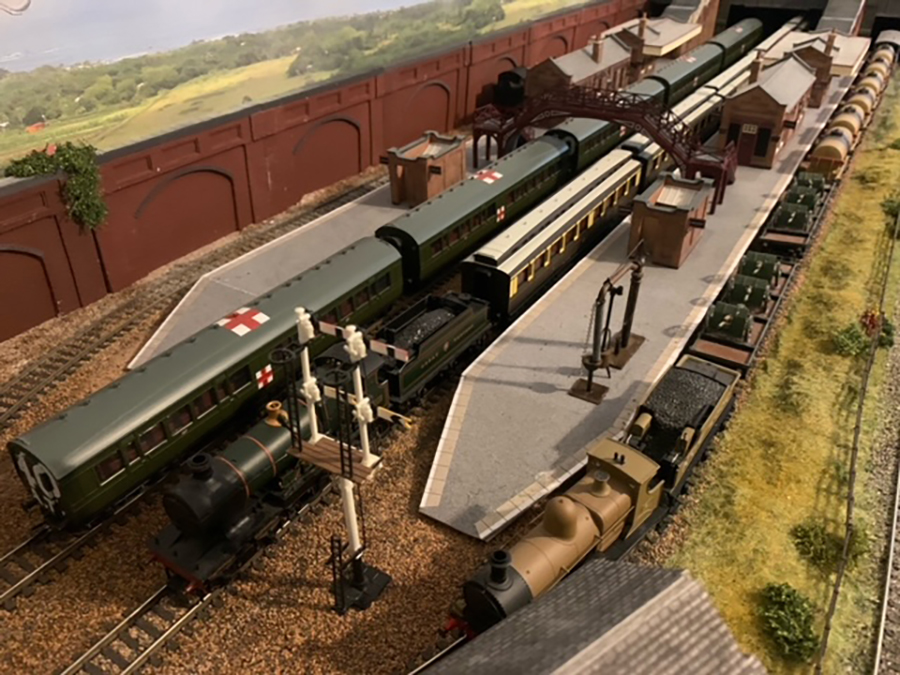
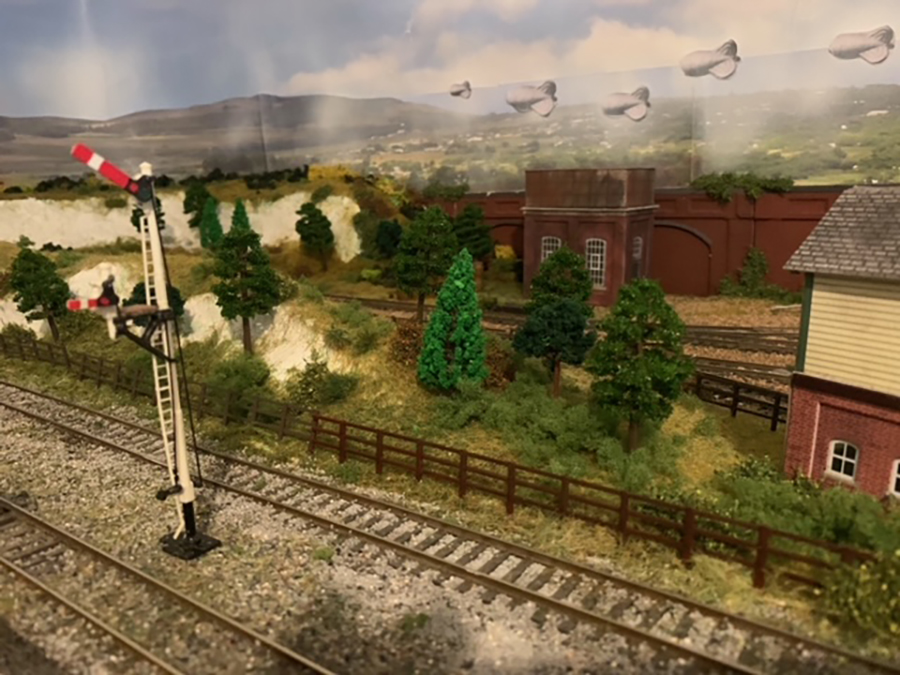
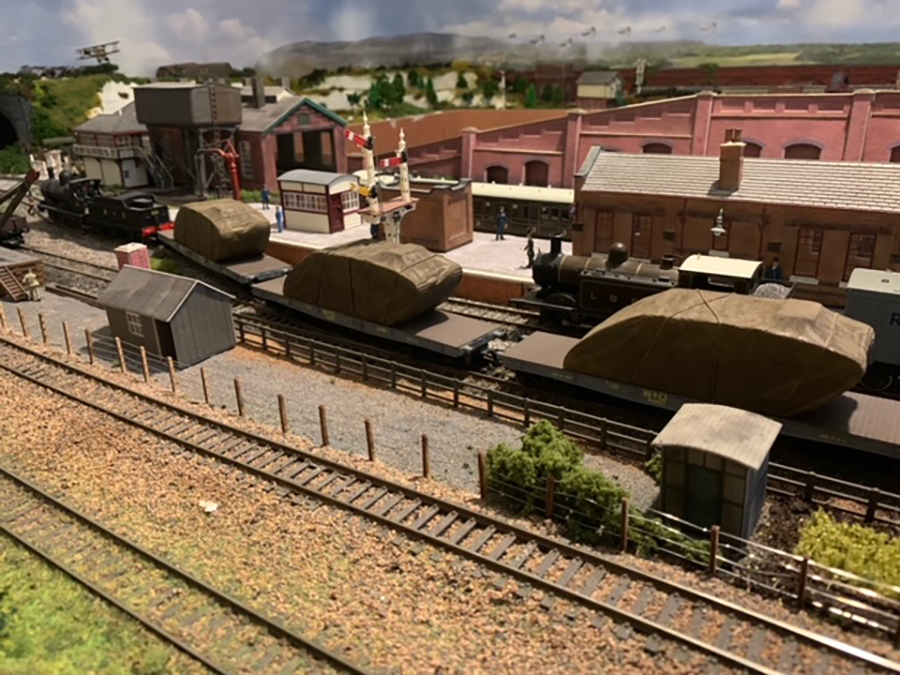
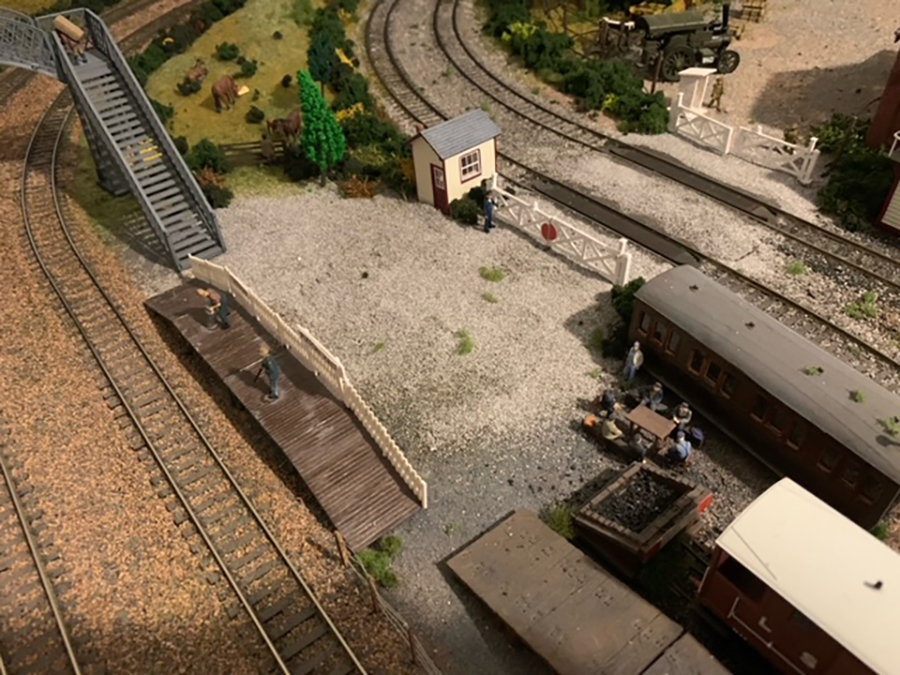
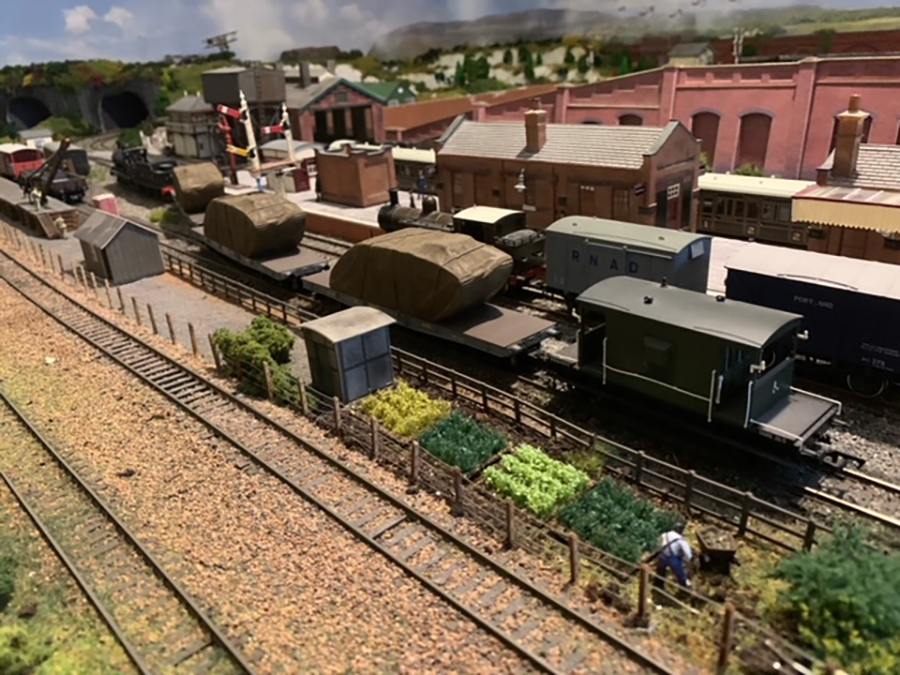
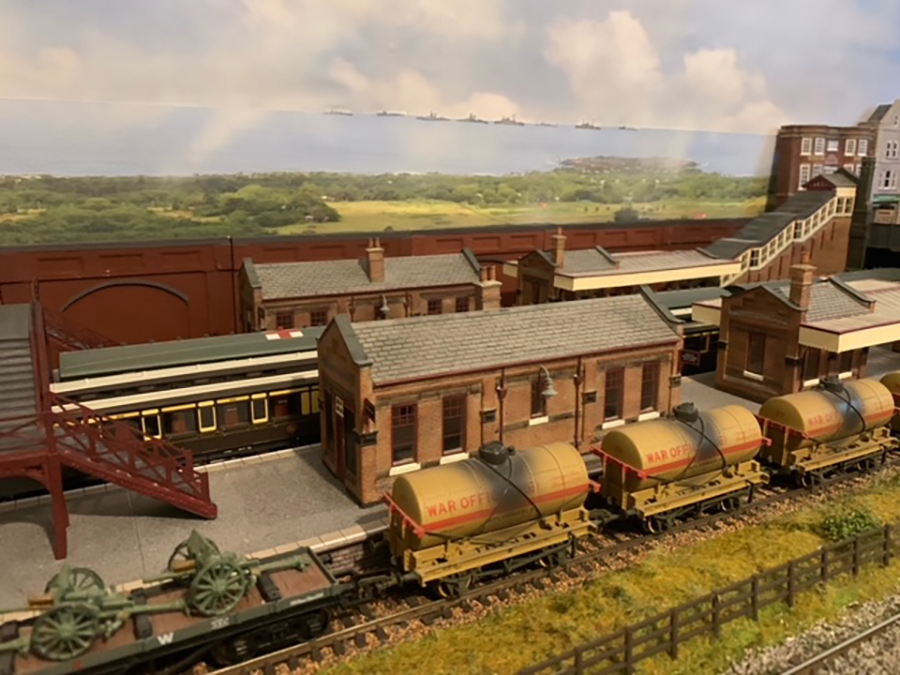
What I love about the model train printable buildings is how adaptable they are – they are easy to scratch build with.

You can make the buildings shorter, fatter, longer… anything to fit in with your layout.

And of course you can print out and make as many as you like.

Recently I’ve had quite a few emails asking about the printable buildings.

Mostly people want to know if anyone can make them look as good as John.

The answer is yes!

So I thought I’d put together a gallery of some of your creations, so just you know I’m not full of hot air.

“Al, like you I have been retired for some time now.

I have gone back to my American Flyer, s Guage boyhood train.

I have had “n guage, HO, G scale”, and this American Flyer has been the most fun of all. I guess it takes me back to my parents basement where my 4 x 8 foot layout was back in the early 50’s.

I resized your wonderful old barn and had so much fun building it. Here are some pics. Hope everyone enjoys it as much as I have.

Jerry from Illinois, USA.”

Model train printable buildings

Model train printable buildings

“Al,

Great project and a lot of fun. The barn is on it’s way to the Railroad Club.

Charles”

Model train printable buildings HO scale barn

“Al

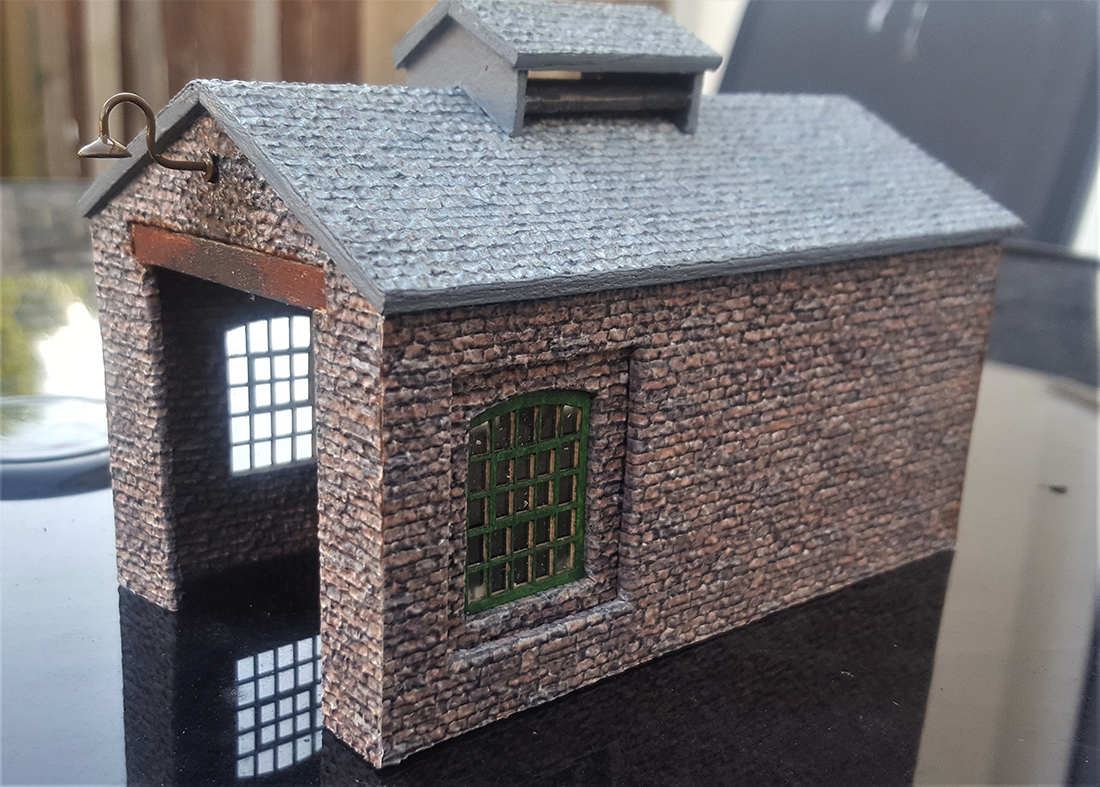
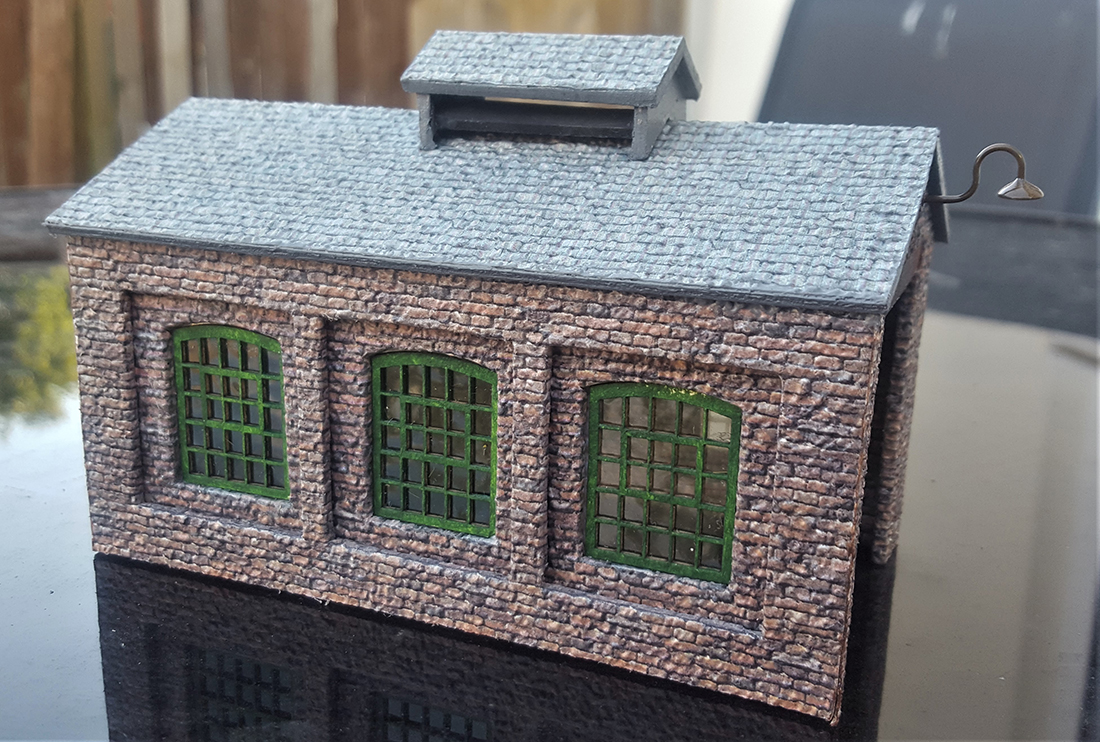
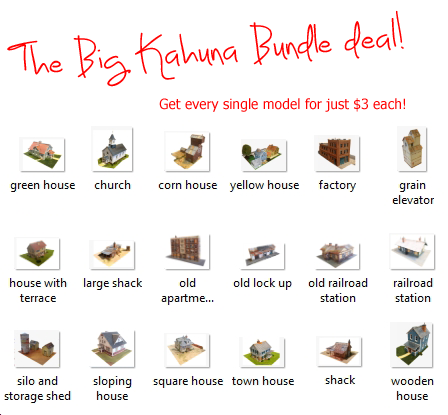
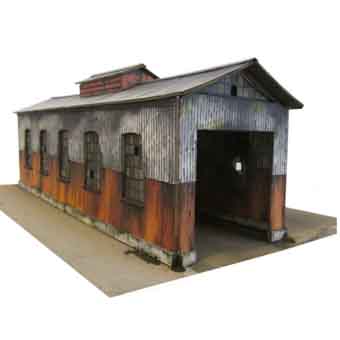
I have enjoyed your site for a long time, since I have retired had to find something to fill the spare time, I purchased one of your (Big Bundle Deal) and printed out one of the Engine sheds among many others.

I have created my own version of the Engine shed as shown in the pictures.

Model train printable buildings

With added and above doors are my creation of lamps, LED lights.

Model train printable buildings

Scratch built table and chairs with tools.

Model train printable buildings

Interior detail.

Side walls have ventilation fan vents.

I have dreamed to set up a model railroad layout for a long time and when I started to make it a reality one thing came up after another, like kids, education, weddings and now I have time and room to finish the dream, but not much of a budget.

Best to all talented people like Hall of Fame Dave, talented hobbyists and their many beautiful layouts.

Ryszard”

Now on to Hall of Fame Dave, who has also sent this vid in on the Model train printable buildings:

“Hi Al,

just uploaded video showing building that Railway cottage from your site, turned out not bad, and it was easier than what I thought, just a case of getting a decent piece of card to put the print on, then cutting to size.

Dave”


“Recently I decided to embark on a new project. The whole of the plan is a portable layout I can take to shows or other events.

Right now I am contemplating 6 small modules with each one potentially serving as a “micro layout” (Less than four square feet) or a diorama.

While waiting for some Setrack points, I used the time I had to build this little distribution shed.

The shed was primarily built form one of Al’s engine shed kits… But with parts from two of his other kits as well… The large doors “work” (the slide) BUT what I am really proud of is the windows.

I was trying a new technique… And it worked better than I had hoped…

Here is my new trick for adding new windows to Al’s Print Out kits.

The whole process begins with finding a window you like and cutting it out. Al’s kits are fabulous works of art and the artwork does not appear to be computer generated.

I cut one window from his engine shed kit and secured it to a cutting mat with blue painter’s tape.

After securing the window “pattern” to the mat, I used a piece of plastic packaging for my “stock”.

I cut this out with a single edge razor blade and trimmed it up to make it easier to work with, I then secured the workpiece on top of the “pattern”

Again I used blue painter’s tape to hold it in place.

Once I had the plastic from the packaging secured on top of the “pattern”, I used a metal straight edge and an awl from Harbor Freight

The awl was a small one… The back of an X-Acto knife works as well.

I followed the “mullions” (window lines) and scribed lines firmly into the clear plastic). I then covered the window in a thin layer of paint and I wiped off the paint immediately with a paper
towel… This left paint in the lines that I had scribed and yet the window panes were all left clear…

After cleaning the window I removed it from the pattern that I had used. I then trimmed it to size.

These photos should show the nice white “mullions” in my new windows… They are nice and thin. I used Canopy glue to secure the windows into their frames… Formula’s Canopy Glue from Pacer is a thick PVA type glue that dries clear.

Here are some photos of my oil shed as I was building it. You can see the windows that I made with the techniques shown in this tutorial…

These windows are just one more way to add even more realism to the great kits Al offers as Print-Out downloads.

John from Cali”

“Hi Alastair,

I am very impressed with the outcome of two that I have made so far. Very easy to put together. I will have to redo the grain elevator (my first one) as I made a mistake with it. I am picking the ones that will fit my American theme.

They will find a place on my layout in the near future.

All the best.

Brian”

“Al,

After watching John explain how to make these models more interesting, I made my own.

It is my very first attempt at creating a building from a printout, I used several different background materials and cutting techniques.

I think my next effort will be better, but I want to thank you for providing these files and let you know there are several others I will be needing soon. Thanks for hosting the website that speaks to our favorite hobby.

Herbert”

“Hi, here is my version, it turned out great with a few minor details added, including some weathering and roof metal fatigue.

Charles H”

A huge thank to you Charles, Brian, John, Ryszard, Jerry and Dave.

And let’s not forget the latest in the model train printable building scenery range – the roundhouse:

roundhouse

Model train printable buildings

Model train printable buildings

railroad roundhouse

Model train printable buildings

Model train printable buildings

Model train printable buildings

It’s up to you how many stalls your roundhouse has, 2, 4, 6, 8… just print out what you need. Below are two stuck together.

railway roundhouse

railway roundhouse

And here’s the infamous John showing us how it’s done:


As with all the printable buildings, it’s HO scale. If you want N scale, just reduce the print size by 54%.

That’s all for today folks. As always, please do keep ’em coming.

Best

Al
Inglenook layout – John’s

John’s been in touch with his inglenook layout:

“As you say, It is all about getting started!

There are some common complaints about this wonderful hobby we share…

1) It is too expensive…
2) No space for a layout
3) No time to build a layout
4) Do not know where to begin.

All four of these common complaints can be answered with a small shunting layout.

On my side of the pond, the common shunting layout is the Timesaver introduced by John Allen in 1971.

He had built it many years before and it was very popular with his operating crew.

Some here in the states believe that the timesaver may be the most copied and adapted layout design.

Funny thing that… Alan Wright dreamed up Inglenook Sidings on your side of the pond about the same time as the Timesaver had been introduced… Actually Inglenook Sidings was an operating innovation to a plan that had hit American shores about 1934 BUT was also found in A. R. Walkely’s “Suitcase layout ” of 1926!

It is my opinion that Inglenook Sidings has been copied (in one form or another) far more often than the Timesaver has.

My current layout project is my ninth or tenth “Inglenook” copy.

I built my first Inglenook as a folding layout that I could take to my local hobby shop for operations on “exhibition day” that they had each month. That one was six feet long in its open form and it folded into a space that was only 8 inches wide and 36 inches long. I ended up giving it to a teacher for use in his classroom.

My second was my take on Simplex by Chris Ellis who used to be the editor of Scale Model Trains and later Model Trains International. (I have now built several copies of Simplex to try different ideas.)

The current project is yet another Inglenook — An Inglenook built specifically to be part of a sectional layout that will be easy to take to “model train shows” — Exhibitions — and show what can be done in a small space.

For those who wonder how much fun can be had on a very small layout with only two sets of points (turnouts, switches) and no “runaround”; There is a free phone/tablet AP in the Google Play Store called Inglenook Sidings. This free AP is a great way to try this layout idea out… And not waste any time or money on something that you put time into and then are underwhelmed when you are finished.

My Little Layout happens to match the Phone AP Inglenook exactly. This was a “happy little accident” to quote the late Bob Ross.

inglenook layout

inglenook layout

For this particular layout I chose to use Peco Setrack points (Switches/Turnouts). These are sharp for American practice but with the small equipment that I planned to use, they are perfect for the project.

I will be using older style equipment that would have been common on American railroads through the 1960’s. If I were to be planning on using more modern equipment, the layout would need to be larger.

If I were to be using equipment that would be common for the 1980’s and into the 1990’s, Peco Streamline Small Radius points could be used and the layout would need to be at least six inches longer if not a foot.

Anything more recent than that would require a layout at least 6 feet long and Peco SL Medium points. Note: It is my preference to use Peco products for my turnouts (Points). I find them to be more reliable than the Atlas switches (points) available here in America… Snap-Track Atlas switches work for anything up to 50 scale foot cars… Anything longer and you want to use #4 or #6 switches…

This Little Layout fits in a space that is 4 feet long and 1 foot wide. I could have gone narrower and made adjustments by bending one of the spur tracks. Again, the longer the equipment, the longer the layout needs to be.

One can make it so that it folds if storage space is an issue. A different solution is to make it so that there are two pieces that bolt together. Here are some examples from other layouts that I have built… Simplex, Little Walkeley, Sandy Flats, and my first Inglenook.

inglenook layout

inglenook layout

inglenook layout

inglenook layout

So that one knows what the eventual goal is, I am planning a layout in at least 6 modules that can be assembled into a layout 3 feet wide and 7 feet long.

The inglenook and another “Micro-Layout” based on a Jack Trollope design known as Microbe Yard will be the two largest pieces at 1 foot by 4 foot each.

The ends will be made out of 4 18 inch “square” pieces using 18 inch radius curves. The intention is to interest people in the idea that one does not need either a basement or “Brewster’s Millions” to have an operating layout!

A second goal in my plan is to use Al’s print-out kits for as many of my structures as possible. Paper craft structures are not as common in the United States as they seem to be “across-the-pond”.

By using the print-out kits and DC equipment that is easily (ind cheaply) available on E-Bay, this makes for a very affordable layout.

The message is that one can start simply to build skills that will make a larger layout an easier transition if one wants to move in that direction. I once wanted a large layout… In time I found that “smaller” is easier to maintain.

The foundation of any layout is the baseboard… The better the work, the better the foundation. The baseboard for my “Little Layout” is a bit overbuilt because of the expectation that it will see at least as much abuse as use. Remember, this is built to be moved frequently! Every board is glued together and screwed with drywall screws for extra strength.

The next most important item is the track. What your trains run on needs as much attention as the base you put or track on. I mentioned that I am using Peco and not Atlas… I am also using code 100 rail rather than something with a more scale appearance. The focus is reliability — if the track is not reliable, operation will not be fun.

A big advantage of Peco points is the over-center (over-centre?) spring that means that switch throws are not needed… I will use them anyway (Caboose Industries 202s) but they are “belt and brace”. I do use a small piano wire in a trough between my switch trows and the points themselves. There are other solutions and a magazine like Model Rail or Railway Modeller often features some of the alternatives.

With the high rail (code 100), track detail becomes important. I spray my track (protecting the points) with a darker brown to hide the height of the rail (optical illusion). Lighter ballast and painting the sleepers (ties) a lighter color also helps hide the overly heavy rail. (A trick I learned reading Continental Modeller many years ago).

With track in place and ballast down, I wanted to add a road. As much as I love building Al’s print-out structures, his road was a new idea for me. I had always used old fashioned techniques before.

The road print is very believable as are the sidewalks. I added a level crossing with some card that I had stained with wood stain. (Here in the States we would call it a road crossing).

inglenook layout

inglenook layout

inglenook layout

Once a layout has track, the scenery tells the story. My little layout is set around a small town with a couple of industries. At the moment this represents the “End of track”. One industry is a petroleum products distributor… The second is either a manufacturing building or a food products plant (I have not made up my mind yet!

My Petroleum Products distributor was built using Al’s print-out enginehouse… The one that looks like corrugated metal. The oil tanks are made from a pair of the tubes that are the core of a couple of loo paper rolls (Toilet Paper rolls here in the States)

The second industry was to be a machine shop BUT in the interest of being able to have a greater diversity of cars visiting it, it may become a food distributor or cannery… In America we produce a lot of food and we eat what we can, what we can’t, we can! (I believe across the pond you would say that we “tin”).

I call this “the Triangle building” because of the space it fits in…

It is made from another of Al’s print-out engine house kits…

I just finished a diner…. Have fun figuring out the kits I used.

Yes, every building you see is from one of Al’s printable buildings kits….

inglenook layout

inglenook layout

inglenook layout

Here it is along with the station.

All my structures are removable from the layout…

Sincerely,

John

California USA”

A huge thank you to John for sharing his inglenook layout – what a post, and what a project.

Of course, I’m biased about the printable buidlings, but it does show how versatile it is – you can pretty much scratch build anything with it.

Whenever a timesaver layout is mentioned, I always think of Brian’s post:

Timesaver layout.

That’s all for today folks.

Please do keep ’em coming.

And if today is the day you get started on your layout, the Beginner’s Guide is here.

Best

Al

PS Latest ebay cheat sheet is here.


HO scale bushes

John has been in touch with a wonderful ‘how to’ on HO scale bushes:

“Hi Al,

I’ve been working on scenery on my HO Scale layout lately and experimenting with some homemade mats for a woodsline. I like the way they turned out and thought I would share with you.

I’ve been creating a wooded hill to use as a scenic divider as well as to hide the entrance to staging on my layout. Between the open areas on either side of the trees on the hilltop, I wanted to create a brambled, overgrown area on the hillside. I used a Coconut Coir basket liner and part of an old air filter to create the effect.

First, I separated a section of the basket liner into two halves. I did the same with the air filter material. The side that was on the outside of either material is pressed flat with some sort of adhesive. But working with the inside, one can tease the material up and create vertical depth.

HO scale bushes

HO scale bushes

Next, simply paint the materials thoroughly with some flat brown and darker green tones. Once dry, I applied spray adhesive and several varieties of leaf and flock material, followed by hairspray. An optional mist of some florist green tone spray paint was perfect for some highlights.

HO scale bushes

HO scale bushes

I ended up using some thinner pieces along a nearby embankment, and combined with some Super Trees, the larger chunks made for what I think is a convincing woodsedge,

HO scale bushes

HO scale bushes

HO scale bushes


HO scale bushes


I documented the process in the video above, and ran some trains through the completed scene at the end.

John”

A huge thanks to John – what a ‘how-to’ on HO scale bushes.

Now on to John#2.

He’s back and he’s as bonkers as ever.

What’s more, he’s very kindly put together a video of the latest printable buildings.

There’s always been one particular building that people have requested when it comes to the print out buildings: a roundhouse.

So it’s fitting to have a very silly sale that includes the new roundhouse at a give-away price.

First, let’s have a look at it. Here it is:

roundhouse

railroad roundhouse

railroad roundhouse

railroad roundhouse

railroad roundhouse

railway roundhouse

railway roundhouse

It’s up to you how many stalls your roundhouse has, 2, 4, 6, 8… just print out what you need. Below are two stuck together.

railway roundhouse

railway roundhouse

And here’s the infamous John showing us how it’s done:


I’ve bundled the roundhouse with the Beginner’s Guide, the signal boxes and 4 other buildings, for just $19. A crazy price.

Have a look and see what else you get.

It’s a cracking deal – a big thank you, from me: a $74 saving with all the print out scenery.

I really do think the roundhouse looks good – I can’t wait to see it on a layout.

I know many of you already have the Beginner’s Guide and will grab this just for the Roundhouse – and that’s absolutley fine. Do a quick google and you’ll see just how expensive some of the roundhouse kits are.

And of course, every sale helps support the site and keep this show on the road.

As with all the print out scenery, it’s HO scale. If you want N scale, just reduce the print size by 54%.

I hope you’ve enjoyed the posts over the last year. I don’t think I’ll ever be able to express my appreciation enough.

Hope you find the roundhouse a fitting ‘thank you’, and if you do, please do grab it now as this sale won’t last for long.

That’s all for today folks. As always, please do keep ’em coming.

Best

Al
PS And don’t forget it still comes with my no quibble, 60 day money back guarantee. If you’re not chuffed to bits with the roundhouse, the other prints, and the Beginner’s Guide, just let me know.

PPS Please don’t hang about to grab this deal. It’ll be business as normal shortly.

PPPS I’m also throwing in these two signal boxes: