HO scale tunnel clearance

Jim’s been in touch with a fine example of how important it is to get the HO scale tunnel clearance right.

It’s also wholesome reading as you’ll see.

If you missed his first post and want to get up to speed, it’s here:

Jim’s layout.

“Hi Al

And all of my fellow model railroaders, this is Jim from across the big pond in Buffalo NY, USA.

It has been a long time since I posted anything to the forum so here we go.

It has been a hard year for me and my son, with health issues that I have and my son who is in recovery. He has been clean of any issues now for over a year and I am very proud of him. Since I have not been able to work on the layout for so long, I was anxious to get back to it.

For starters, the mountain had to be rebuilt. All of the engines, steam and diesel kept hitting the rear wall of the mountains tunnel and either stalling there or derailing. So a real issue with HO scale tunnel clearance.

The upper section of the mountain track also had to be repaired. So I removed 90% of the mountain to rebuild it to eliminate the issues. The only section of the mountain that was not touched was the front face of the mountain. A picture of the front of the mountain is below.

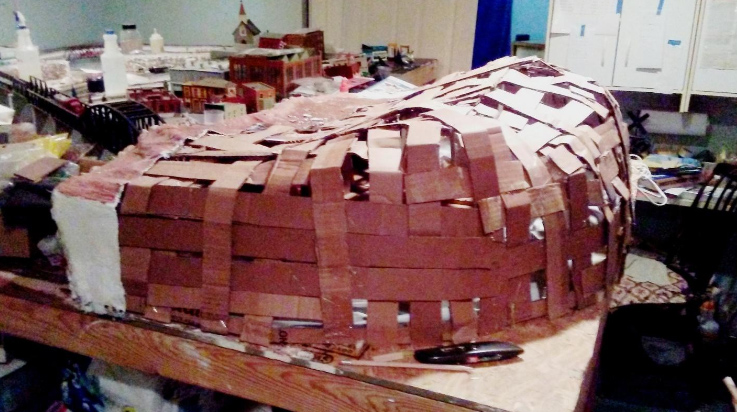
The structure of the mountain was very flimsy, so that is another reason for the rebuild. Now in the picture of the webbing below, illustrates not a very good job, however it is very sturdy, and when I say sturdy, our cat Mango who is 7 lbs. decided to take a short walk on it, after I lifted her up to the top and it did not falter.

The mountain size is 4 feet wide and 2 ½ feet deep. There are two sets of tracks in the mountain, the lower track travels to the train station that will sit outside of the mountain, and the second track that will climb inside the mountain to the six foot bridge that crosses to the other side of the layout over the lake, over the main tracks, pass the steam engine facility ( still under construction ) and back to a container yard, cement factory, freight station, and for passenger service, a second passenger station.

Now for the plaster cloth application! Now I know many of the modelers have used Woodland Scenic’s plaster cloth, which is a little expensive. So, I went to Amazon and found a 5 pound roll of Plaster Cloth that is 16 yards long, 11 inches wide for $16.00 with free shipping. What a huge savings. I cut each piece to 4 inches by 11 inches for ease of application.

I am doing three layers, the first going horizontal, the second going vertical, and the last horizontal. I let each application dry for 24 hours before applying the next layer.

Below are pictures of the work that has been done to the mountain, including a drawing of the entire layout

I have a lot more to accomplish before I can even think about running the trains again. I will keep everyone up to date on the progress.

Here is a drawing of Starrpoint Railroad I sent this in some time ago. I thought you might want to see how the layout looks in real life.
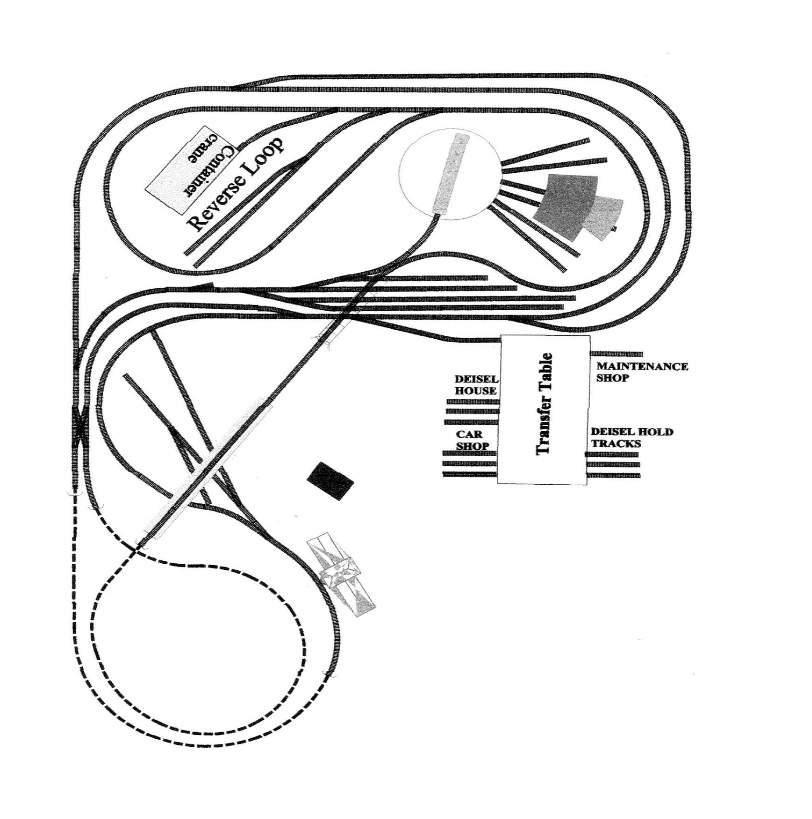
model railroad track plan

cardboard for model railroad mountain

As I mentioned, it is not the most beautiful webbing ever seen, but it is sturdy.
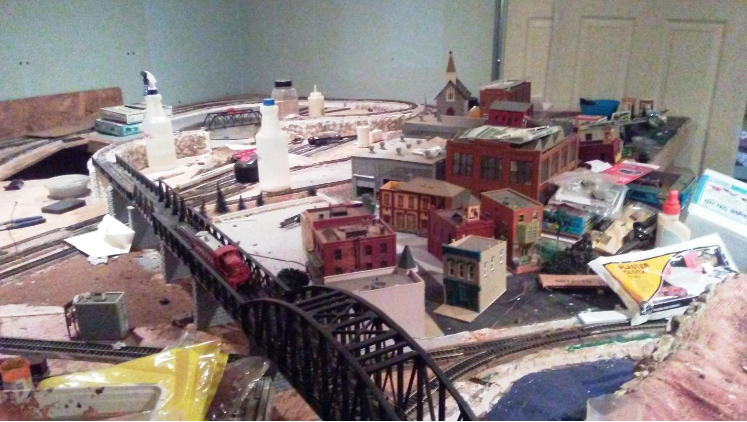
model railroad bridge

Here is the six foot bridge that leaves the mountain to the back of the layout.
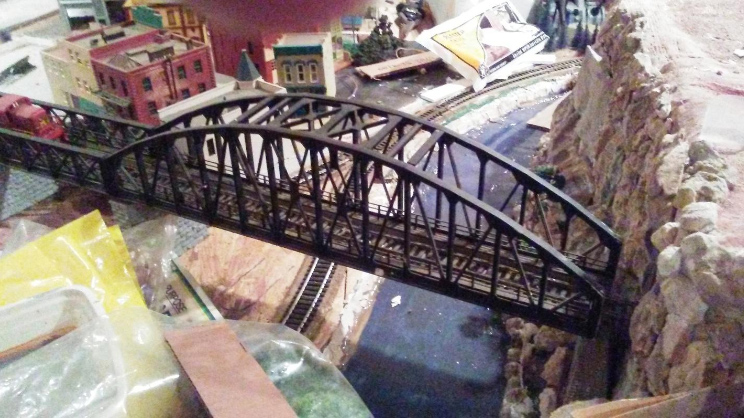
HO scale tunnel clearance

Here is another view of the bridge as it leaves the mountain portal over the lake in front of the mountain.
HO scale tunnel clearance

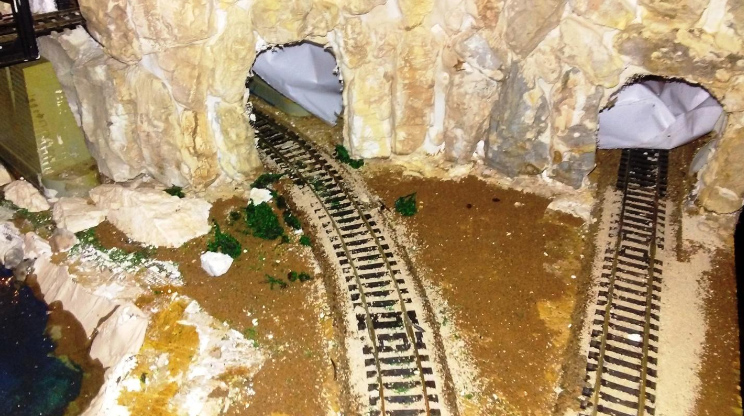
Here are two of the entrances to the interior of the mountain. The right one is for the lower level to the train station, while the one of the left leads to the six foot bridge crossing over to the back part of the layout. The tracks are covered until the plaster cloth is applied to protect them.


HO scale tunnel clearance:
HO scale tunnel clearance

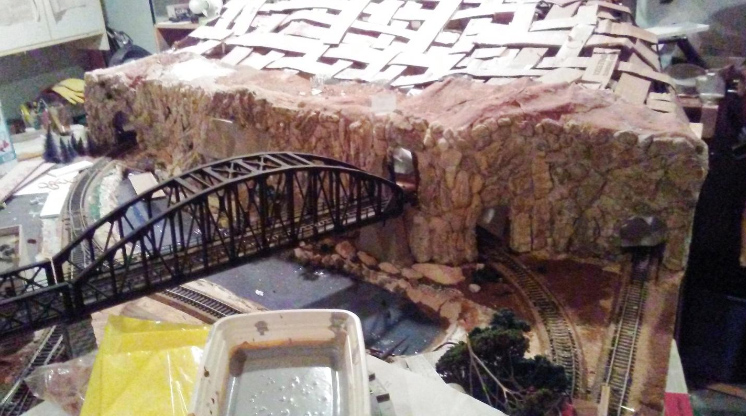
This is the front of the mountain, the part that I wanted to save during reconstruction. As you can see the top portal that leads to the bridge .

This mountain is four feet wide and 2 and 1/2 feet deep. I saw a video of the Alaskan Railroad crossing through mountainous tunnels, where the portals were of natural rock. They looked unique and so I decided to keep mine the same way. The portal on the far left of the mountains lower level leads to the train station that will be placed there.
HO scale tunnel clearance

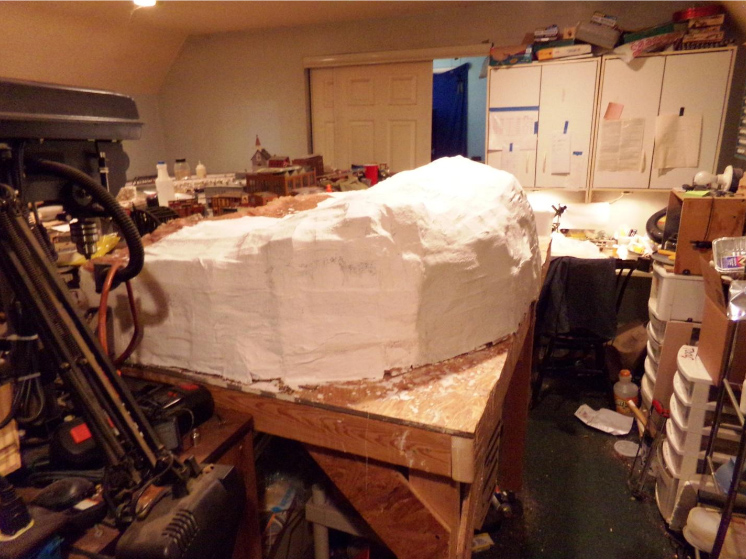
As you can see I have started to cover the mountain with the plaster cloth. It is going to take some time to complete. I am letting each layer dry for 24 hours before applying the next layer. I plan on using three layers for the mountain. Once all of the layers are applied, I will then cover the entire mountain with a coat of dry wall compound diluted with water to make a sort of paint solution. This will further stiffen the mountain structure.
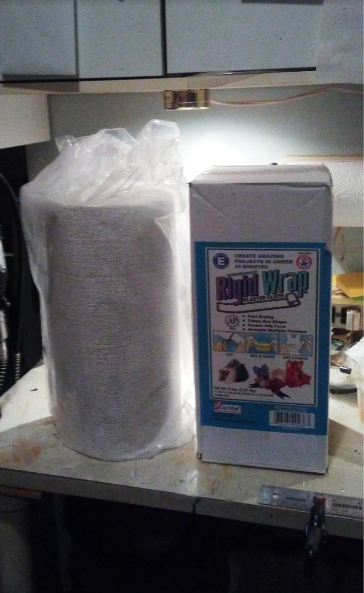
model train plasterparis mountain

I mentioned before, this is the plaster cloth that I purchased from Amazon for $16.00. There is more than enough to complete the mountain and for any other projects for the Starrpoint Rail Road that may come up

I have some other projects in the works for the layout, and I will share them as I proceed with them.

Hope you enjoy.

Jim”

A huge thank to Jim for sharing the danger of not getting your HO scale tunnel clearance spot on – a wonderful narrative and pics too.

Jim’s narrative reminded me of Malcolm’s excellent post on derailments:

How to stop derailments.

Also, once you have your clearance dimension sorted, Bill’s “tunnel jig” will save you hours of heartache:

Model train tunnel.

It just goes to show, a layout is never really finished…

That’s all for today folks.

Please do keep ’em coming.

And if today is the day you get started on your layout, the Beginner’s Guide is here.

Best

Al

PS Latest ebay cheat sheet is here.

PPS More HO scale train layouts here if that’s your thing.


Pics of trains

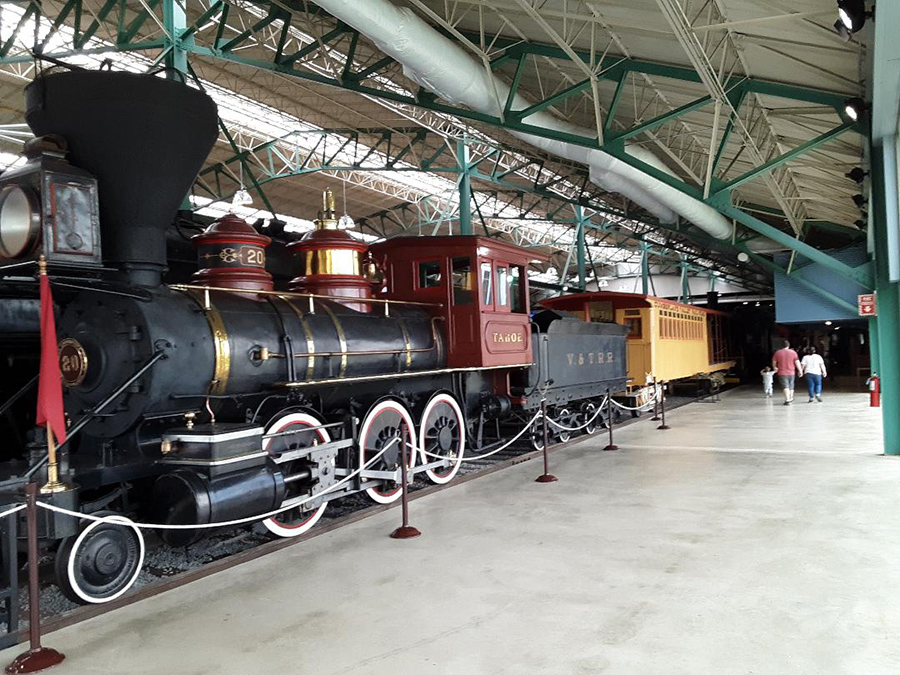
Dick’s been in touch with some stunning pics of trains:

“Alastair

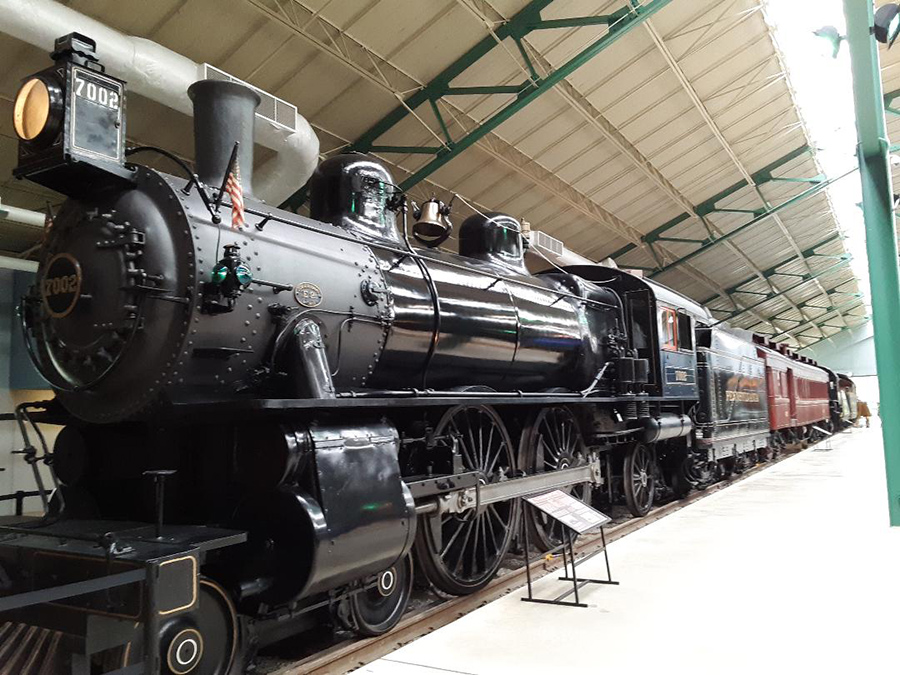
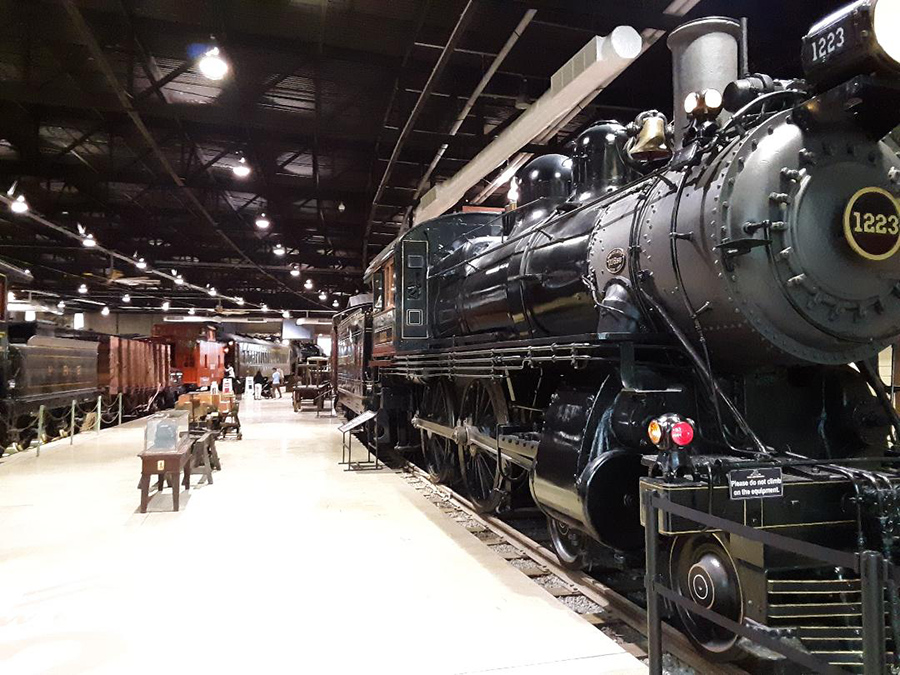
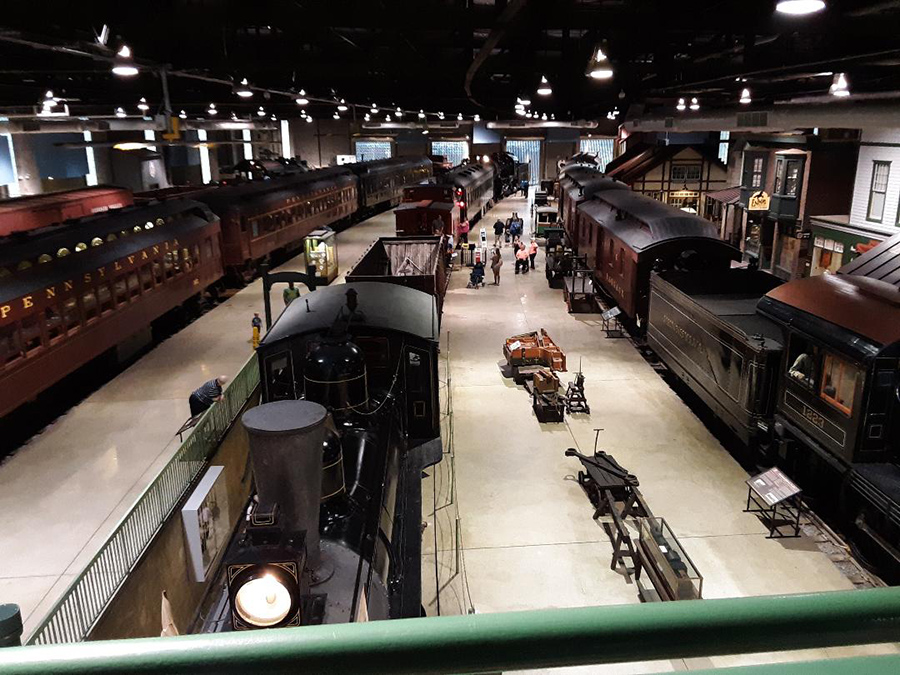
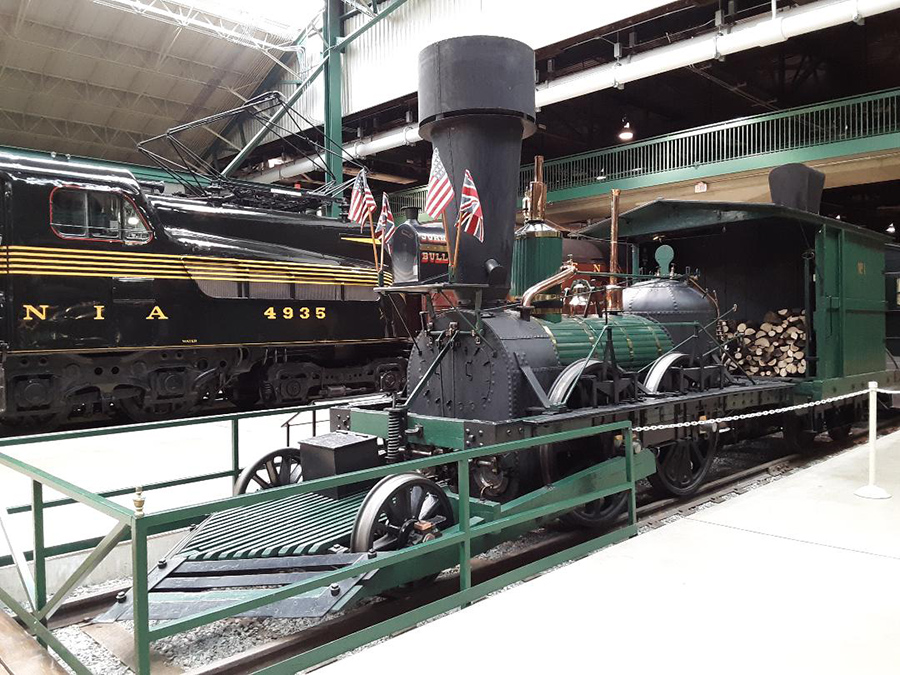
Thought you might enjoy some pictures from the Railroad Museum of Pennsylvania located with the Strasburg Railroad just outside Lancaster Pennsylvania.

Truly a day-long adventure at a very modest admission. Lots of historical exhibits and information; even a “hands-on” for the little ones.

Dick”

(All images are clickable.)

pics of trains railroad museum

pics of trains railroad museum

pics of trains railroad museum

pics of trains railroad museum

pics of trains railroad museum

railroad museum

What stunning pics of trains – looks like a fantastic day out to me.

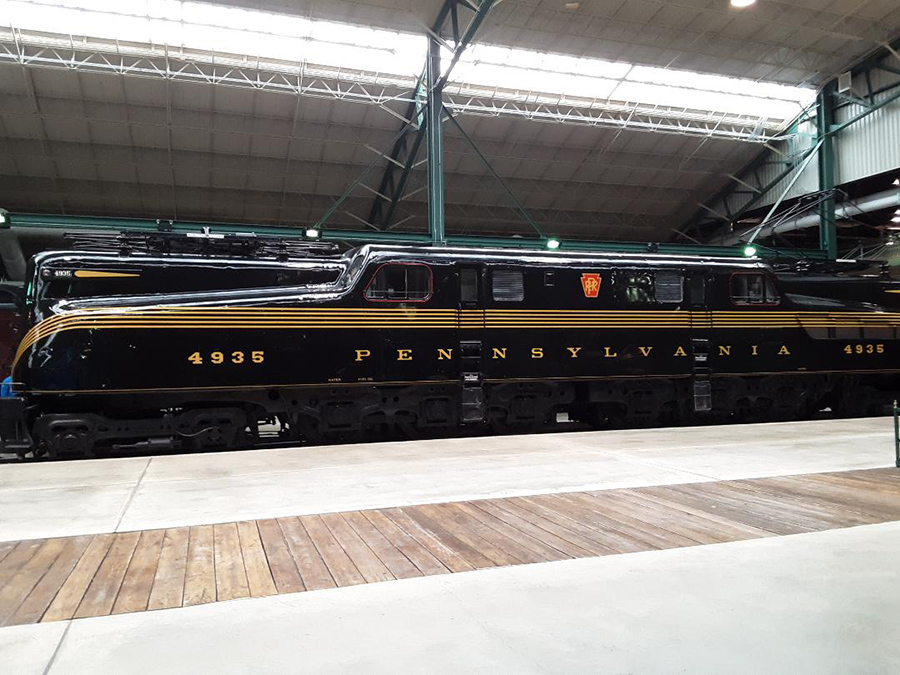
I’m very keen to hear more about the engine in the last pic. If anyone knows please do leave a comment below.

And now for Jon. He’s got in touch after seeing a ‘how-to’ from another John:

“Thank you for the post.

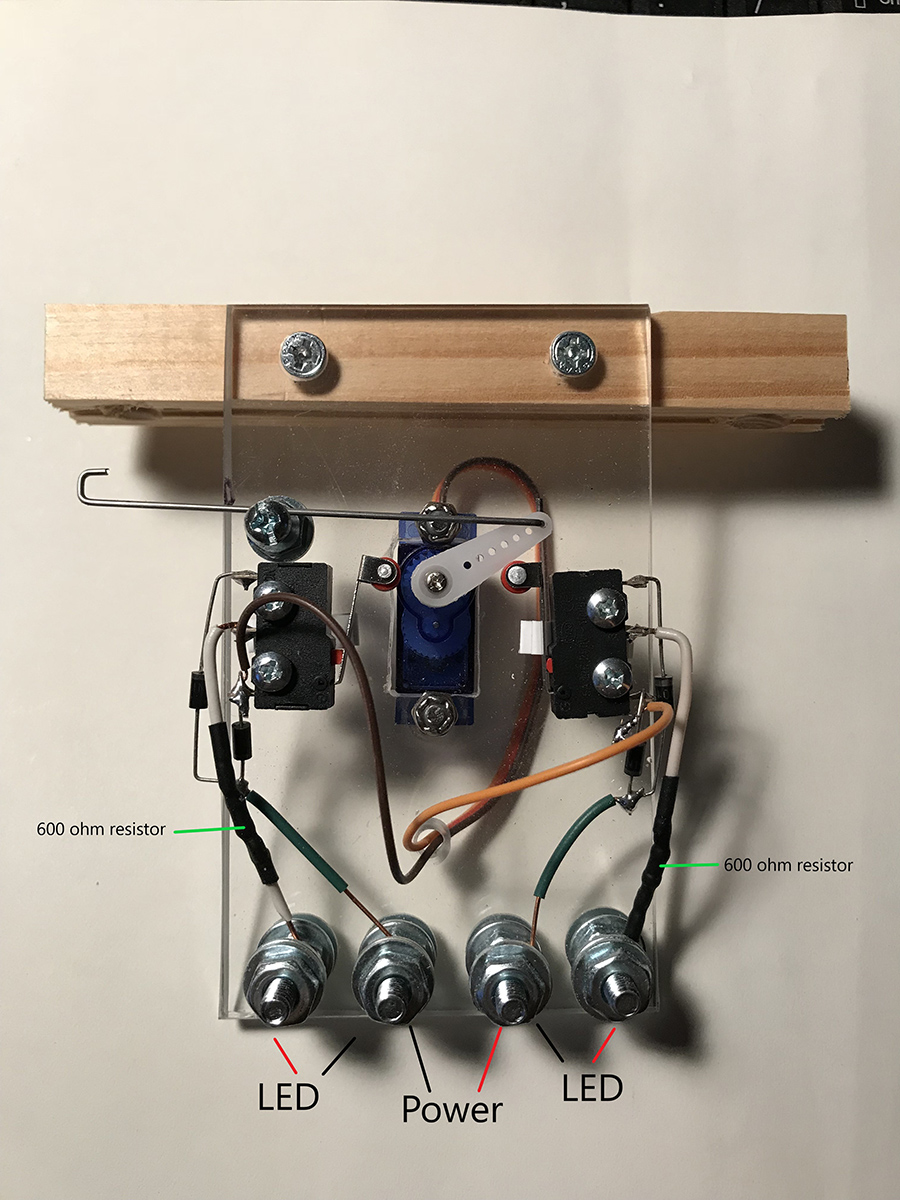
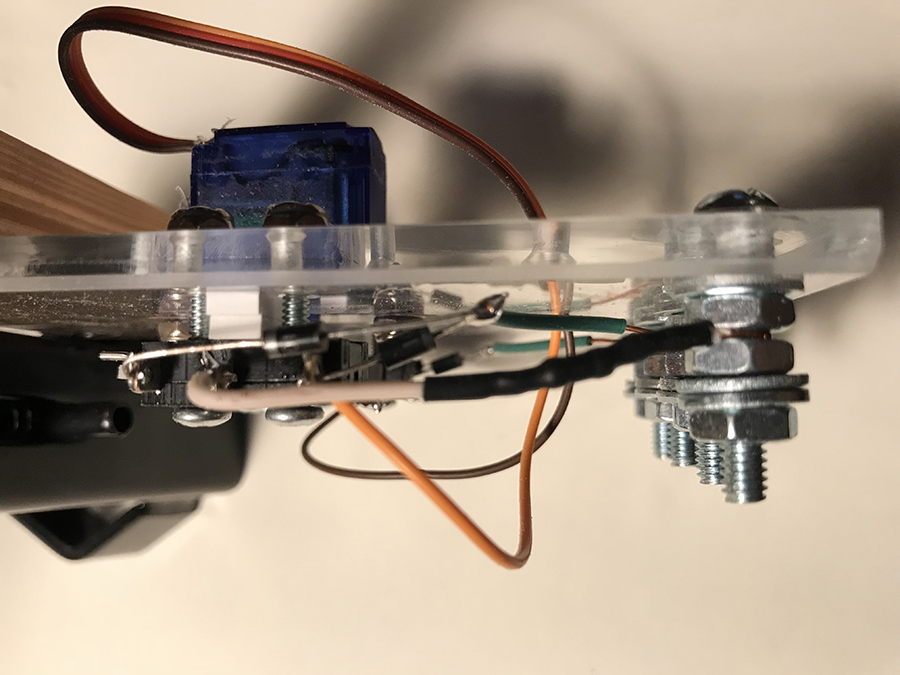
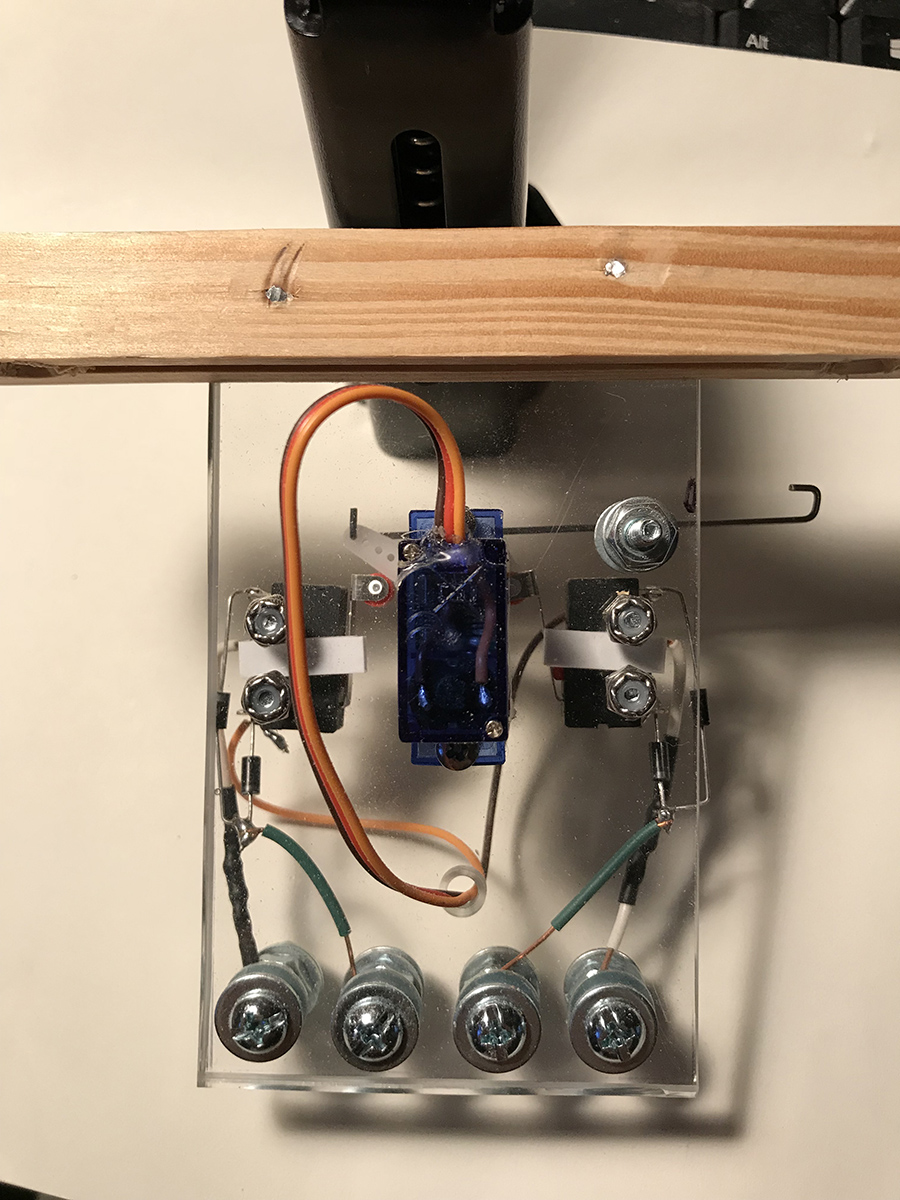
I decided to use John’s idea and make my own model railroad switch machine. I added a light system to it.

I’ve attached pictures.

If you would like more information just let me know.

Thank you,

Jon”

model railroad switch machine

model railroad switch machine

model railroad switch machine

My word – clever stuff – all I can say is yes, please do send more info Jon, look fantastic.

There are lots of posts on the blog now about switching machines. The one that springs to mind is Dean’s:

HO scale switch maching.

And there’s John’s post too:

HO scale turnout switches.

Please do mail me if you’d like to share anything – even if it’s just some train pics of your day out.

Thanks to Jon and to Dick for sharing his pics of trains.

That’s all for today folks.

Please do keep ’em coming – it’s all getting rather sparse in my inbox.

That’s all for today folks.

Please do keep ’em coming.

And if today is the day you get started on your layout, the Beginner’s Guide is here.

Best

Al

PS Latest ebay cheat sheet is here.

PPS More HO scale train layouts here if that’s your thing.


HO scale MOW equipment

Dan’s been in touch again – this time with his HO scale MOW equipment.

He’s sent in quite a piece on what he’s been doing.

I hope you enjoy it as much as I did:

“Wreck Train /MOW (maintenance of way) equipment has been vital to railroads since ties were first laid.

As operational equipment became more sophisticated, so did the maintenance equipment.

Displaying and using this equipment on model railroads can add a lot of visual interest, at a well displayed static location, or as part of an operating session.

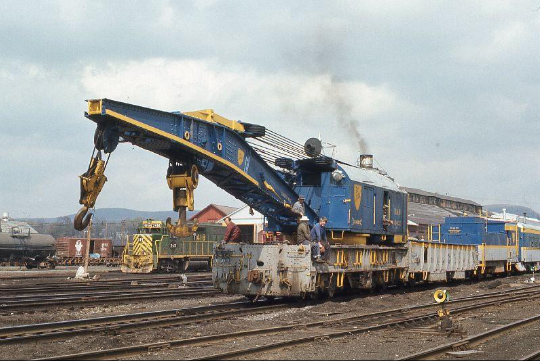
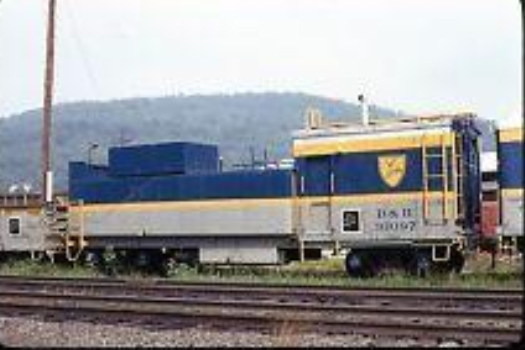
I am modeling the Delaware and Hudson railroad in upstate NY, and in doing some photo browsing I came across the below photo by Gil Ford of a D & H wreck train consist.

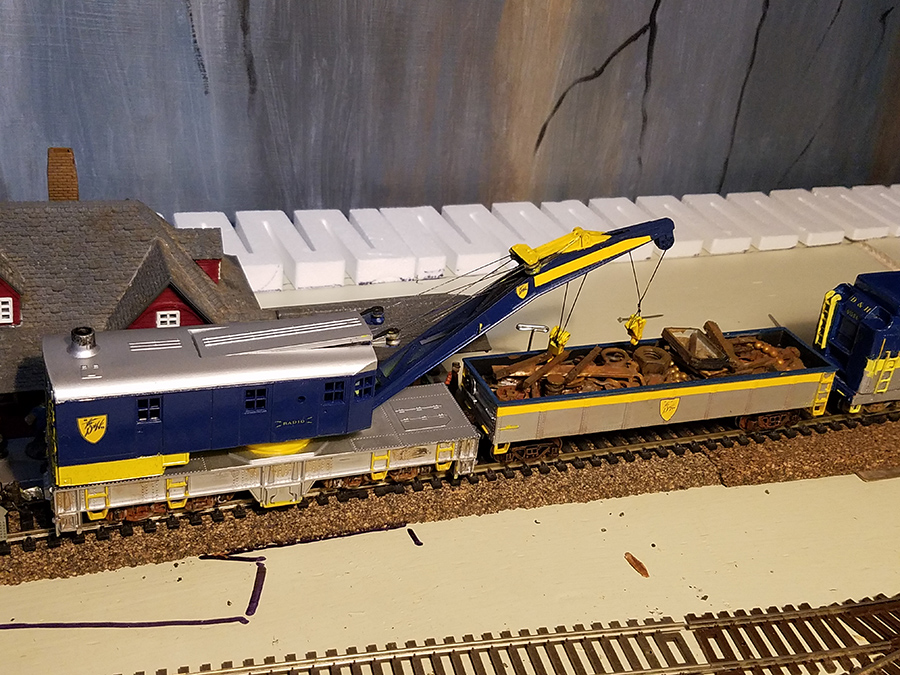
It features a 200 Ton crane, a gondola as a boom/scrap car, a hybrid tool car, and a repurposed heavyweight coach for the crew. Sometimes there were two gondolas, one on each end of the crane.

I immediately decided that I had to replicate this consist. The D & H, like many railroads, had its share of disastrous road events, one in particular I happened to witness as I was sitting on the edge of the Hartwick College pool.

On a bright February midday, a huge fireball erupted over the mountain ridge east of the college.

That was the evidence of the first of several propane cars that exploded and put themselves in an airborne trajectory 1000 feet across the Susquehanna River… but that is another story.

HO scale MOW equipment

maintenance of way crane

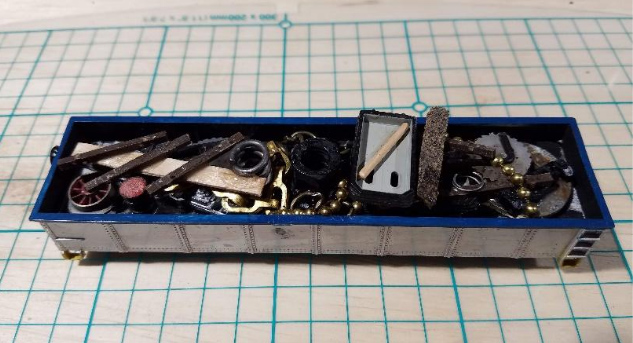
The first car I chose to model was the gondola, as I had one ready for “bashing.”

It started life as a Bachman gondola with the Southern livery. Some alcohol, swabs and a pencil eraser removed all the lettering, providing a clean slate. Fortunately the body side was very close to the silver grey of the D&H.

The next task was to prepare the car interior. I built up a base with wooden strips to raise the future load.

After a warm soapy wash I painted the interior of the car flat black.( It is a good idea to wear gloves to keep your skin oils off the surface. I then decaled the sides with D&H yellow and painted the top rail with D&H Blue.

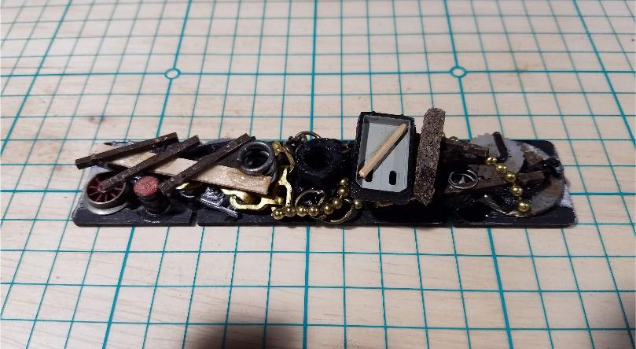
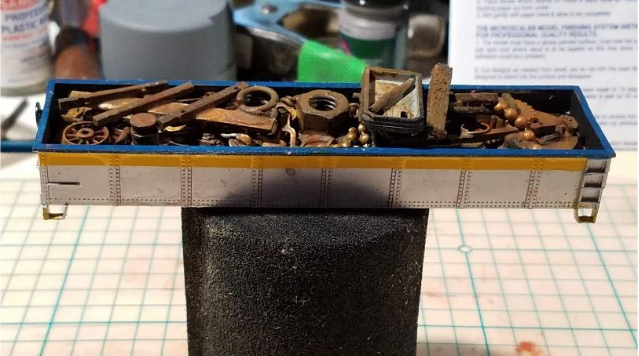
To create the load I cut a piece of styrene to fit into the gondola, and painted it flat black. I used CA glue to affix a washer and nut for a magnetic option to remove the load from the car. Then I looked through my various parts supply and came up with track pieces, wheels, chain, gears, ties, etc. to create the load, gluing each with CA glue.

HO scale gondola

HO scale gondola

After assuring it would fit into the car I aged the load to the patina of rust. I used various modeling paints; rust, rail brown, raw sienna and followed that by brushing with powders. Once dry with the look I wanted, I sprayed the car with flat medium to affix everything.

HO scale gondola

The next car was the HO scale MOW equipment 200 ton crane. My 20 year old crane was missing too many parts so I found a complete crane on a sluggish eBay auction.

As I did not want to risk losing parts, I painted it intact, using a fair bit of Tamiya masking tape. Once an edge was burnished, there was no bleed thru with this tape. D & H decals from Micro Scale put the finishing touches to this model.

The next car in the line is the “hybrid car” that I had no information on. Picking the brains of some fellow enthusiasts, like yourselves, I discovered that this was called a “Tool Car” with a boom tender on one end, and part of a locomotive tender at the other.


This was surely created at one of the D&H shops. I was told the tender portion likely held water or fuel. I found an unused tender body and a suitable car in my inventory. Al recently sent over a picture of the tool car under construction. I am just about done with this car now, just needing to put the smokestack in place.

maintenance of way car

Prototype Tool Maintenance of Way Car

The last car in the consist is the heavyweight coach to transport the crew.

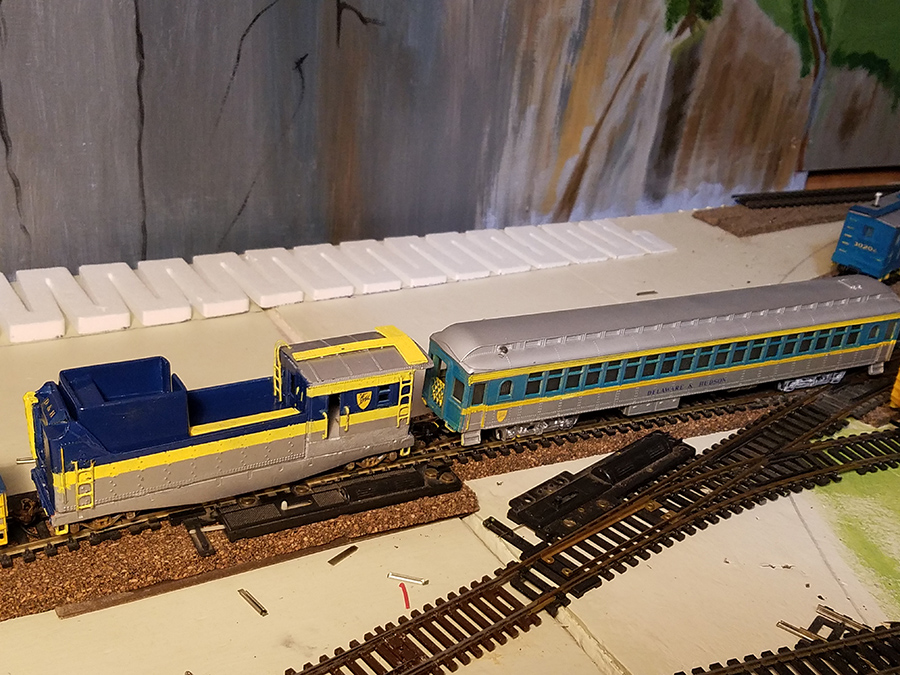
I found the perfect car in my extra inventory, a Milwaukee Road heavyweight coach I bought in a flea market package deal. I added some weight, removed the MR decals, then taped, painted, decaled, added a supervisor on the platform and finished it off with a coat of flat medium.

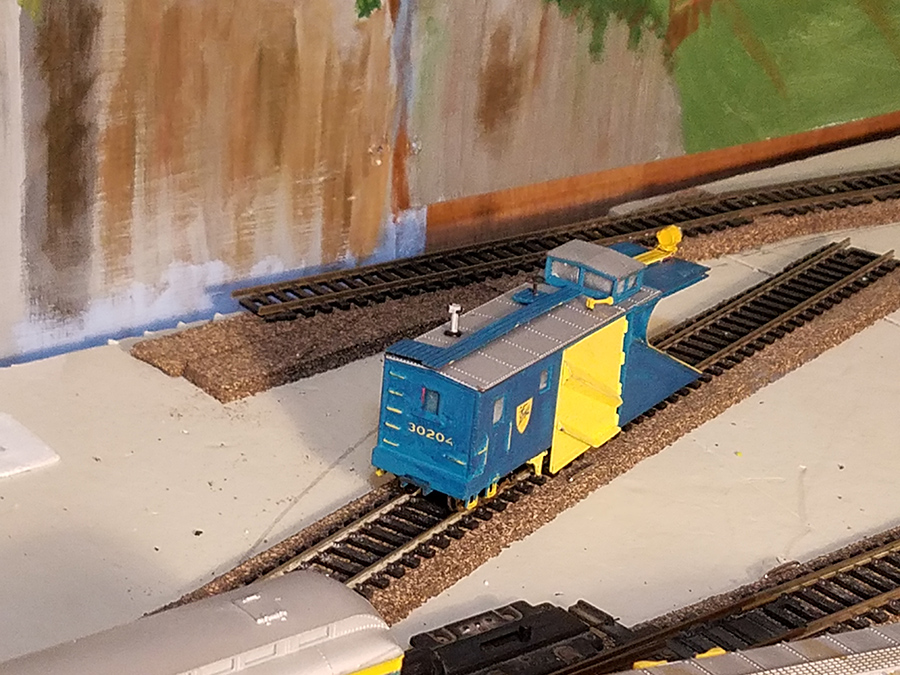
The bug for heavy equipment was still with me, and upstate NY gets its fair share of snow, so a plow would be in good order. On Craigslist I found an older Walthers Russell snowplow kit and also found that the D&H had used them along with Jordan spreaders as part of their snow removal system.

I was fortunate to find Gil Fords photo of that complete operation, but I think that using “MOW” followed by your railroad in a search engine will yield many photo examples of the type of equipment that was used. I am sure they would look great on your layout.

Here is my completed D&H HO scale MOW equipment.

HO scale MOW equipment

HO scale MOW equipment

HO scale MOW equipment

I still have one up my sleeve, a searchlight car, but the painting is mostly done, but I need to rewire the light. Want to put an LED in it.

Thanks,

Dan.”

A huge thanks to Dan for sharing his HO scale MOW equipment

I don’t think there is a ‘wrong way’ to make a layout – but I have to say, I do find the ones with a good back story the most captivating.

Dan has a done an execellent job, and I can’t wait to see how this one unfolds.

That’s all for today folks.

Please do keep ’em coming.

And if today is the day you stop dreaming and start doing, the Beginner’s Guide is here.

Best

Al

PS Latest ebay cheat sheet is here.

PPS More HO scale train layouts here if that’s your thing.