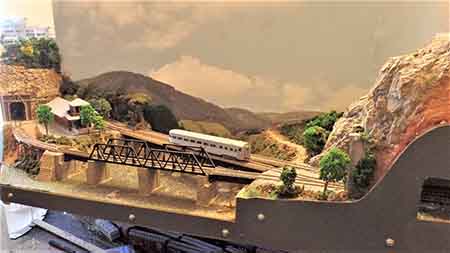
Charles has been in touch with his railroad build.
Was it an April fool? Or was it proof that your model railroad can be anything you want it to be.
And I really mean that, as you’ll see:
“In the early 1900s, short-line railroads proliferated in Oregon.
In the agricultural and timber area of Linn County, about 70 miles south of Portland, along the Willamette River, the locals built a house called the Linn County Poorfarm.
Today, it remains as a farmhouse, but old-timers remember it as a place where the indigent and those with mental illnesses lived; those who were able worked the farm, with food supplemented by the charity of others.
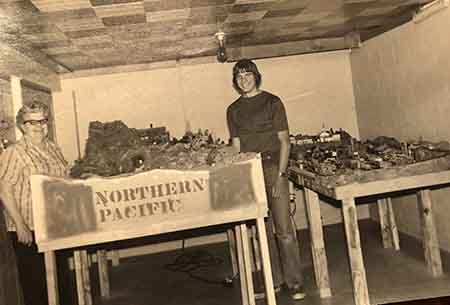
In 1976, my wife, our infant daughter and I moved to Linn County, not too far from an old community called Oakville, not far from Oregon Electric RR tracks.
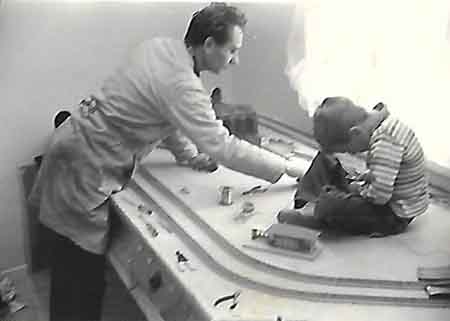
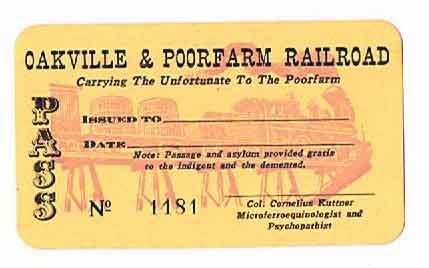
Our house had a workshop, and this soon became home to a 4×6 foot board with an HO railroad, aptly named The Oakville & Poorfarm Railroad.
I drove past the Poorfarm daily on the way to my psychiatric practice.
It was logical to imagine that a short line could have built between Oakville and the Poorfarm, and with something a bit more than logic, that it would have been built by a fictitious ancestor of mine, Col. Cornelius Kuttner, who just happened to be the superintendent of the Poorfarm, collecting government subsidies to house the patients while putting them to work as laborers laying the track.
We moved to Portland 25 years later, in a house much too compact to set up the HO railroad.
Using a space I found in the basement (a past homeowner had used this as a place to have his own railroad on a board that was hinged and would block the hallway), I realized I had to find some way to fit a railroad onto a shelf 2 feet (0.6 m) deep.
A trip to a local model railroad show had me asking questions of those running Z and N scale trains. Finally, with the excellent advice I got from the members of Cascade Z Modelers, I made the plunge to Z.
I did it all wrong.
Before, I had fastened my rail to cork on a flat plywood sheet, just not having the confidence that I could actually make good scenery. I got a 2×4 foot sheet of white foam, double-stick roadbed, and flextrack, and went to work.
I learned how to make a mountain out of instant papier-mache, use Woodland Scenics risers, ballast and put on greenery, and it actually looked good.
Oh, the disasters!
My trackwork was not great, the rail joints not the best, and I had to re-do them. Then came one really cold winter week, when it got so cold in the basement that the foam curved up off the plywood base, taking the track with it.
I asked around on the forums, and learned that the white foam I used was just a bunch of little foam pills that were stuck together, whereas pink foam is actually molded as one piece. OK, I’ll just rebuild it all from scratch.
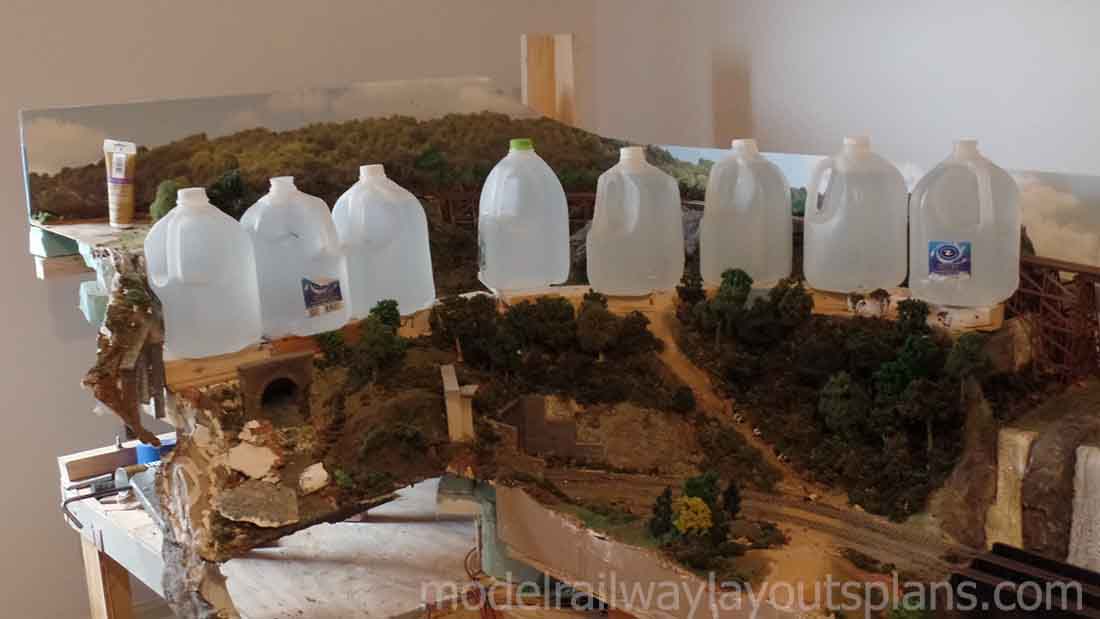
But first–hmm, let’s try just gluing down the white foam to the plywood base with Gorilla Glue. Amazingly, it worked, and the layout has stayed intact since.
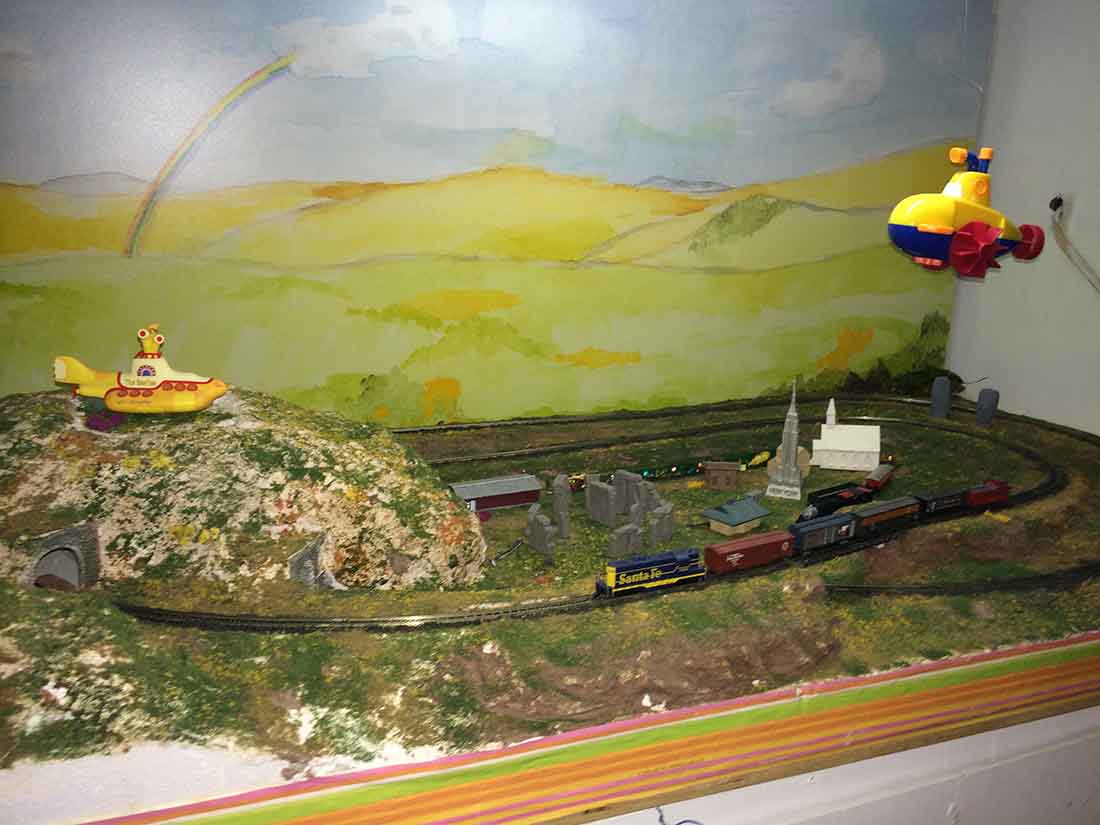
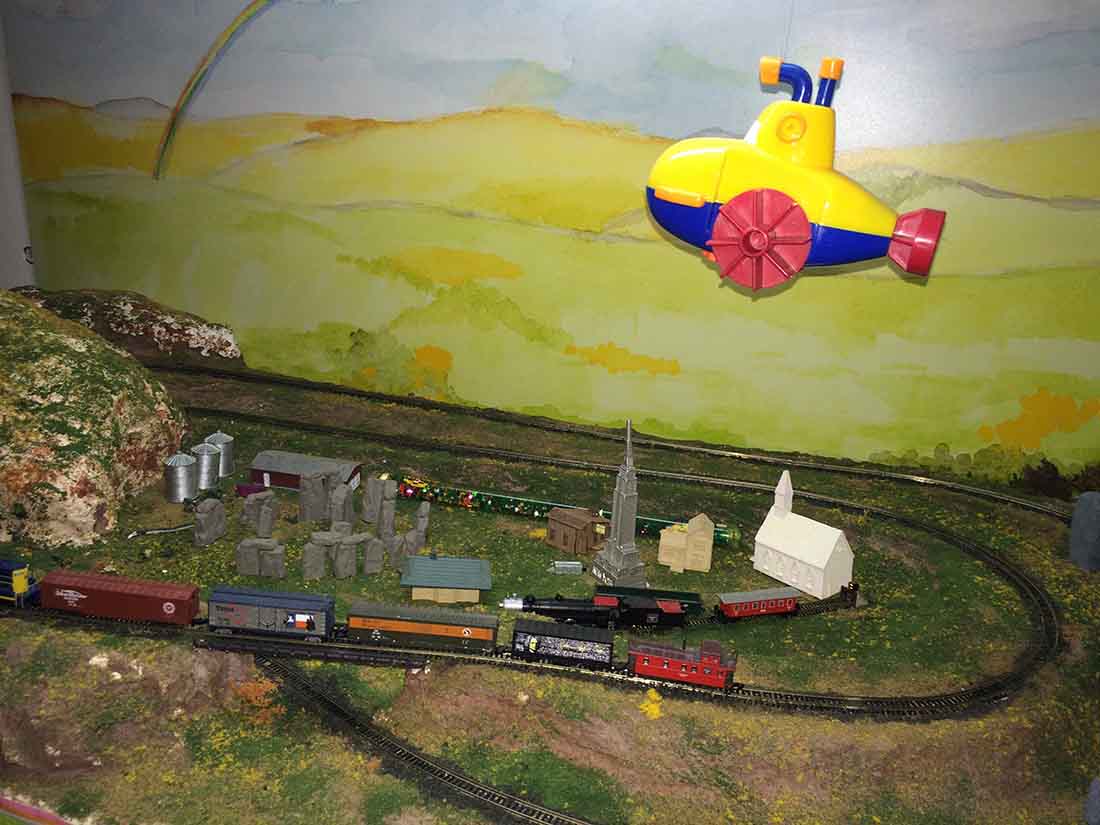
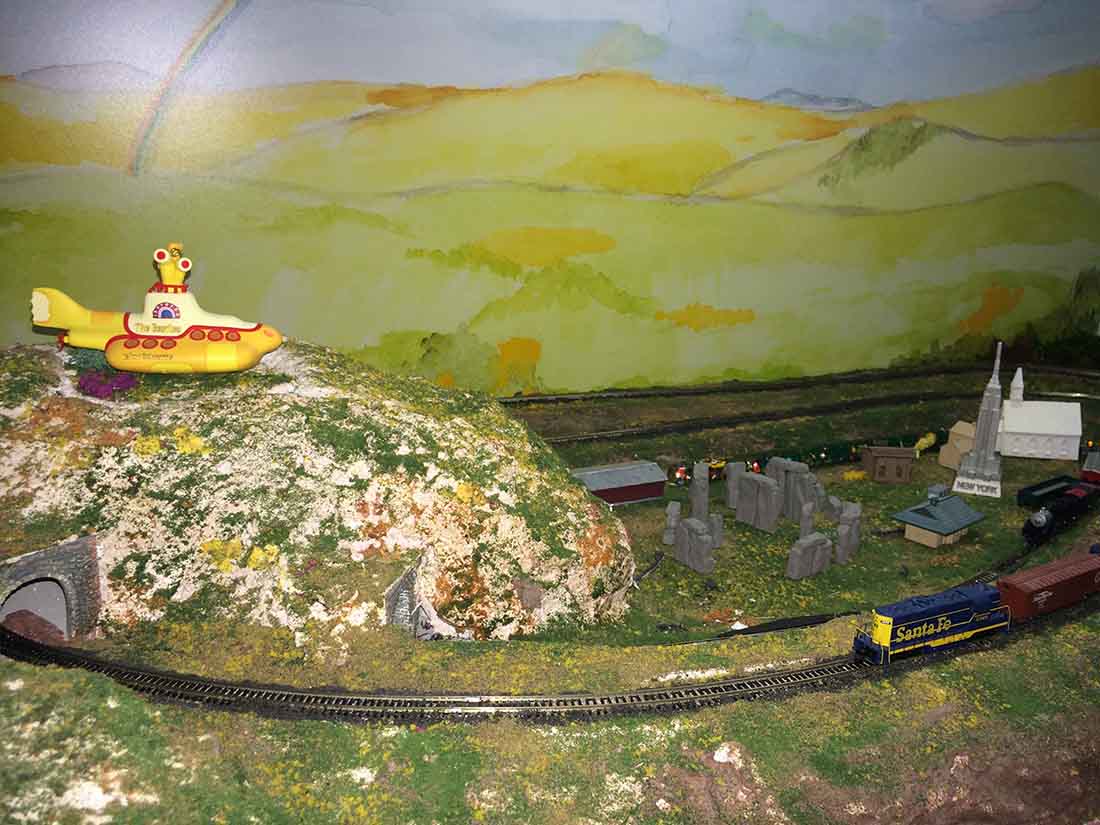
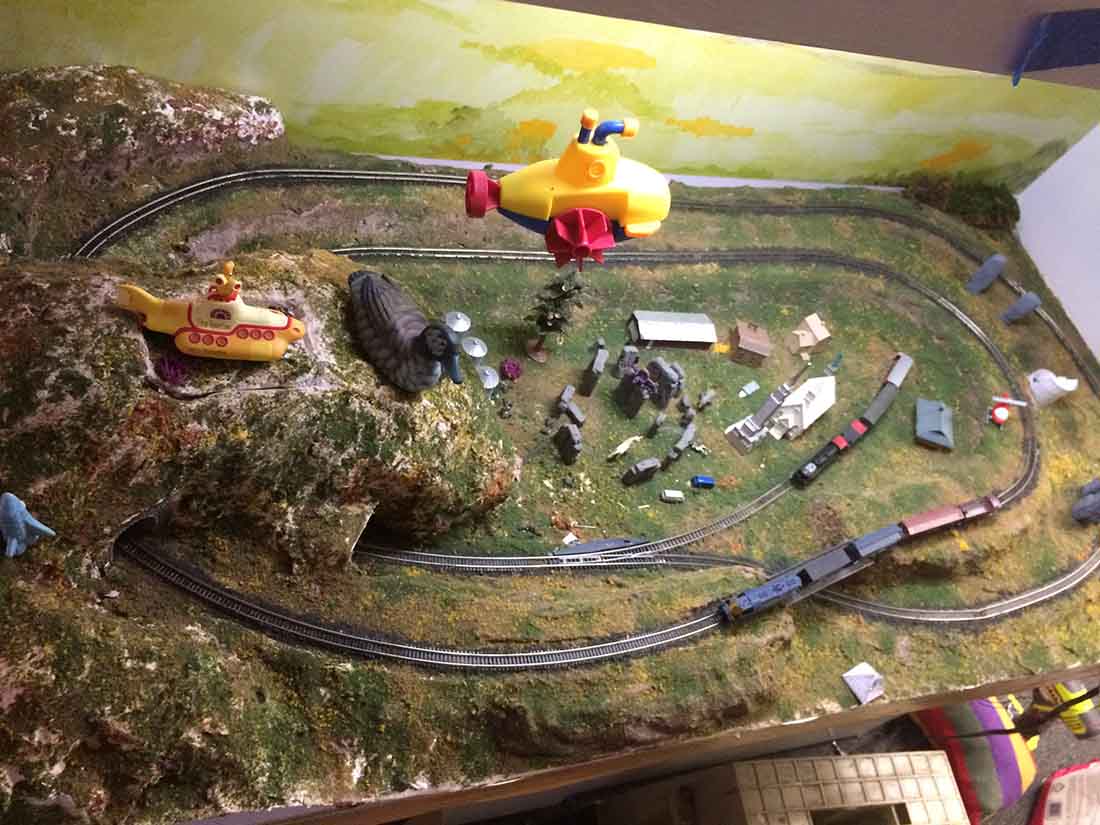
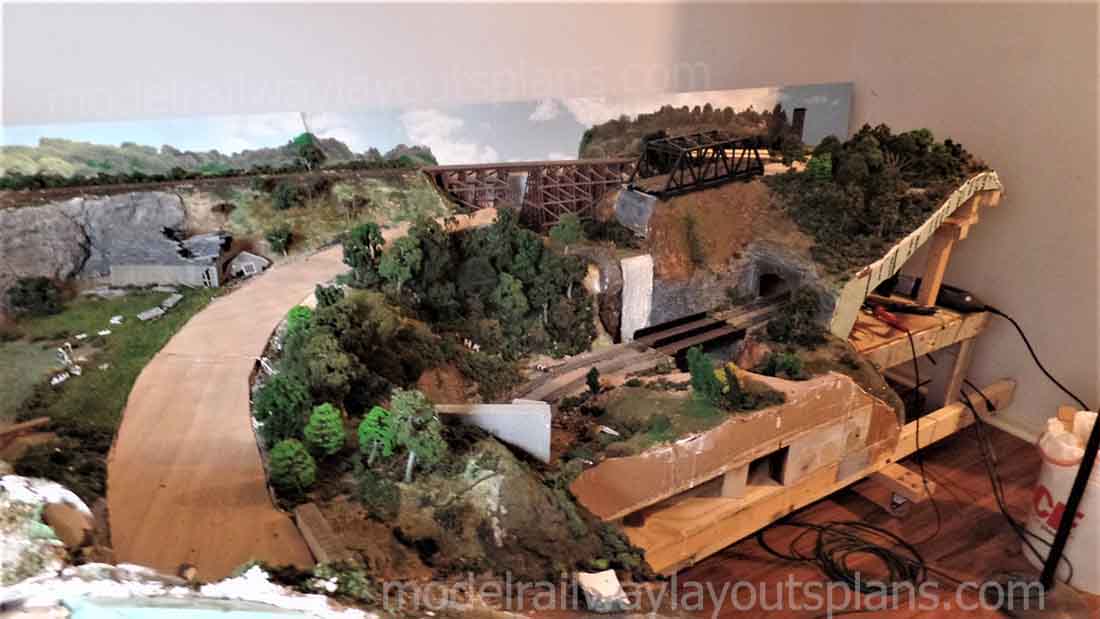
The layout is set in a time & space continuum that resulted from the arrival of the Yellow Submarine, which is simultaneously resting on the mountain and flying through the air. As a result, the combined tavern-workshop has the signs “Rotgut and Smoothies” and “Velocipedes and Jet-Packs Fixed Here.” S
tonehenge is here, as are the Easter Island heads, not to mention the Empire State Building.
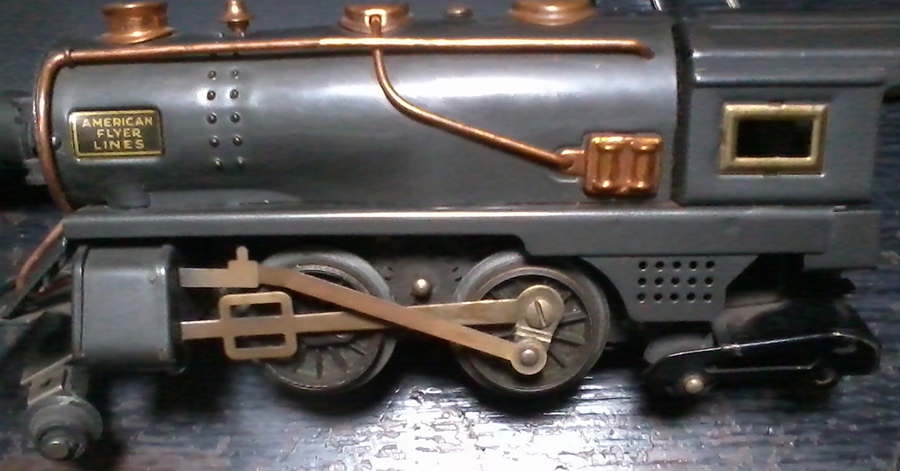
One of my favorite discoveries has been No-Ox-Id, which has kept my diesel engine running reliably, although my trackwork just isn’t smooth enough for my steam locomotive.
Charles”
Hope that made you smile and scratch your head as much as me.
Now on to Brian:
“Hi Alastair,
I have made a start on my next long term project (may be a 3 month long one).
It is a very detailed building and will end up being a super detailed one as it is right on the front edge of my layout.
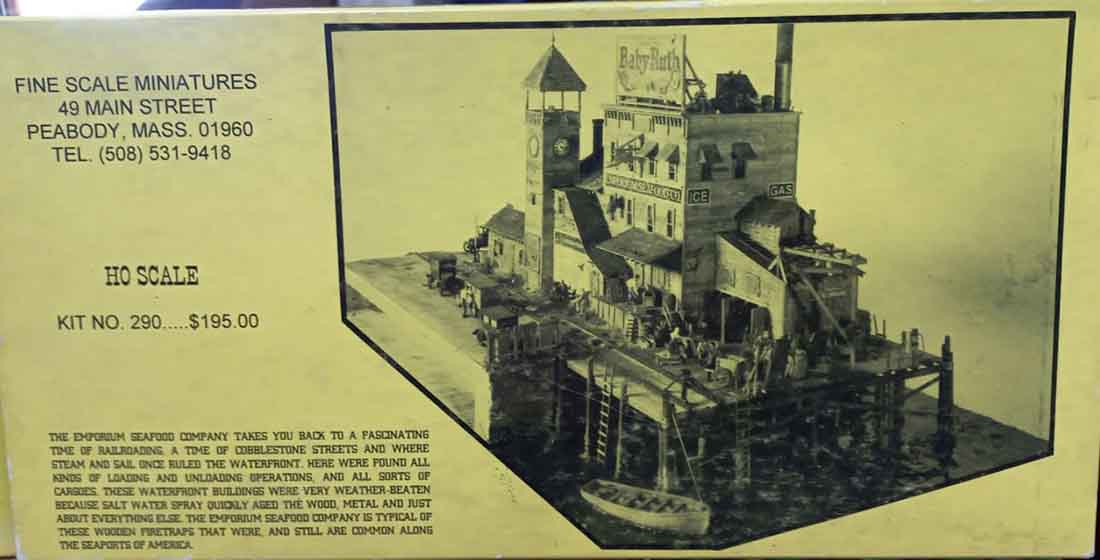
This is the kit that I obtained through a swap (built a kit for a friend in return for this kit) I think that I got the better side of the deal. (See my previous post of the kit that I built for the swap.)
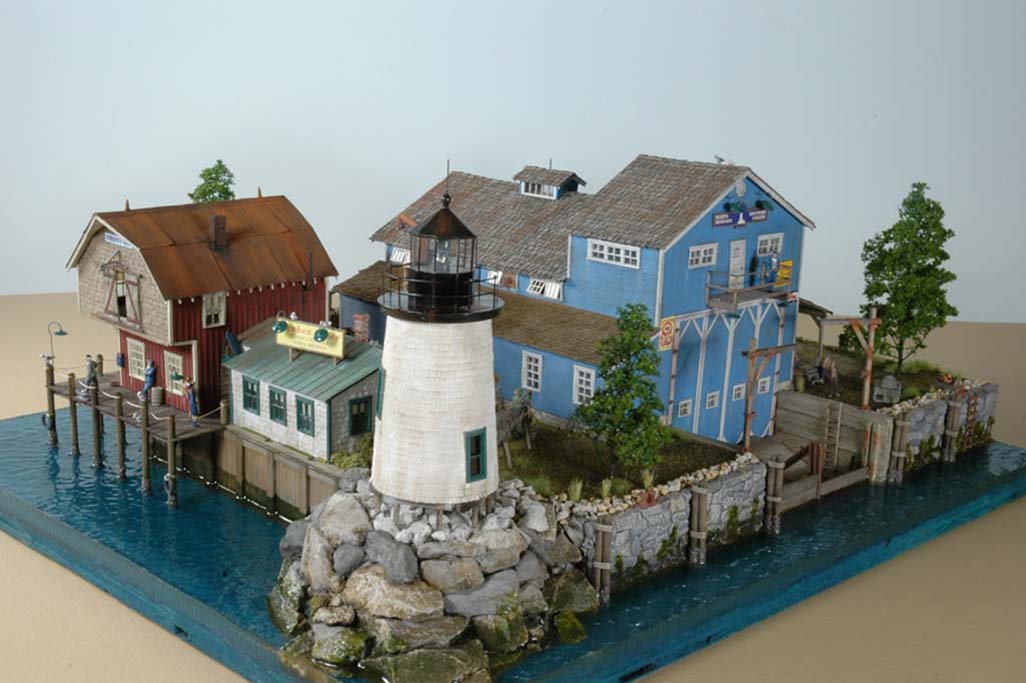
The FSM Seafood Emporium kit is a kit that I wanted for many years and I now have it to build on my HO Scale narrow gauge layout.
I have to modify (kit-bash) it to fit the area at Pelican Bay.
It will have to be flipped horizontally as well as a mirror image of it to be able to install it the way I want it to be.
The track comes onto the wharf from the opposite side in the kit. From left to right but I have to have it from right to left.
As with all my buildings, I make a cardboard mock up of the kit to be able to visualise how it should look (being a foreground model) it had to be right.
From this I was able to cut the layout baseboard to suit the wharf.
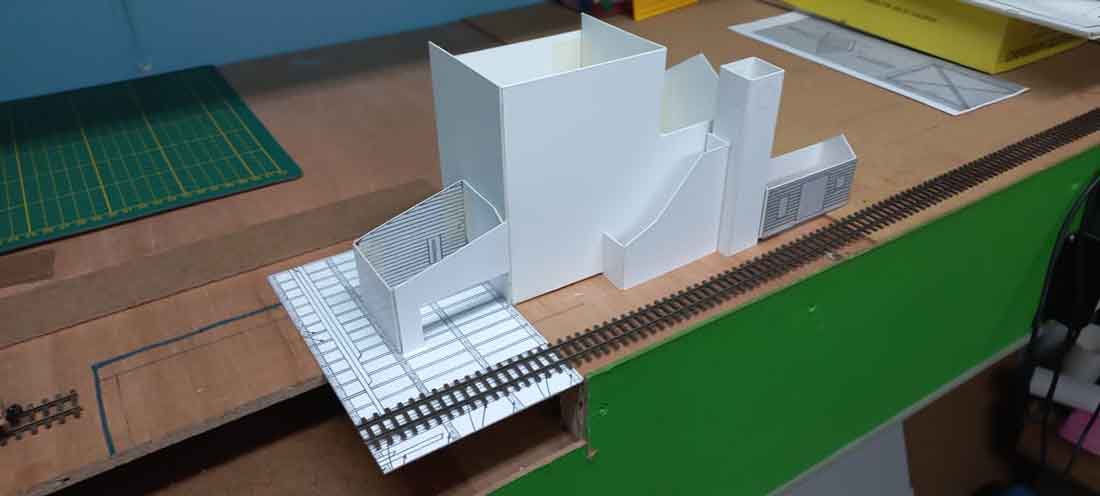
Here I have temporarily assembled the original parts to visualise the building.
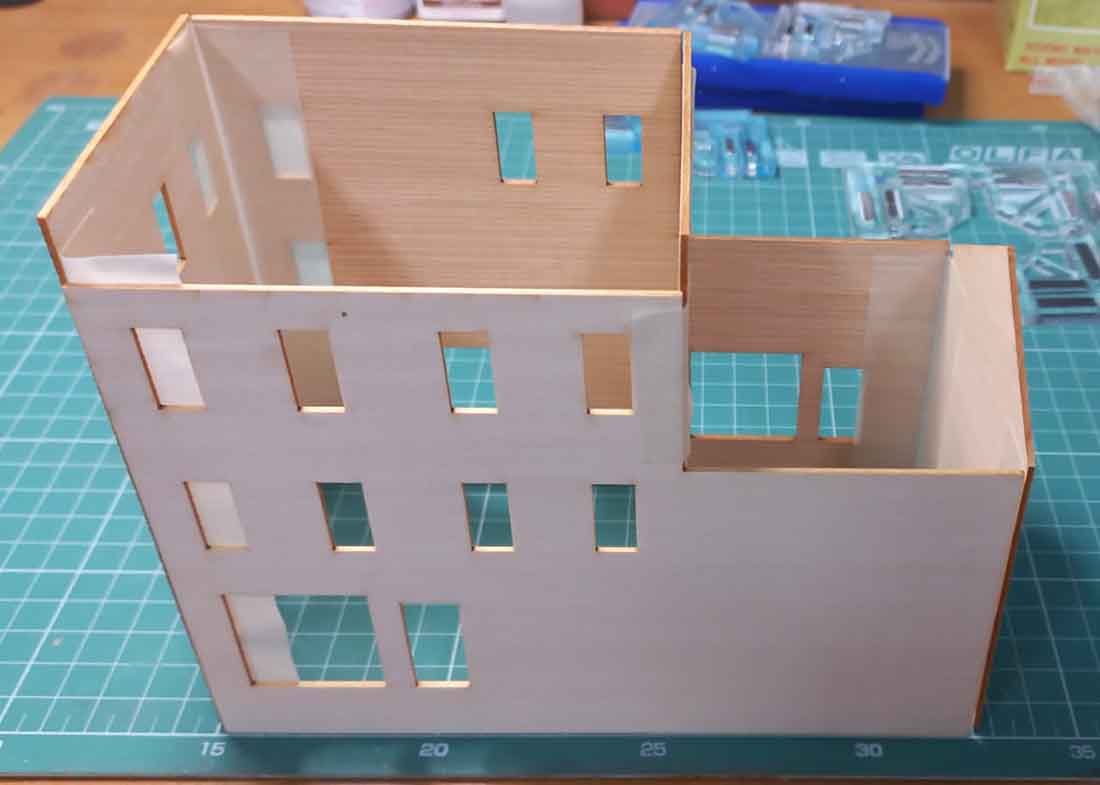
Unfortunately was not able to use the front and back pieces as the scribed siding would be on the inside, therefore will have to cut new pieces from my wood stock in order for them to be correct.
I used the original pieces to mark out the sides on the card stock.
The area for the wharf has now been cut out and the cardboard wharf is test fitted in the correct position.
Now to build the wharf.
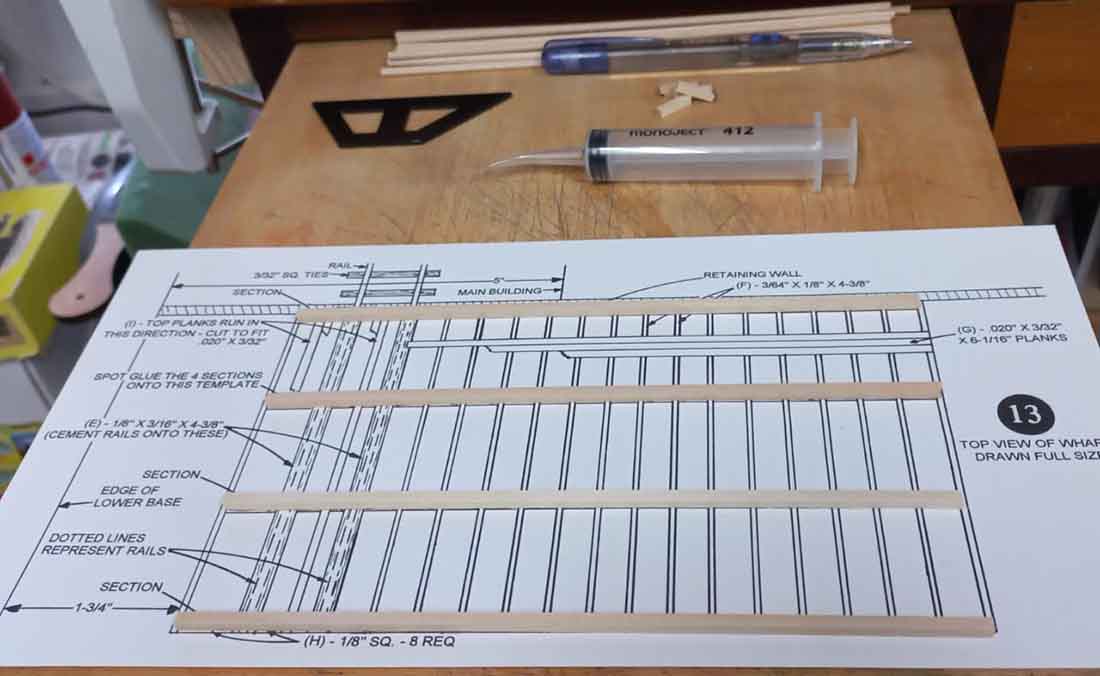
The template is used to lay out the main beams under the deck.
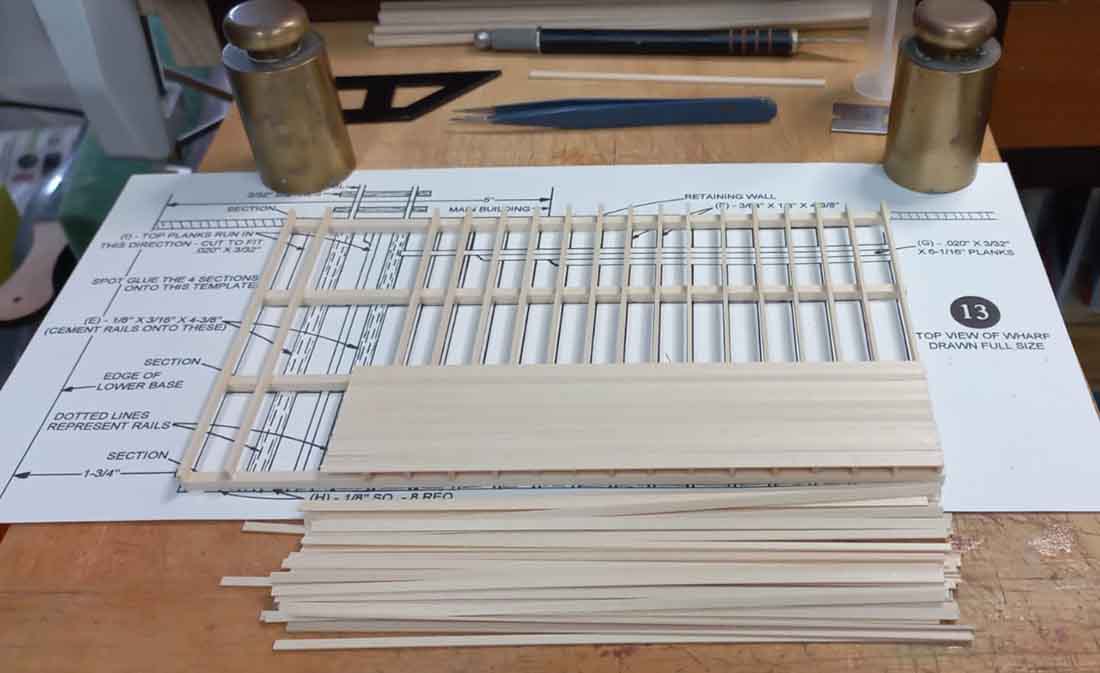
Here are a couple of photographs showing the construction of the board by board construction of the deck. Above shows the single strips of the boards being placed on the template.
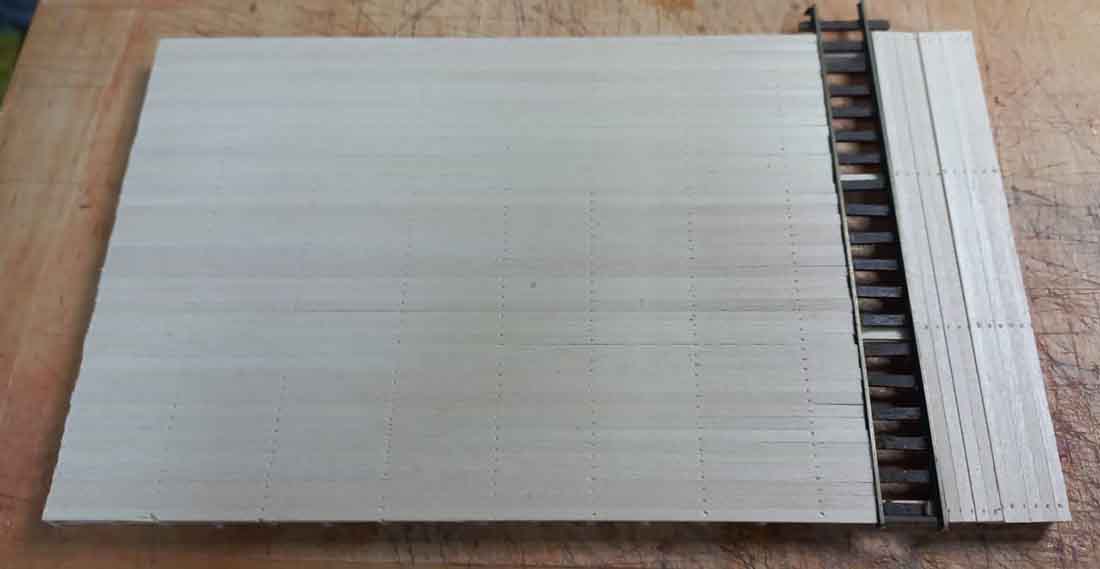
The nail holes were added using a ‘ponce wheel’ against a metal ruler. I obtained the ‘ponce wheel’ from a dress makers shop (It is used by dress makers to mark out dress patterns) You do get different size wheels with different amounts of teeth per inch.
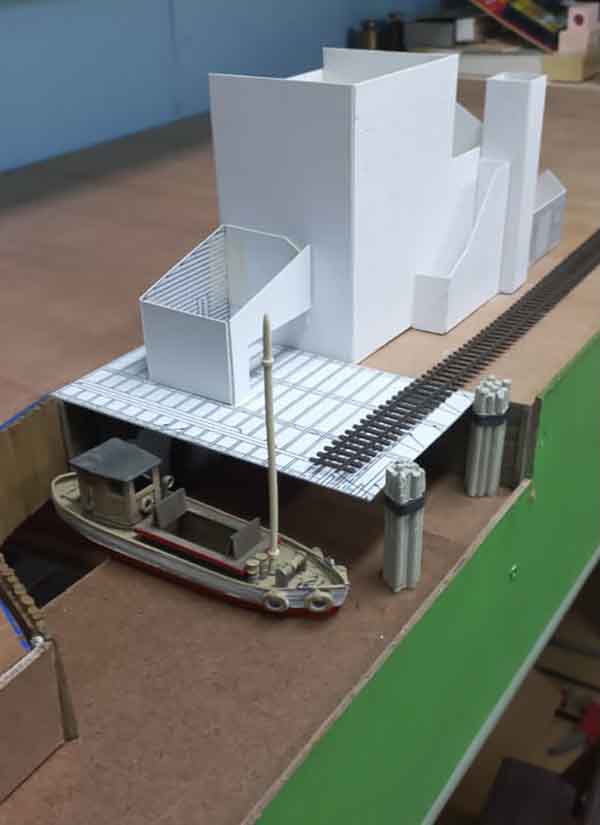
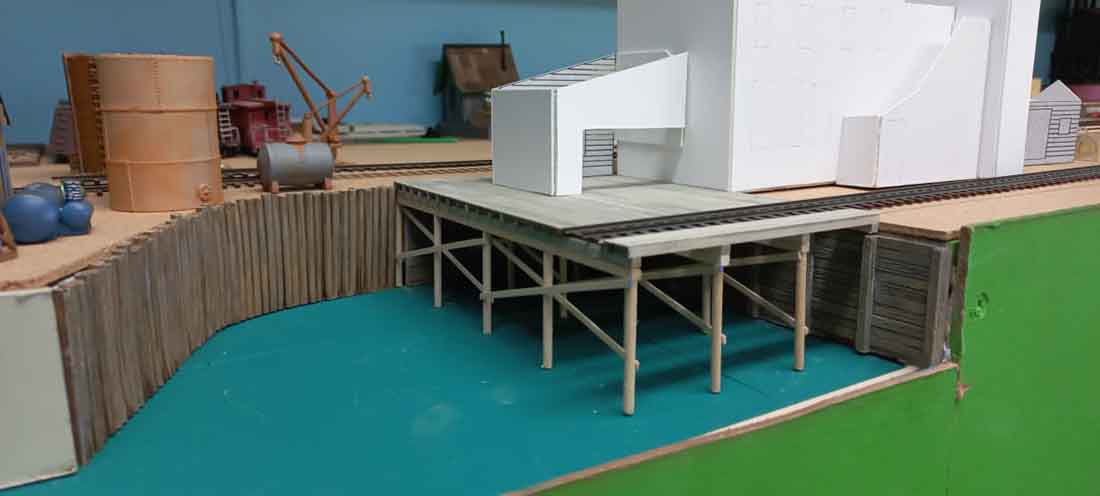
The above shows the test fit of the pilings to ensure the correct height.
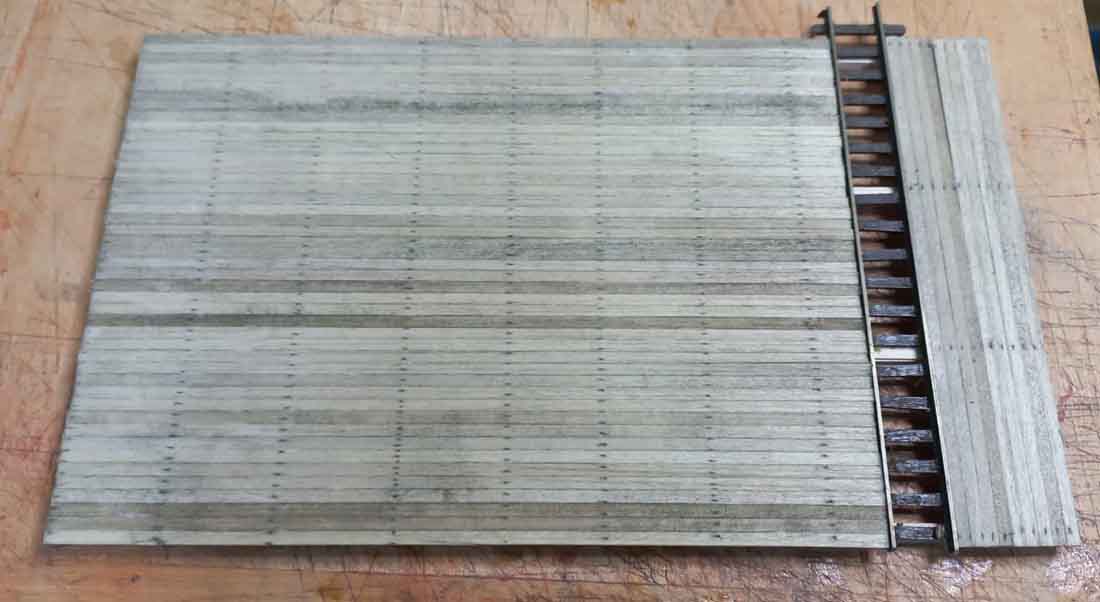
The side pilling wall was made using skewer sticks, cut, stained, weathered and glued to fit the cutout area.
The ‘wood wall’ behind the wharf was from a wood wall casting that I made using casting resin and painted accordingly.
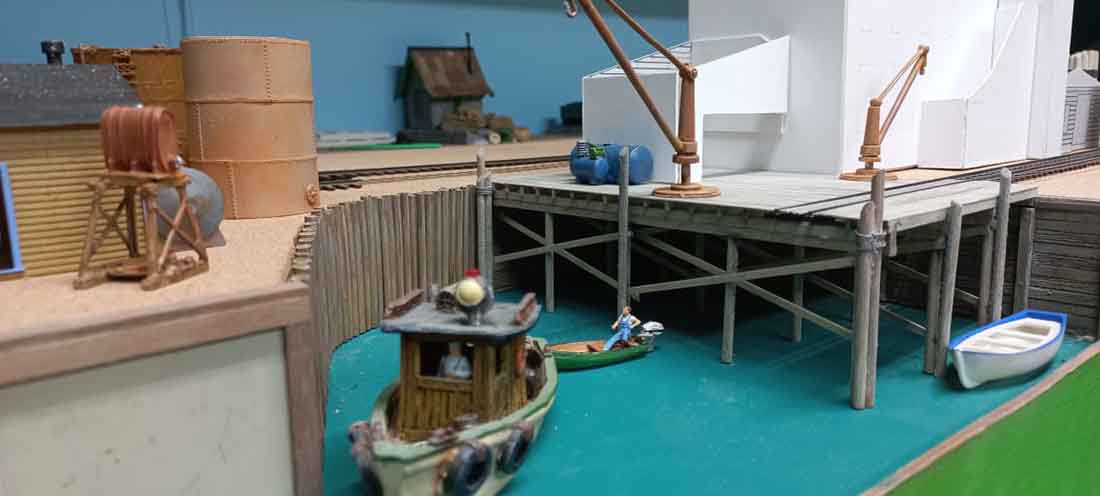
Another view taken of the wharf. The wall on the left is a long piece of Masonite painted with Woodland Scenics concrete colour and has the wood support posts added. Still needs to be weathered once fixed in place.
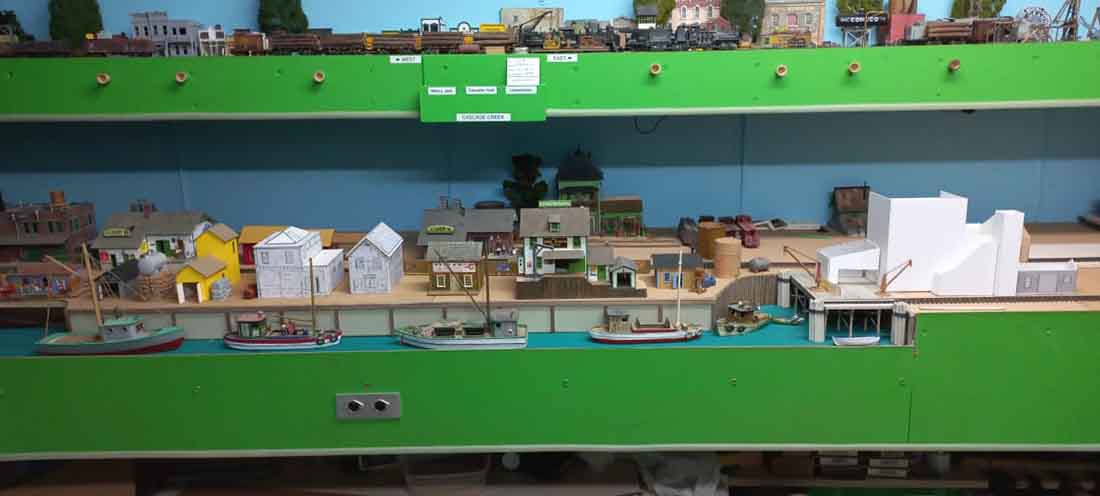
The photo below shows where it fits in on my layout (Pelican Bay).
Unfortunately this is as far as I have progressed on this build. Now to start on the main and side buildings.
Will keep you all posted in future articles on the build.Have fun and keep modelling.
Brian – the HOn3 guy in Knysna.”
A big thanks to Brian.
Whenever I see his name in my inbox I’m always reminded of his HO scale dock.
That’s all for today folks – please do keep ’em coming.
I had built a layout in a 15×15 ft room in our condo. I tried to use parts of the layout I had started in the basement of our house before we moved into our condo.
To make it fit I had three access lifts. It also covered the window. I lived with it for two years until my wife decided that we needed hardwood floors.
I took it apart and was able to save about 30% of the layout. These parts I mounted on casters so the installers could put in the floor.
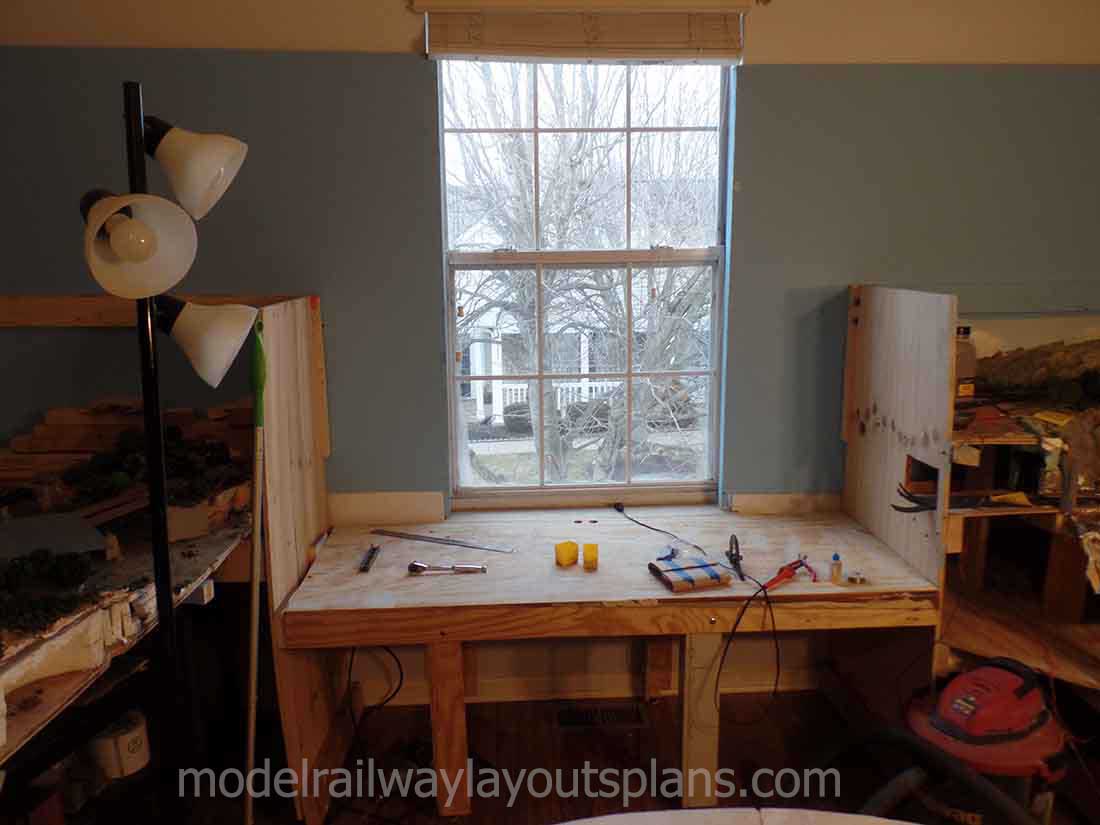
It has three features: no lift outs, a window view, and two levels.
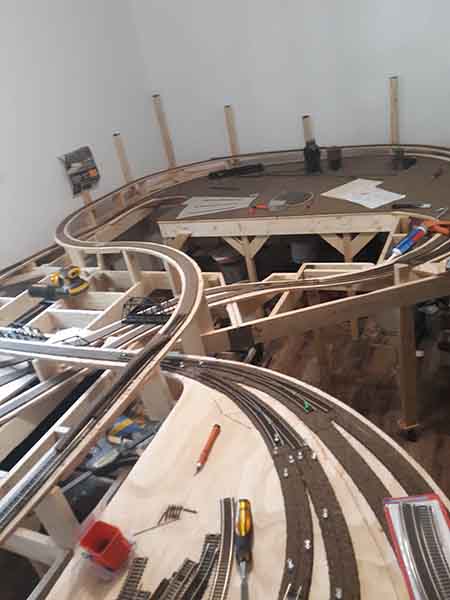
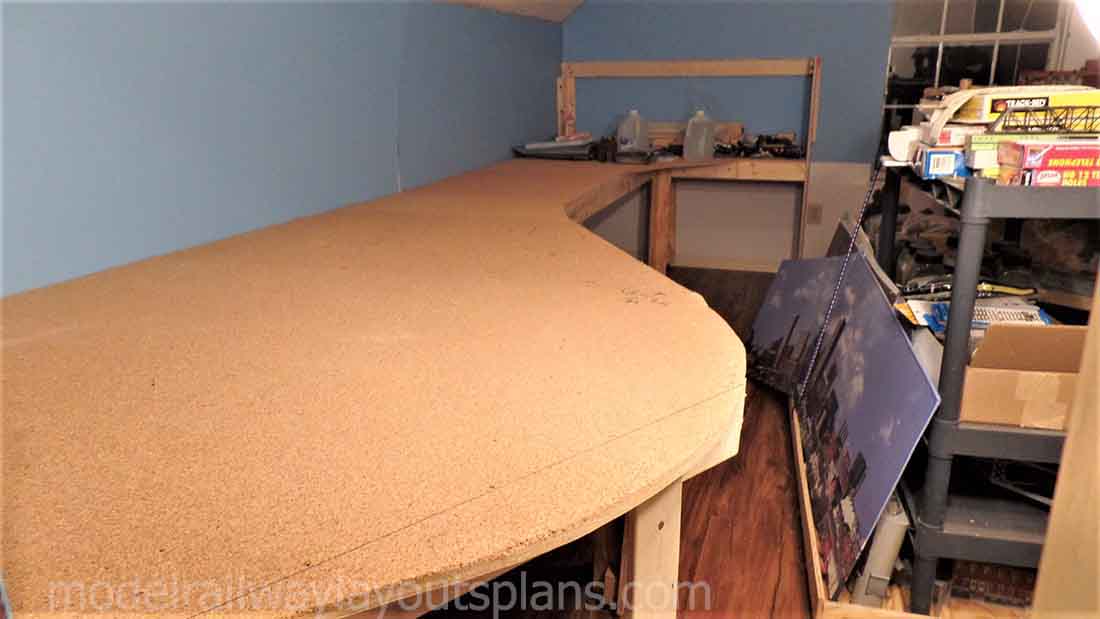
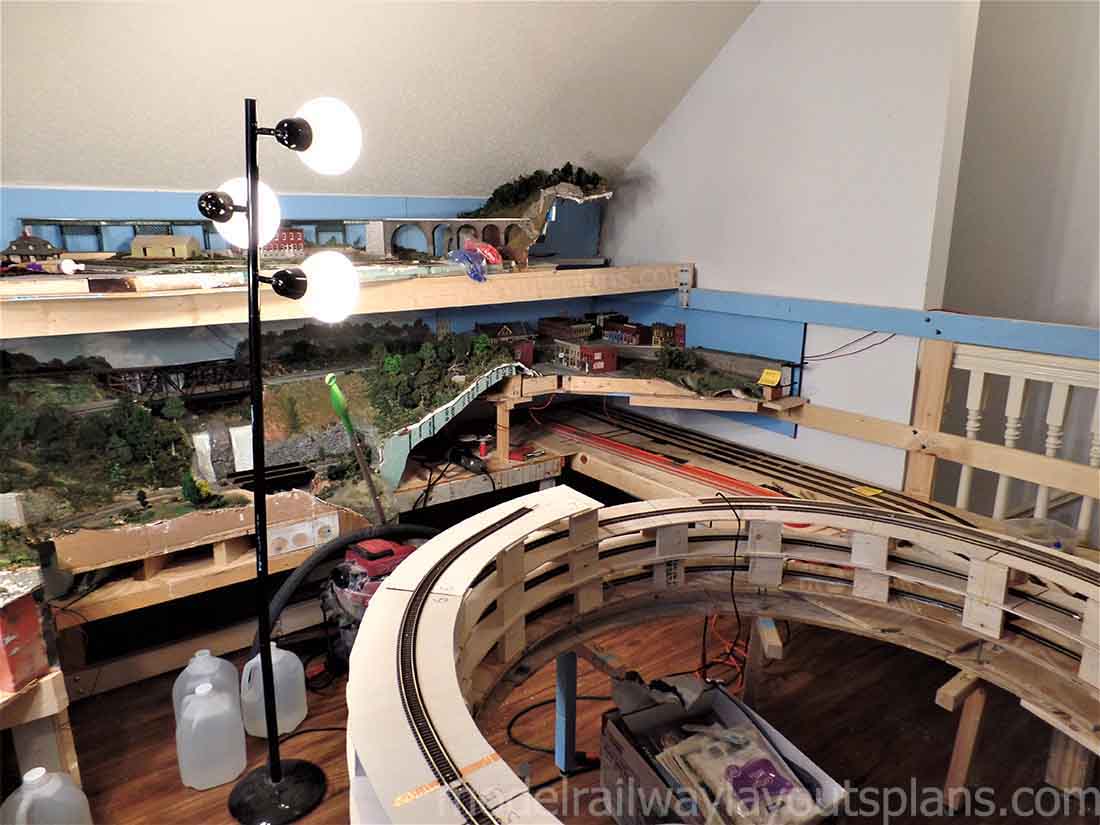
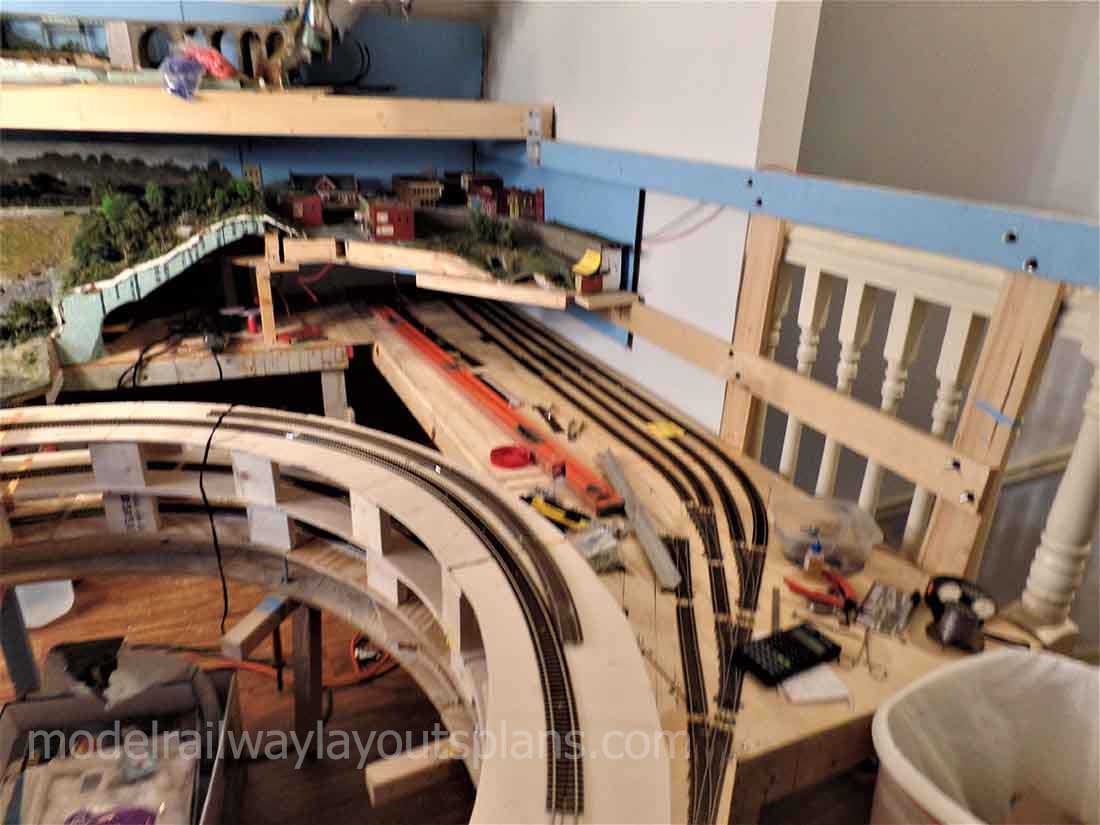
The first photos show the new loop on the southwest wall.
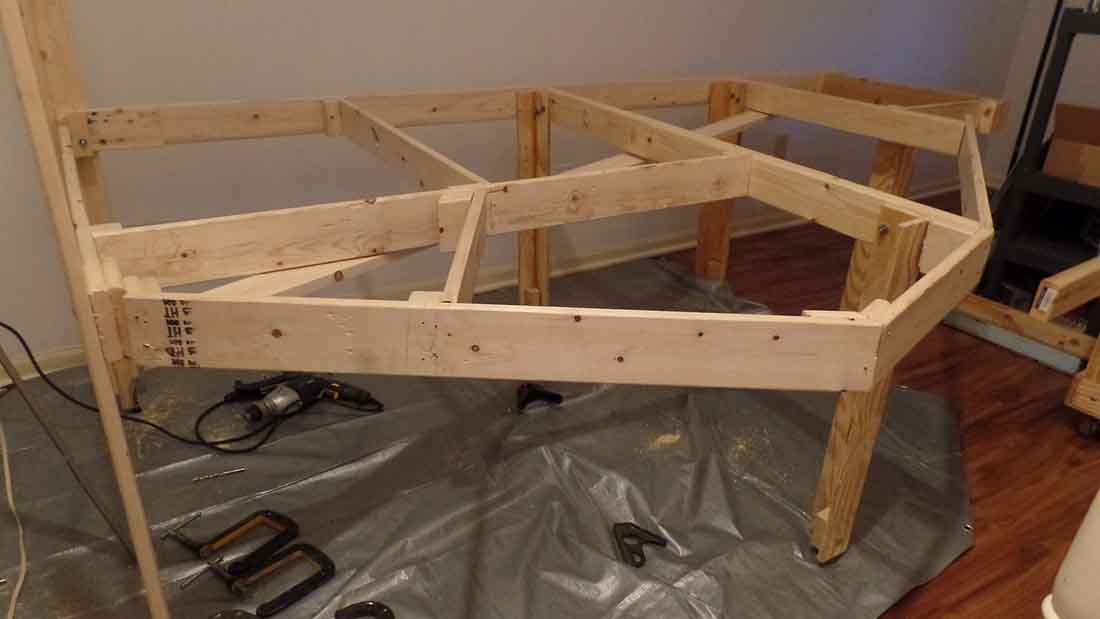
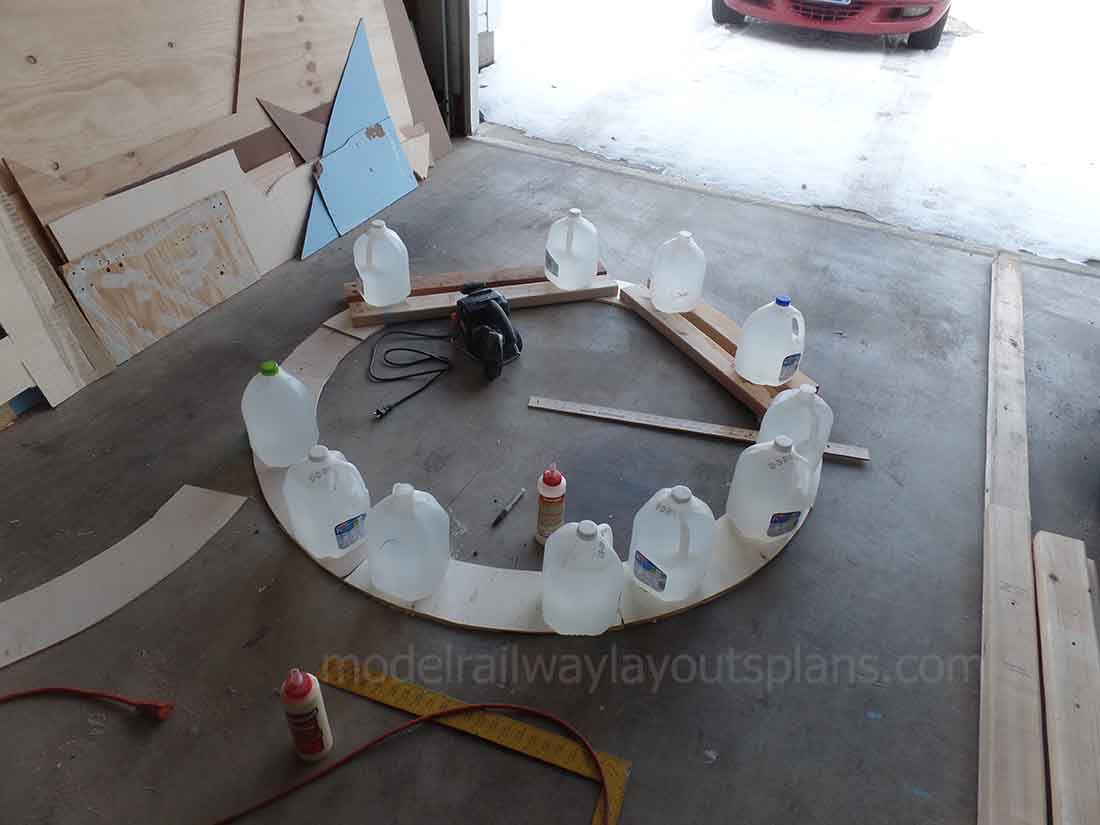
It is covered with cork 4×8 sheets from Ebay. There will be a similar loop 20 inches above. The base has odd angles to allow a drop in turntable. I used graph paper to get the proper oddball angles. Templates were then used to set the chop saw.
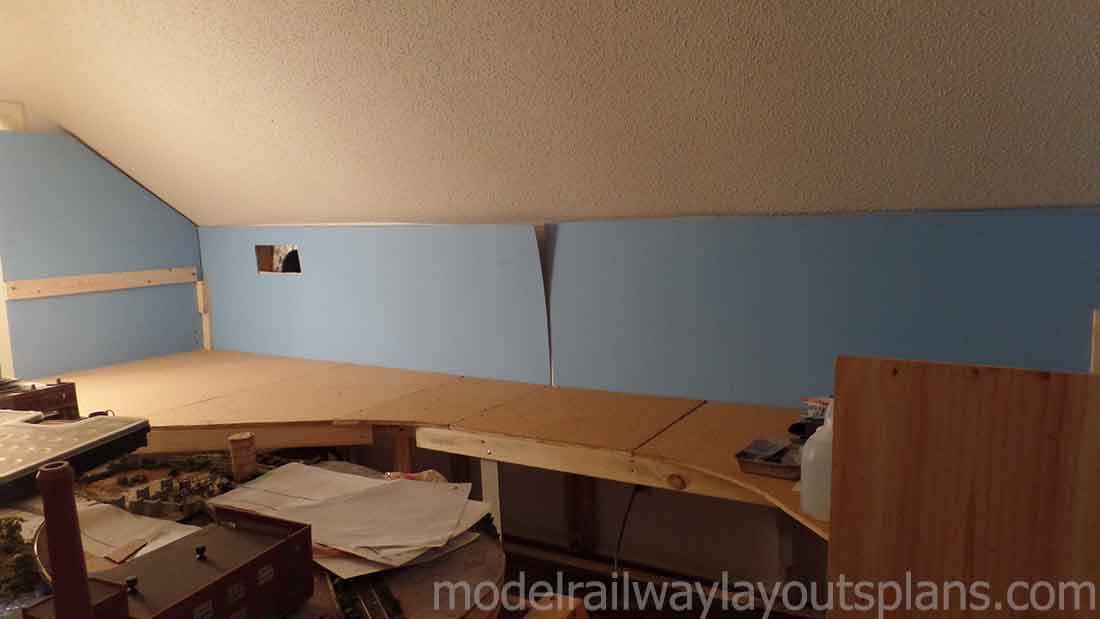
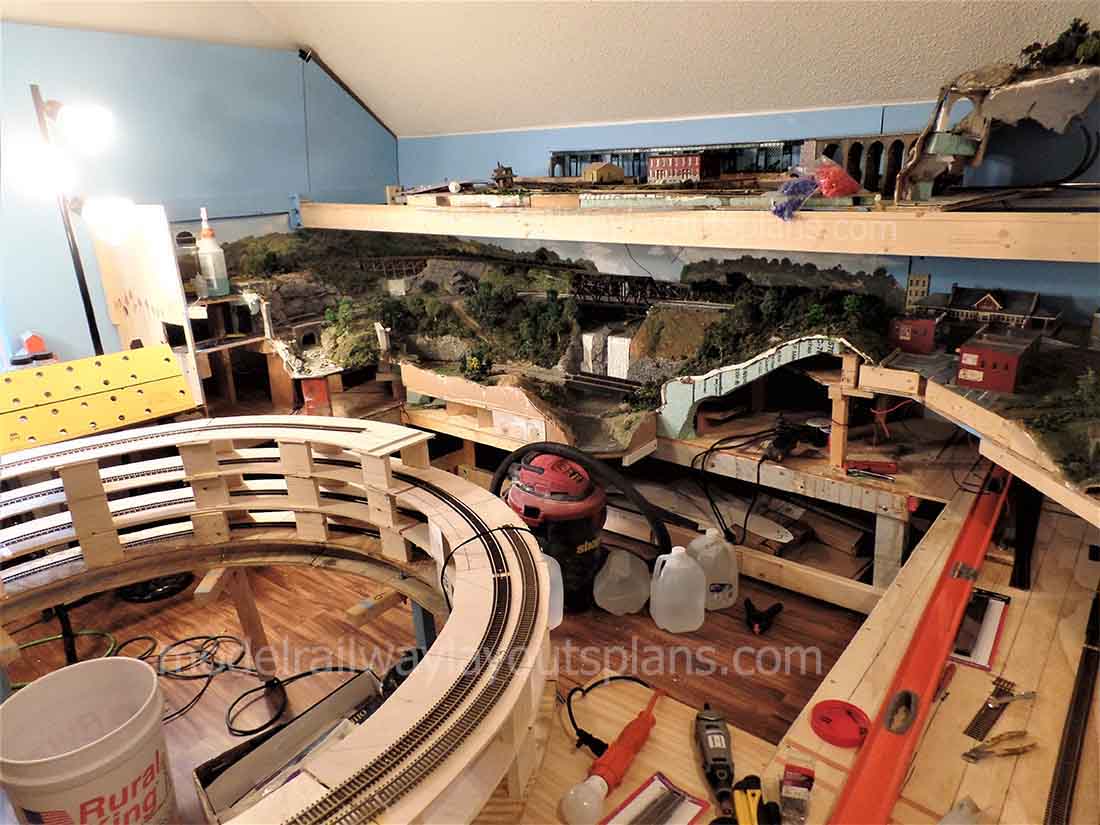
The next photos show what was saved from the old layout. The upper level is supported by 12 ft 1×4 L girders. The track of the old layout was glued down and could not be saved. I was able to cut it out because the plaster cloth did not stick to the base. I then glued luan plywood to the base.
The layout uses the new Walthers code 83 turnouts and Atlas flex track and rail joiners. Peco rail joiners didn’t work with Atlas track.
I used #20 nails to mount the track. I used #O Brass screws for the turnouts and in the helix.
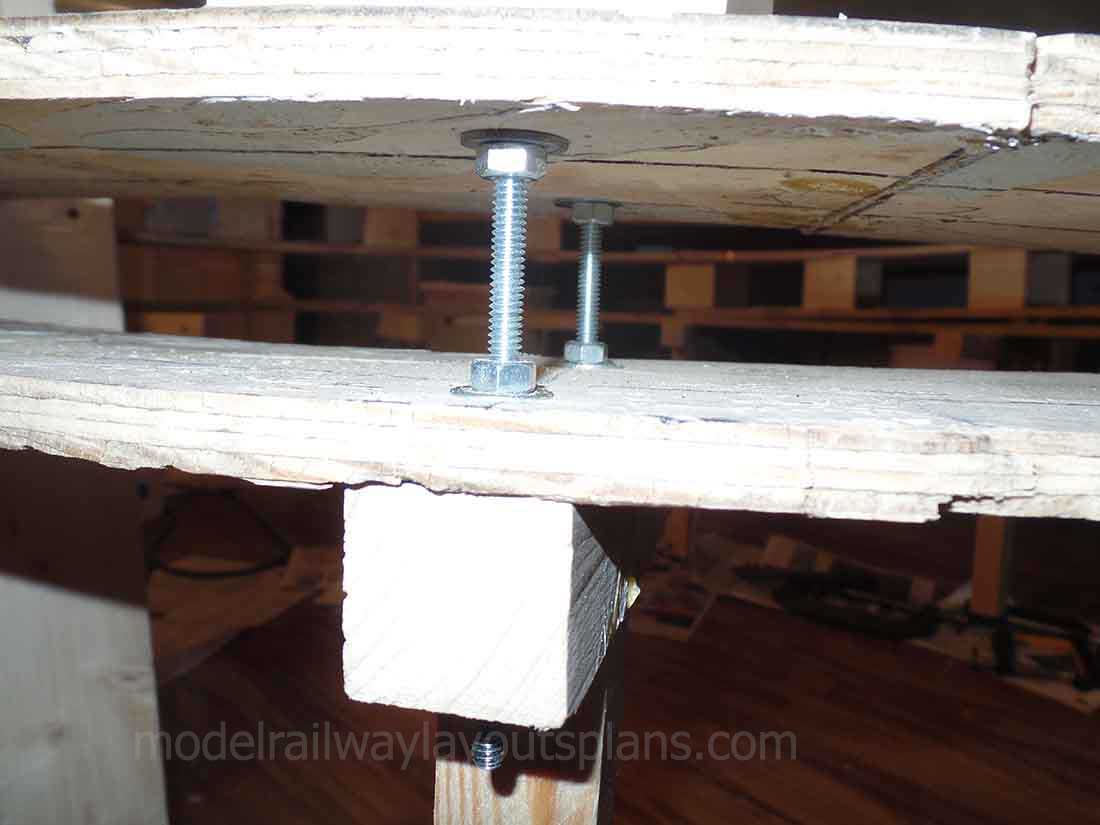
The helix is 5 ft with a 27 inch radius track. The base spline is 1/2 inch plywood. The grade was determined using adjustable lag screws as shown. The spacing was set with spacers.
I took 1×4 by 8 ft boards and ran them through a table saw to make it the proper width. The chop saw was used to make 3 inch spacers.
By cutting only one edge it was easy to determine the top edge. If you decide to make two smaller cuts, paint the top and bottom cuts so you will know the orientation after the chop saw.
This made 32 spacers per board and I cut seven identical boards. The upper levels were luan.
This helix goes from staging to the main level. A second helix will go to the upper level
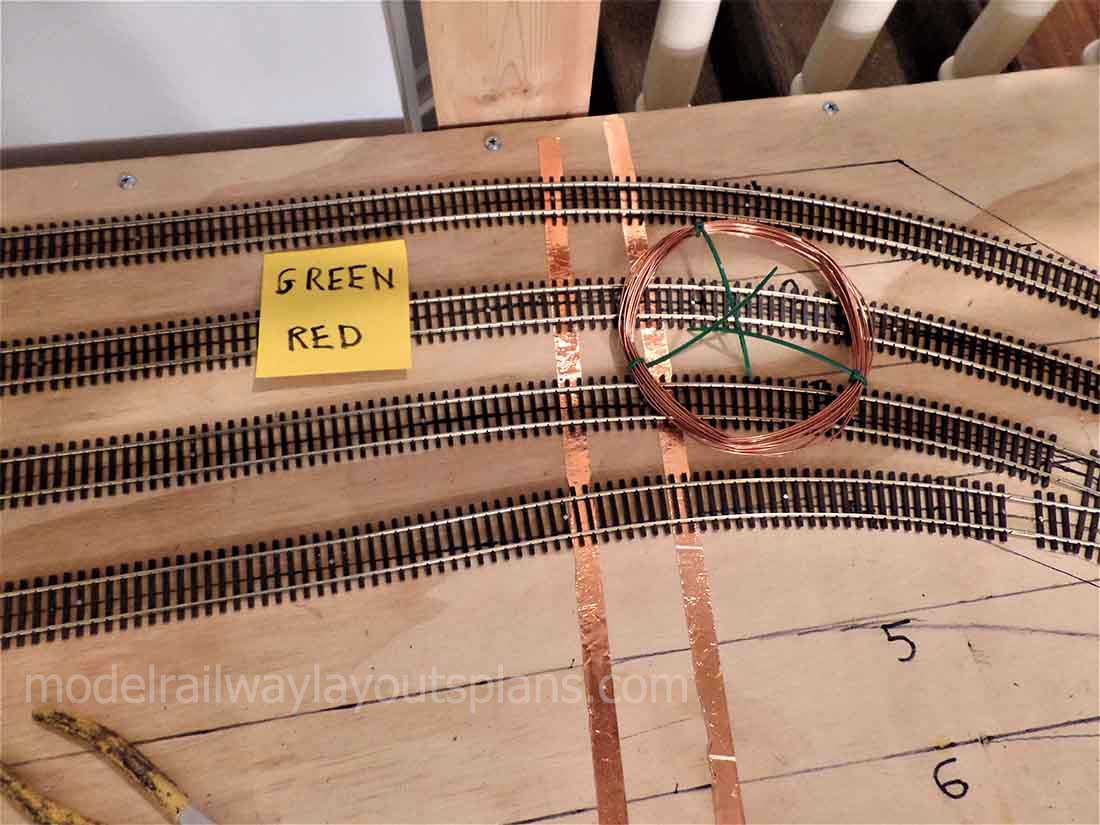
The window will be clear other than bridges. The new staging yard will have nine tracks. 1/2 inch Copper tape was used extensively.
Don”
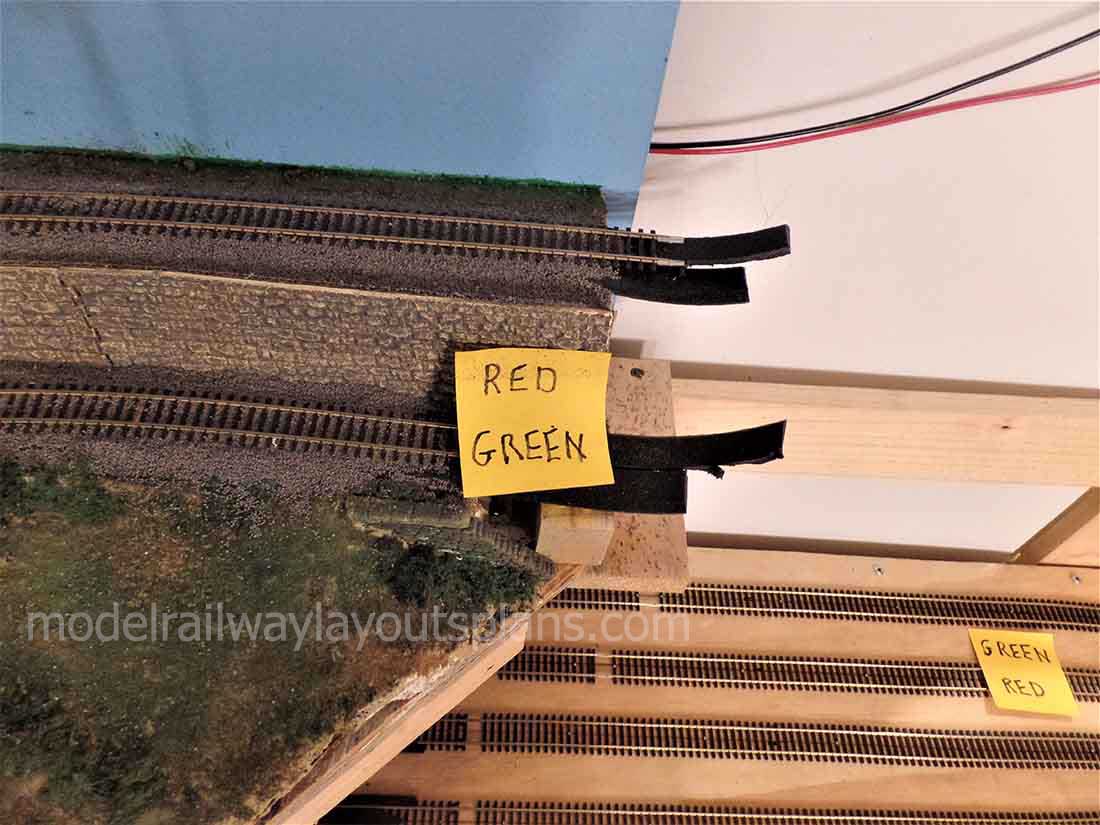
Track was connected with copper wire. 16 gauge wire was soldered and fed under the layout and connected to the 14 gauge bus with Quick splices (suitcase connectors). This cuts down on many under table connections. Post It was used to keep track of polarity.
A big thanks to Don for sharing his Atlas flex track layout.
I always get mails when I show a layout like this, asking, “Why show a half finished layout?”
Well, for me, it’s all about making a start and getting stuck in. Because without that, there are no layouts, and worse, there’s no fun either.
And besides, you can see Don’s ‘finished’ layout in his last post.
Don’t forget to revisit it, you can find it here. There’s some solid advice and great pics before the big move.