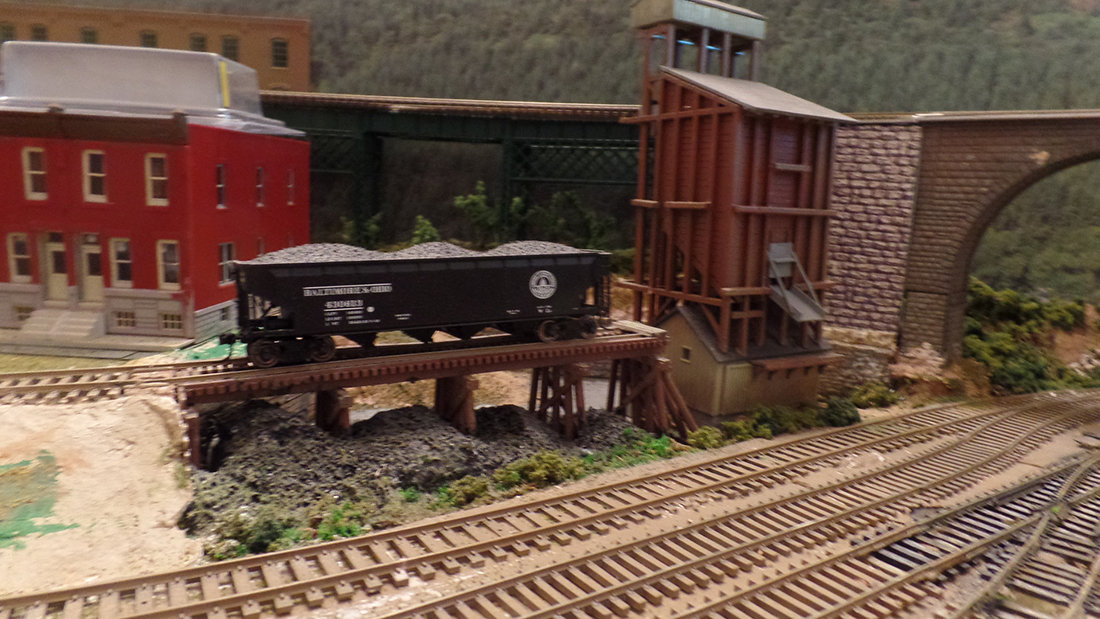
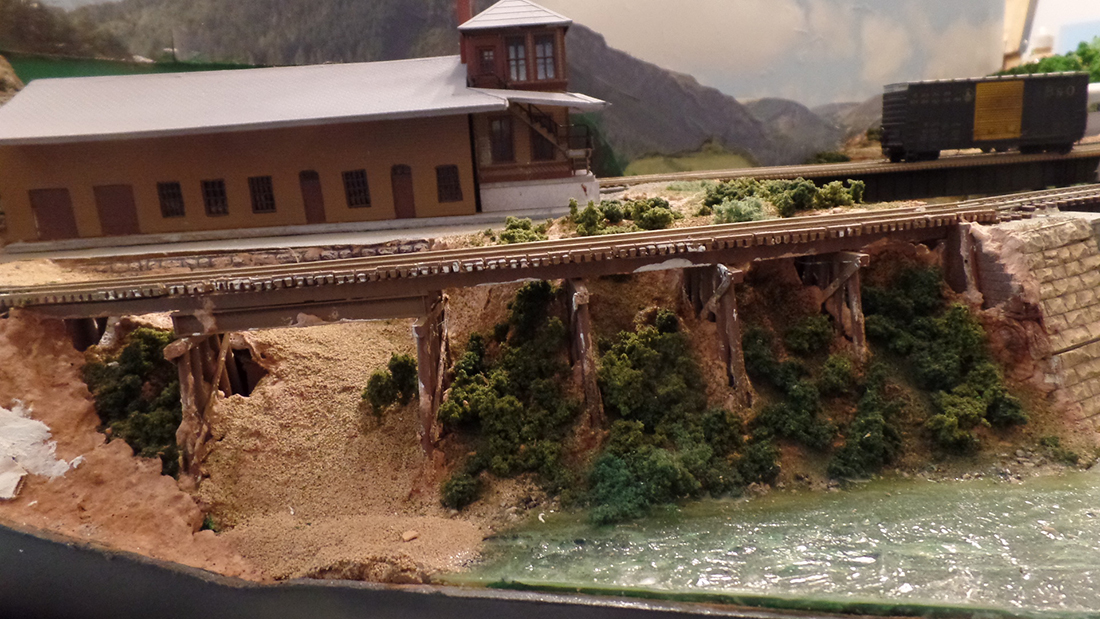
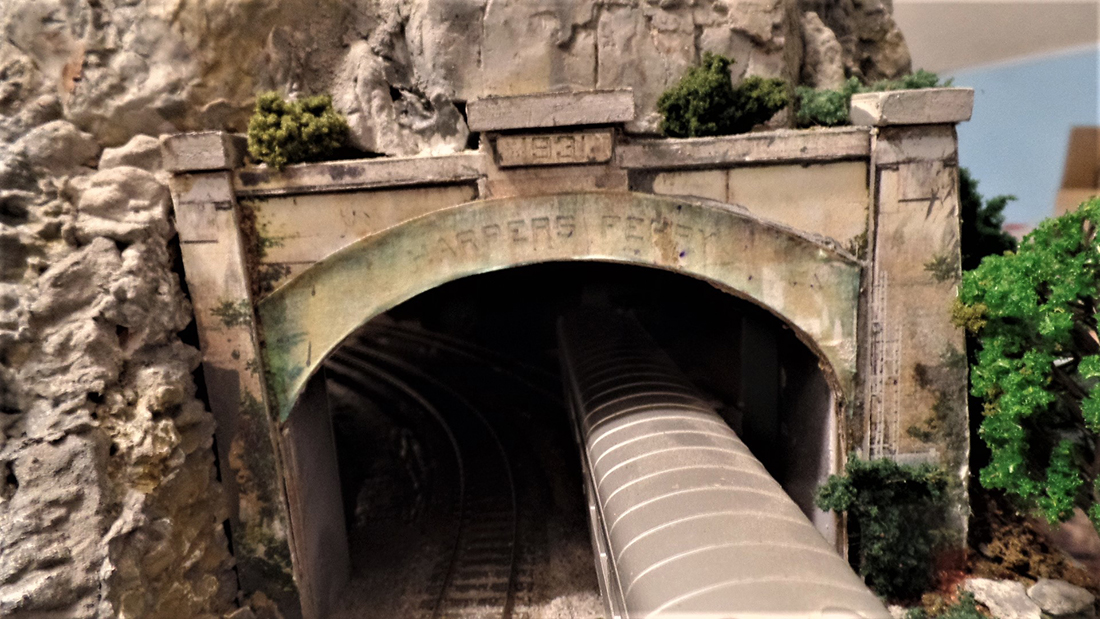
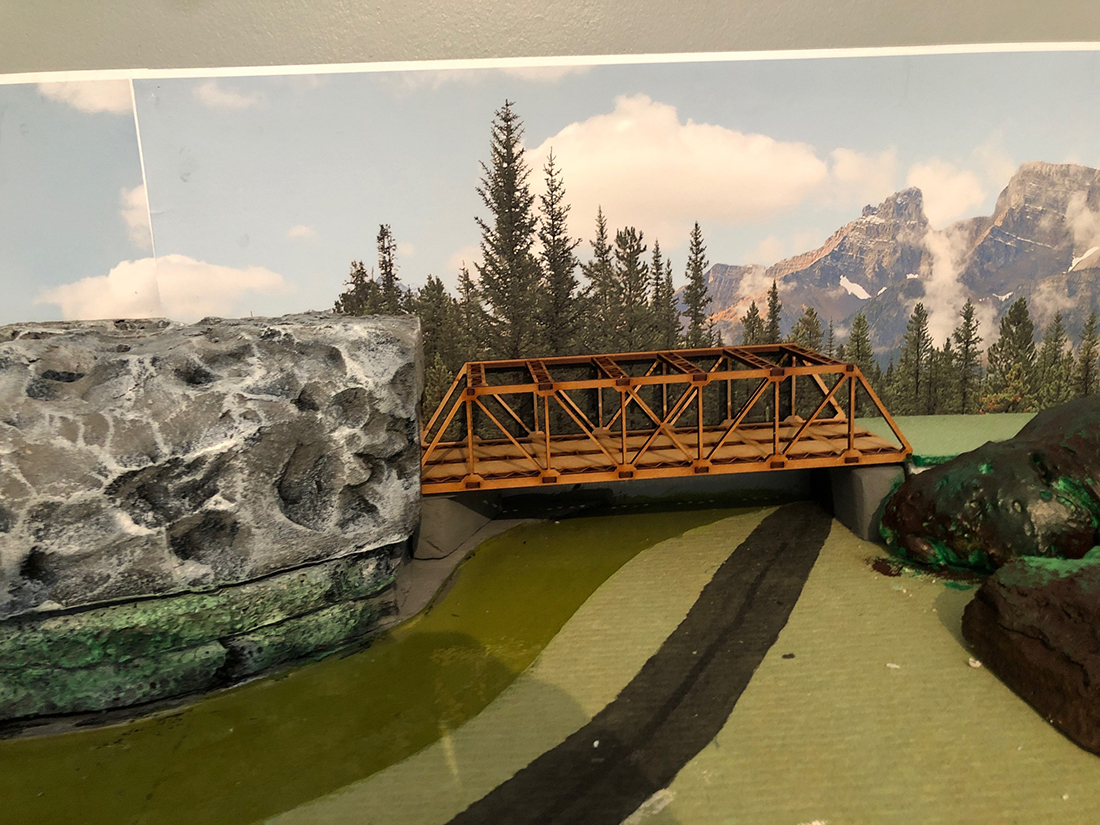
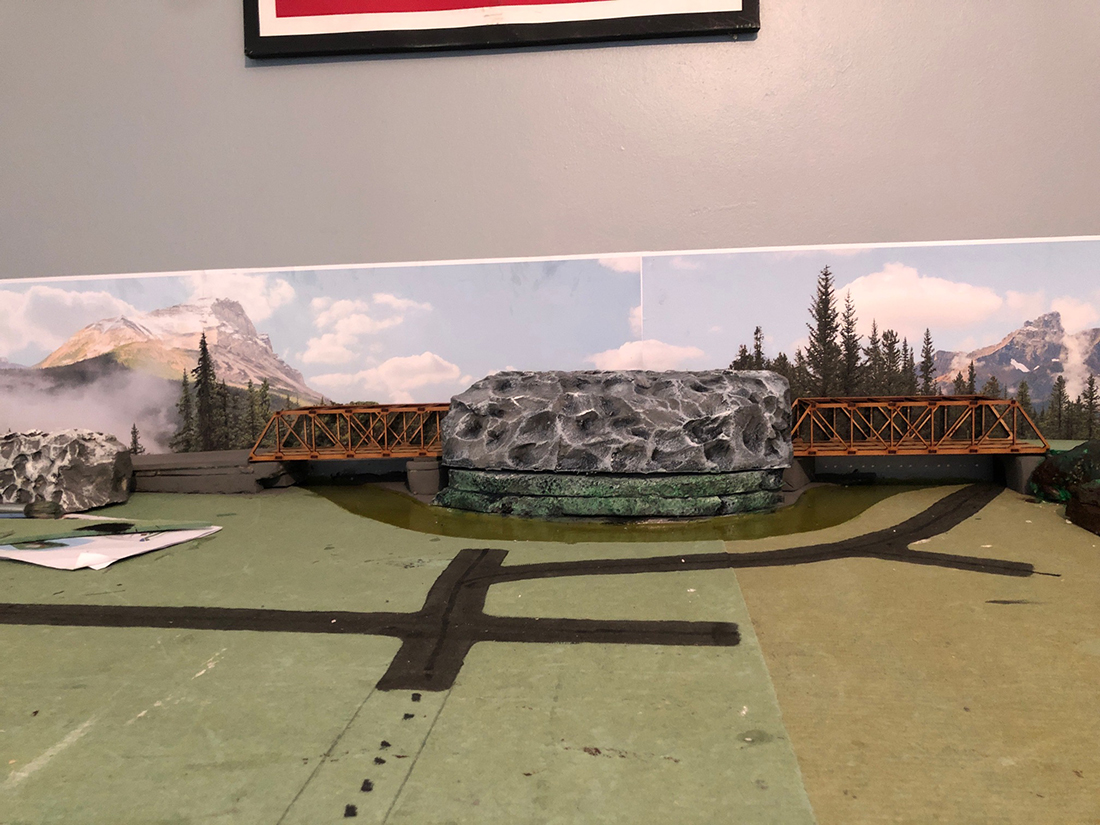
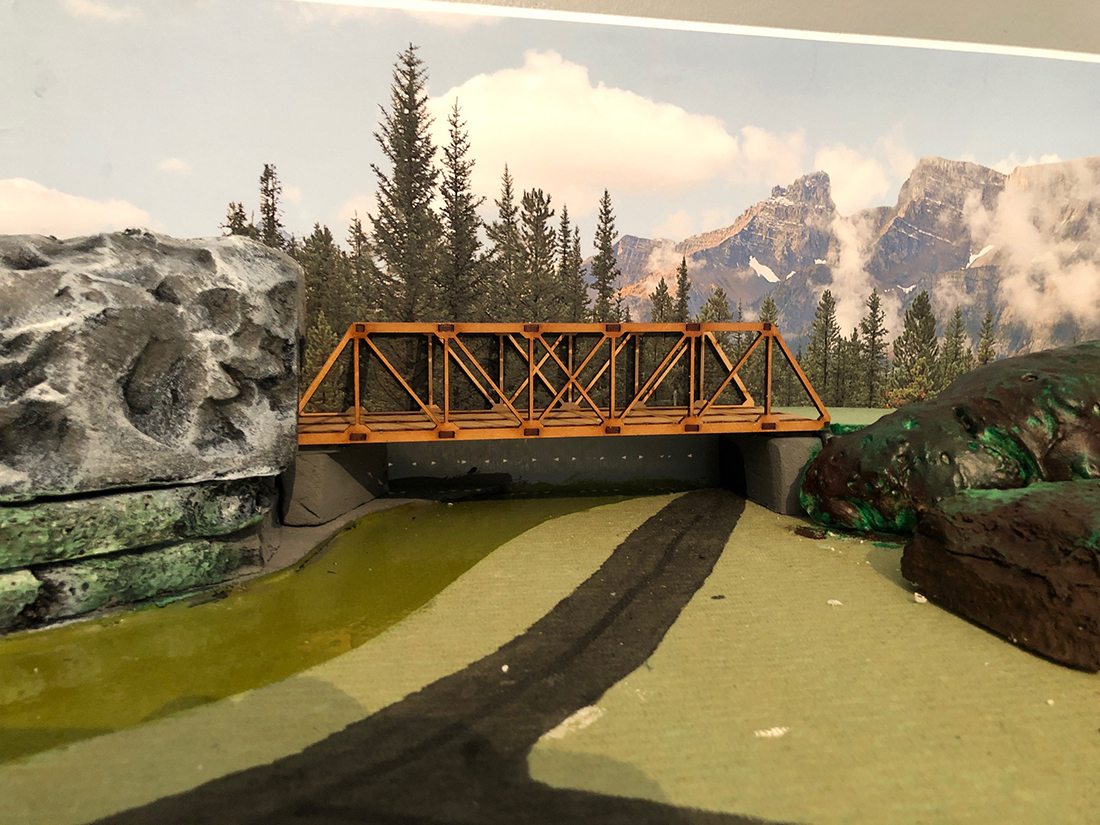
“It was nice to see my kit bashing of trestles. Here are two more.
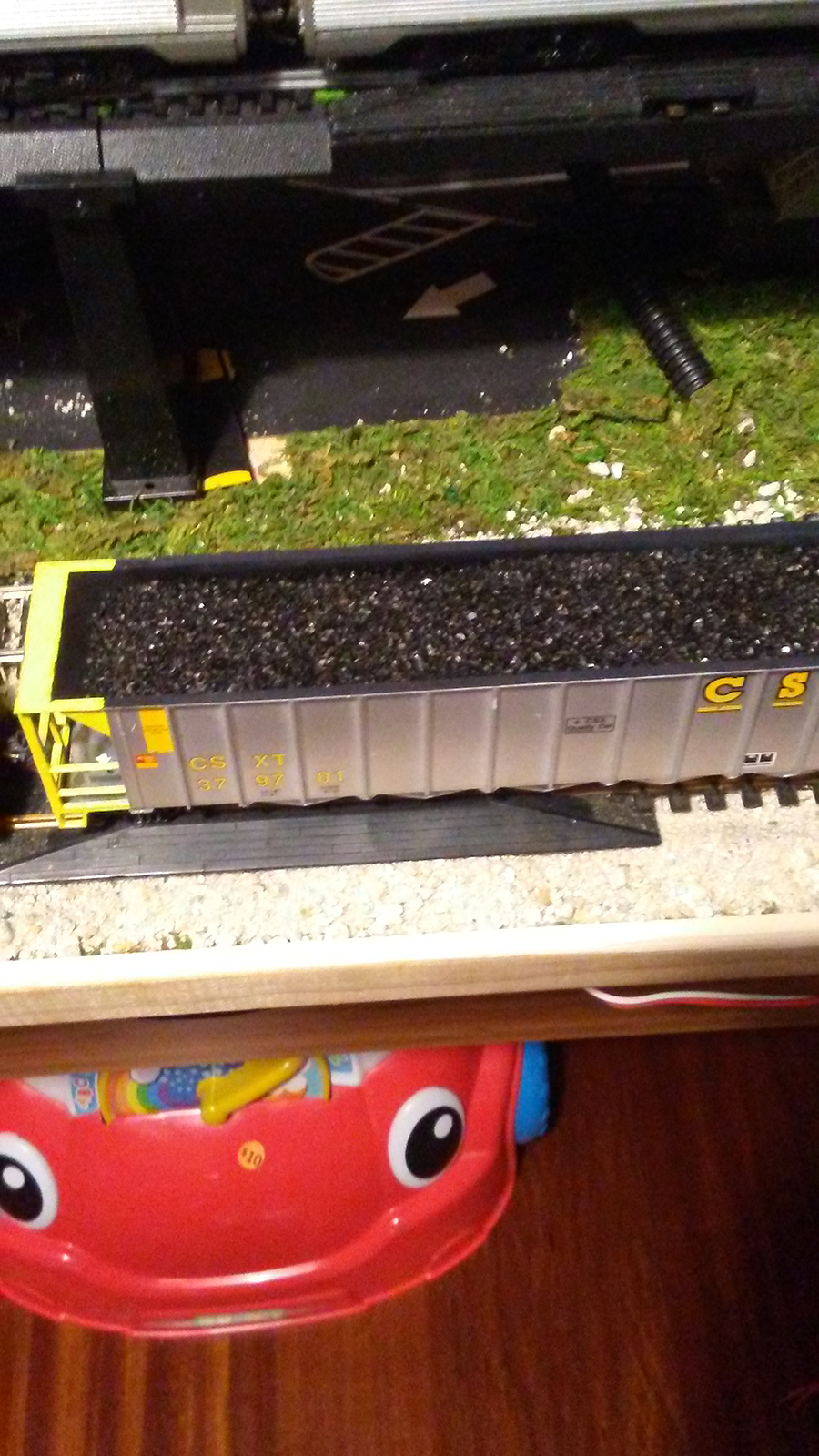
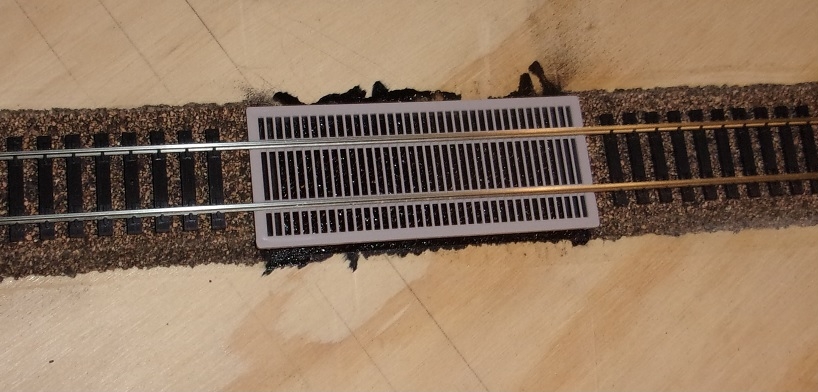
I made a coal dump. That is real coal off Ebay.
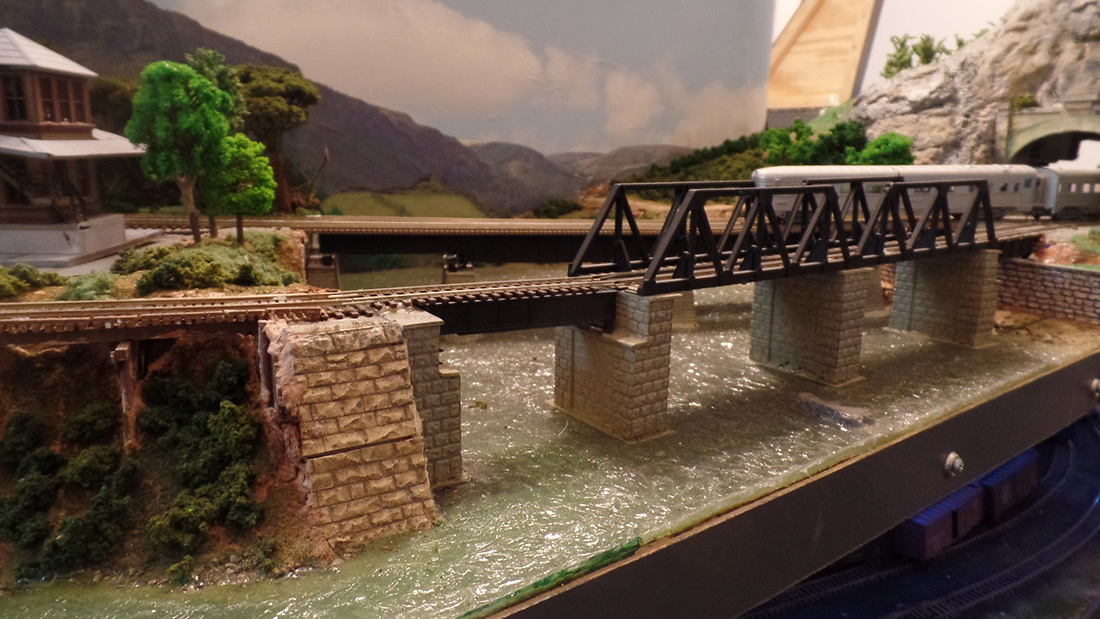
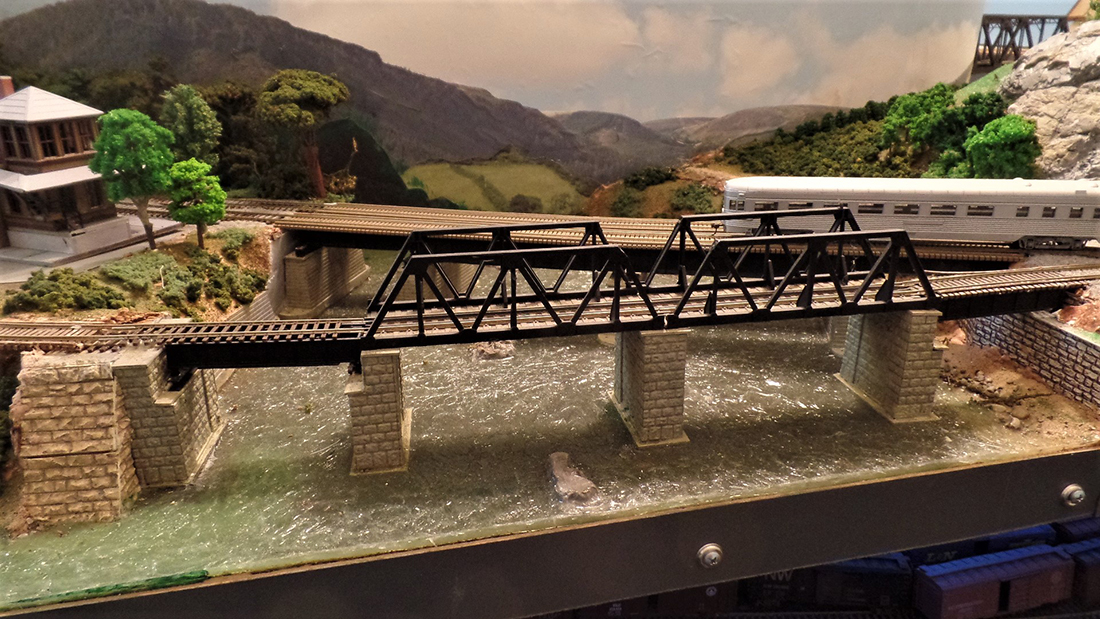
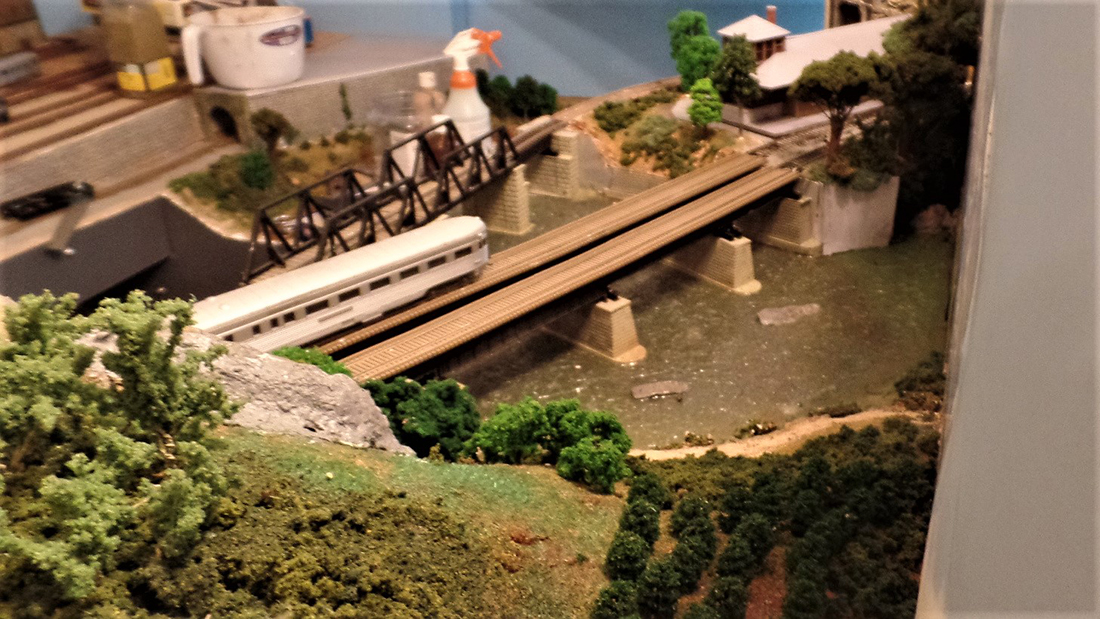
The second is short curved trestle at Harpers Ferry with the Susquehanna River. It meets the Potomac River here.
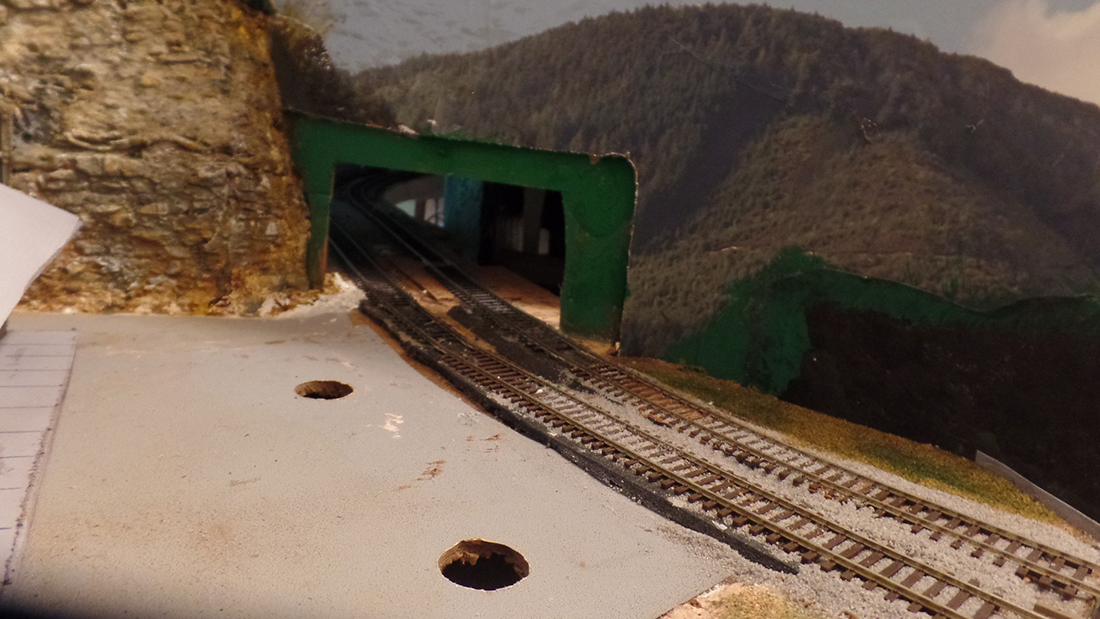
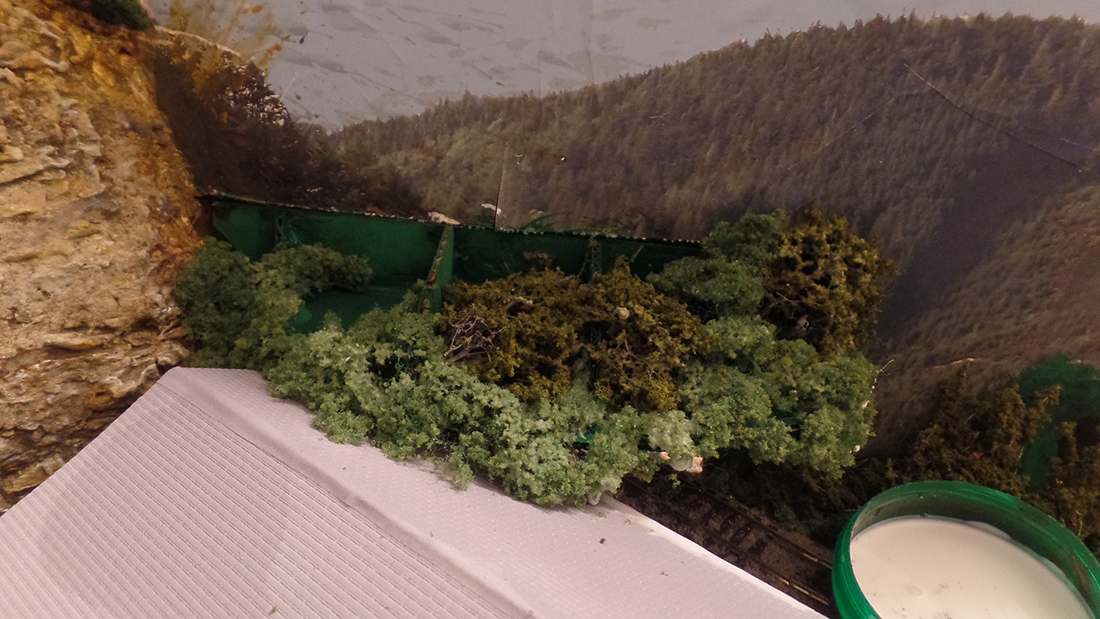
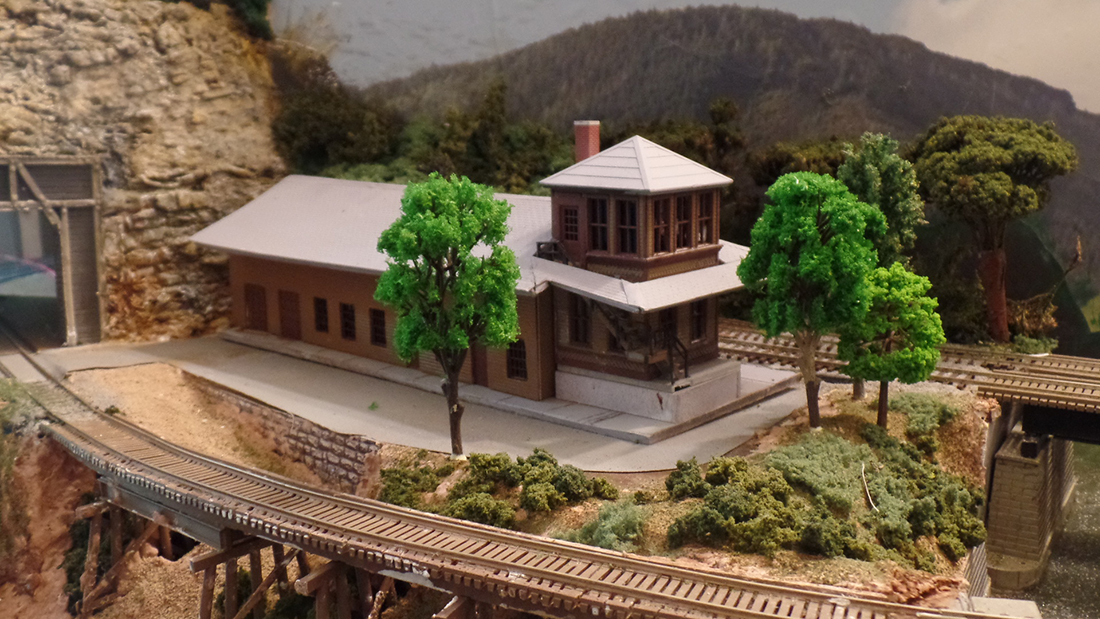
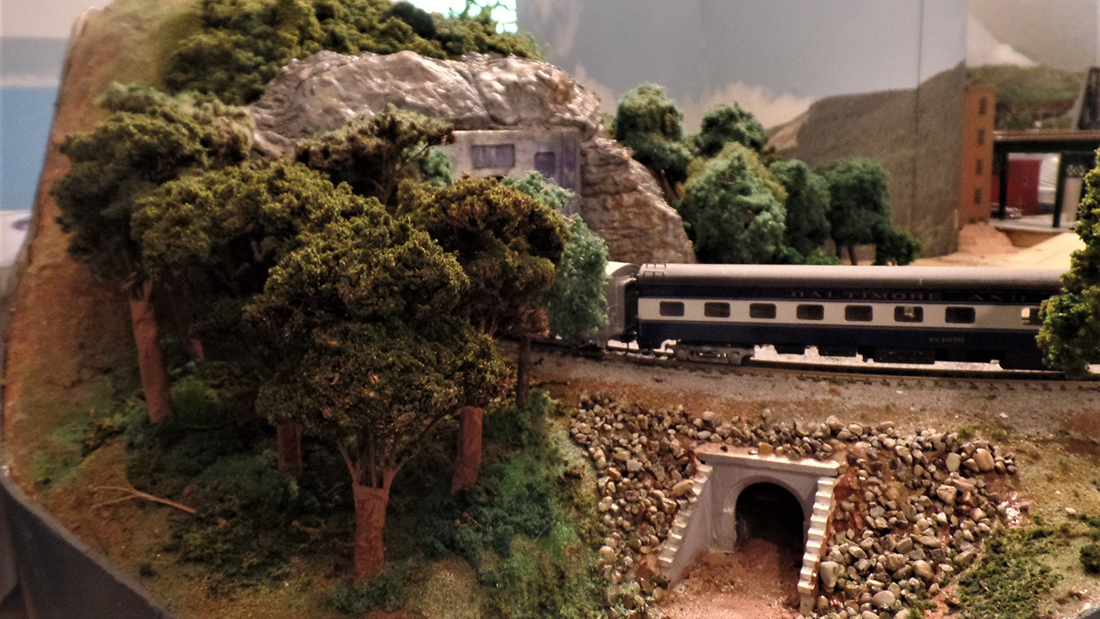
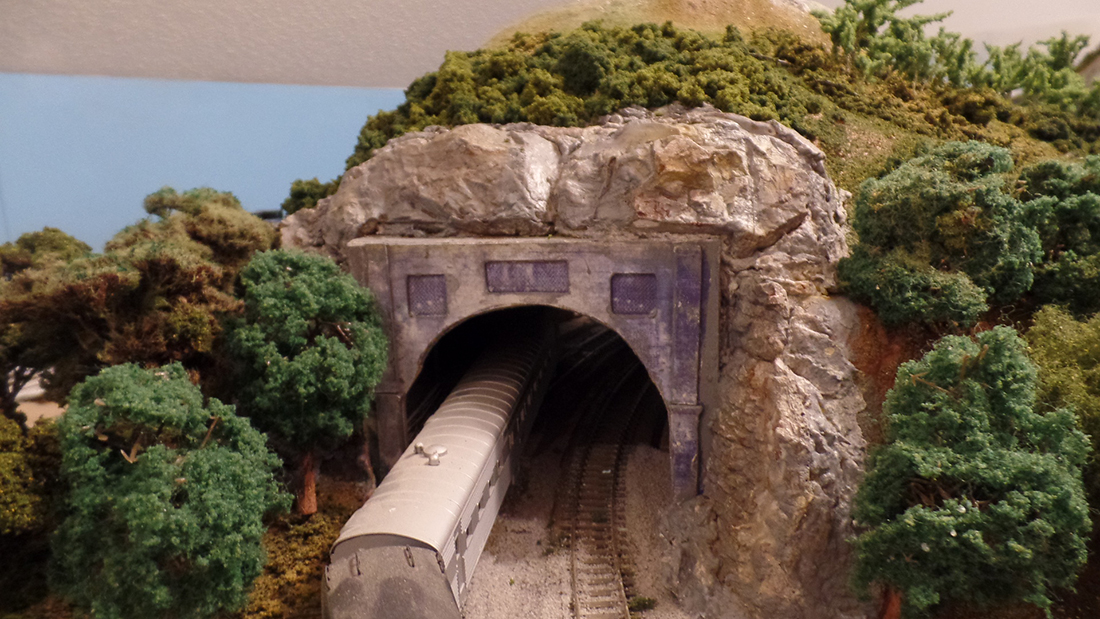
I had a problem with my scenery as shown by the open hole. The Harpers Ferry Station did not cover it. I added a canopy and trees. This is where the B&O crossed the Potomac River
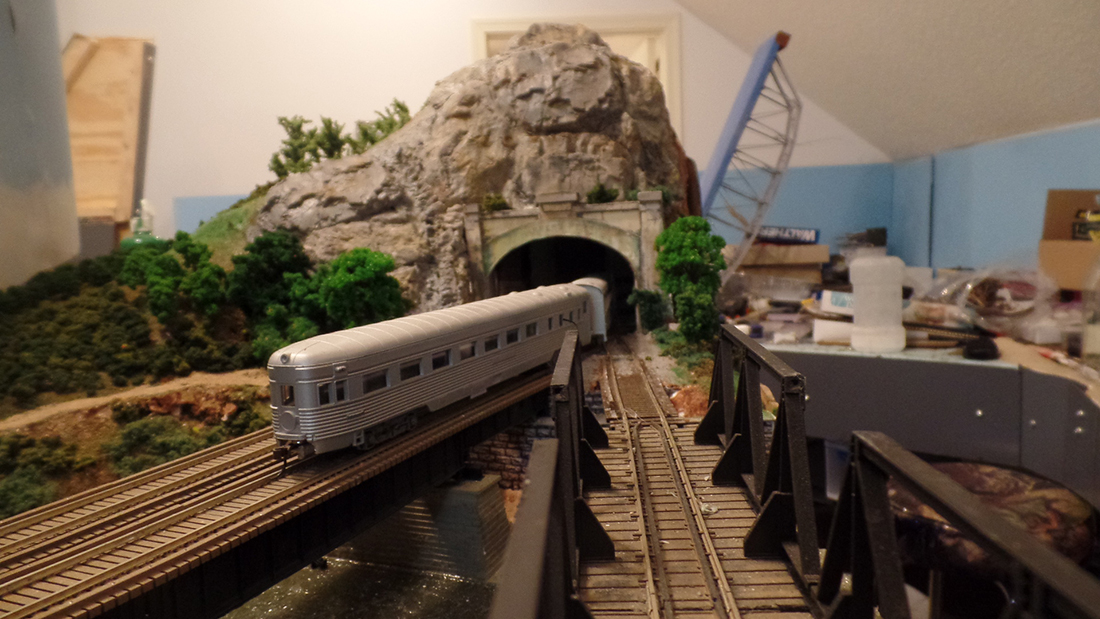
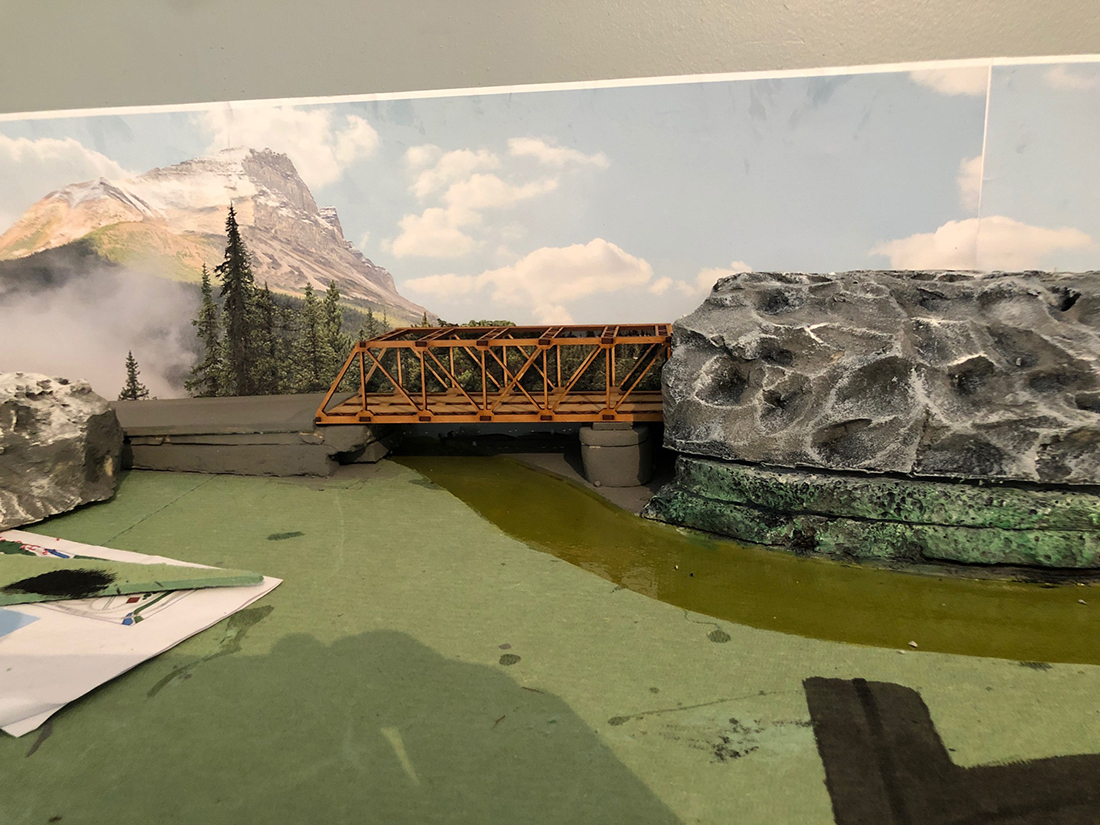
The truss bridges are cut down Atlas kits. The supports for twin track girder bridge are Atlas bridge piers #81.
They are cut horizontally at the slots and then vertically. They are glued and .080 styrene added. Then weathered.
Don”
(Unfortunately this is the only pic of the HO scale coal dump! But the rest are just as impressive.)
I love that Don used real coak in his HO scale coal dump!
Over the years lots of ‘coal’ tips have come in – here are a few more that I could find with a quick look:
Robert’s uses black cinder purchased from a fabric store:
Now he’s helping with something I get mailed a lot on – lihts and LEDs:
“Alastair,
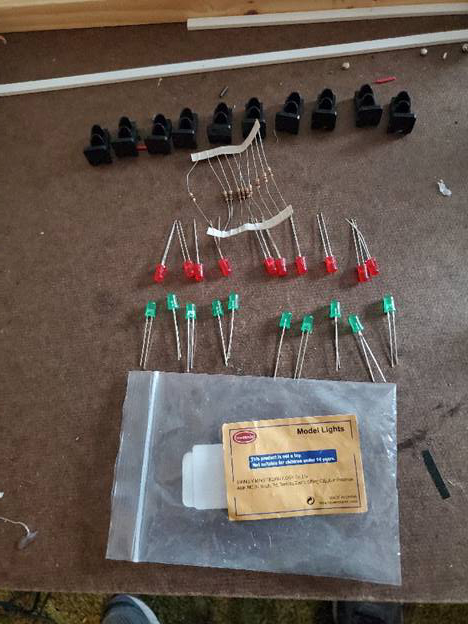
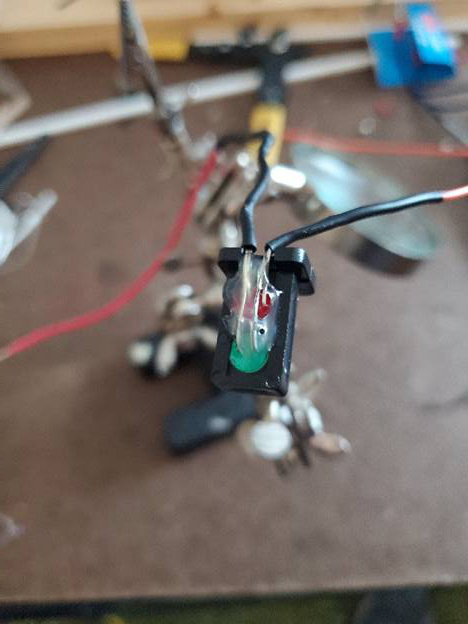
I picked up some dwarf signals at Aliexpress. I got 1o I a pack for $11.04 USD. You get 10 dwarf signals, 10 red LEDs, 10 Green LEDs, and 10 resistors.
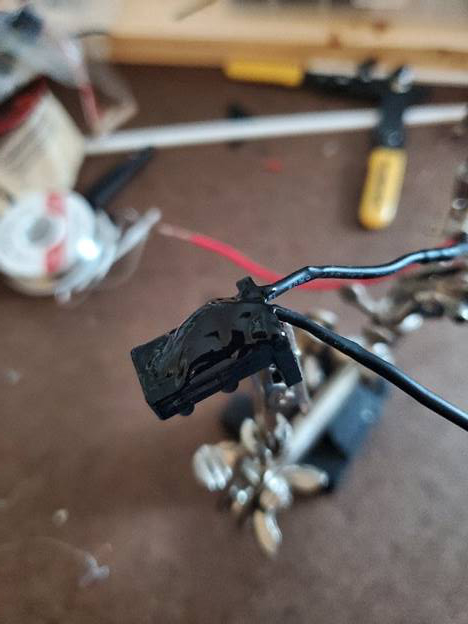
Even though you must assemble them, to me they are a good buy. The only problem is that the dwarf signals have no backs. So once I position the LEDs, I use hot glue on the back to secure them.
To finish them I apply liquid tape to the back.
They look good when installed. If any light shines through the backs, a touch of liquid tape solves the problem.
Thanks for hosting this great site.
Bob in Virginia”
A huge thanks to Don for his HO scale coal dump and to Bob too.
Please do keep ’em coming, folks, it’s all getting a bit thin on the ground this end.
Andrew has been in touch with his Union Pacific N scale:
“Hi all
Well it broke my heart but I had to take down my 00 gauge layout as my grandson will require a bed space in the spare room so needs must as they say.
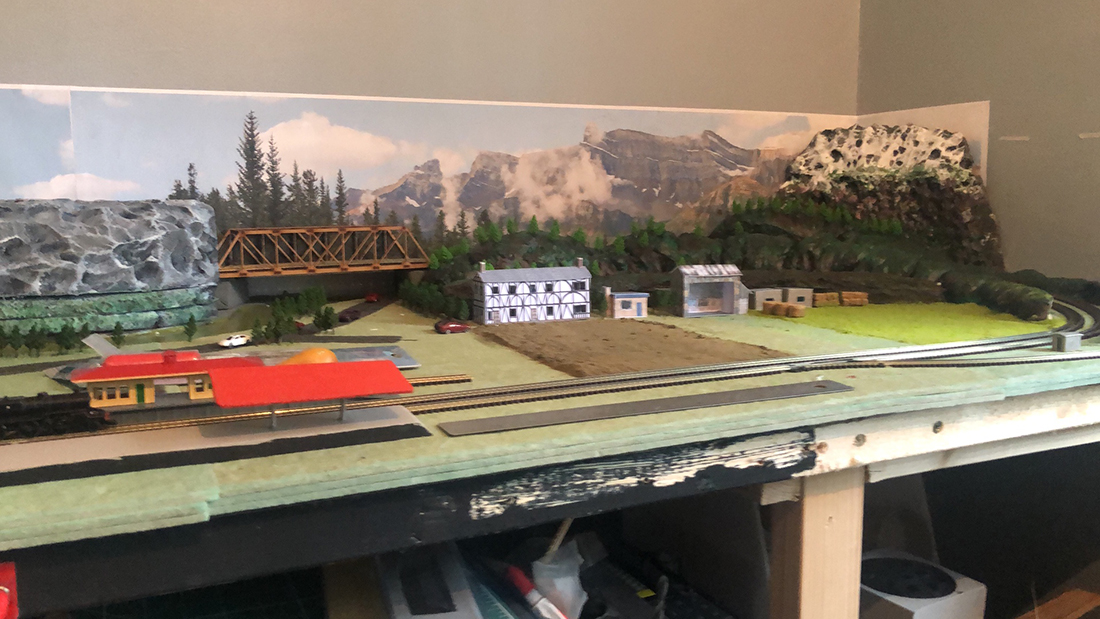
I convinced the better half that I could have the bottom bit of the room for an N gauge layout, after a wealth of info trawling on the net for ideas, I found something I liked.
It’s called Union Pacific Silver Creek Diversion, but the idea was there so I am taking some of it but using my ideas as well and I’m calling it the Moultainus Pass after my surname Moult.
I’m not putting a turntable in, that will be farm land and it will be an up and down line as well.
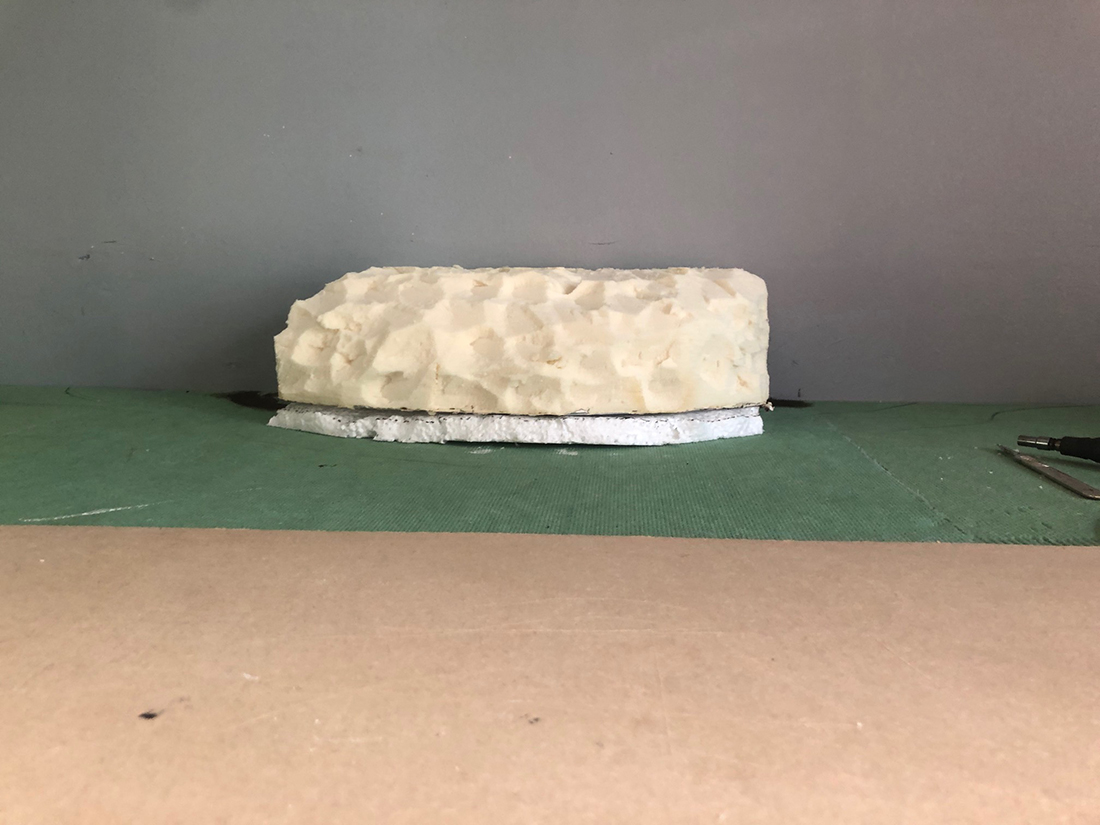
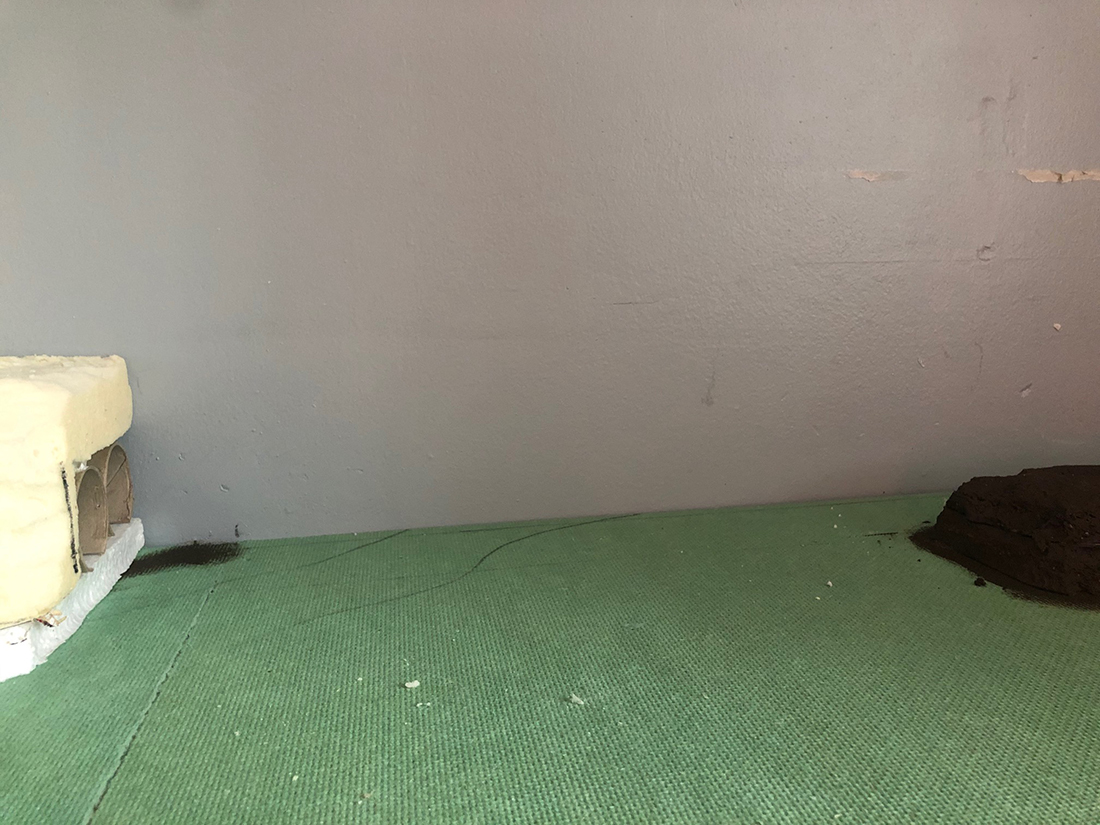
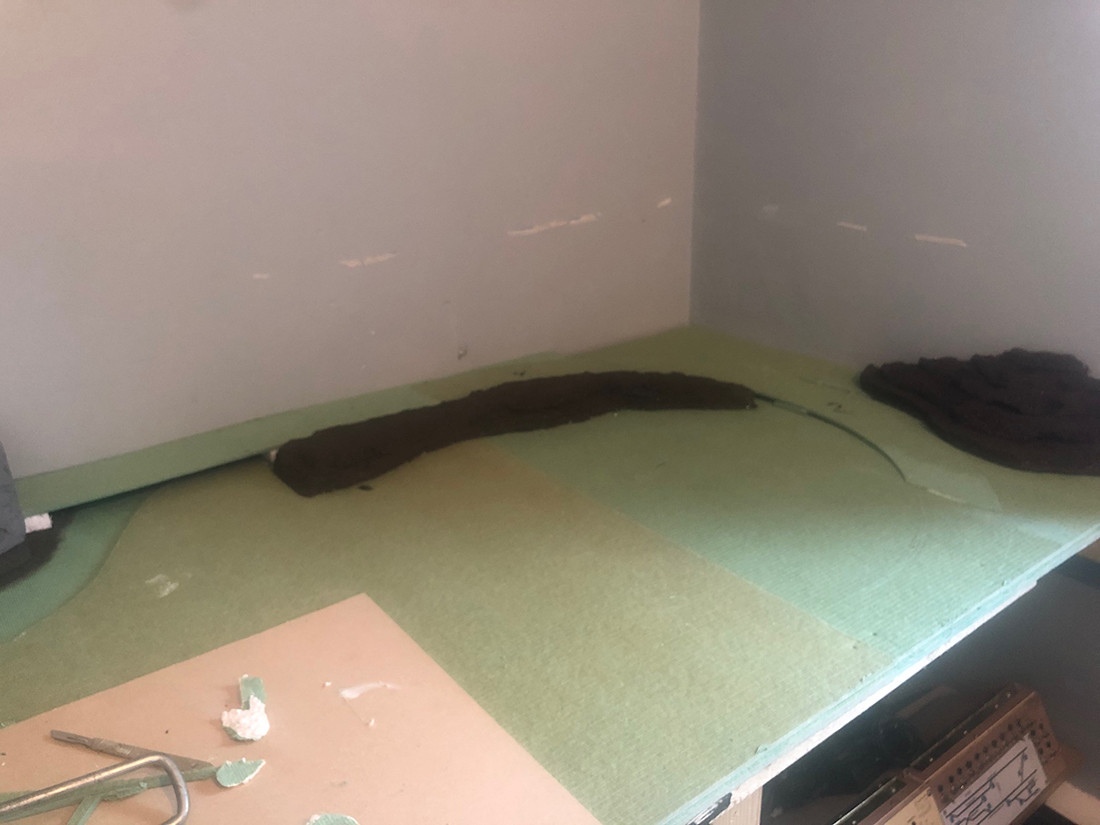
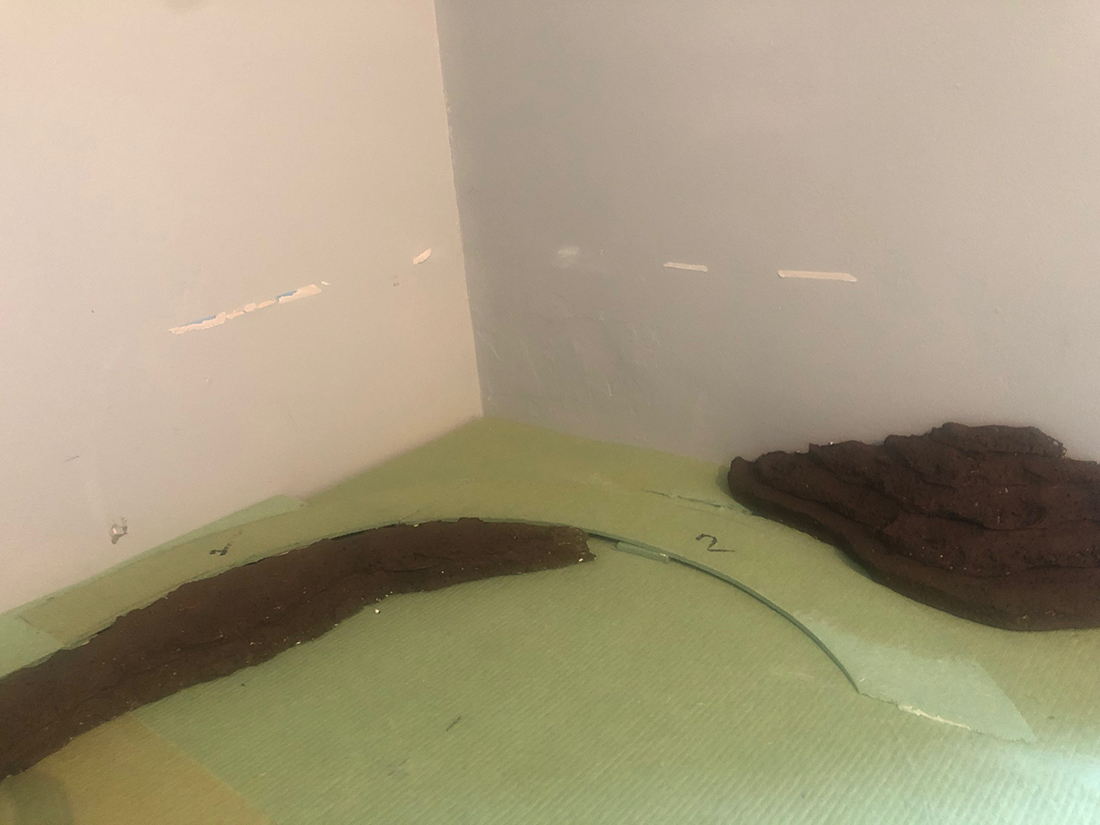
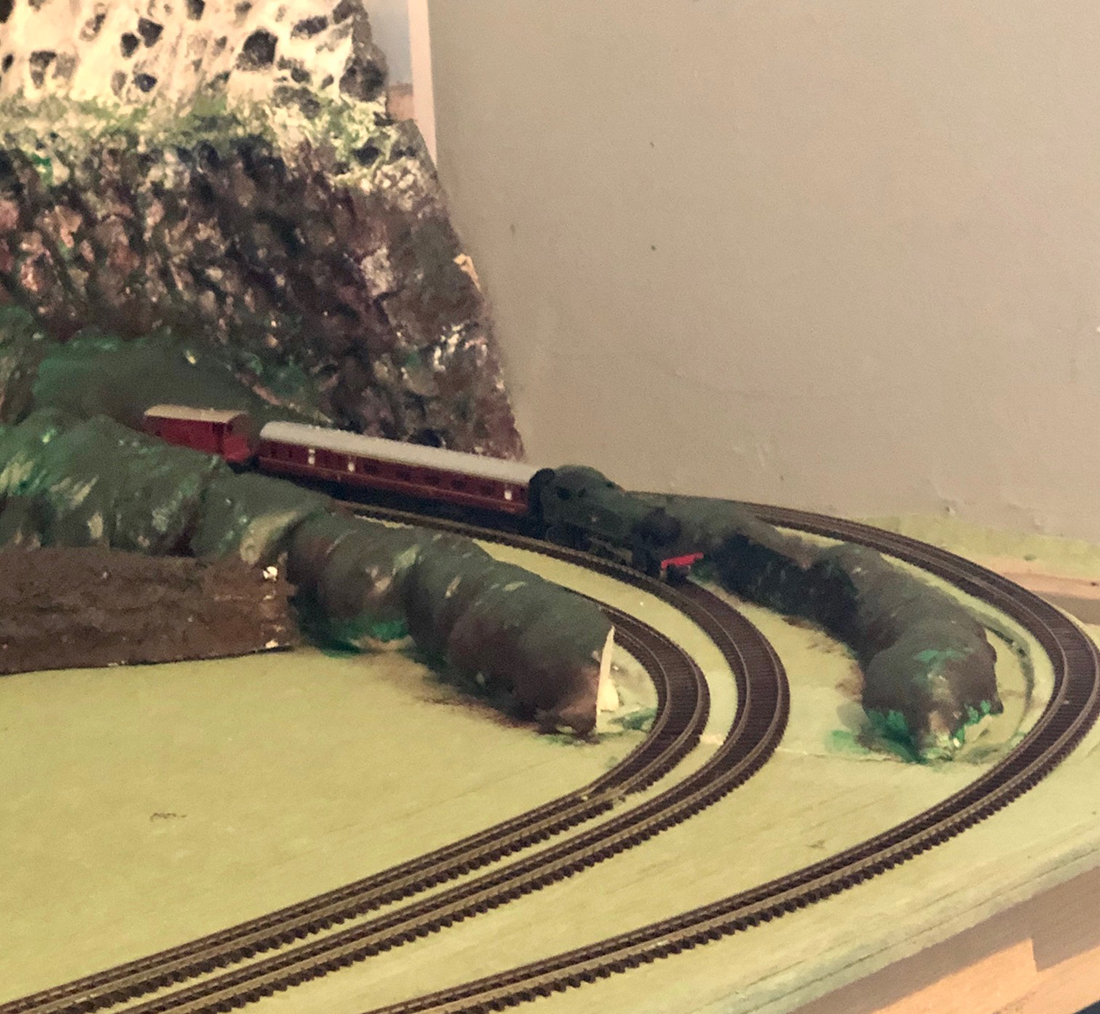
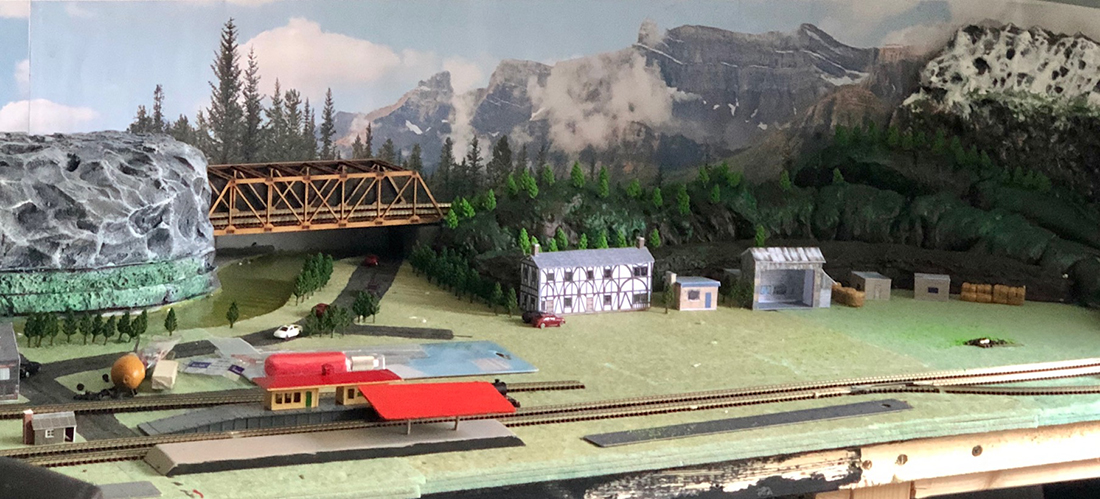
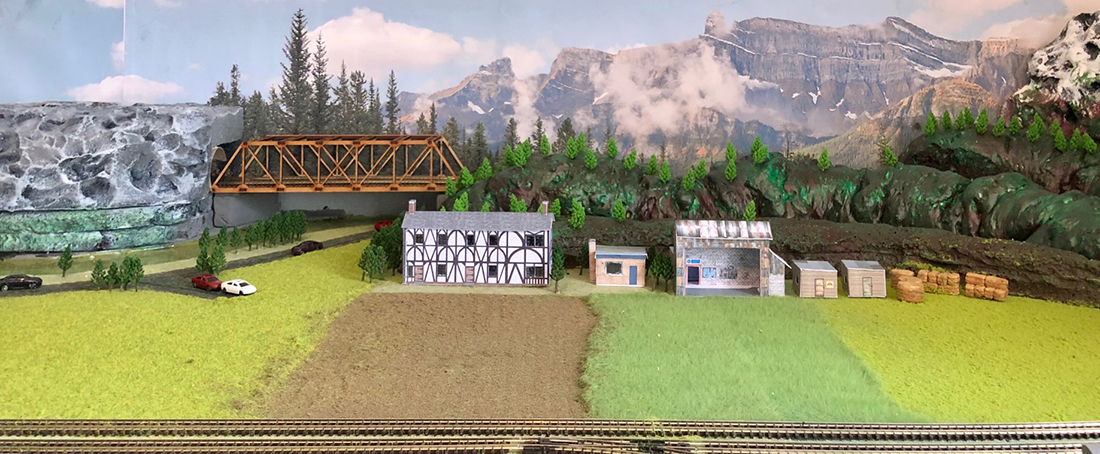
So this is where I started and am currently, I am quite happy at how the expanding foam embankments went. I have now started the farm scenery with a mixture of scatter grass and static grass and earth.
Here are my pics from start to current state.
Any comments please feel free to pass them across.
Thank you
Andrew”
Do you know, I think there’s only one thing I enjoy more than an update – and that’s seeing a layout born from the very first step. So a big thanks to Andrew.
Now on to something I’ve been mulling over for a while. It’s Fred who brought it up again. Have a read:
“Al –
In the last week or two, since Jon Rousch appeared on your site, I tracked him down (with difficulty) and have been corresponding by email. We have discovered that in addition to N Scale railroad modeling, we were once avid RC aircraft modelers, we both own and ride heavy motorcycles, and we are both pilots. John and I have traded a lot of notes, potentially opening up some avenues of discussion that will be useful for two guys who have a lot in common.
I remember a few years back you expressed your concern to me about privacy, names, email addresses and the like, but I do think that compared to some of the absolutely insane revelations that are being made and discovered on Facebook, Alastair Lee’s group of mostly old men with a passion for models is very tame by comparison and could actually serve your readership better if opened up a bit.
While you’ve suggested that some of us are “men of few words,” which in my case is probably true, I think it’s because it takes a lot of time to explain what we submit to you every six months or so. If, on the other hand, the conversation were kept specific and allowed to focus between interested parties, it might be more useful.
It would require some thinking to figure out how to benefit yourself and your site and not cut you out of the loop as host, but there are plenty of websites that seem to do this, and I think you actually might increase the website’s traffic quite a lot, and attract other modelers from around the world.
Anyway, just a thought.
Fred”
Well, any thoughts or ideas on this would be appreciated. Let’s see what we come up with. Even just yesterday Jim offered his help to those eager to learn.
“Hi Alistair I started making a fun video yesterday as with all the rain we have been getting it was something to keep me indoors, then later in the day the post delivered the new block I was waiting for to work those signals automatically.
Bit of a long story, it was the same block as before, but after connecting up (and sending e mail to supplier not correct one ) it worked, as shown I had diagrams of 2 different ones but with same part number a bit confusing …so cut the story short , the first one must have been faulty, so double video on here, the result for the signals and a fun video…
A big thanks to Andrew for sharing his Union Pacific N scale, and to Dave. And please do leave a comment below if you agree with Fred. Let’s see what we can sort out.
Apologies to Jim – I missed his HO scale lumber layout in my inbox.
He sent me these wonderful pics and narrative weeks and weeks ago.
I missed them.
They’ve just been sat in my inbox gathering dust.
Fortunately for all of us, he gave me a very polite prompt and I was delighted when I found them.
How could I have missed this stunning layout?
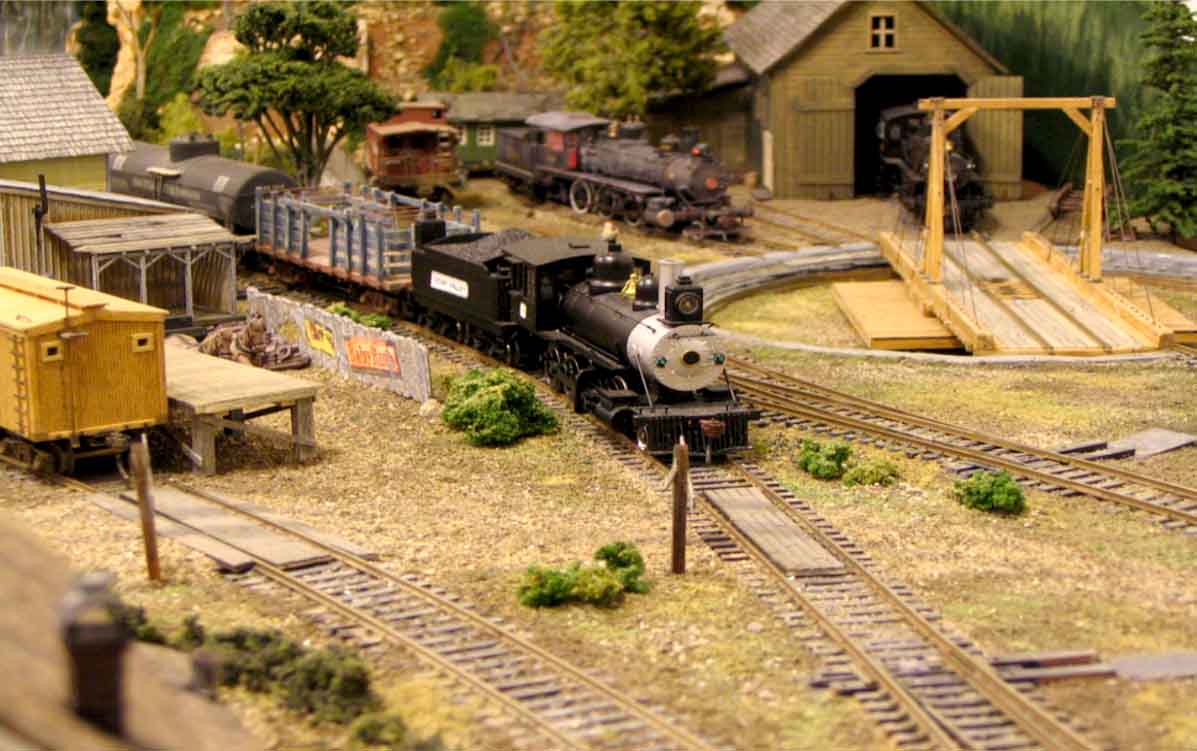
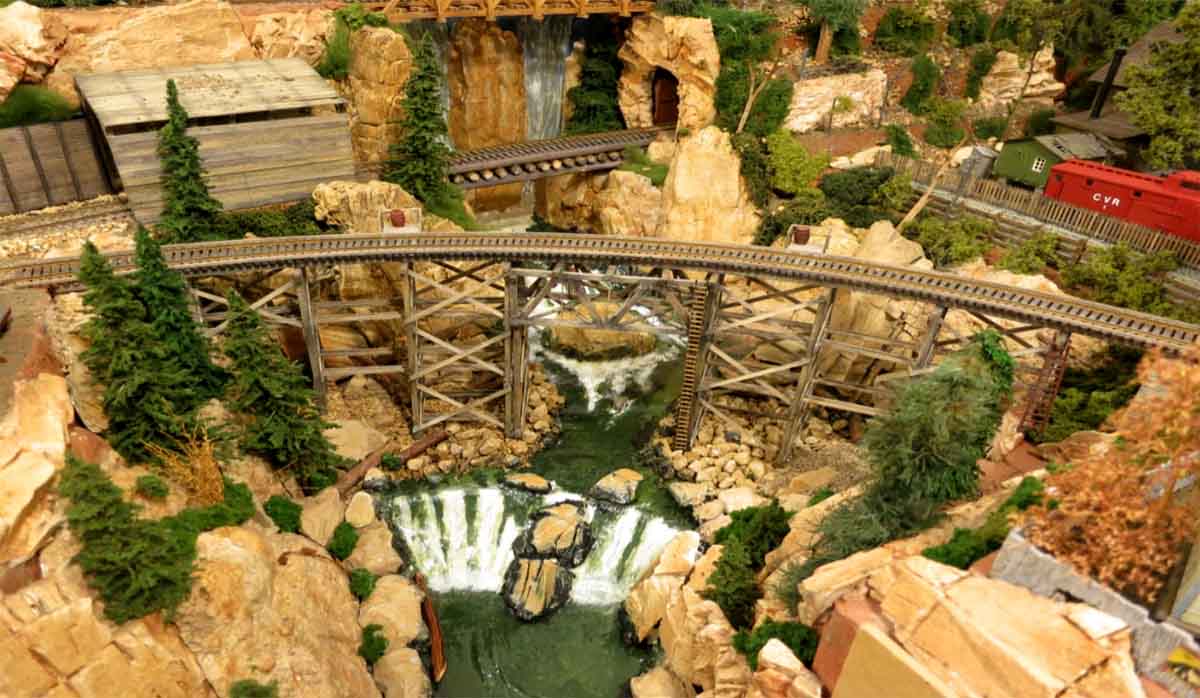
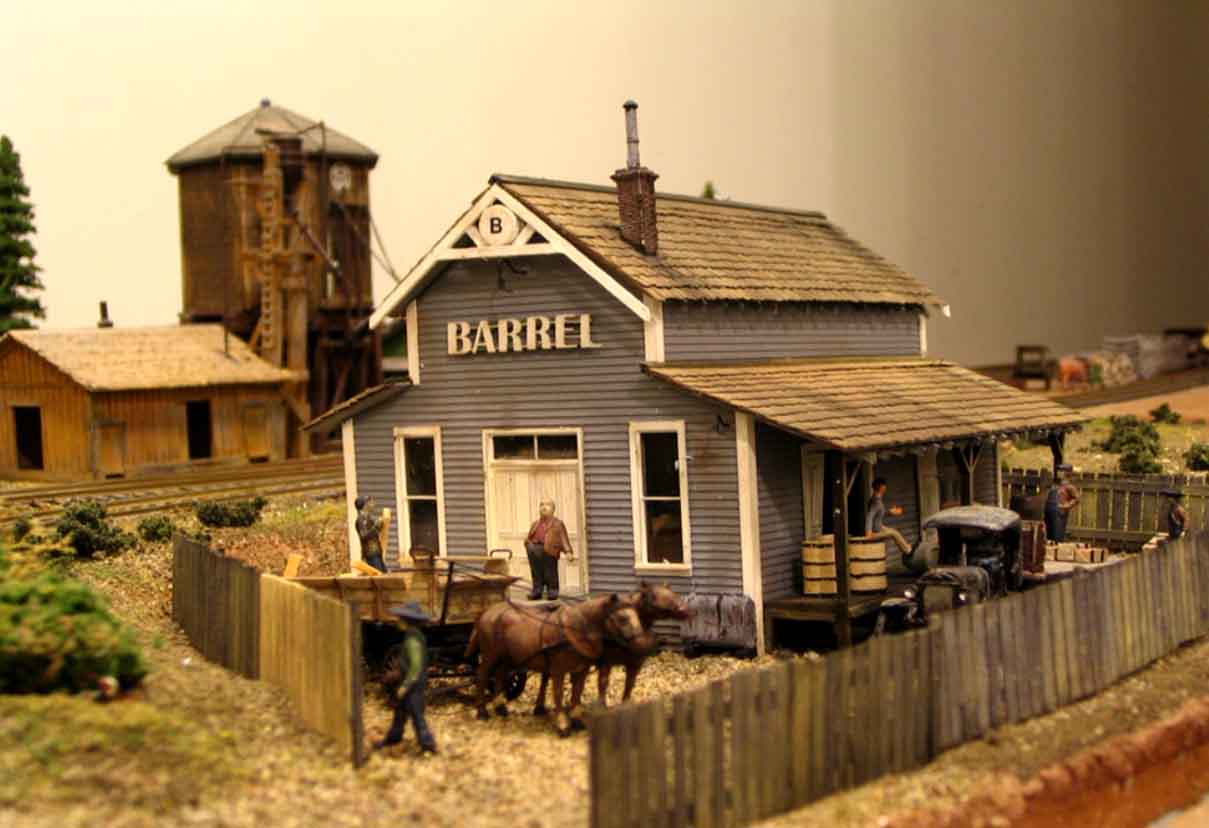
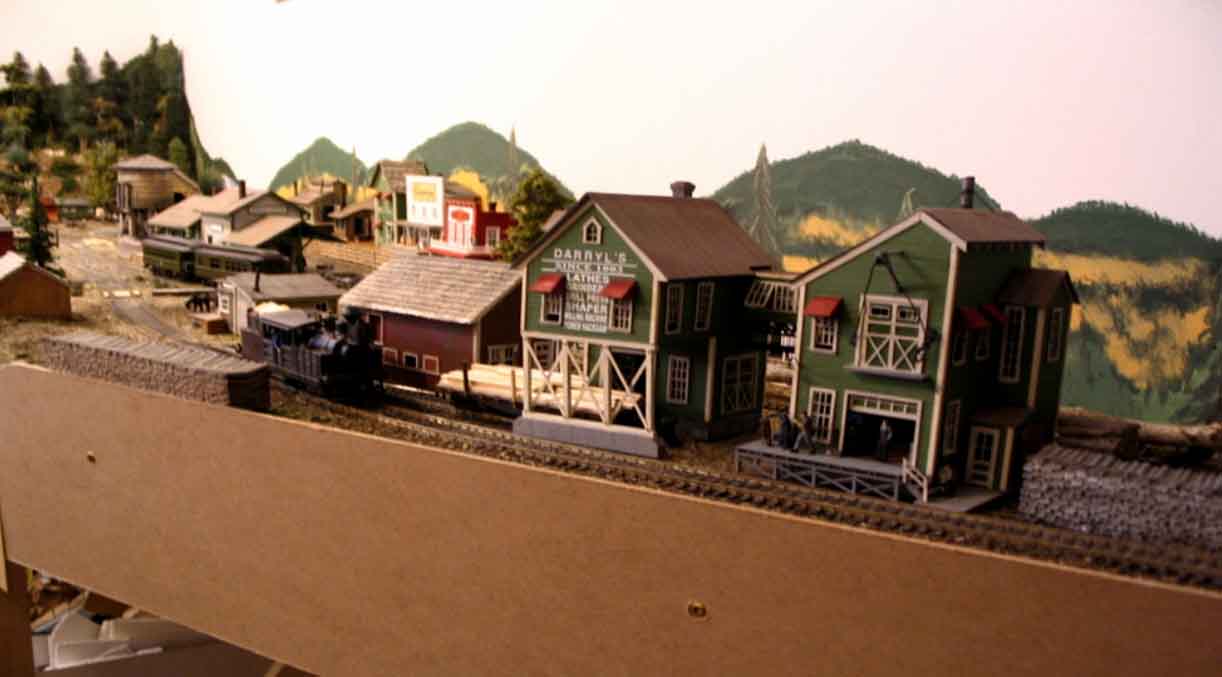
“Cedar Valley HO scale Lumber Rail Road
During the past year I have read your articles and found them very informative and helpful, and, sometimes quite humorous.
I should share with you and your readers my layout. I have a HO layout that fits into a 12ft.by 9ft. room.
It is a lumber and mining theme set in 1900’s.
It is point to point with an extra two tier helix in the furnace room for continuous running for grandchildren and visitors.
The layout is a design of my own with the name coming from a place I worked at before retirement.
The bench work is 1”x3” wood frame built in sections with 2”x2” legs. The height of the layout is 40”.
Foam sheets are then glued on top. The flex track is glued right on top of the foam board. The track work goes up to height of 46” at the mine and lumber camp.
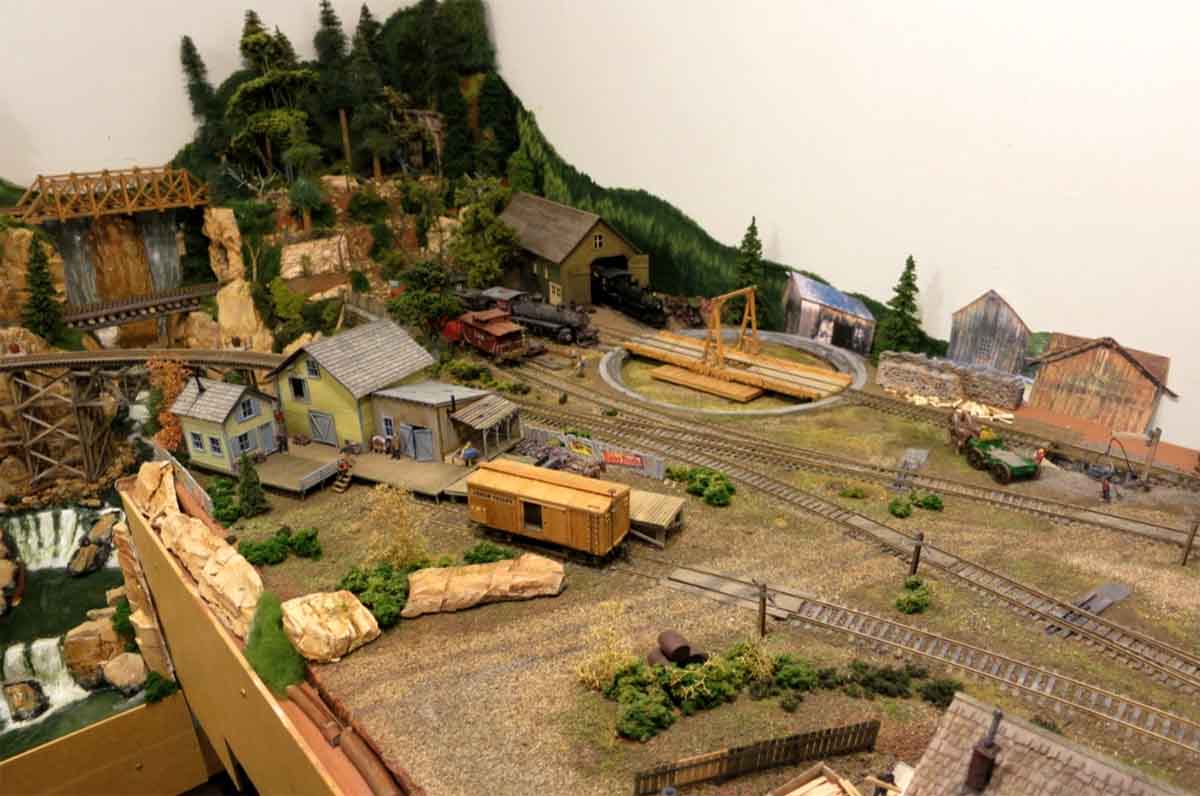
The town of Cedar Falls has a station and many wood related industries. It is also the engine facility with a shop and a turn table.
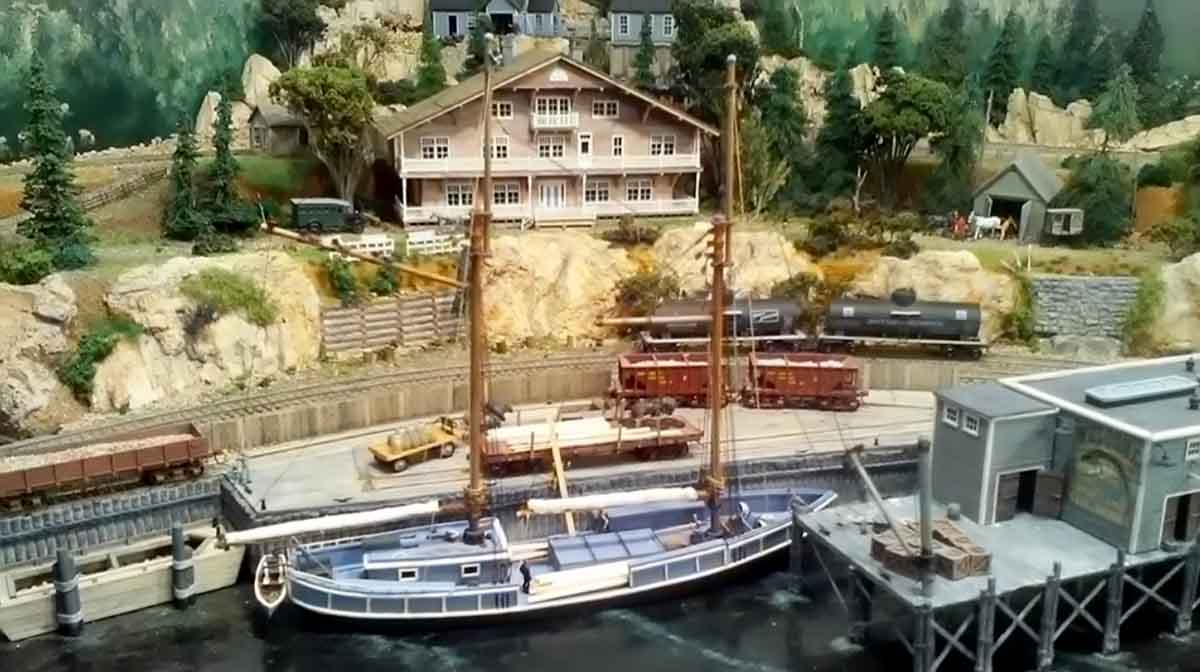
The port of Cedar Bay is a shipping center for lumber, goods and ore carriers. One other feature is the lodge at Cedar Point.
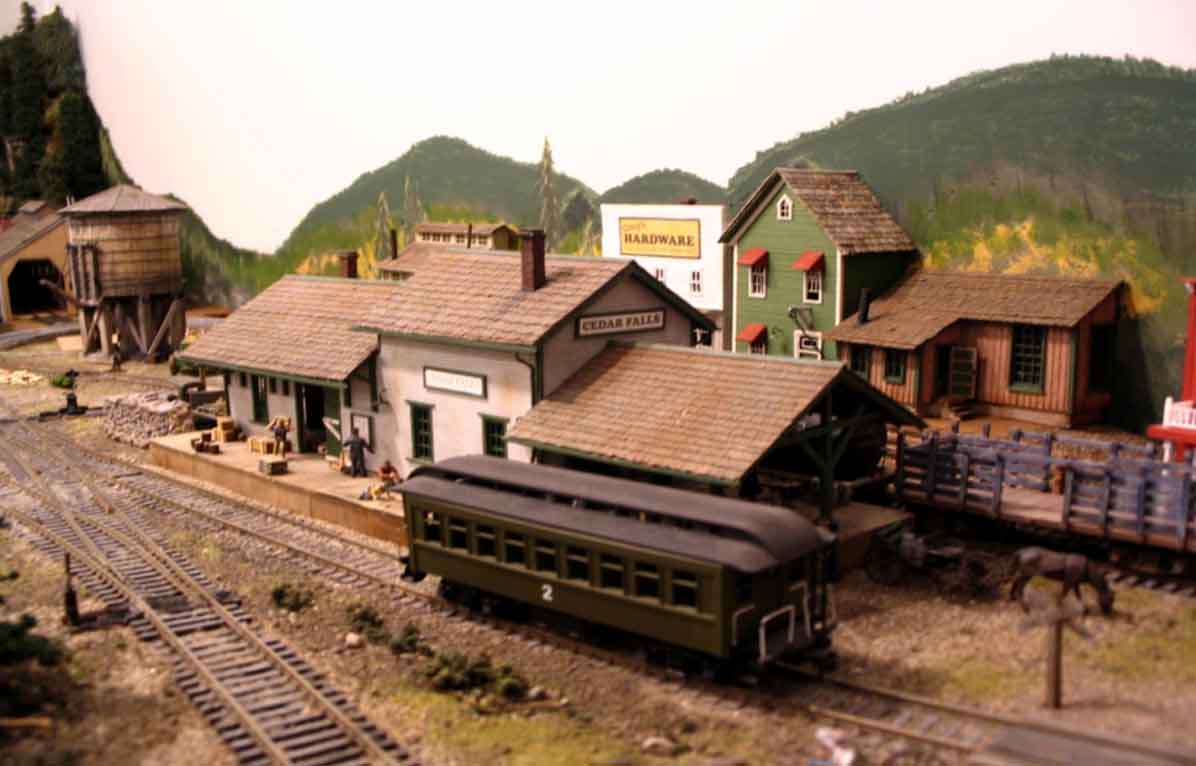
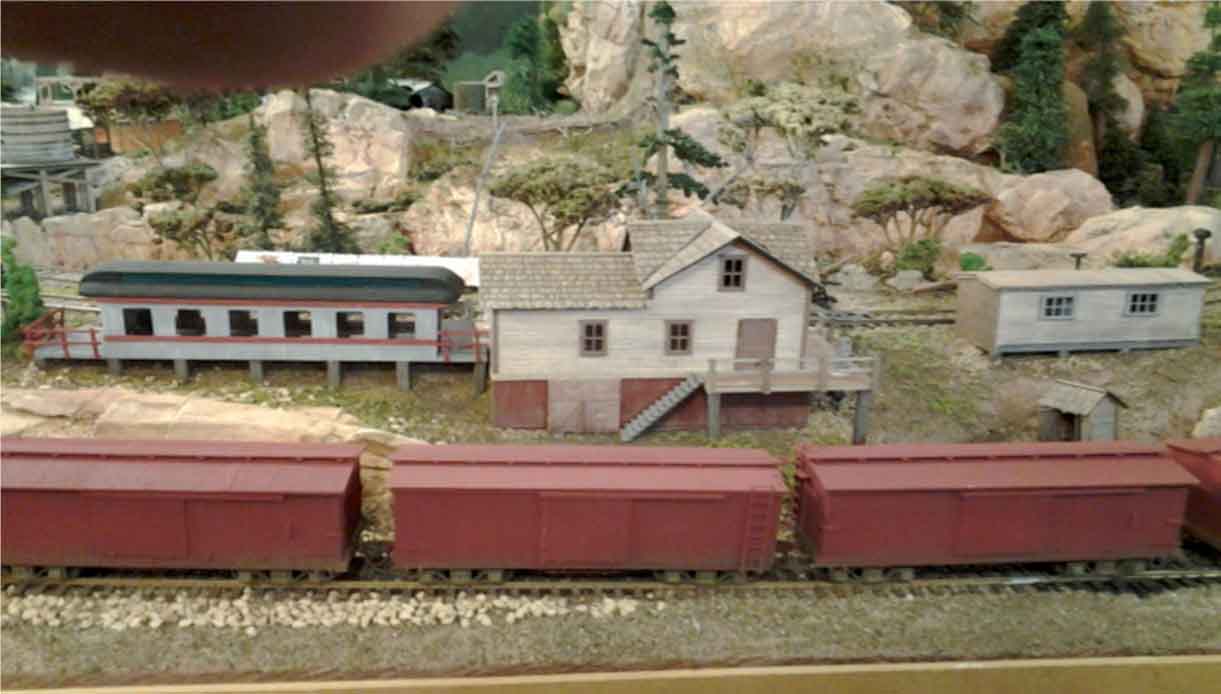
This station is at Cedar Lake. It is a stopover with a diner for the passengers. Everything you see in this picture is scratch built.
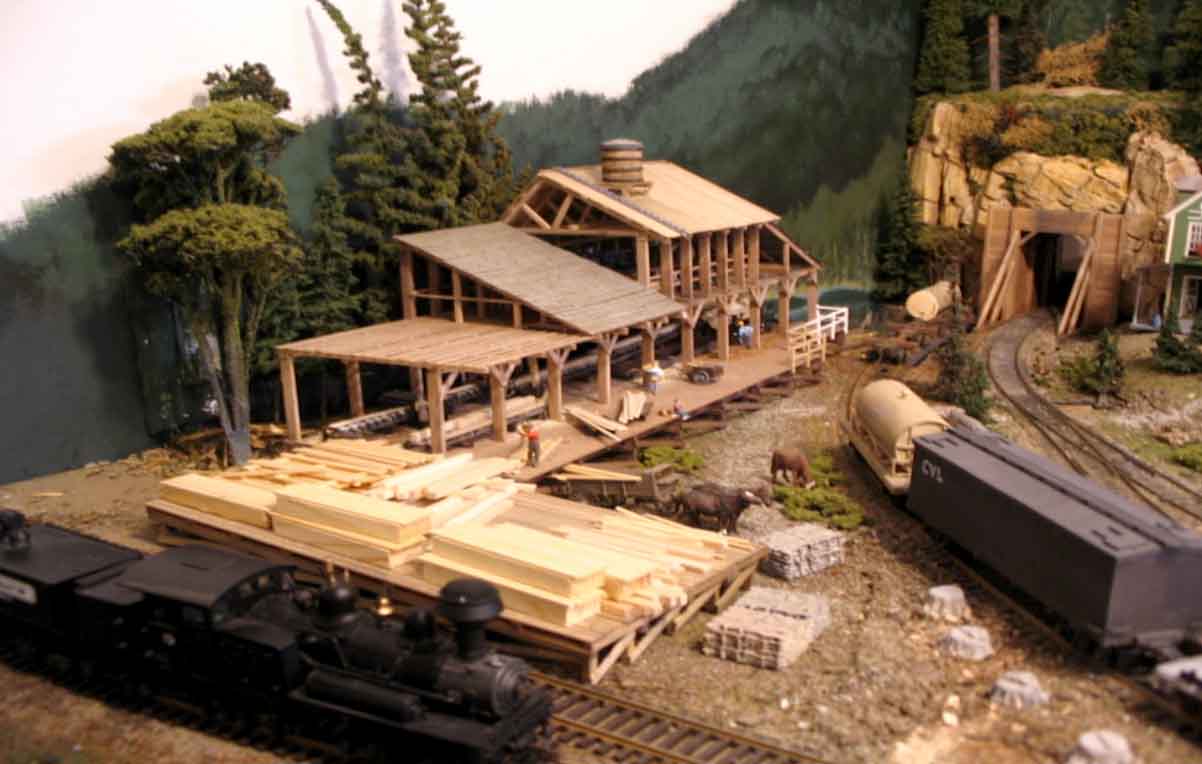
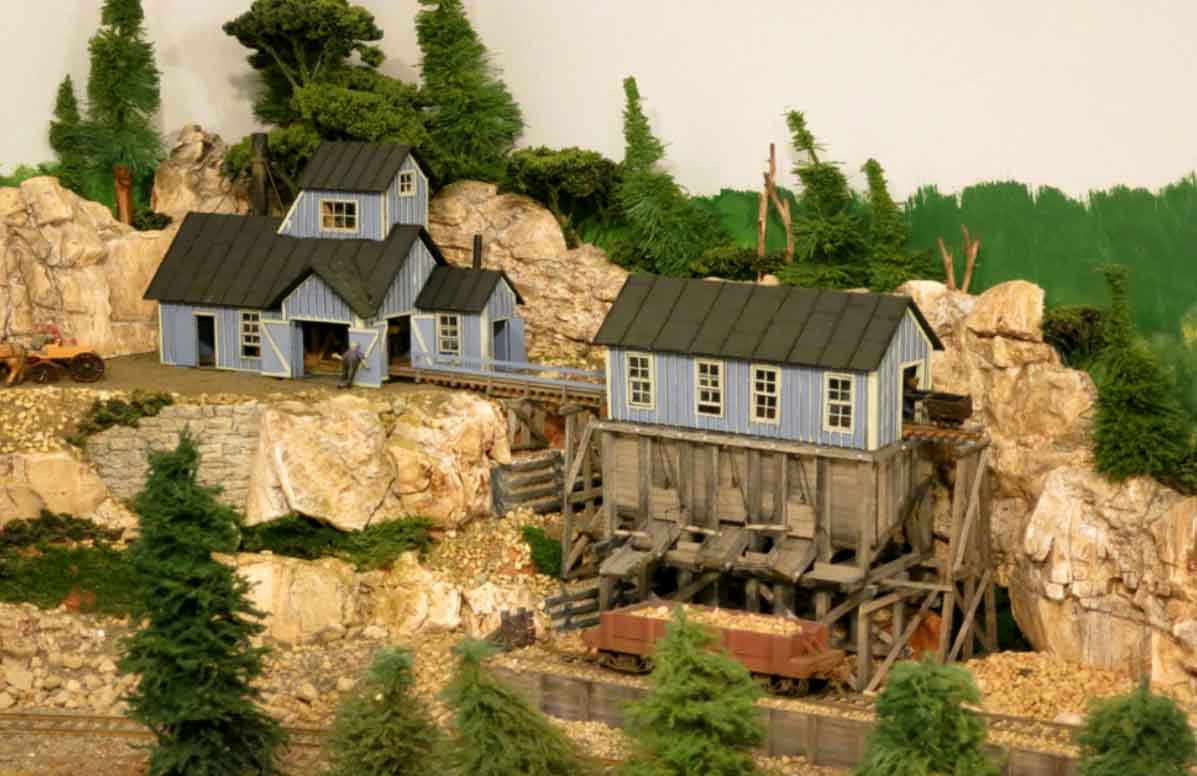
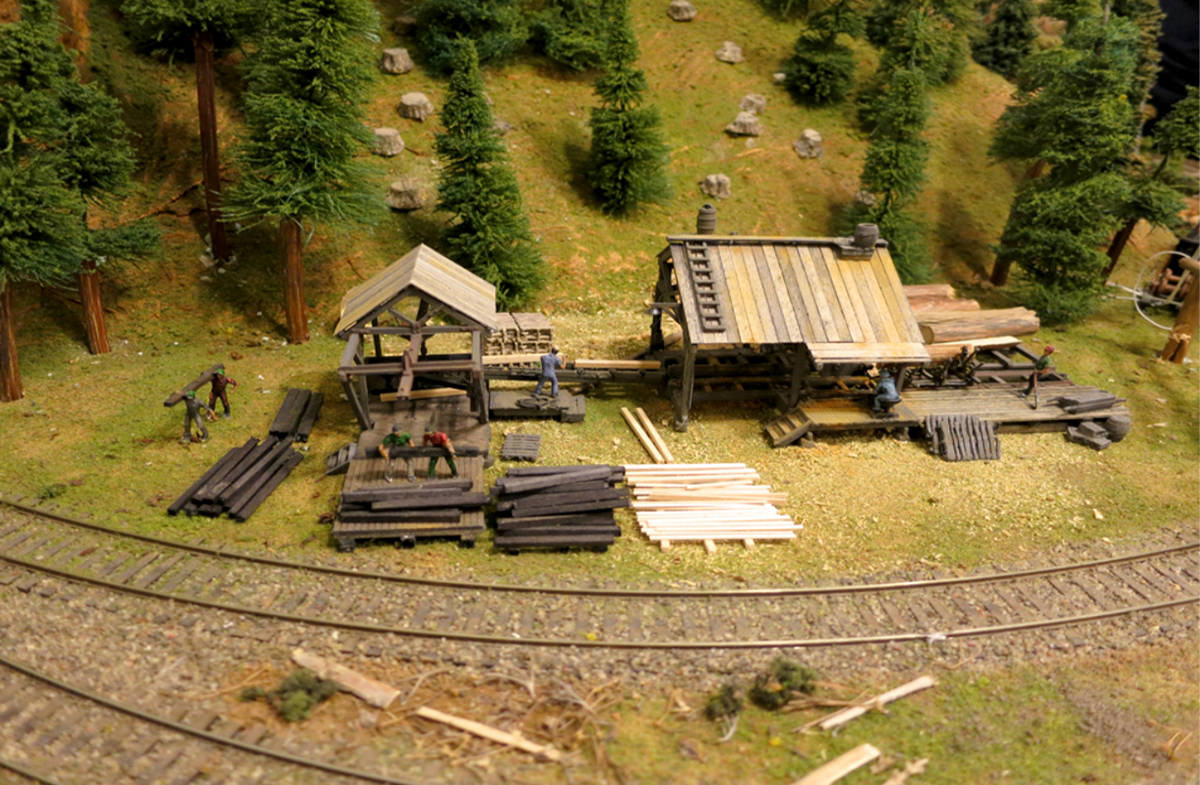
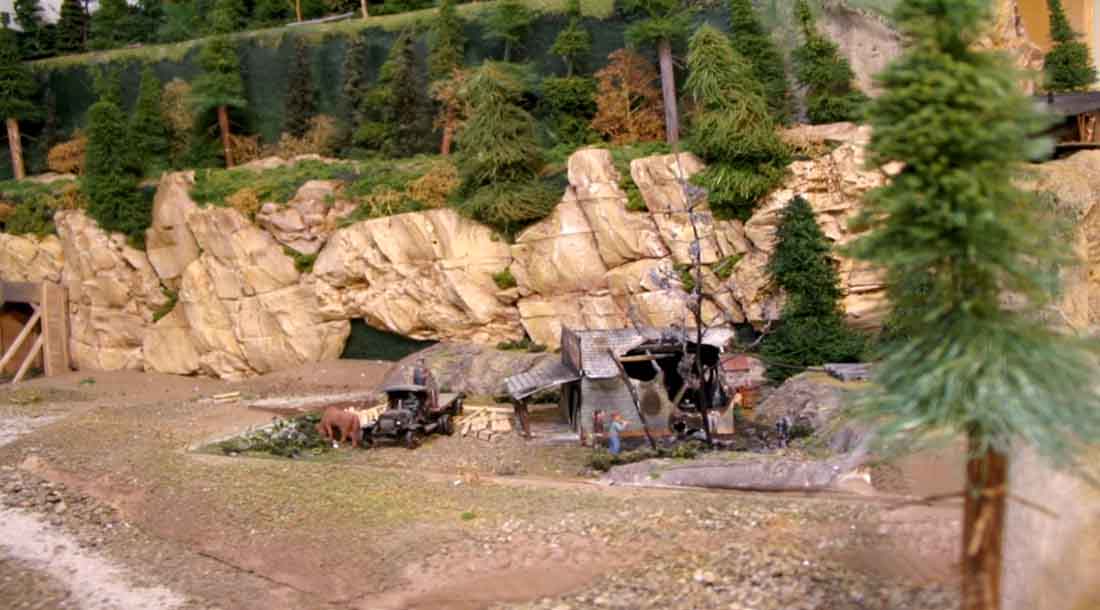
There are other points of interest, namely, a sawmill, a mine, and a number of other industries.
Lumber is brought down from the logging sites to the mill, then cut up and then shipped to other industries.
The houses and buildings are all made of wood as you would see in a lumber town. All the structures are either scratch built or wood kits modified to meet the space.
The station is a Fine Scale Miniatures kit modified to fit between the tracks.
The large sawmill and the lodge were scratch built from pictures I found on the internet.
The turntable and engine facility are all scratch built. Nearly all the rolling stock is scratch built.
The rocks are made from moulds and plaster. They are then coloured with acrylic colours and washes.
The water is poured liquid water. The trees are either wound rope on wire or natural plants dried, sprayed and sprinkled with flocking.
The track is code 80 Peco Flex track with Peco turnouts mainly #6’s.
The ballast is my own. I get it from a gravel pit then sift it a number of times until it is the size I want. ( Make sure your ballast has no iron particles in it.)
I then use the larger stones around the layout. This keeps everything the same colour. The same goes true for the ground that shows. It is first painted with latex paint the colour of the ground and then real dirt from the farm and ground foam are sprinkled on top while the paint is still wet.
The locomotives are mainly 2-6-0 Bachmann steam. There are two shays and a climax. The CVL RR also owns a 2-4-4-0 steamer.
The layout is controlled with Digitrax DCC and nearly all have sound.
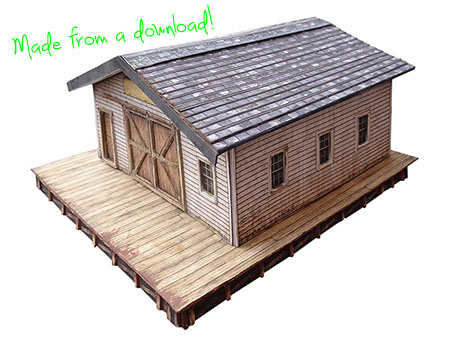
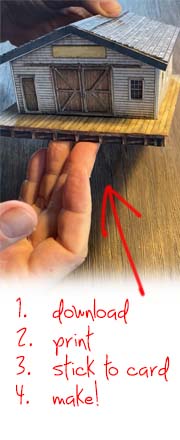
Below is a sample of what you can do with your paper cut out buildings.
I hope your modellers can take some ideas and use it on their own layouts. It is always nice to share ideas with other folks.
I also do not mind other modellers contacting me for information and help.
Now for the bad news, it had to be torn down as a result of having to move to a new place.
Do not worry folks, I have started over again.
If you wish, I will keep you posted as progress continues.
Al, keep up the good work and thanks again for your site.
Jim,
Ontario Canada”
My word – a HUGE thank you to Jim for sharing his HO scale lumber layout. Can’t wait to see his new masterpiece!
All of Jim’s pics are a joy to look at, and I do love the way there is pretty a much a ‘scene’ going on in every part of it, which really brings it to life.
How I could miss a layout like this is beyond me.
It just goes to show, if you’ve mailed me, and I’ve not replied, please bear with me. I’m only human.